Low Testosterone Treatment UK: Your 2026 Guide
Searching for low testosterone treatment uk? Our 2026 guide explains symptoms, diagnosis, TRT options, costs, and NHS vs private pathways. Start here.
SEO brief
Primary keyword: low testosterone treatment UK
Secondary keywords: TRT UK, low testosterone symptoms, testosterone blood test UK, NHS vs private TRT, testosterone replacement therapy UK
Search intent: Informational with practical next steps for diagnosis and treatment access in the UK
Target reader: UK adults with symptoms of possible low testosterone, plus partners or carers
Product/service mention (if any): Home blood testing and TRT assessment options
Internal links available: Assumed from the URLs provided
You're tired, snappy, less interested in sex, and struggling to focus. You tell yourself it's stress, poor sleep, age, or just a busy life. Sometimes that's true. But sometimes it isn't.
Low testosterone treatment in the UK usually starts with the same thing: symptoms plus the right blood tests. If those tests confirm testosterone deficiency, treatment may include monitoring, lifestyle support, and testosterone replacement therapy (TRT) where appropriate. This guide explains the UK numbers that confuse people most, how NHS and private routes differ, what treatment looks like day to day, and how to stay safe if you do start TRT.
Feeling Off Your Game? Understanding Low Testosterone Symptoms
A lot of men don't walk into a clinic saying, “I think my testosterone is low.” They say they feel flat. Their gym sessions feel harder. Their fuse feels shorter. Their partner says they're not themselves.
That's one reason testosterone deficiency can hide in plain sight. In the UK, testosterone deficiency is described as a severely underdiagnosed condition, affecting approximately one in two men over 40, while fewer than 10% of affected men receive treatment, according to Spital Clinic's overview of testosterone deficiency in UK men [1].
Common signs people notice first
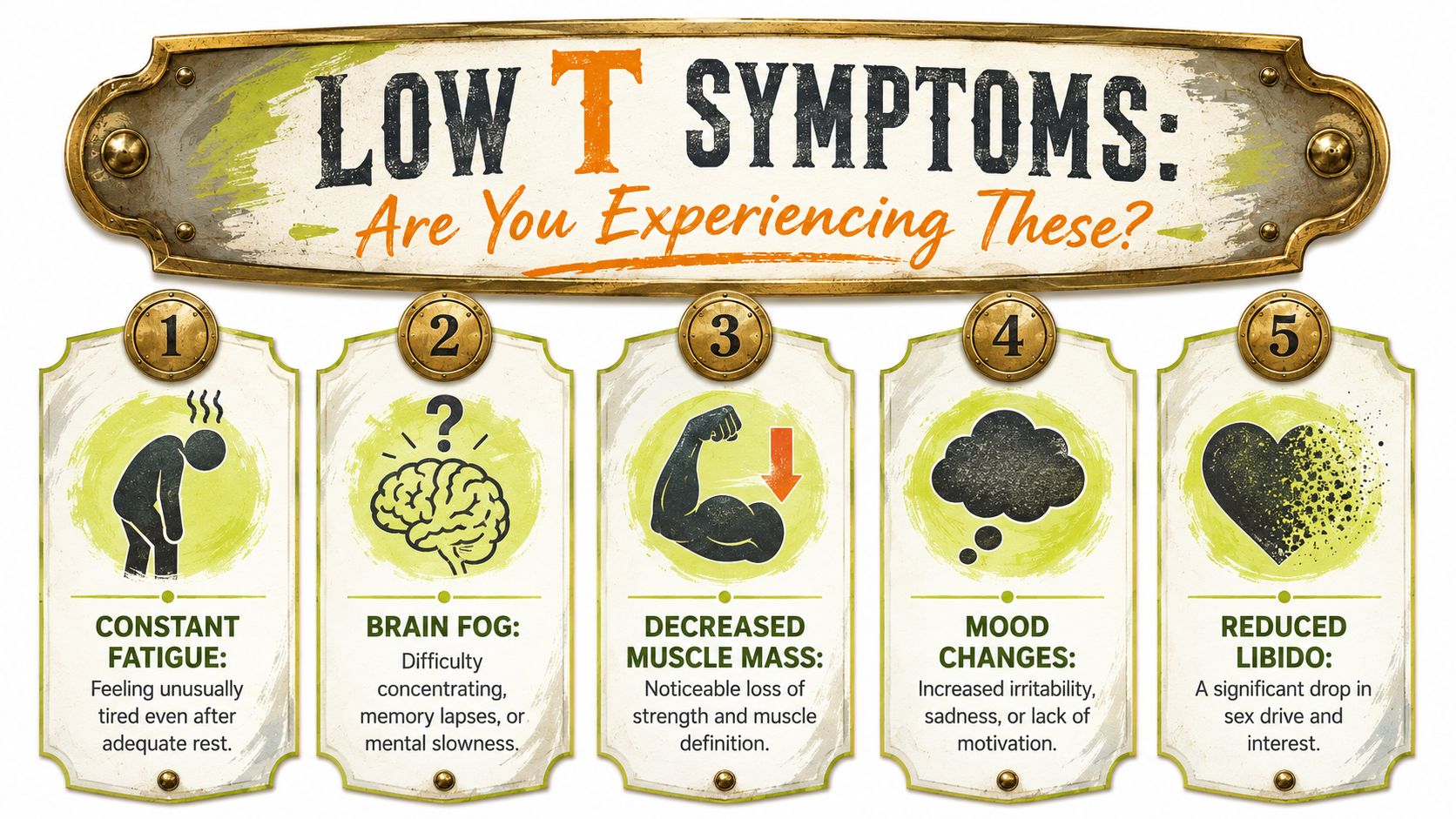
Testosterone helps with sex drive, energy, mood, muscle maintenance, and general drive. When levels drop, symptoms can overlap with stress, depression, poor sleep, weight gain, or burnout. That's why blood tests matter.
You might notice:
- Persistent fatigue: You feel drained even after a decent night's sleep.
- Lower sex drive: Interest in sex drops, sometimes quite sharply.
- Erection changes: Some men notice weaker erections or fewer early morning erections.
- Brain fog: Focus slips. Memory feels patchy. Work takes more effort.
- Lower mood: You may feel flat, irritable, or less motivated.
- Reduced strength: Training feels harder and recovery feels slower.
- Body changes: You may see more body fat and less muscle tone.
Two real-life examples
A busy parent in his mid-40s might blame everything on poor sleep and work stress. He stops exercising because he feels exhausted. Months later, he realises the low mood, fading libido, and loss of morning erections all arrived together.
A gym-goer might assume he just needs to train harder. He notices falling strength, slower recovery, and less motivation. He cleans up his diet, but still feels off.
Low testosterone doesn't have one “classic” look. It often shows up as a cluster of changes that don't quite make sense together.
A quick reality check
These symptoms don't prove low testosterone. Plenty of other problems can cause the same pattern, including sleep apnoea, depression, thyroid problems, alcohol excess, and some medicines. That's why safe care starts with testing, not guesswork.
Featured snippet answer
What are the main symptoms of low testosterone?
Common symptoms include fatigue, low libido, erection changes, low mood, poor concentration, and reduced muscle strength.
How Low Testosterone is Diagnosed in the UK
A proper diagnosis needs symptoms plus blood tests. One without the other can mislead. If you feel terrible but your tests don't support testosterone deficiency, your clinician should look for other causes. If your blood level is low but you have no symptoms, treatment may not help.
Why symptoms matter as much as the number
In the UK, a total testosterone below 12 nmol/L is generally considered the point where assessment becomes important, but the NHS often starts treatment only when levels fall below 8.6 nmol/L. That gap is a major reason patients get mixed messages [1][4].
A specialist clinic may say, “Your result is low enough to assess in context.” An NHS GP may say, “It's not low enough for treatment.” Both can be working from different thresholds.
Practical rule: Don't focus on one number in isolation. Your symptoms, repeat test results, and timing of the blood sample all matter.
The blood tests that usually matter most
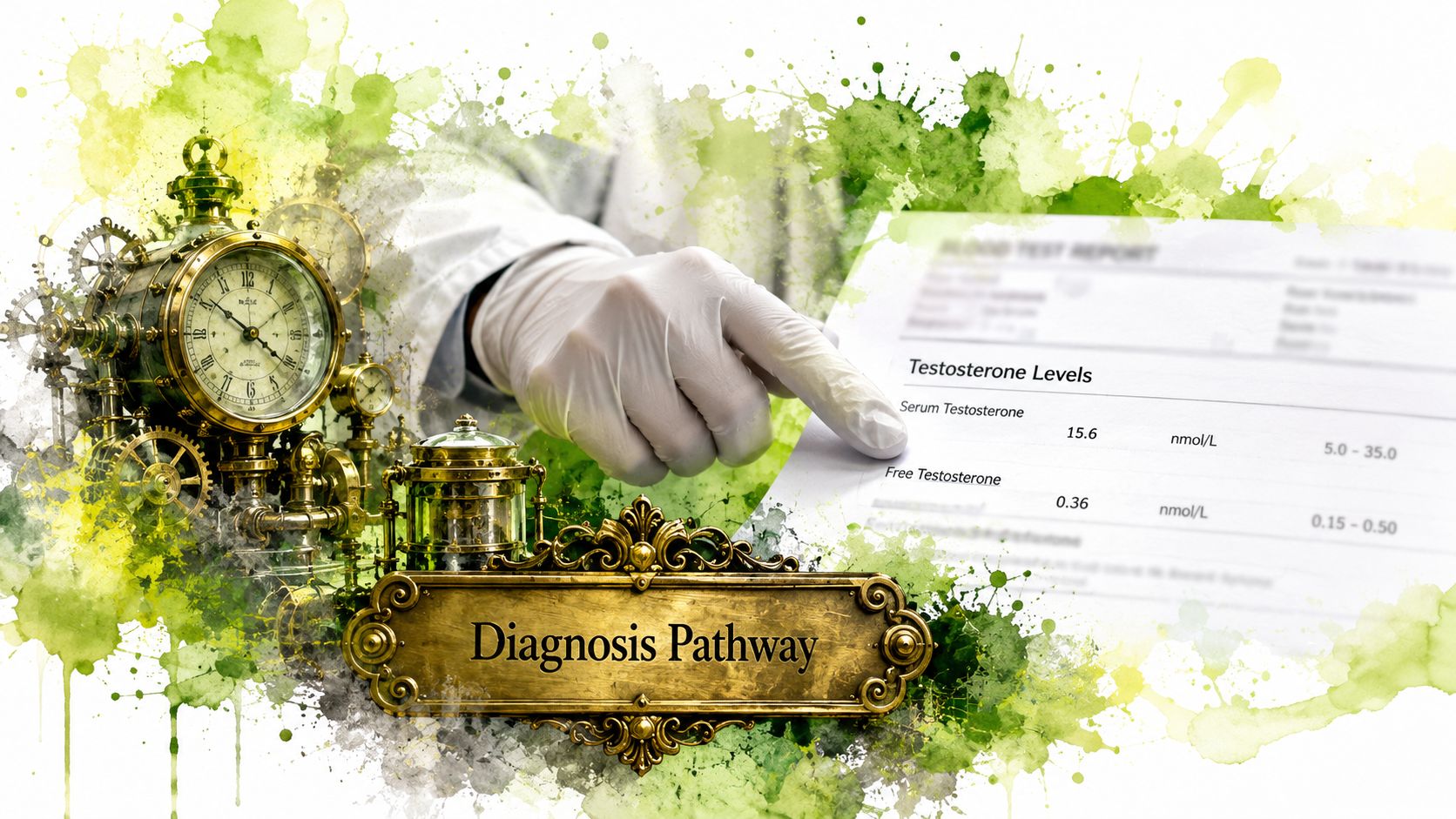
Clinicians usually want two separate early morning fasting blood tests before making decisions about TRT [4]. Testosterone varies through the day, so timing matters.
The tests often include:
- Total testosterone: The main headline number.
- Free testosterone: The fraction that isn't tightly bound and is more available to the body.
- SHBG: This stands for sex hormone-binding globulin. It affects how much testosterone is available.
- Related safety checks: Your clinician may also look at other markers depending on your history.
A simple way to think about it is this. Total testosterone is the amount in the bloodstream. Free testosterone is the portion more available for your body to use. SHBG can change how much of that testosterone is available.
For symptomatic men, some UK guidance uses total testosterone below 12 nmol/L and free testosterone below 0.225 nmol/L as part of the broader definition of hypogonadism [1].
If you're testing at home first, make sure you understand sampling technique and timing. A practical guide on using a home blood test kit in the UK can help you avoid common mistakes.
Where readers often get confused
Here are the three biggest stumbling blocks:
“My level was normal.”
Normal for one lab or service doesn't always mean appropriate for your symptoms.“I only had one test.”
That's often not enough for a treatment decision.“I wasn't fasting or tested later in the day.”
Poor timing can muddy the picture.
Featured snippet answer
How is low testosterone diagnosed in the UK?
Doctors diagnose it using symptoms plus repeat early morning fasting blood tests, usually including total testosterone and sometimes free testosterone and SHBG.
A Guide to Low Testosterone Treatment Options
If tests confirm deficiency and your symptoms fit, the main medical treatment is testosterone replacement therapy, usually called TRT [1]. The aim isn't to push levels sky high. The aim is to bring them into a healthy treatment range and improve symptoms safely.
What treatment is trying to do
UK guidance aims for testosterone levels in the mid-upper range of 15 to 30 nmol/L during treatment, with regular monitoring to keep things safe [2][6].
That matters because good TRT isn't “more is better”. Good TRT means the right dose, the right product, and the right checks.
Comparing TRT methods available in the UK
Different methods suit different lifestyles. A shift worker may prefer a plan with fewer day-to-day steps. Someone with needle anxiety may lean towards gel. Someone who travels a lot may value a routine that feels simpler.
| TRT Method | How It's Used | Pros | Cons |
|---|---|---|---|
| Topical gel | Applied to the skin regularly | Avoids injections, can be easier to start, steady day-to-day routine | Can be messy, requires care to avoid transfer to others, daily habit needed |
| Short-acting injections | Given at shorter intervals | Useful if dose adjustments are needed | Peaks and dips may feel more noticeable, injections may not suit everyone |
| Long-acting injections | Given less often | Fewer dosing days, convenient for some patients | Needs planning around appointments, less flexible once given |
| Subcutaneous pellets | Implanted under the skin | Longer-lasting option for selected patients | Minor procedure needed, not the first choice for everyone |
Common UK examples include Testogel, Sustanon, and Nebido, plus pellets in some settings [1][6].
If you want a factual overview of testosterone replacement therapy options, that can help you compare formats before speaking to a prescriber.
Choosing what fits your life
A gym-goer who likes routine may do well with gel if he's happy to apply it carefully and consistently. A lorry driver or shift worker may prefer an injection schedule that reduces daily admin.
Pharmacist's tip: If you use testosterone gel, wash your hands after applying it and follow your prescriber's instructions closely. Skin transfer is a practical issue, especially around partners and children.
Pharmacist's tip: If you're anxious about injections, say so early. There may be other formats that suit you better.
Featured snippet answer
What treatments are available for low testosterone in the UK?
The main treatment is TRT, usually as gel, injections, or less commonly pellets, with the dose adjusted to reach a safe target range.
Weighing the Benefits and Risks of TRT
TRT can help the right patient. It can also cause problems if used casually, monitored poorly, or started for the wrong reason. That's why balanced information matters.
What men often hope will improve
In UK data, 85% of respondents reported TRT as effective or very effective. Reported improvements included quality of life at 75%, mental wellbeing at 71%, self-esteem at 69%, and appearance at 63%, as summarised in a paper available via PubMed Central [2].
For sexual symptoms, British Society for Sexual Medicine guidance notes that the strongest responses are often seen in men with baseline testosterone below 8 nmol/L, with sexual desire improving by 6 weeks, while erection improvement can take longer [5].

The risks and unknowns to take seriously
Short-term cardiovascular safety data are reassuring. A major analysis found similar cardiovascular disease rates in the testosterone and placebo groups, 8% versus 7%, and concluded that TRT used for under a year in men with hypogonadism did not increase the risk of heart attack, stroke, or other cardiovascular disease [2].
That said, some questions remain unsettled. Long-term safety beyond five years is still uncertain. One doctor quoted in a University of Utah health article put it plainly: “we don't really know what the side effects are of testosterone replacement over the long haul greater than five years” [3].
Other practical concerns include:
- Fertility: TRT can reduce or shut down sperm production. This can matter a lot if you want children.
- Haematocrit rise: TRT can increase red blood cell concentration, which is why monitoring matters [6].
- Routine follow-up: Safe treatment includes blood tests and review, not just a prescription.
If fertility matters to you now or might matter later, raise it before treatment starts. Don't assume it can wait.
Pharmacist's tip: Tell your clinician about plans for children before the first prescription. That conversation should happen up front, not after months on treatment.
Featured snippet answer
Is TRT safe?
For men with confirmed hypogonadism, short-term data are reassuring when treatment is properly monitored. Longer-term safety still has unanswered questions.
How to Get Treatment in the UK NHS vs Private Care
For many readers, this is the part that matters most. You may already suspect low testosterone. What you really want to know is how to move through the system without getting lost.
What the NHS route usually looks like
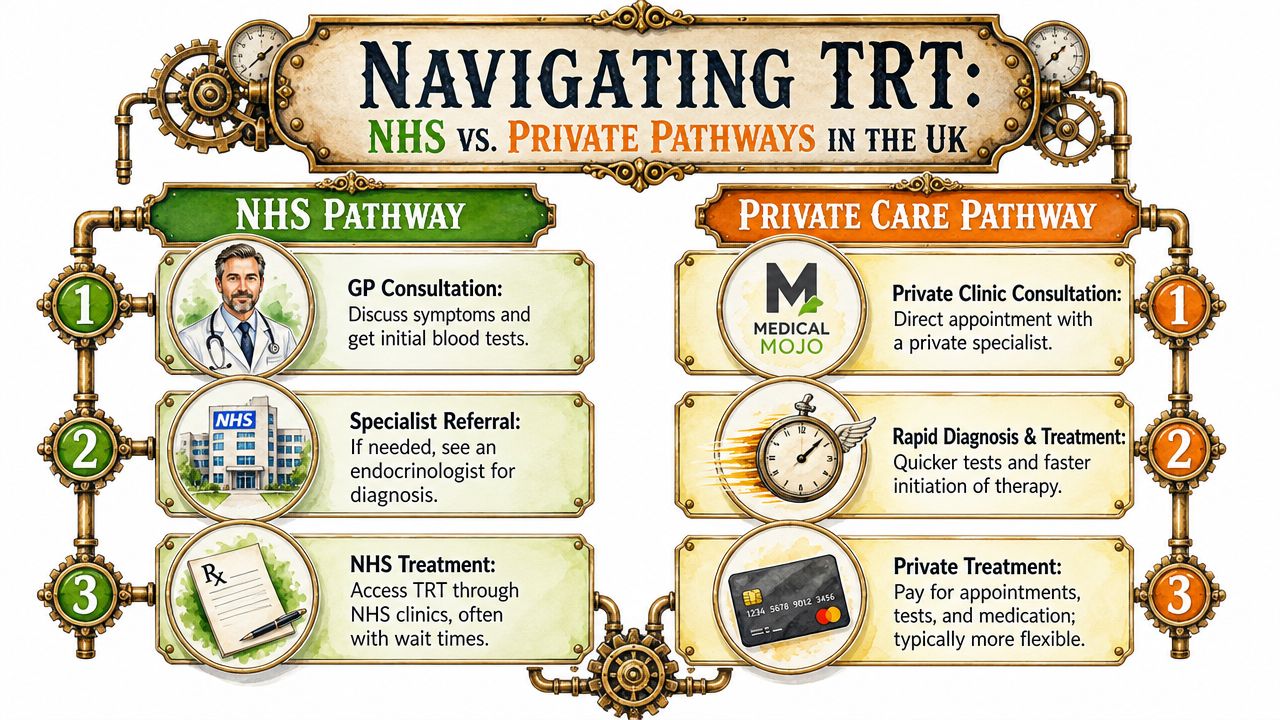
A common first step is to consult a GP. You discuss symptoms, arrange blood tests, and sometimes repeat them. If the picture looks convincing, your GP may manage part of the process or refer you to a specialist.
The challenge is access. NHS treatment often follows the lower threshold already mentioned, so some men with symptoms and borderline results may not qualify for treatment through that route [1][4].
A realistic scenario is a busy office worker with persistent symptoms and a result that sits below the broader assessment threshold but above the usual NHS treatment threshold. He may leave the appointment feeling dismissed, even though the result still deserves proper interpretation.
Later in the pathway, some people may be referred to endocrinology or a related specialist service. That can be appropriate, but it can also take time.
Here's a quick explainer video that shows the sort of questions patients often ask about access and treatment pathways:
What private care can offer
Private care usually gives faster access to testing, review, and discussion of options. It may also be more flexible about men who have symptoms with levels below 12 nmol/L, especially when repeat tests support the picture [4].
A regulated online service can be part of that route. For example, Courier Pharmacy's online pharmacy service is one UK option where secure questionnaires are reviewed by human prescribers, with blood testing and follow-up forming part of the process where appropriate.
Some patients don't need a “better” system. They need a clearer one, with proper interpretation of symptoms, test timing, and follow-up.
A simple cost picture
The NHS route may involve standard prescription charges if treatment is approved, while the private route can involve separate costs for consultations, blood tests, and medicines. Because services vary, it's best to ask for a full written breakdown before you commit.
That question matters more than people think. A cheaper-looking starting point can become less simple if repeat testing, reviews, or product changes aren't clear from the outset.
Pharmacist's tip: Ask who reviews your blood results, how often follow-up happens, and what is included in the quoted price. Those answers tell you a lot about safety.
Featured snippet answer
Can I get TRT on the NHS in the UK?
Yes, but access can be strict. Many patients start with a GP, and NHS treatment often uses a lower treatment threshold than private practice.
Safe Treatment Monitoring and Follow-Up Care
TRT isn't a one-off fix. It's ongoing treatment. The safest clinics make that obvious from day one.
UK guidance recommends blood tests every three to six months initially. The aim is to keep testosterone in the treatment range of 15 to 30 nmol/L and to screen for side effects such as haematocrit rising above 50%, based on British Society for Sexual Medicine guidance and the UK review data [2][6].
What your clinician will monitor
Monitoring usually includes:
- Testosterone level: To check whether the dose is too low, too high, or about right.
- Full blood count: This helps spot a rising haematocrit. If you want to understand the test better, this guide to the full blood count test is useful.
- PSA: This is part of routine follow-up in many men on TRT [6].
Testing timing can differ by product. The BSSM practical guide advises checking gels 2 to 4 hours after application and checking injectable treatment before the injection when monitoring testosterone, PSA, and full blood count [6].
Pharmacist's tip: Put your blood test dates in your phone the same day you book them. People rarely “forget” treatment, but they often forget monitoring.
When to seek urgent help
Get urgent medical help if you develop symptoms that could suggest a serious problem, such as:
- Chest pain
- Sudden shortness of breath
- A new severe headache
- One-sided weakness
- Sudden leg swelling or pain
- Fainting or collapse
These symptoms can have many causes, not just TRT. Still, they need quick assessment.
The UK's safety framework matters too. Medicines are licensed by the MHRA, and pharmacies are regulated by the GPhC. That doesn't remove risk, but it does set standards for prescribing, supply, and oversight.
Your Practical Next Steps to Getting Help
If this sounds familiar, don't self-diagnose from symptoms alone. Take a calm, structured approach.
Start here:
Write down your symptoms
Note what's changed, how long it has lasted, and what matters most. Libido, erections, energy, mood, and concentration are all worth noting.Arrange proper blood tests
Make sure testing is done correctly and repeated if needed. If home testing suits you better, a TRT eligibility home blood testing kit can be one way to start the process before a clinical review.Discuss results with a qualified prescriber
Ask what your number means in context. Ask whether your symptoms fit. Ask what else could explain the picture if testosterone deficiency isn't confirmed.Think about your priorities
Do you want children? Do you hate needles? Do you travel often? Your lifestyle affects the best treatment choice.Commit to monitoring if treatment starts
This part isn't optional. Safe TRT depends on follow-up.
Low testosterone can affect work, relationships, confidence, and day-to-day energy. It can also be over-attributed, which is why careful diagnosis matters. The best next step is simple. Get the right tests, get the right interpretation, and make decisions with someone qualified to guide you.
If you want a regulated route to start the process, Courier Pharmacy offers UK-based online prescribing, home blood testing options, and TRT-related assessment as part of a wider pharmacy service. It's one option for people who want a structured, safety-focused pathway with professional review.
Summary
Low testosterone treatment in the UK starts with symptoms and proper blood tests, not guesswork.
A result below 12 nmol/L may prompt assessment, but the NHS often treats only below 8.6 nmol/L.
That gap explains why many men get confusing answers.
If TRT is appropriate, the aim is a safe treatment range of 15 to 30 nmol/L with regular follow-up.
Gels, injections, and pellets each have pros and cons.
Monitoring every three to six months initially helps keep treatment safe.
If you think something isn't right, get assessed properly and ask clear questions.
FAQs
What is low testosterone treatment in the UK?
Low testosterone treatment in the UK usually means assessment of symptoms, repeat blood tests, and sometimes TRT if deficiency is confirmed. Treatment may happen through the NHS or private care depending on eligibility and access.
What testosterone level is considered low in the UK?
A total testosterone level below 12 nmol/L is generally considered the threshold for assessment in the UK, while the NHS often starts treatment below 8.6 nmol/L [1][4]. Symptoms still matter, so the number isn't the whole story.
Do I need more than one blood test?
Usually, yes. Clinicians often want two early morning fasting blood tests before making treatment decisions [4]. That helps reduce the chance of acting on a misleading result.
Can I get TRT if my testosterone is “borderline”?
Possibly, but it depends on your symptoms, repeat results, and the care pathway you use. Borderline results often create the most confusion, especially when NHS and private thresholds differ.
How long does TRT take to work?
Some sexual symptoms may improve within weeks in the right patient, and BSSM guidance notes that sexual desire can improve by 6 weeks in some men with lower baseline levels [5]. Other changes, such as erections, may take longer.
Is TRT safe for the heart?
Short-term evidence in men with hypogonadism is reassuring. In a major analysis, cardiovascular disease rates were similar in testosterone and placebo groups, 8% versus 7%, when treatment was used for under a year [2].
Will TRT affect fertility?
It can. TRT may reduce or shut down sperm production, so this needs discussion before treatment starts [3]. If future fertility matters, say so clearly at the first consultation.
How often do I need monitoring on TRT?
UK guidance recommends blood tests every three to six months initially [2][6]. These checks help confirm that testosterone is in range and that markers such as haematocrit remain safe.
What blood tests are monitored during TRT?
Clinicians often monitor testosterone, PSA, and full blood count, including haematocrit [6]. The exact timing depends on whether you use gel or injections.
Meta description
Low testosterone treatment UK explained. Learn symptoms, blood test numbers, TRT options, NHS vs private care, and safe monitoring.
Internal links
- A practical guide to using a home blood test kit in the UK
- Testosterone replacement therapy information
- Online pharmacy UK service
- Your guide to understanding the full blood count test
- TRT eligibility home blood testing kit
Visual guidance
Symptom checklist infographic
Alt text: Five common symptoms of low testosterone shown as a painterly checklist with brass plaque labels in lime green, pale yellow-green, and light grey.Diagnosis pathway graphic
Alt text: A stylised UK testosterone diagnosis pathway showing repeat morning blood tests, symptom review, and treatment thresholds.TRT methods comparison graphic
Alt text: A comparison chart of testosterone gel, short-acting injections, long-acting injections, and pellets in a steampunk-inspired UK healthcare design.NHS vs private pathway infographic
Alt text: A side-by-side flowchart comparing NHS and private routes to testosterone treatment in the UK with brass plaque headings.
Byline
Author: Medical Mojo Editorial Team
Credentials: Patient education writers and pharmacy content specialists
Clinical review
Clinically reviewed by: UK registered pharmacist
Credentials: GPhC-registered pharmacist
How this content was created
This article was written using UK-focused clinical guidance and peer-reviewed evidence available in the source list below, then reviewed for clarity, accuracy, and patient safety. It is for information only and isn't a substitute for personalised medical advice.
References
[1] Spital Clinic (n.d.) Testosterone deficiency: the silent epidemic affecting UK men. Available at: https://www.spitalclinic.com/articles/testosterone-deficiency-silent-epidemic-uk-men (Accessed: 27 June 2026).
[2] Hackett, G. et al. (2025) Testosterone therapy in the UK: access, outcomes and safety. Available at: https://pmc.ncbi.nlm.nih.gov/articles/PMC12170005/ (Accessed: 27 June 2026).
[3] University of Utah Health (2013) Facts about low testosterone treatment. Available at: https://healthcare.utah.edu/the-scope/health-library/all/2013/11/facts-about-low-testosterone-treatment (Accessed: 27 June 2026).
[4] The Men's Health Clinic (n.d.) Testosterone replacement therapy (TRT) in the UK: navigating the best path for treatment. Available at: https://themenshealthclinic.co.uk/testosterone-replacement-therapy-trt-in-the-uk-navigating-the-best-path-for-treatment/ (Accessed: 27 June 2026).
[5] British Society for Sexual Medicine guidance discussed in Kulaksizoglu, H. and colleagues (2023) The optimal indication for testosterone replacement therapy in late onset hypogonadism. Available at: https://pmc.ncbi.nlm.nih.gov/articles/PMC10307648/ (Accessed: 27 June 2026).
[6] British Society for Sexual Medicine (2023) Practical guide to testosterone replacement therapy in men. Available at: https://bssm.org.uk/wp-content/uploads/2023/02/BSSM-Practical-Guide-High-Res-single-pp-view-final.pdf (Accessed: 27 June 2026).
Disclaimer: This information is for education only and doesn't replace medical advice, diagnosis, or treatment from your GP, pharmacist, or specialist.


