A Patient's Guide to the Mast Cell Activation Syndrome Diet
Discover how a mast cell activation syndrome diet can calm symptoms. This UK guide explains which foods to eat, what to avoid, and how to start safely.
In this article
- Five Key Takeaways
- Understanding the Mast Cell Diet
- What is the goal of the diet?
- Is this a lifelong diet?
- How food can trigger your MCAS symptoms
- The histamine bucket analogy
- Key foods that can cause symptoms
- Starting your elimination diet safely and effectively
- The elimination phase
- The reintroduction phase
- The maintenance phase
- Practical meal ideas and UK supermarket swaps
- Real-life example: A busy parent
- Real-life example: A shift worker
- Easy UK food swaps for a low-histamine diet
- Integrating diet with medical support
- The role of medication
- The importance of specialist pharmacy support
- Exploring personalised options
- Summary
- Frequently Asked Questions
The best mast cell activation syndrome diet is a personalised eating plan you create to find your food triggers. It often starts with a temporary low-histamine diet to calm symptoms like hives, flushing, and digestive issues, before reintroducing foods to build a long-term, balanced way of eating. This guide will walk you through how to start safely, what foods to try, and how diet fits with your overall medical treatment.
Five Key Takeaways
- It’s a Tool, Not a Life Sentence: The goal is to identify your personal triggers, not to restrict your diet forever.
- Start with Low-Histamine: Begin by temporarily removing high-histamine foods (like aged cheese, cured meats, and alcohol) for 2–4 weeks.
- Keep a Detailed Diary: A food and symptom log is the most important tool you have for spotting patterns.
- Reintroduce Foods Slowly: Test one new food at a time, waiting 2–3 days between each to check for reactions.
- Work with a Professional: Always start an elimination diet with support from a doctor or a registered dietitian.
Understanding the Mast Cell Diet
Living with Mast Cell Activation Syndrome (MCAS) in the UK can feel like navigating a dietary minefield. Common foods might trigger a wave of debilitating symptoms. A mast cell activation syndrome diet aims to lower the total burden on your system. This gives your body a chance to calm down and reset.
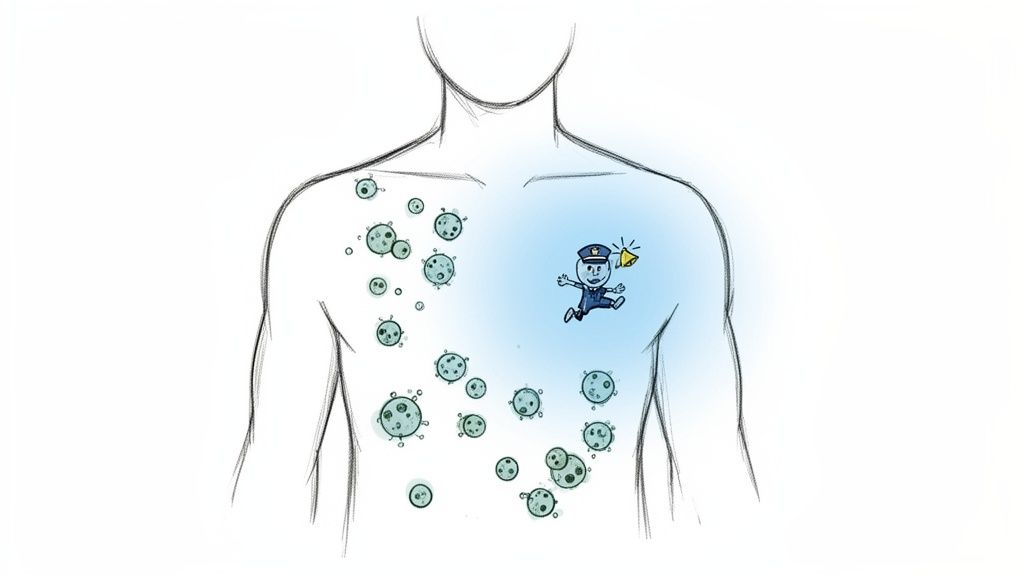 Alt text: An illustration shows a torso with immune cells. A figure representing a mast cell holds a megaphone, symbolising an overactive immune response. The image is in Medical Mojo's green and yellow palette.
Picture your mast cells as hyper-sensitive car alarms. In most people, they only go off when there’s a real threat, like a nasty bacteria. But with MCAS, these alarms are faulty. Harmless things, including compounds in food, can set them off. This false alarm unleashes a flood of chemicals—most famously histamine—that cause your symptoms.
What is the goal of the diet?
The main goal is simple: reduce your overall histamine load. You can do this by managing two main types of foods:
- Foods high in histamine: This includes aged or fermented foods and even leftovers.
- Histamine liberators: These foods trigger your mast cells to release their own stored histamine.
By carefully managing what you eat, you reduce the triggers setting off those internal alarms. This gives your body a calmer baseline. It makes pinpointing specific problem foods much easier later on.
Is this a lifelong diet?
Not usually, at least not in its strictest form. The initial phase is a temporary elimination diet. It helps you identify your personal triggers.
Once you know what affects you, you can start reintroducing foods you tolerate well. You can then build a sustainable, varied, and nutritious diet that keeps your symptoms in check. For more on the condition, you might find our guide on what mast cell activation syndrome is helpful. [1]
How food can trigger your MCAS symptoms
Think of your mast cells as the hyper-vigilant security guards of your immune system. If you have MCAS, these guards are incredibly jumpy. They mistake harmless things, like certain food compounds, for dangerous intruders.
When that alarm goes off, your mast cells flood your body with powerful chemicals called mediators. The most famous is histamine, but there are hundreds of others. This chemical downpour unleashes the bewildering array of MCAS symptoms, from hives and a racing heart to stomach cramps and brain fog.
The histamine bucket analogy
The "histamine bucket" is a helpful way to picture this. Your body makes some histamine and you also get it from food. Usually, an enzyme in your system keeps the bucket from getting too full.
But with MCAS, things go wrong. Your overactive mast cells might dump too much histamine into the bucket. Or, your body might be slow at emptying it. Once the bucket overflows, you get symptoms. A mast cell activation syndrome diet stops you from pouring so much in, giving your body a chance to catch up.
Key foods that can cause symptoms
It helps to understand why some foods are a problem. It’s rarely as simple as a food being "good" or "bad."
High-histamine foods
These are the most obvious culprits. They are foods naturally packed with histamine. This happens when bacteria break down an amino acid during ageing, fermenting, or storage.
Classic examples include:
- Aged cheeses (e.g., parmesan, cheddar)
- Fermented foods (e.g., sauerkraut, kimchi, yoghurt)
- Cured meats (e.g., salami, bacon)
- Tinned or smoked fish (e.g., tuna, mackerel)
- Alcohol (especially red wine and beer)
Histamine liberators
These foods are more sneaky. They are low in histamine but contain compounds that provoke your mast cells into releasing their own stored histamine. They top up your histamine bucket just as much.
Common histamine liberators include:
- Citrus fruits (oranges, lemons)
- Tomatoes and spinach
- Chocolate and cocoa
- Nuts (especially walnuts and cashews)
- Certain food additives
What are histamine liberators? Histamine liberators are foods that cause your body's mast cells to release their own stored histamine, leading to MCAS symptoms.
The role of the DAO enzyme
Your gut has a secret weapon for dietary histamine: an enzyme called diamine oxidase (DAO). Its job is to break down the histamine you eat before it causes trouble.
However, some people have lower levels of DAO. This means histamine from food isn't cleared efficiently. That histamine bucket overflows much faster, which is a key reason digestive issues are so common in MCAS. You can learn more about the link between MCAS and gastrointestinal symptoms in our detailed guide.
Starting your elimination diet safely and effectively
Taking the first steps on a Mast Cell Activation Syndrome diet can feel huge. A clear plan makes it more manageable and safe. Think of it as a fact-finding mission, not a diet of restriction.
The best way forward is to break the process into three logical phases. Each stage has a clear goal. They guide you from a broad low-histamine start to a truly personalised diet.
The elimination phase
This is the foundation and typically lasts two to four weeks. The aim is simple: calm your system right down. You do this by temporarily removing all common high-histamine foods and other known mast cell triggers.
During this time, focus on fresh, whole, unprocessed foods. It’s all about creating a quiet baseline. Keeping meals simple is your best friend here.
Pharmacist's tip: Start a detailed food and symptom diary from day one. Log everything you eat and drink, the time, and any symptoms. This diary will be your most valuable tool.
The reintroduction phase
Once your symptoms have calmed down, it's time to begin reintroduction. This is where you put on your detective hat. You will systematically reintroduce foods one at a time to see how your body responds.
Here’s a safe, methodical way to do it:
- Choose one food: Pick a single food you’ve cut out, like a tomato.
- Start small: On day one, eat a very small amount and monitor how you feel for 24-48 hours.
- Increase slowly: If you feel fine, try a slightly larger portion the next day.
- Wait and observe: Wait two or three days before you test the next food. This 'washout' period is crucial.
This slow, deliberate process is the only reliable way to pinpoint your personal triggers. Rushing this stage will only give you confusing results.
The maintenance phase
After you’ve identified your trigger foods, you can move into the maintenance phase. This is where you build your long-term, personalised diet. It will be a balanced, enjoyable way of eating that includes all the foods your body tolerates well.
Your list of 'safe' foods will be unique to you. The goal is to create the most varied and nutritious diet possible that keeps your symptoms under control.
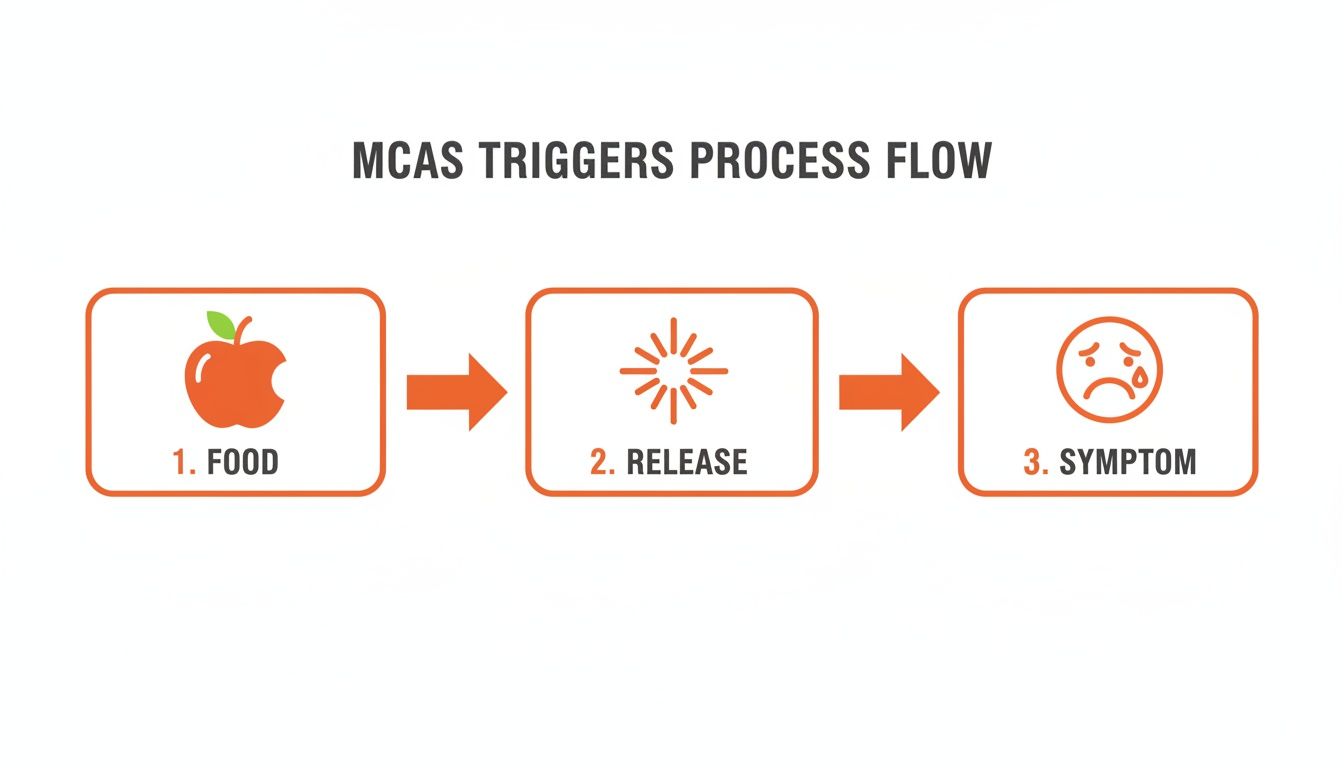 Alt text: A simple flowchart shows three steps: a plate of food, an arrow to a cell releasing particles, and an arrow to a person showing allergy symptoms, illustrating the trigger-to-symptom process.
Working with a professional
It's always best to undertake an elimination diet with a registered dietitian or a doctor experienced in MCAS. They ensure you avoid nutritional deficiencies and help you interpret your results.
Underdiagnosis of MCAS is a huge problem. It can delay proper care by years, which highlights why an expert-guided approach is so critical. Learning about the gaps in diagnosing Mast Cell Activation Syndrome can give you helpful context.
Pharmacist's tip: Become an expert at reading labels. Hidden triggers like 'spices', 'natural flavours', preservatives (sulphites, benzoates), and citric acid can be a problem. The shorter the ingredients list, the better.
When to seek urgent help
If you experience severe symptoms like difficulty breathing, swelling of the throat or tongue, a rapid heart rate, or feeling faint after eating, this could be anaphylaxis. This is a medical emergency. Call 999 immediately.
Practical meal ideas and UK supermarket swaps
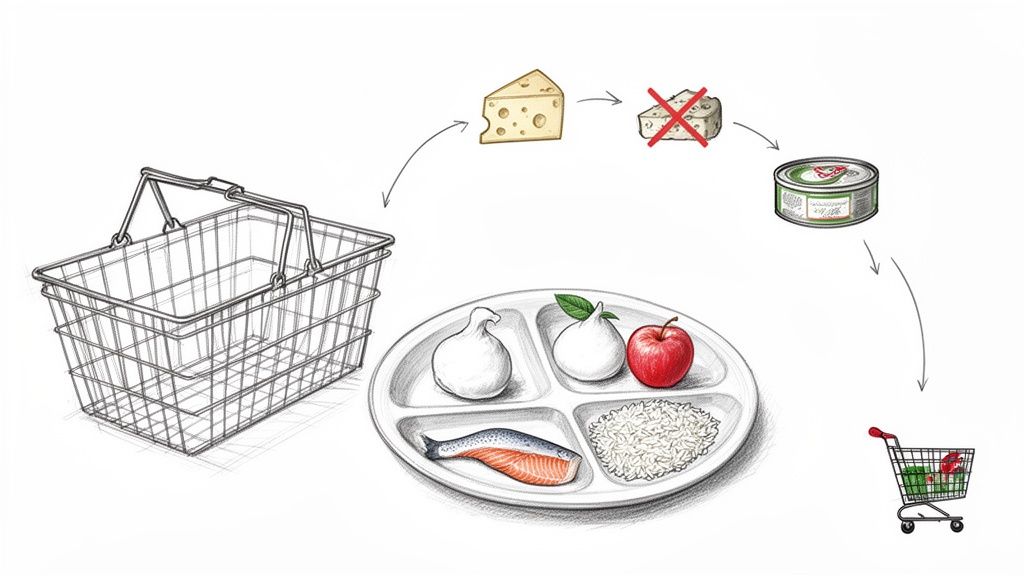 Alt text: An infographic shows a shopping basket of fresh vegetables, an arrow to a cooking pot, and an arrow to a final meal on a plate, representing the meal planning process for an MCAS diet.
Knowing the theory behind a mast cell activation syndrome diet is one thing. Figuring out what to actually eat day-to-day is the real challenge. The good news is, you don't have to face a future of boring food.
With a little planning and clever supermarket choices, you can put together delicious, satisfying meals. It’s all about learning to build a plate with fresh, simple ingredients that nourish your body.
Real-life example: A busy parent
Sarah, a mother of two from Manchester, constantly dealt with flushing and bloating. She worked with a dietitian to start an elimination diet. She batch-cooked simple meals like chicken with roasted sweet potatoes to make life easier. Her food diary revealed that tomatoes and spinach were major triggers. Her maintenance diet now avoids these, but she was thrilled to find she could tolerate most other vegetables.
Real-life example: A shift worker
Mark is a paramedic in London working unpredictable shifts. He needs convenient, grab-and-go options. On his days off, he prepares a large batch of rice pasta with a simple sauce made from blended courgettes and fresh basil. For snacks that travel well, he packs rice cakes with sunflower seed butter and a flask of chamomile tea.
Easy UK food swaps for a low-histamine diet
Navigating Tesco or Sainsbury's can feel overwhelming at first. The key is to focus on fresh, unprocessed foods and learn a few simple swaps. This table makes it easy to substitute common high-histamine items with safer alternatives.
| Instead of This (High-Histamine) | Try This (Low-Histamine) |
|---|---|
| Aged Cheddar, Parmesan | Fresh Mozzarella, Ricotta |
| Tinned Tuna in Brine | Fresh or Frozen Cod or Haddock |
| Salami, Pepperoni, Bacon | Freshly Cooked Chicken or Turkey |
| Fermented Yoghurt | Coconut Yoghurt (check additives) |
| Leftover Roast Chicken | Freshly Cooked Chicken (eaten same day) |
| Spinach or Tomatoes | Cucumber, Carrots, Sweet Potatoes |
| Red Wine or Beer | Still Water, Peppermint Tea |
| Soy Sauce | Coconut Aminos (use sparingly) |
Making these simple changes can dramatically reduce your daily histamine load. For example, you can still have homemade pizza. Just swap the tomato base for a puréed vegetable sauce and use fresh mozzarella instead of aged cheddar.
Alongside diet, some supplements like high-quality fish oils might help. You can learn more about Omacor Omega-3 capsules and their role in supporting overall health.
Integrating diet with medical support
A carefully managed mast cell activation syndrome diet is a powerful tool, but it is rarely the whole story. For most people, diet works best as one part of a complete management plan. Medication provides a crucial safety net, helping to stabilise your mast cells from the inside.
The role of medication
Medications are often essential for getting MCAS symptoms under control. They either block the chemicals your mast cells release or make the cells less likely to overreact.
Common medications prescribed in the UK include:
- H1 Antihistamines: Everyday antihistamines like cetirizine or loratadine. They help with itching, hives, and flushing.
- H2 Antihistamines: Medications like famotidine. They help reduce stomach acid and calm gut symptoms.
- Mast Cell Stabilisers: Drugs like sodium cromoglicate. They make mast cell membranes stronger and less "leaky."
Pharmacist's tip: Take your prescribed medications exactly as your doctor instructs. Antihistamines often work best when taken regularly to prevent symptoms, rather than after a reaction has started.
The importance of specialist pharmacy support
Standard medications can sometimes contain fillers, dyes, or binders that are themselves mast cell triggers. A specialist pharmacy can make a world of difference.
Services like compounding allow a pharmacist to create a personalised medication for you, leaving out any problematic inactive ingredients. This ensures the treatment itself doesn't add to your symptoms. Getting this integrated approach right is key. [2]
Exploring personalised options
Beyond standard treatments, some people find relief with more specialised options. Low-Dose Naltrexone (LDN) is gaining attention for its potential anti-inflammatory effects. Our guide on LDN and MCAS has more detailed information.
Because gut health is so intertwined with MCAS, investigating underlying issues is also crucial. Conditions like Small Intestinal Bacterial Overgrowth (SIBO) can make MCAS symptoms much worse. A simple SIBO breath test can identify this problem, paving the way for targeted treatment.
Pharmacist's tip: Never add a new supplement or over-the-counter remedy without first checking with your pharmacist or doctor. Even "natural" products can interact with your prescribed medications.
Summary
In summary, a mast cell activation syndrome diet is a personal journey of discovery, not a rigid set of rules. It starts with a short-term, low-histamine elimination phase to calm your system. You then methodically reintroduce foods to identify your unique triggers. Keeping a detailed food and symptom diary is crucial for success. This diet is most effective when it is part of a wider management plan that includes medical supervision and appropriate medication. Always work with a healthcare professional to ensure your approach is safe, effective, and nutritionally sound.
Frequently Asked Questions
How long should I stay on the strict elimination diet? The strict elimination phase is short-term, typically lasting two to four weeks. This is usually long enough to calm your system and establish a clear baseline. Staying on it for too long can risk nutritional deficiencies and is not sustainable.
What is the difference between MCAS and histamine intolerance? Histamine intolerance is a digestive issue where your body can't break down histamine from food effectively. MCAS is a broader immune disorder where your own mast cells are unstable and release many chemicals, including histamine, in response to various triggers (not just food).
Can I drink alcohol on an MCAS diet? It's best to avoid alcohol, especially during the elimination phase. Most alcoholic drinks are high in histamine, and alcohol itself can trigger mast cells to release more histamine. Once stable, some people may tolerate small amounts of low-histamine spirits like gin, but it varies greatly.
Is a low-histamine diet the only option for MCAS? A low-histamine diet is the most common starting point, but not the only one. Some people also react to other food compounds like salicylates or oxalates. The best mast cell activation syndrome diet is the one personalised to your specific triggers.
How can I eat out with friends or family? Plan ahead. Check the menu online and call the restaurant in advance to explain your needs. Choose simple dishes like grilled meat or fish with steamed vegetables. Eating a small, safe snack before you go can also help you make better choices.
Can children follow a mast cell activation syndrome diet? Yes, but it is essential that it is supervised by a paediatrician and a registered paediatric dietitian. Children have specific nutritional needs for growth, and a poorly managed diet can be harmful. Never start a restrictive diet for a child without professional guidance.
Disclaimer: This article is for informational purposes only and does not constitute medical advice. Always consult with a qualified healthcare professional for any health concerns or before making any changes to your diet or treatment plan.
Meta Description: Your patient-friendly UK guide to the mast cell activation syndrome diet. Learn how to start a low-histamine plan, identify triggers, and manage symptoms safely.
Internal Links to Suggest:
- What is Mast Cell Activation Syndrome?
- MCAS and Gastrointestinal Symptoms
- The Gaps in Diagnosing Mast Cell Activation Syndrome
- LDN and MCAS
- Omacor Omega-3 Capsules
- Home Page
Byline: Written by The Medical Mojo Editorial Team. Clinically reviewed by Scott McDougall, MPharm, GPhC Reg No: 2062332.
How This Content Was Created: This article was written by our in-house editorial team using a rigorous process. We consult trusted sources, including the NHS, NICE guidelines, peer-reviewed medical journals, and patient advocacy groups. The content is then fact-checked and clinically reviewed by a qualified UK pharmacist to ensure it is accurate, evidence-based, and patient-friendly.
References: [1] Afrin, L.B., Self, S., Menk, J. and Lazarchick, J., 2017. Characterization of mast cell activation syndrome. The American journal of the medical sciences, 353(3), pp.207-215. Available at: https://doi.org/10.1016/j.amjms.2016.12.013 [2] Patient.info. 2021. Mastocytosis and Mast Cell Disorders. [online] Available at: https://patient.info/doctor/dermatology/mastocytosis-and-mast-cell-disorders


