Mast Cell Activation Syndrome MCAS: Your UK Guide
Mast cell activation syndrome MCAS explained for UK patients. Learn symptoms, triggers, tests, and treatments, with practical advice on daily management.

Mast cell activation syndrome MCAS means your mast cells release too many inflammatory chemicals too easily, causing severe repeated episodes across at least two body systems. In the UK, clinicians confirm it only when those episodes, objective blood evidence during an episode, and a clear response to mast cell treatment all line up.
You might be reading this after a frightening reaction, or after months of flushing, gut pain and fatigue with no neat answer. It's understandably worrying. This guide explains what mast cells do, which patterns matter, how timing affects blood tests, and when you need urgent help. It won't diagnose you, and it doesn't replace medical advice.
What MCAS Actually Means in Everyday Life
A busy parent eats a hot curry on a warm evening. Within minutes, her face flushes, her skin itches, her stomach cramps, and she feels faint. One system alone wouldn't tell the story. Several systems flaring together, again and again, is the pattern that makes a clinician pause.
That's different from a simple food intolerance or a one off allergy. NHS sources describe MCAS as a recently defined and rare disorder where abnormal mast cell activation can affect many organs and, in severe cases, cause life threatening anaphylaxis, as set out in NHS patient guidance on mast cell activation syndrome.
Five things to hold on to
- One sentence definition: Mast cells release chemicals such as histamine too easily, and symptoms hit more than one part of your body at once.
- Three part NHS test: Recurrent severe multisystem episodes, mediator evidence in blood, and improvement on targeted treatment must all be present.
- Tryptase timing matters: A single normal result when you're well doesn't confirm or exclude MCAS.
- Triggers vary: Heat, alcohol, infection, exercise, stress, foods, perfumes, medicines and stings can all play a part.
- Safety first: Breathing trouble, throat tightness or fainting needs emergency help. Call 999.
Why the label needs care
You may see MCAS discussed online as an explanation for fatigue, pain or vague gut symptoms. Those symptoms deserve care, but they don't prove MCAS on their own. Symptoms alone aren't enough, and that protects you. It stops other causes being missed, and it stops you starting long term treatment you may not need.
Think pattern, proof and response. If one of those three is missing, your team should keep looking rather than rush to a label.
How Mast Cells Work and Why They Misbehave
Picture mast cells as security guards posted in your skin, gut, airways and blood vessels. Each guard carries small packets of chemicals. When a real threat arrives, such as infection or injury, the guard opens those packets and calls for help. That response helps you heal.
In MCAS, the guards react too easily. They may fire after heat, pressure, a medicine or no clear trigger at all. Then they release too much, too fast, across several places. You feel that as a flare.
The chemicals you'll hear about
- Histamine: Drives itching, flushing, hives, wheeze and gut cramps. Antihistamines block some of its effects.
- Tryptase: Doesn't explain most symptoms day to day. Doctors measure it because a sharp rise during an episode supports mast cell activation.
- Leukotrienes: Can narrow airways and add to gut and breathing symptoms. That's why one antihistamine doesn't always cover everything.
Mast cells sit throughout vascularised tissues, which means tissues with a blood supply. Because they're widespread, a flare can involve skin and gut, or airways and blood pressure, at the same time. That spread is central to the diagnosis.
How a flare unfolds
First, a trigger sets the guard off. Next, the mast cell releases its packets in a process clinicians call degranulation. Then the chemicals act on nearby blood vessels, nerves and muscle. Finally, you notice symptoms, sometimes within minutes.
MCAS isn't the same as mastocytosis, where the body makes too many mast cells. It also isn't the same as a classic allergy, where one known allergen drives the reaction. The overlap can confuse people, so your clinician may test for related conditions as well.
If you only get isolated flushing in a hot room, that's a different picture. A gym goer who repeatedly gets hives, wheeze, stomach cramps and light headedness during exercise shows the multisystem pattern clinicians take more seriously.
Typical and Atypical Symptoms Across Body Systems
A shift worker finishes nights, drinks an energy drink, then gets palpitations, brain fog and urgent diarrhoea. An office worker flushes in warm meetings, then develops hives and nausea. Neither story proves MCAS, but both show why clinicians ask what happened together, not just what happened once.
Typical episodes are sudden, severe and recurrent. Atypical or less obvious symptoms, such as headache or brain fog, matter only when they arrive as part of that wider episode. Chronic single symptoms, such as daily hives alone or loose stools alone, usually point your team elsewhere first.
MCAS symptoms by body system
| Body system | Typical MCAS symptoms | Red-flag signs |
|---|---|---|
| Skin | Flushing, itching, hives, swelling | Lip or tongue swelling |
| Airway | Wheeze, breathlessness, tight chest | Throat tightness, voice change, struggling to breathe |
| Gut | Cramps, nausea, diarrhoea, vomiting | Severe cramps with fainting or airway symptoms |
| Heart and circulation | Racing heart, variable blood pressure | Fainting, collapse, feeling very unwell fast |
| Brain and nerves | Headache, brain fog during an episode | Confusion with breathing trouble or collapse |
Gut symptoms often cause the longest detour, because they can look like irritable bowel syndrome. Timing helps. Cramps and diarrhoea that arrive sharply with flushing, hives or wheeze tell a different story from bloating after meals alone. You can read more on mast cell activation syndrome and gastrointestinal symptoms if your gut is your main concern.
Similarly, anxiety and hormones can cause flushing. However, flushing plus swelling, breathlessness or a drop in blood pressure needs a different level of urgency. Don't try to sort that out at home during an episode.
Seek urgent help now if you have throat tightness, difficulty breathing, faintness, or symptoms in two or more systems that escalate quickly.
Write down the time symptoms started, what you ate or took, and how long the episode lasted. That simple record often helps more than a long list of every symptom you've ever had.
Common Triggers You Can Plan Around
Triggers don't cause MCAS on their own, and avoiding them won't cure it. However, planning around your personal triggers can reduce flares and make episodes easier to explain to a clinician. Your list may differ from someone else's, and it can change over time.
The visual below sums up four triggers people commonly notice first.

A practical checklist
- Alcohol: Can bring on flushing and hives quickly. Notice whether even small amounts set you off.
- Heat: Hot baths, saunas and warm rooms can flare symptoms. Try cooler showers and loose layers.
- Medicines and procedures: Some medicines can trigger episodes in sensitive people. Tell dentists, surgeons and pharmacists about past reactions before treatment.
- Infection and exercise: Illness and hard exertion can lower your threshold. Rest during infection, and build exercise back slowly.
- Pressure, friction and stings: Tight straps, rubbing and insect stings can matter. Note the exact spot and timing.
- Foods, perfumes and stress: Strong scents, certain foods and emotional stress appear in many diaries. Look for repeat patterns, not one offs.
Pharmacist's tip: Keep a simple diary for each episode. Record time, trigger, symptoms, medicines taken and recovery time. Don't cut out whole food groups while you track, because that can hide the pattern and harm your nutrition.
Bring that diary to appointments. It helps your team judge severity, spot two system episodes, and plan blood tests for the next flare.
How UK Clinicians Diagnose MCAS
There's currently no NICE guideline specifically for MCAS, so practice can vary, as noted in Leeds NHS referral guidance for suspected MCAS. Even so, NHS specialist services use a clear three part framework. All three parts must line up.
The flow below shows those three steps in order.
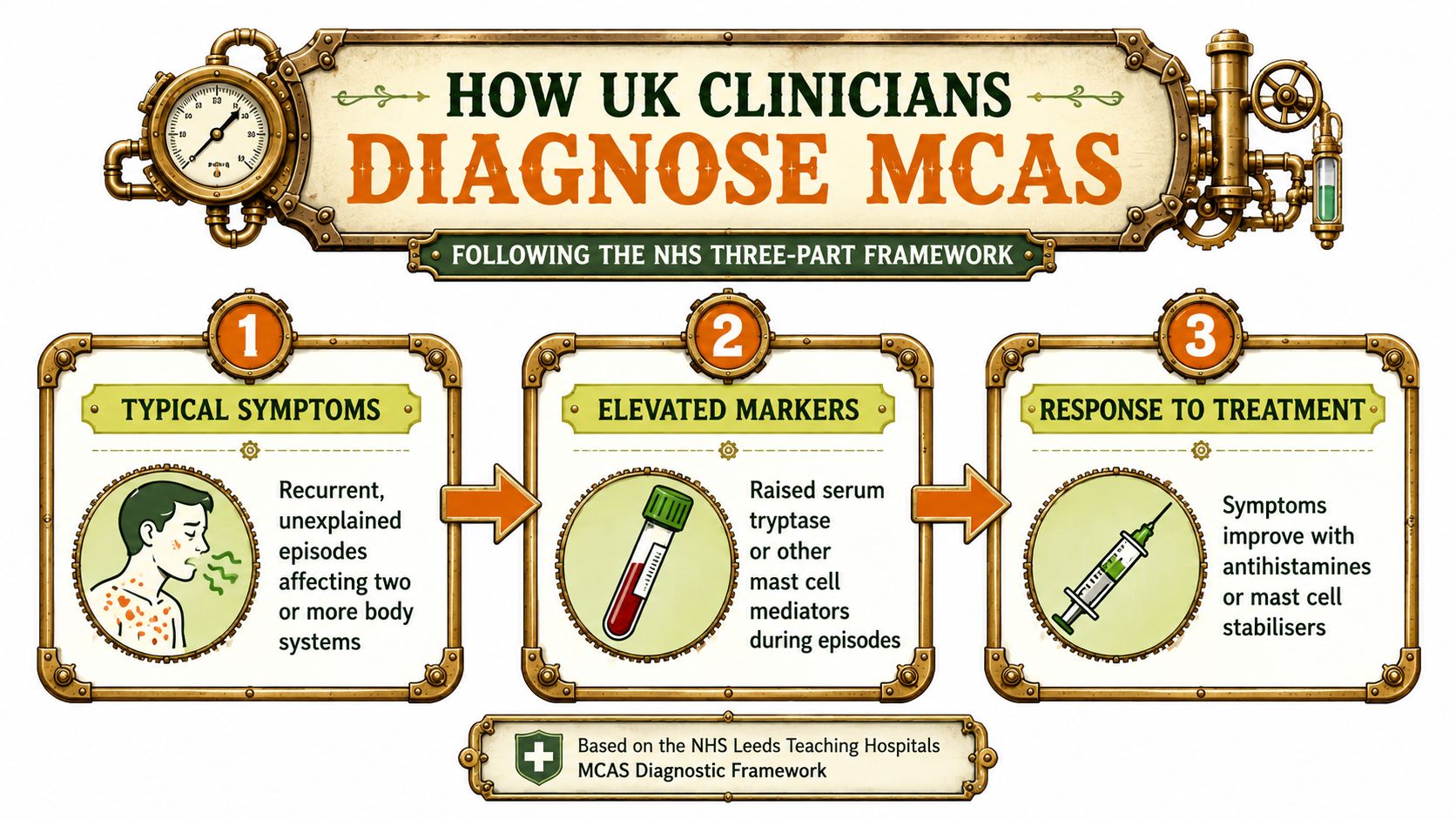
The three NHS criteria
- Severe recurrent episodes: Acute systemic episodes involve at least two organ systems and often resemble anaphylaxis. For example, hives or swelling occurring with diarrhoea and cramps fits better than either symptom alone, as explained in Leeds Teaching Hospitals guidance on the three elements of MCAS diagnosis.
- Biochemical evidence: Blood tests should show mast cell activation during an episode, compared with your own baseline when well.
- Response to treatment: Symptoms improve on medicines that block mediators, reduce their production or stabilise mast cells, such as antihistamines. NHS England's specialist allergy service specification identifies all three requirements as necessary.
This short video walks through the diagnostic logic in plain terms.
The tryptase rule, worked through
Serum tryptase is the preferred marker, but timing matters because it has a short half life. The accepted threshold is acute tryptase greater than baseline × 1.2 + 2 ng/mL, as described in the peer reviewed summary of the 20% plus 2 ng/mL tryptase threshold.
For example, if your baseline is 5 ng/mL, your acute result must exceed 8 ng/mL to meet that biochemical criterion. Even then, clinicians still need the episode history and treatment response. A number alone doesn't make the diagnosis.
For timing after suspected anaphylaxis, NICE emergency guidance on tryptase sampling times recommends a first sample as soon as possible after emergency treatment starts, a second ideally within 1 to 2 hours and no later than 4 hours, then a later baseline after recovery. That's why turning up days later for a single test often disappoints people.
Can a normal tryptase rule out MCAS
No. A normal baseline doesn't rule it out, and a raised result alone doesn't prove it. In a 2024 UK survey of 130 people with confirmed or suspected MCAS, all reported serum tryptase results were within the normal range, as reported in the Mast Cell Action UK life experiences survey. Some people also reported diagnosis from symptoms or treatment response alone, which shows why UK pathways now stress paired testing and specialist review.
Your team may also consider urinary mediators, but they can degrade quickly and need careful handling. For background, see MCAS latest diagnostic and testing advances. Above all, clinicians should still exclude mimics such as allergy, mastocytosis, endocrine causes and gut disease.
Evidence-Based Management From Avoidance to Emergency Plans
Management works in layers. You avoid what you can, take daily treatment to raise your threshold, and keep a clear plan for severe reactions. Your prescriber should tailor each layer to your episodes, other conditions and other medicines.
The layered visual below shows that step up approach.
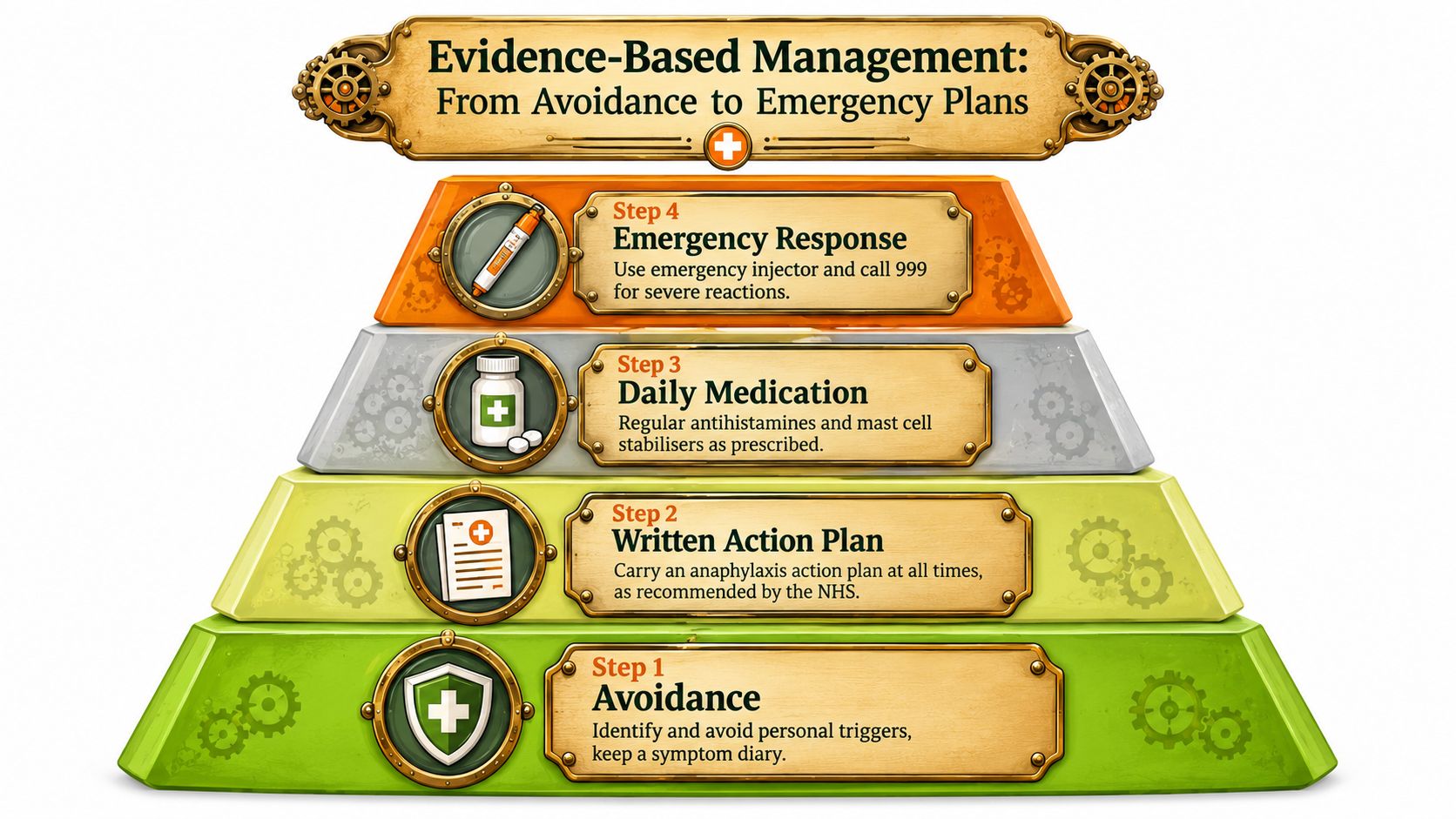
Step 1. Avoidance and a written plan
First, use your diary to avoid proven personal triggers where practical. Next, agree a written action plan that states your usual medicines, your red flags and who to call. Share it with family, close colleagues or a training partner who might need to help.
Step 2. Daily antihistamines
Clinicians often use H1 antihistamines for itch, flushing and hives, and H2 antihistamines where gut symptoms feature. Some NHS pathways use a trial of dual antihistamines followed by review to judge change. Don't judge benefit after one dose during a mild day. Your team needs to see whether episodes become less frequent or less severe.
Pharmacist's tip: Take daily antihistamines regularly if your prescriber advises that, rather than only on bad days. Note sleepiness, dry mouth or interactions, and report them instead of stopping without warning.
Step 3. Stabilisers and add on treatment
If symptoms continue, specialists may add a mast cell stabiliser such as sodium cromoglicate, which can help gut symptoms such as diarrhoea and abdominal pain. They may also consider leukotriene modifiers where breathing symptoms persist, or specialist led options in selected cases. If you're exploring related discussions, this page on LDN and MCAS explains one option people often ask about, but you should only use it if a prescriber deems it appropriate.
Pharmacist's tip: Be wary of strict online MCAS diets. Cutting many foods without dietitian input can leave you undernourished and still symptomatic. Change one thing at a time, and track the result.
Step 4. Emergency treatment
If you're at risk of anaphylaxis, UK guidance recommends carrying two adrenaline auto injectors, using the first immediately at the first signs of a severe reaction, calling for emergency help, and using a second 5 to 15 minutes later if there's no improvement, as set out in NHS information on adrenaline auto injectors and mast cell treatment.
Pharmacist's tip: Adrenaline doesn't replace emergency care. Use it early, call 999, and stay for observation even if you feel better.
When to See a Specialist and How UK Pharmacies Can Help
Ask your GP about referral to NHS allergy or clinical immunology if you have repeated severe episodes across two or more systems, any episode with breathing trouble or fainting, or reactions you can't explain. A dermatologist may help where skin disease dominates, but allergy and immunology usually lead MCAS assessment.
Access isn't always smooth. In the UK survey already mentioned, many respondents reported recent diagnosis and some lacked regular specialist access. That doesn't mean you should self diagnose. It means your referral letter needs strong detail.
What to take to your first appointment
- Episode diary: Dates, times, triggers, symptoms by system and recovery time.
- Medicine list: Include over the counter products, supplements and past reactions to fillers, dyes or lactose.
- Test results: Bring any tryptase results with the time of the sample, not just the number.
- Emergency plan: Note any adrenaline use, A&E visits and what treatment helped.
If you need background on severe reactions, information on anaphylaxis can help you prepare questions.
Pharmacies can support the practical side. A pharmacist can check interactions, explain how to use auto injectors, and flag excipients, which are the inactive ingredients in a tablet or liquid that some people react to. As one UK regulated option, Courier Pharmacy offers pharmacist support and, where a prescriber judges it suitable, personalised compounded formulations for people who react to standard fillers or formats, plus home blood testing options.
Pharmacist's tip: Use online pharmacy support for ongoing prescribed treatment and formulation problems. Choose face to face NHS care urgently for new severe, unexplained or worsening reactions.
Key Takeaways and Common MCAS Questions
MCAS means mast cells release mediators too easily, causing severe repeated episodes in at least two body systems. UK clinicians need that pattern, objective mediator evidence and a documented treatment response together. Tryptase helps only when teams time it during an episode and compare it with your baseline. Daily treatment usually starts with antihistamines, then adds stabilisers or other specialist options if needed. Trigger planning helps, but it doesn't replace prescribed treatment. Breathing trouble, throat tightness or fainting needs adrenaline if prescribed and a 999 call.
Common questions
Can a normal tryptase rule out MCAS? No. A normal result when you're well, or a sample taken too late, can miss a rise. Clinicians need paired acute and baseline samples, plus your episode history.
Will a low histamine diet cure MCAS? No diet cures MCAS. Some people notice fewer symptoms when they avoid personal food triggers, but broad restriction can harm nutrition. Work with a dietitian if food seems central.
How quickly should dual antihistamines help? Your team will usually review change over a trial period rather than after a single dose. Track episode frequency and severity, then share that record at review.
When should I use my adrenaline auto injector? Use it immediately for signs of a severe reaction, such as breathing difficulty, throat tightness or feeling faint, then call 999. Don't wait to see if an antihistamine will work first.
If you're unsure how MCAS differs from a related condition, differentiating MCAS from mastocytosis based on signs and symptoms gives a useful comparison. This article is for information only and isn't a substitute for medical advice.
If standard tablets, fillers or dyes keep causing problems, or you need pharmacist support with prescribed MCAS treatment and home testing options, visit Courier Pharmacy to explore regulated online consultations and personalised compounded formulations where a prescriber judges them suitable.


