Mast Cell Activation Syndrome Treatment: A Practical Guide
Evidence-based mast cell activation syndrome treatment options explained for UK patients, from antihistamines and cromolyn to biologics and emergency plans.

You've reacted to a meal, a new washing powder or a busy day, and now you're trying to work out whether the pattern means MCAS. Mast cell activation syndrome treatment usually aims to control symptoms and reduce reactions, not provide a permanent cure. UK care often uses trigger planning, carefully chosen medicines and gradual reviews. This guide explains the practical treatment ladder, what each medicine does, how diet fits in, when emergency help matters and when to ask for specialist support.
Five key takeaways
- Treatment is usually personalised, with one change made at a time.
- H1 antihistamines often form the starting point, with other medicines added if symptoms continue.
- A low-histamine diet isn't a universal cure and works best as a short, supervised trial.
- Severe reactions need an emergency plan, including adrenaline when a prescriber considers it appropriate.
- Specialist referral matters when symptoms stay severe, diagnosis remains uncertain or anaphylaxis occurs.
What MCAS treatment really means in the UK
A patient in Manchester develops facial flushing after a scented candle burns in the living room. Later, stomach cramps and itching follow a stressful journey. Her GP reviews the pattern, current medicines and possible alternatives before deciding whether inappropriate mast-cell activation could explain the episodes.
Mast cells are immune cells that release histamine and other mediators, chemical signals involved in inflammation. In MCAS, they may activate too readily, producing allergy-like symptoms affecting the skin, gut, breathing, circulation or nervous system. A trigger does not have to be a classic allergen.
Diagnosis can take time because symptoms overlap with idiopathic urticaria, in which hives have no clear cause, hereditary alpha-tryptasaemia and other allergic, inflammatory or gastrointestinal conditions. A symptom pattern alone cannot confirm MCAS. Your clinician may need to combine the history, examination, investigations and response to carefully monitored treatment.
Practical rule: Treat the person in front of you, not just the label on the referral letter.
Why UK treatment focuses on control
NHS information describes MCAS management as symptom control rather than cure. Plans may combine trigger avoidance with H1 antihistamines, H2 blockers, mast-cell stabilisers and leukotriene antagonists 1. No licensed treatment reverses the underlying mast-cell dysregulation.
In practice, treatment is a monitored series of trials. A prescriber may introduce one layer, review symptoms and side effects, then adjust, continue or stop it. Keeping a brief record of food, medicines, exposures, symptoms and timing can make that review more useful.
Care may begin in UK primary care. Referral to allergy, clinical immunology or dermatology depends on the clinical findings, diagnostic uncertainty and level of concern. Emergency symptoms still require urgent medical help, rather than waiting for a routine medication review.
This plain-language overview of MCAS may help you prepare questions. Tell your GP or pharmacist about medicines for asthma, allergies, reflux or pain, since the full list affects safe choices.
The stepwise medication ladder
Mast cell activation syndrome treatment usually progresses in stages. A prescriber may begin with one H1 antihistamine, review the response, then add another layer if symptoms continue to disrupt daily life. Each medicine should have a clear purpose and a planned review. A trial commonly lasts 2–4 weeks, with a low starting dose and gradual increases when tolerated, rather than several changes at once.
Start with histamine blockade
H1 antihistamines include cetirizine, loratadine and fexofenadine. They can reduce itching, flushing, hives and other symptoms linked to histamine. If digestive symptoms remain troublesome, a clinician may discuss an H2 blocker such as famotidine.
This combination is called dual antihistamine treatment, meaning one H1 medicine and one H2 medicine. A St Helens NHS leaflet describes a time-limited trial followed by review 2. The exact choice and dose still need to fit your medical history, other medicines and response.
Add medicines for specific symptoms
If the first layer is not enough, the next option depends on which symptoms remain.
- Sodium cromoglicate may be considered when gastrointestinal symptoms are prominent.
- Montelukast may enter the discussion if leukotrienes appear relevant to respiratory or other symptoms.
- Ketotifen may be used by a prescriber as a mast-cell-stabilising option.
- Short steroid courses can sometimes be used for significant flares, but they are not a routine self-management approach.
- Specialist medicines, including immune-modifying treatment, require specialist oversight because monitoring and risks vary.
Where possible, introduce one medicine at a time. Record its dose, intended benefit, symptom changes and unwanted effects. A discussion of low-dose naltrexone and MCAS can help you prepare questions for a prescriber, but it does not replace an individual consultation.
Why slow changes help
Starting several medicines together makes it difficult to identify what helped, caused a side effect or made no difference. Gradual adjustments give your GP and pharmacist a clearer view of tolerance and allow the plan to be refined.
Pharmacist's tip: Ask for the purpose of every medicine in writing, such as “for flushing” or “for bowel symptoms”. That simple record makes later reviews more useful.
Finding and avoiding your personal triggers
Trigger management fills the gaps that medicines cannot. A reaction might follow alcohol, a temperature change, exercise, emotional stress or a fragranced household product. Someone else may react to an insect sting, a medicine or a particular food, so your trigger list needs to be personal rather than borrowed from another patient.
Potential triggers include red wine, beer, aged cheeses and fermented foods. Some people report reactions to medicines such as vancomycin, fluoroquinolones, codeine or morphine. These examples do not mean you will react to them. Treat them as topics to discuss with your prescriber, especially before avoiding or stopping a prescribed medicine.
Use a diary, not memory
Symptoms can follow a combination of factors. For example, a shift worker might sleep badly, miss lunch, exercise in a warm gym and then flush after eating. A diary records the pattern more reliably than memory and helps your prescriber test one explanation at a time.
Record:
- Food and drink, including alcohol and portion size.
- Medicines, supplements and when you took them.
- Environment, such as heat, cold, fragrances or cleaning products.
- Activity, including exercise and stressful events.
- Hormonal timing, including menstrual-cycle changes.
- Symptoms, their start time, severity and duration.
If diarrhoea, nausea or abdominal pain dominate, read this guide to MCAS and gastrointestinal symptoms before discussing patterns with your prescriber.
Treat low-histamine diets as experiments
UK patient information says a low-histamine diet may help some people, but there's no official MCAS diet 3. A short elimination phase followed by structured reintroduction can test suspected triggers. It should not become a permanent list of forbidden foods without a clear reason.
Restriction can reduce enjoyment, create food anxiety and cause nutritional gaps. Ask a dietitian for support if you are losing weight, avoiding several food groups or managing another condition such as coeliac disease.
Pharmacist's tip: Change one major food pattern at a time. Otherwise, you may blame the wrong food and make your diet narrower than necessary.
Comparing common MCAS medicines at a glance
A medicine that helps one person may cause problems for another. Fexofenadine may suit someone who feels drowsy with other antihistamines, while cetirizine may suit another person. Your prescriber also needs to consider other medicines, kidney function, pregnancy, age and the symptoms being treated.
The table is a discussion aid, not a self-prescribing plan. It separates commonly considered options from licensed indications, because some MCAS treatments are used outside their licensed indication.
| Medicine class | Examples | Typical UK role in MCAS | Onset of effect | Prescribing route |
|---|---|---|---|---|
| H1 antihistamines | Cetirizine, loratadine, fexofenadine | Itching, flushing and hives | Often assessed during an early treatment trial | GP or specialist |
| H2 blockers | Famotidine | Often considered for gastrointestinal symptoms alongside H1 blockade | Judged during a planned trial | GP or specialist, depending on context |
| Mast-cell stabilisers | Sodium cromoglicate, ketotifen | Gut symptoms or broader mediator control | May need a sustained trial | GP or specialist |
| Leukotriene receptor antagonists | Montelukast | Respiratory symptoms or airway reactivity | Trial-based | GP or specialist |
| Low-dose naltrexone | Compounded LDN | Off-label option in selected consultations | Individual and trial-based | Prescriber assessment |
| Biologic treatment | Omalizumab | Add-on treatment for difficult cases | Specialist-led review | Specialist initiation |
A UK NHS leaflet gives examples of low-dose regimens, including cetirizine 10 mg, loratadine 10 mg, fexofenadine 180 mg and montelukast 10 mg nightly. It also describes sodium cromoglicate 100 mg four times daily, increasing to 200 mg four times daily. These figures are examples for discussion, not instructions. Use only the dose your clinician recommends.
Sodium cromoglicate can take time to assess and may need gradual adjustment. Background information is available for Nalcrom sodium cromoglicate capsules, but suitability, supply and monitoring should be discussed with your prescriber.
BMJ Best Practice places omalizumab as an add-on option after earlier treatment layers, rather than a first-line choice 4. A single case report describing 150 mg monthly cannot establish a routine pathway, so specialist review is needed before considering it.
Two real UK patient stories
The following are anonymised teaching examples, not published case reports and not a promise of treatment response.
Patient A
A 34-year-old woman has flushing, itching, loose stools and abdominal discomfort. Her GP starts cetirizine and famotidine, then introduces sodium cromoglicate slowly. She records meals, drinks, stress, exercise and symptoms rather than removing half her kitchen overnight.
Her diary points towards alcohol, aged cheeses and emotional stress. Over a planned review period of three months, the layered approach gives her meaningful improvement. She doesn't need biologic treatment, and her clinicians keep reviewing whether each medicine still earns its place.
The lesson is simple. A useful treatment plan often grows from careful observation, not from a single dramatic intervention.
Patient B
A 52-year-old man has repeated episodes of idiopathic anaphylaxis. H1 and H2 blockers, followed by montelukast, don't control the episodes well enough. His GP refers him to a tertiary centre because the severity and recurrence change the risk calculation.
The specialist team discusses omalizumab as an add-on option, including uncertainties, possible benefits and risks. The decision follows shared discussion rather than an automatic move up the ladder.
Good reviews ask three questions: What helped? What caused problems? What should change next?
These examples also show why your review date matters. Treatment may need adjustment after a new diagnosis, a change in work pattern, pregnancy, another medicine or a change in reaction severity.
Emergency plans and how online pharmacies help
A 34-year-old with MCAS may never need an adrenaline auto-injector, while someone with documented anaphylaxis may need one available at all times. The decision depends on documented anaphylaxis or other high-risk features, rather than the diagnosis alone.
Your written emergency plan should work like a clear instruction card. It should cover:
- Early symptoms, including widespread hives, swelling, breathing difficulty, faintness or symptoms that worsen quickly.
- Immediate actions, such as when to take prescribed antihistamines.
- Adrenaline instructions, naming the device you carry and when to use it.
- Emergency contact, including when to call 999 and what to tell the ambulance team.
- Support for others, so family, colleagues or school staff can follow the plan.
For a severe or rapidly progressing allergic reaction, a UK primary-care guide recommends immediate intramuscular epinephrine at 0.01 mg/kg up to 0.5 mg 6. Follow your own plan and device instructions. If you suspect anaphylaxis, use prescribed adrenaline without delay and call 999.
Online pharmacies can help with repeat prescriptions and delivery of regular medicines. They cannot provide emergency treatment or replace specialist assessment. A service such as Courier Pharmacy's online pharmacy service may offer remote prescription reviews when a suitable prescriber has assessed you and has your treatment information.
Pharmacist's tip: Save an up-to-date medicines list on your phone and share it with your household. Include allergies, previous reactions and emergency instructions.
Check that an online pharmacy operates lawfully and provides access to a responsible pharmacist. Adrenaline auto-injectors still require an NHS or private prescription. Check supplies before they run out.
Knowing when to ask for specialist help
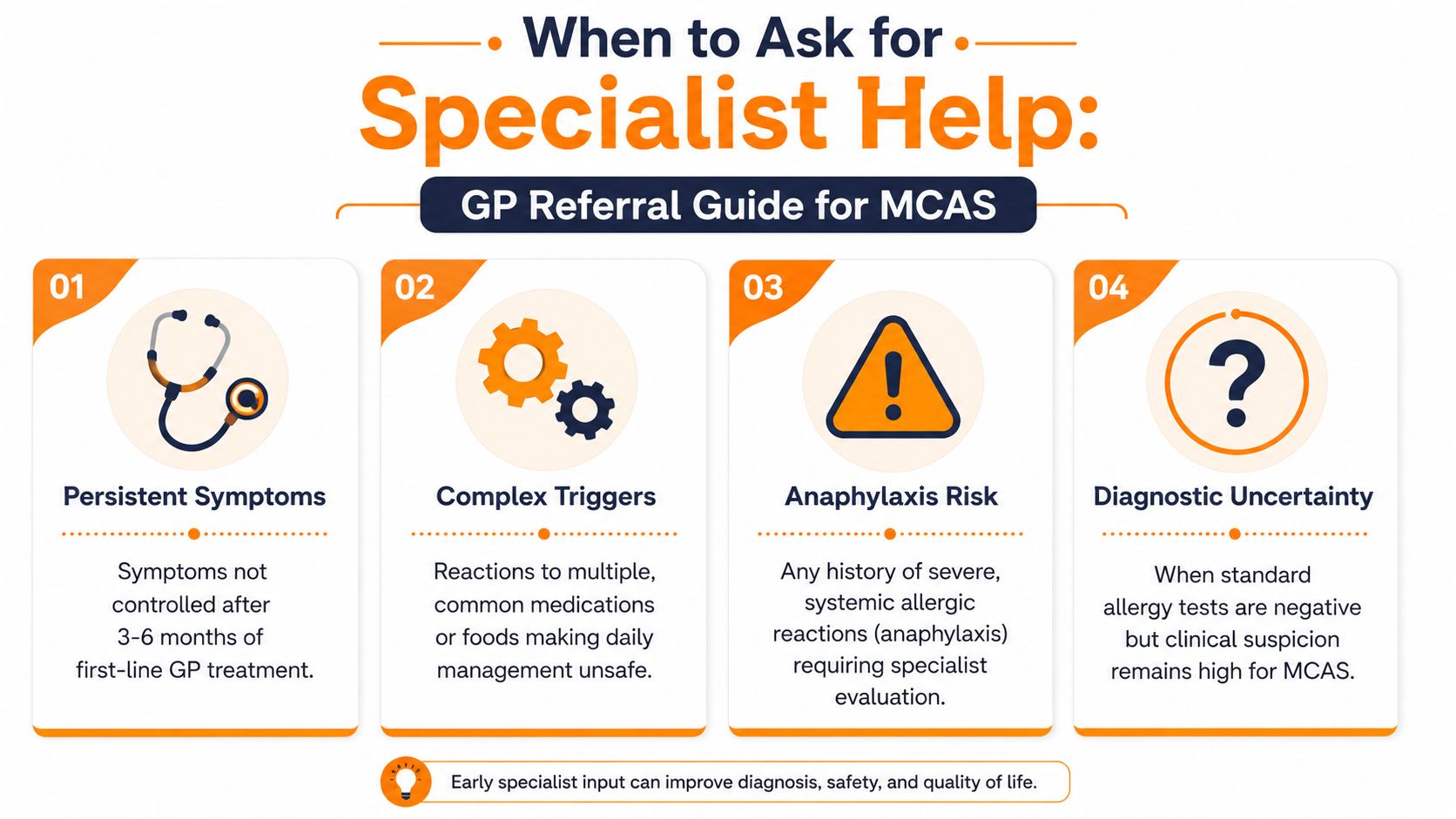
A GP-led plan may be reasonable for mild or stable symptoms. Ask your GP about referral to allergy, clinical immunology or dermatology if symptoms stay difficult to control, the diagnosis remains uncertain, or reactions raise safety concerns.
Specialist advice is particularly appropriate for:
- Persistent anaphylaxis or severe systemic reactions.
- Poor control despite reviewed H1 and H2 treatment, with other suitable treatment layers considered.
- Repeated emergency department attendances.
- Suspected coexisting conditions, such as hereditary angioedema.
- Unclear test results, especially where symptoms do not match routine allergy testing.
- Reactions to several medicines, which can make future prescribing more difficult.
A specialist can review serum tryptase results, when samples were taken and alternative diagnoses. They may arrange supervised investigations or consider specialist medicines such as omalizumab. In the stepwise approach described by BMJ Best Practice, omalizumab is considered later, after antihistamine and mediator-directed options have been assessed 4.
NHS referral routes differ across the UK. A private immunology clinic may suit some patients, but check what the fee covers, including assessment, testing and follow-up. Waiting times vary, so bring a symptom diary and current medicines list to each appointment.
Arrange medication reviews at least every six months, or sooner if symptoms change. Keep rescue medicines in date, explain the plan to family members and ask whether it still matches your current risk.
FAQs on mast cell activation syndrome treatment
How long does cromoglicate take to work?
Sodium cromoglicate is usually assessed through a gradual, individualised trial over several weeks, rather than expected to work immediately. Do not increase, reduce or stop it without advice from your prescriber.
Is fexofenadine better than cetirizine?
Neither medicine is automatically better. Fexofenadine may cause less drowsiness for some people, but responses vary. Ask a prescriber or pharmacist before changing the medicine or dose.
Can a low-histamine diet cure MCAS?
No. Some people may benefit, but there is no official MCAS diet. If you try removing foods, keep the trial brief and reintroduce foods with professional support, so unnecessary restriction does not become the main treatment.
How can I access omalizumab on the NHS?
A specialist may consider omalizumab when symptoms remain difficult despite earlier treatment layers. It is generally an add-on option rather than a first treatment, and access depends on specialist assessment and local NHS arrangements.
What should I do during a flare?
Follow your written plan and use prescribed emergency medicine as instructed. Call 999 for suspected anaphylaxis, breathing difficulty, faintness or symptoms that are worsening rapidly.
Do children follow the same treatment ladder?
Children may use similar medicine classes, but doses, formulations and safety checks differ. A paediatrician or relevant specialist should design the regimen. Never adapt an adult plan for a child.
Should I try several medicines together?
Introducing one change at a time usually makes benefits and side effects easier to judge. Your prescriber may use another approach if symptoms or risk require it. Record what changes, when it changes and what happens, then review the pattern with your clinical team.
If you are managing MCAS, Courier Pharmacy offers online prescription consultations and support for selected medicines. Qualified prescribers make treatment decisions. Visit Courier Pharmacy to check whether the service suits your prescription and review needs.
Summary
MCAS has no licensed cure, so UK treatment focuses on control and prevention.
Most plans start with trigger review and H1 antihistamines.
H2 blockers, cromoglicate, montelukast and other options may follow.
A low-histamine diet should be a short, supervised experiment.
Severe reactions need a written emergency plan and urgent help.
Ask for specialist input when symptoms remain unsafe or unclear.
Medical disclaimer: This article is for information only. It isn't a substitute for diagnosis, prescribing advice or emergency care.
Suggested visual ideas
- Layered treatment ladder: A painterly steampunk staircase showing trigger planning, H1 treatment, H2 treatment and specialist options. Use bright lime green, pale yellow-green, light grey and ornate brass plaque labels. Alt text: “Layered UK treatment ladder for mast cell activation syndrome.”
- Symptom diary graphic: A light grey notebook with brass mechanical details, showing food, medicines, environment and symptoms. Alt text: “MCAS symptom diary tracking food, medicines, environment and reactions.”
- Emergency action card: A pale yellow-green emergency card beside an adrenaline auto-injector, with lime green highlights and brass edging. Alt text: “Written emergency plan for anaphylaxis risk in MCAS.”
- Medicine comparison illustration: Brass pharmacy drawers labelled H1, H2, cromoglicate and montelukast against a light grey background. Alt text: “Common medicine classes used in UK mast cell activation syndrome treatment.”
Internal links to consider
- What is mast cell activation syndrome?
- Low-dose naltrexone and MCAS
- MCAS and gastrointestinal symptoms
- Nalcrom sodium cromoglicate capsules
- Online pharmacy services in the UK
SEO brief
- Primary keyword: Mast cell activation syndrome treatment
- Secondary keywords: MCAS treatment UK, MCAS medicines, low-histamine diet, cromoglicate for MCAS, omalizumab for MCAS
- Search intent: Informational and practical treatment guidance
- Target reader: UK adults, carers and health-curious readers
- Product or service mention: Online prescription and pharmacist support
- Internal links available: Courier Pharmacy MCAS and online pharmacy pages
About this content
This article was created from the cited NHS, NHS-affiliated and BMJ clinical materials, with attention to UK prescribing pathways and safety information. It should undergo clinical review by a suitably qualified UK pharmacist, allergist or clinical immunologist before publication.
Byline: Medical Mojo editorial team, patient education writers
Clinical review: Review by a UK-registered pharmacist or allergy specialist required before publication
References
[1] University Hospitals Plymouth NHS Trust (undated) Mast Cell Activation Syndrome information leaflet. Available at: University Hospitals Plymouth NHS Trust MCAS leaflet
[2] Mersey Care NHS Foundation Trust (undated) Long COVID and mast cell activation syndrome, St Helens. Available at: Mersey Care NHS MCAS patient leaflet
[3] PoTS UK (undated) Mast cell activation syndrome. Available at: PoTS UK information on MCAS
[4] BMJ Best Practice (undated) Mast cell activation syndrome. Available at: BMJ Best Practice MCAS guidance
[5] Khan, S. (2017) ‘Use of omalizumab for idiopathic mast cell activation syndrome', Journal of Medical Case Reports. Available at: Peer-reviewed MCAS and omalizumab case report
[6] Mast Cell Action (2026) Primary care guide. Available at: UK primary care MCAS guide
Meta description: Mast cell activation syndrome treatment in the UK, including medicines, trigger planning, diet, emergency care and when to seek specialist help.


