Medication for Restless Legs UK: A Complete Guide
Struggling with Restless Legs Syndrome? Discover the most effective medication for restless legs UK, from NHS options to private online prescriptions.

In this article
- Five Key Takeaways for RLS Treatment
- Navigating Your RLS Treatment Journey
- From Symptoms to a Clear Diagnosis
- The Four Pillars of an RLS Diagnosis
- The Role of Dopamine and Iron
- Your First-Line Medication for Restless Legs UK
- Understanding Dopamine Agonists
- Comparing First-Line RLS Medications in the UK
- The Golden Rule: Start Low, Go Slow
- What Happens When the First RLS Treatment Doesn’t Work?
- A New Approach: Alpha-2-Delta Ligands
- Checking Your Iron: A Critical Step
- Last-Resort Options: Opioids
- How to Access RLS Medication in the UK
- The Traditional NHS Pathway
- Private Online Clinics: A Streamlined Alternative
- Lifestyle Strategies to Support Your Medication
- Building a Supportive Daily Routine
- Immediate Relief Techniques
- Summary: Your Next Steps Towards Quieter Nights
- Frequently Asked Questions
- Can I Buy Medication for Restless Legs Over the Counter in the UK?
- How Long Does It Take for RLS Medication to Work?
- What Should I Do If My RLS Medication Stops Working?
- Are There Any Natural Alternatives to RLS Medication?
Finding the right medication for restless legs in the UK is a realistic goal. Options like Ropinirole and Pramipexole are commonly prescribed and can make a huge difference to your symptoms. For most people, treatment starts with a chat and diagnosis from their GP, with the aim of restoring the brain's dopamine balance to quieten down that maddening urge to move your legs, especially at night.
Five Key Takeaways for RLS Treatment
Before we dive in, here are five essential points to keep in mind:
- Diagnosis is Key: A proper diagnosis from a GP is the first step. They will check your symptoms and rule out other conditions.
- Dopamine Agonists are a Common Start: Medications like Ropinirole are often the first choice. They work by balancing dopamine, a brain chemical that controls movement.
- Start Low, Go Slow: A pharmacist's advice is to always begin with the lowest effective dose. This minimises side effects and reduces the risk of symptoms worsening over time (a condition known as augmentation).
- Check Your Iron Levels: Low iron (ferritin) can cause RLS. A simple blood test can check this, and iron supplements can sometimes resolve the issue entirely.
- Treatment is Accessible: You can get treatment through the NHS or via private online pharmacies, offering a convenient and fast alternative.
Navigating Your RLS Treatment Journey
That uncontrollable urge to move your legs, particularly when you’re trying to wind down in the evening, is the classic calling card of Restless Legs Syndrome (RLS). While making positive lifestyle changes is always a good first step, sometimes it’s just not enough. Prescription medication is often what’s needed to provide real relief and finally reclaim a peaceful night's sleep.
This guide will walk you through the treatment options available in the UK, from getting a proper diagnosis to finding the right medication. We’ll break down how different treatments work, what you can expect from them, and how you can get started on the path to quieter legs and much better sleep.
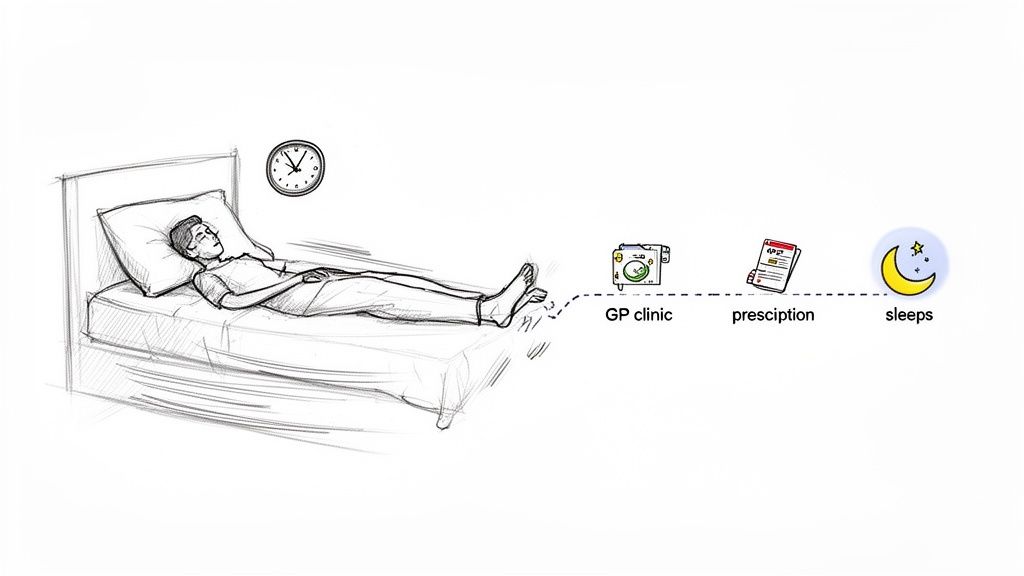
From Symptoms to a Clear Diagnosis
Before you can explore the right medication for restless legs in the UK, the first and most crucial step is getting a proper diagnosis. This isn't about complicated machines or scans. It all starts with a detailed conversation with your GP, where you describe what you've been experiencing. It's about finally putting a name to the nightly struggle, moving you from a place of frustration toward a clear plan for relief.
Your doctor will be listening for four key things, which are recognised internationally as the hallmarks of RLS. You can think of them as the four pillars of a diagnosis, confirming that what you’re feeling fits the official medical picture.
The Four Pillars of an RLS Diagnosis
To get a confirmed RLS diagnosis, your symptoms really need to tick these four boxes:
- An Urge to Move the Legs: This is the absolute core of the condition. It’s almost always paired with uncomfortable or downright unpleasant sensations deep in your legs. People often describe it as a "creepy-crawly," "pulling," or "throbbing" feeling that won't go away.
- Symptoms Worsen During Rest: That urge to move gets much more intense when you’re sitting or lying down. This is precisely why evenings can be so tough, whether you're just trying to watch a film on the sofa or get to sleep.
- Relief with Movement: Getting up and having a walk around, stretching, or even just rubbing your legs brings temporary relief. But the moment you stop, the sensations usually creep back in.
- Evening or Night-time Pattern: The symptoms are almost always worse in the evening and at night. In the morning, you might feel perfectly fine. This distinct daily rhythm is a classic sign of RLS.
Historically, the condition was often missed in UK primary care. One major database review from the late 1990s was quite telling. It showed that only 0.25% of over 1.5 million patients had a registered RLS diagnosis. This was a massive gap, considering experts estimate it affects 5-10% of the population. It really highlighted how little awareness there was among doctors at the time. You can learn more about these historical findings on RLS diagnosis rates.
The Role of Dopamine and Iron
So, what’s going on in the body to cause all this? It mainly boils down to two key players in your body's chemistry: dopamine and iron.
Dopamine is a chemical messenger in the brain that helps control muscle movement. With RLS, the theory is that the dopamine pathways aren't firing correctly, which leads to those maddening, involuntary urges to move.
Iron is absolutely vital because it helps your body produce dopamine. If your iron levels are low—specifically a protein called ferritin, which stores your iron—your brain can struggle to make enough dopamine to keep things running smoothly.
Pharmacist's Tip: "Your GP will almost certainly want to check your blood iron and ferritin levels. It's a simple but vital test. For some people, just correcting a confirmed iron deficiency with supplements is enough to resolve RLS symptoms completely, without needing any other medication. For example, I had a patient, a woman in her 40s, whose RLS was so severe she could barely sit through a film. A blood test revealed very low ferritin. After a few months of prescribed iron tablets, her RLS symptoms vanished. It's a perfect example of why we always check iron first."
This is why a blood test is such a standard and important part of the diagnostic process. It's straightforward and can reveal a clear, treatable cause. You can even explore options for convenient at-home blood test kits to check your levels. By understanding how these pieces fit together, you can have a much more informed chat with your doctor and get closer to finding the relief you need.
Your First-Line Medication for Restless Legs UK
Once your GP has confirmed a diagnosis, the conversation will turn to treatment. The main goal of any medication for restless legs in the UK is to get the brain's chemistry back in balance, zeroing in on a system that’s gone a bit haywire: the dopamine system. This is where a family of drugs known as dopamine agonists makes a real difference.
Imagine the dopamine receptors in your brain are like thousands of tiny locks. To keep your limbs calm and control movement, these locks need the right key, which is dopamine. With RLS, it’s like there aren't enough of these keys, or they aren't working properly. Dopamine agonists, such as ropinirole and pramipexole, act like a master key. They fit into the dopamine locks and essentially trick the brain into thinking it has all the dopamine it needs, calming down those disruptive signals that create the overwhelming urge to move.
This straightforward decision tree highlights the key questions a GP asks to get to the bottom of an RLS diagnosis.
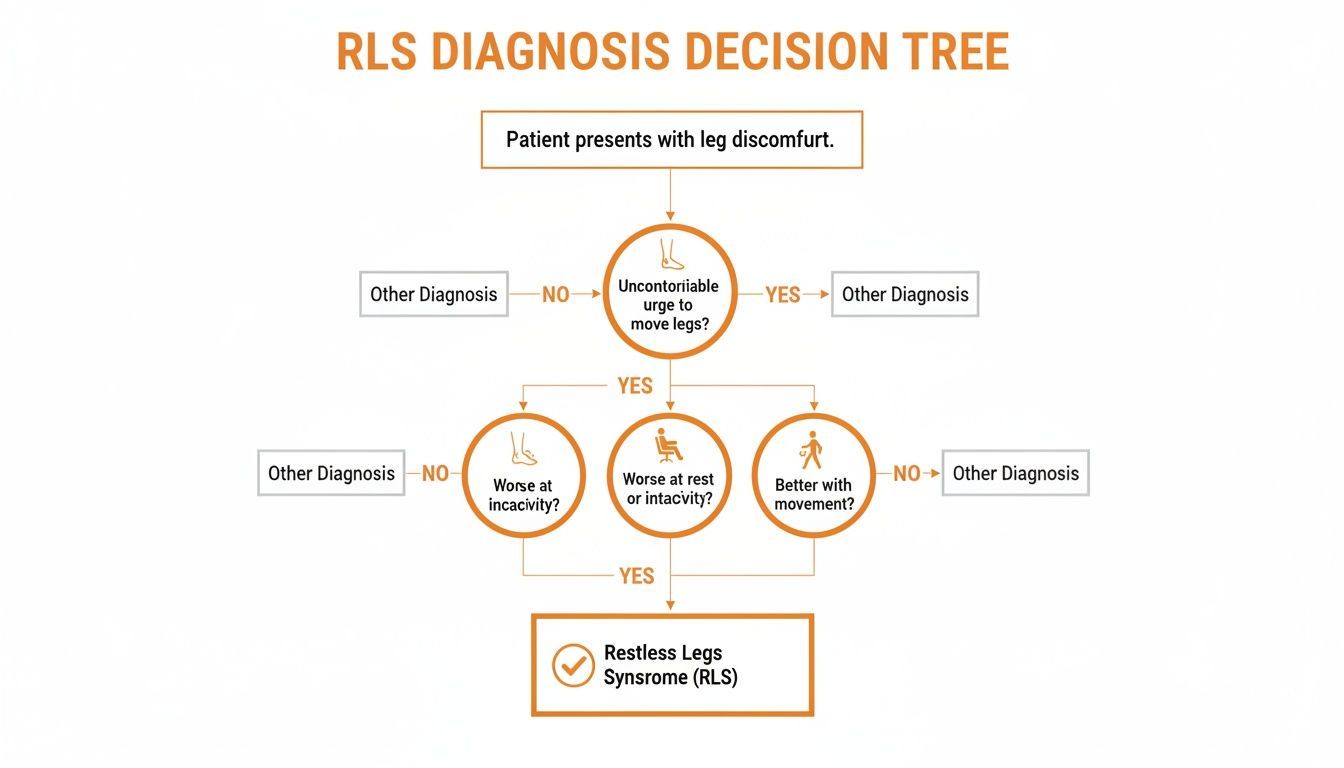
This process ensures the symptoms tick all the boxes for classic RLS, which helps guide the decision on which medication is most likely to help.
Understanding Dopamine Agonists
Ropinirole and pramipexole are the go-to first-line treatments for moderate to severe RLS here in the UK. They work well for many people and tend to act quickly, sometimes bringing relief from the very first dose. You’ll usually be advised to take your tablet one to three hours before bedtime or whenever your symptoms typically flare up.
Getting the right prescription is so important. Looking back, a large UK database study (1994-1998) revealed that many people diagnosed with RLS were given completely ineffective treatments, like drugs for varicose veins or quinine for cramps. These medications do absolutely nothing for the underlying dopamine problem. Thankfully, today’s NHS and NICE guidelines are much clearer, pointing to dopamine agonists as the correct place to start. You can read more about these historical prescribing trends.
To give you a clearer picture, here's a quick comparison of the two most common first-line options.
Comparing First-Line RLS Medications in the UK
| Medication | How It Works | Typical UK Starting Dose | Key Considerations |
|---|---|---|---|
| Ropinirole | A dopamine agonist that directly stimulates dopamine receptors in the brain, mimicking the effect of natural dopamine. | 0.25mg, taken 1-3 hours before symptoms usually start. | Effective for many, but carries a risk of augmentation and side effects like nausea or sleepiness. |
| Pramipexole | Also a dopamine agonist, it binds to dopamine receptors to reduce the urge to move the legs. | 88 micrograms (0.088mg), taken 2-3 hours before bedtime. | Similar effectiveness to ropinirole, with a comparable risk profile for augmentation and side effects. |
Both medications work on the same principle, and the choice often comes down to individual patient response and prescriber preference. The key is how they are managed over time.
The Golden Rule: Start Low, Go Slow
There’s a critical concept with these medications that you absolutely must know about: augmentation. This is a serious potential side effect where, over the long term, the medication paradoxically starts to make your RLS symptoms worse.
Pharmacist's Tip: "Augmentation is the biggest long-term risk we watch for with dopamine agonists. Your symptoms might start appearing earlier in the day, feel more intense, or even spread to your arms. This is precisely why we always, without exception, start patients on the lowest possible effective dose and only increase it if it's truly necessary."
Starting with a tiny dose helps minimise the risk of augmentation and also reduces the chances of other side effects like nausea or dizziness when you first begin treatment.
Here’s what you need to know about this careful approach:
- Low Starting Dose: Your doctor will prescribe a very small dose to begin with, like 0.25mg of ropinirole. This gives your body time to adjust.
- Gradual Increase: If that initial dose isn't quite cutting it, it will only be increased very slowly over several weeks.
- Regular Reviews: It's vital to have regular check-ins with your GP or specialist to make sure the medication is still working as it should, without any signs of augmentation creeping in.
By following this "start low, go slow" method, you and your doctor can find that sweet spot—achieving significant relief while keeping the long-term risks as low as possible.
What Happens When the First RLS Treatment Doesn’t Work?
While dopamine agonists are a common starting point for treating Restless Legs Syndrome, they're not the perfect long-term fix for everyone. Sometimes side effects, particularly augmentation, can become a real problem. Or, you might find the initial treatment simply doesn't bring the relief you need.
If this happens, it’s not a failure. It’s just a sign that your body needs a different approach. The goal is always the same: to calm those legs and finally get a good night's sleep. The good news is, there are other excellent options to explore.
A New Approach: Alpha-2-Delta Ligands
When augmentation becomes an issue with dopamine agonists, GPs and specialists often pivot to a different class of medication called alpha-2-delta ligands. The two you’ll most likely hear about in the UK are gabapentin and pregabalin.
Think of these drugs as a dimmer switch for your nervous system. Instead of targeting dopamine, they calm down overactive nerve signals in the brain. They work by reducing the release of certain chemical messengers that make your nerves hypersensitive, which helps to quieten those unpleasant sensations and the overwhelming urge to move.
- Gabapentin: This is frequently prescribed 'off-label' for RLS in the UK, but it’s a well-established and effective treatment. Your doctor will usually start you on a low dose and increase it gradually over a few weeks. This helps find the sweet spot where it works best while keeping side effects to a minimum.
- Pregabalin: Working in a similar way to gabapentin, this medication is another strong contender for managing moderate to severe RLS symptoms. It’s a very effective alternative for soothing those overexcited nerves.
RLS is more common than many people think. In Western Europe, studies estimate it affects between 1.9% and 4.6% of the population, and about 20-30% of those people need medication to manage it. Although dopamine agonists work well for 60-80% of patients at first, the 10-20% risk of augmentation means that alternatives like alpha-2-delta ligands are absolutely essential. You can discover more insights about these RLS statistics.
Checking Your Iron: A Critical Step
One of the most important alternative treatments isn't a prescription drug at all, but a vital mineral: iron. However, and this is crucial, it’s not something you should ever start taking on your own. Iron therapy is only effective if blood tests confirm you have low iron stores.
Your GP can run a blood test to check your serum ferritin level. If it's below 75 mcg/L, medically supervised iron supplementation is often the next step. Since iron is essential for producing dopamine, simply bringing your levels back into a healthy range can sometimes be enough to completely resolve RLS symptoms.
Last-Resort Options: Opioids
For the most severe and stubborn cases of RLS, where nothing else has worked or been tolerated, low-dose opioids may be considered. These are always a last resort because of their potential for dependence and other significant side effects.
This isn’t a standard treatment path. It’s a specialist-led option reserved for those with truly debilitating symptoms after a very thorough evaluation of the risks and benefits. If this route is taken, constant monitoring is absolutely essential. Don’t forget that simple things like improving your sleep hygiene can also make a difference. For anyone whose sleep is disrupted by RLS, you might be interested in learning more about Circadin for sleep regulation.
Pharmacist's Tip: "Your RLS treatment is not a 'set it and forget it' situation. It’s vital to have regular medication reviews with your GP or pharmacist. This allows us to check that your treatment is still working effectively and safely, and to catch any early signs of issues like augmentation before they become a major problem."
How to Access RLS Medication in the UK
Once you have an RLS diagnosis, the next step is getting the treatment you need. In the UK, there are two main pathways for this: the traditional NHS route and modern private services. Understanding the differences can help you choose the best and most convenient option for your circumstances.
The Traditional NHS Pathway
The most common route to treatment starts with your GP. After confirming your diagnosis and discussing your symptoms, your doctor can write you a prescription. You can then take this to any local pharmacy to have it filled under the NHS.
This pathway is reliable and cost-effective. However, it's worth being aware of potential delays. Securing a GP appointment can sometimes take a while, and if you need a referral to a specialist, you might face further waiting periods.
Private Online Clinics: A Streamlined Alternative
For anyone looking for a faster or more direct route, private online clinics offer a modern solution. These services are built for convenience, letting you manage your health from home – which is a huge help when RLS symptoms make travel difficult.
The process is refreshingly straightforward and secure:
- Complete an Online Consultation: You'll fill out a secure and detailed medical questionnaire at a time that works for you. This covers your symptoms, medical history, and any other medications you’re taking.
- Clinician Review: A UK-registered prescriber, like a doctor or pharmacist, carefully reviews your information to make sure the requested treatment is safe and right for you.
- Discreet Home Delivery: If your prescription is approved, the medication is sent directly to your home in discreet packaging.
A key benefit here is speed. You can often complete the consultation and get your treatment approved and on its way much faster than through traditional channels, providing quicker relief from disruptive symptoms.
This option puts you in control of your treatment journey, fitting it around your schedule. For many, being able to avoid travel and in-person appointments makes managing a chronic condition like RLS much simpler. Exploring a trusted online pharmacy in the UK can give you a clearer idea of how these convenient and confidential services work.
Ultimately, the best pathway depends on your personal needs. Whether you stick with the familiar structure of the NHS or opt for the speed of a private online service, the most important thing is taking that first step to get the effective medication for restless legs UK residents need to find relief and reclaim their nights.
Lifestyle Strategies to Support Your Medication
While getting the right medication for restless legs in the UK is a massive step forward, think of lifestyle changes as your secret weapon. These strategies work hand-in-hand with your prescription, boosting its effectiveness and giving you a greater sense of day-to-day control over your symptoms.
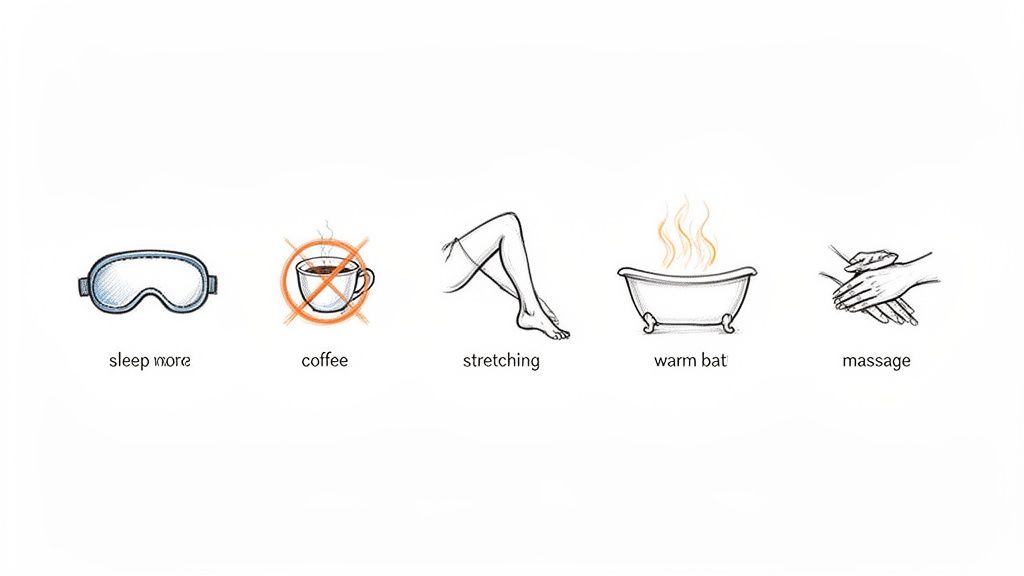
Building a Supportive Daily Routine
A consistent daily routine can work wonders for regulating your body’s internal clock, which often helps to calm down RLS symptoms. You’d be surprised how much of a difference small, consistent actions can make over time.
Try weaving these simple habits into your day:
- Prioritise Sleep Hygiene: Aim to go to bed and wake up around the same time every day—yes, even on weekends! Make sure your bedroom is cool, dark, and quiet to create the best possible environment for a peaceful night.
- Avoid Evening Triggers: Caffeine, alcohol, and nicotine are notorious for stirring up RLS. It’s best to steer clear of them, especially in the four to six hours before you head to bed.
- Gentle Evening Stretching: A few simple calf and hamstring stretches before you get under the covers can help release muscle tension. This can calm your legs before those twitchy feelings even have a chance to start.
Immediate Relief Techniques
When you feel that all-too-familiar urge to move creeping in, having a few go-to remedies ready can bring immediate relief.
Pharmacist's Tip: "I often advise patients to have a 'RLS toolkit' ready for bad nights. A warm bath with Epsom salts, a leg massage with a soothing lotion, or alternating hot and cold packs can work wonders to interrupt the nerve signals and provide comfort. A real-life example is a patient who swore by a heated leg massager she kept by her sofa. Whenever symptoms started during the evening, she would use it for 15 minutes, which was often enough to settle her legs down until it was time for her medication."
These simple, at-home measures are fantastic partners to your prescribed medication. Together, they create a powerful team to help you achieve quieter legs and more restful nights. You can also explore our guides on essential vitamins and minerals that are known to support overall nerve health.
Summary: Your Next Steps Towards Quieter Nights
Restless Legs Syndrome is a recognised medical condition, not just an annoyance. Effective treatments are available in the UK to help you find relief and reclaim your sleep. By understanding your options—from first-line medications like dopamine agonists to vital lifestyle changes—you can take control of your symptoms.
The key takeaways are:
- Get a proper diagnosis from your GP.
- Discuss dopamine agonists like Ropinirole as a first-line treatment.
- Always check your iron levels.
- Support your medication with positive lifestyle changes.
Your journey to calmer legs and better nights can start today. Book an appointment with your GP or explore the convenience of an online pharmacy to begin finding the right solution for you.
Frequently Asked Questions
When you're trying to get a handle on Restless Legs Syndrome, it's natural to have a few questions. Here are some straightforward answers to the queries we hear most often about RLS treatment in the UK.
Can I Buy Medication for Restless Legs Over the Counter in the UK?
No, specific licensed medicines for RLS, like ropinirole or pramipexole, are prescription-only in the UK. This isn't just red tape; it's a safety measure to make sure a doctor properly diagnoses your RLS and can keep an eye on you for potential side effects, especially augmentation.
While you can grab general painkillers or iron supplements off the shelf, they don't tackle the root cause of RLS. It’s always best to chat with a healthcare professional before starting any new supplement or treatment.
How Long Does It Take for RLS Medication to Work?
It really depends on the medication. Dopamine agonists such as ropinirole are known for being fast-acting, and many people start to feel relief within the first couple of nights. You’ll typically take them one to three hours before your symptoms usually kick in.
On the other hand, medicines like gabapentin need a bit more time to build up to their full effect. It can sometimes take up to two weeks as your dose is increased gradually. The key is to follow your prescriber's instructions to the letter.
What Should I Do If My RLS Medication Stops Working?
If your usual dose isn't cutting it anymore, or if you notice symptoms creeping in earlier in the day, you might be experiencing augmentation. The most important thing is not to increase the dose yourself. This can make things worse.
Get in touch with your doctor or prescriber straight away. They’ll work out what’s going on and might suggest lowering your dose, switching to a different type of medication, or even trying a supervised ‘drug holiday’ to help reset your body's response.
Are There Any Natural Alternatives to RLS Medication?
While there's no magic 'natural cure' for RLS, several lifestyle changes can make a huge difference and support your treatment plan. Many people find relief through regular, moderate exercise, leg massages, and warm baths before bed. It's also worth avoiding common triggers like caffeine and alcohol in the evening.
For anyone with confirmed low iron, medically supervised iron supplements are a cornerstone of non-drug treatment. If poor sleep is a major part of the problem for you, it might be helpful to understand more about why melatonin is regulated in the UK.
For a convenient, confidential, and professional way to manage your RLS symptoms, explore the services at Courier Pharmacy. Our UK-registered prescribers can help you find a suitable treatment plan with discreet delivery right to your door. Begin your journey to better nights by visiting us at https://courierpharmacy.co.uk.


