Metronidazole Tablet 400 Mg UK Guide
A clear UK guide to the metronidazole tablet 400 mg: what it treats, how it works, safety, dosing and how to get a prescription online.

Metronidazole tablet 400 mg is a prescription-only antibiotic available in the UK, designed to tackle specific anaerobic bacteria and certain parasites. It won't touch colds, flu, or infections caused by most oxygen-dependent bacteria, which is why a clinician needs to confirm what's actually causing the problem before reaching for it.
What Metronidazole Tablet 400 Mg Actually Treats
Think of metronidazole as a specialist key rather than a blunt instrument. It zeroes in on organisms that thrive without oxygen, along with some microscopic parasites. In practice, that means it's commonly prescribed for bacterial vaginosis, dental abscesses, pelvic infections, abdominal infections, and trichomoniasis.
Consider a typical scenario: someone working nights notices something unusual and walks into their local pharmacy. The pharmacist can talk through what might be going on and point them towards the right tests or a prescriber appointment. Symptoms alone rarely tell the full story — other infections can look similar but need completely different approaches. For a deeper dive, read our guide to bacterial vaginosis.
Or picture a parent whose child has an early dental abscess spotted before treatment begins. The dentist might send them home with metronidazole to get things under control. That same 400 mg tablet can cover several different conditions, though the dosing schedule and duration shift depending on what's being treated.
Common UK Uses for Metronidazole 400 mg Tablets
The table below gives a snapshot of typical adult indications and the standard 400 mg regimens you'd encounter in NHS primary and community care. Regimens can vary based on clinical guidelines and individual circumstances.
| Condition | Typical Adult Regimen | Course Length |
|---|---|---|
| Bacterial vaginosis | 400 mg twice daily | 5 to 7 days |
| Dental or abdominal infection | 400 mg every 8 hours | About 5 to 7 days |
| Trichomoniasis | Single dose or short course | Depends on the prescription |
| Pelvic infection | 400 mg twice daily, often with other antibiotics | Usually several days |
Bear in mind these are typical examples, not personal instructions. Your prescriber will weigh up your diagnosis, symptoms, medical history, pregnancy status, and any other medicines you're taking before settling on a schedule. Stick to what's printed on the pharmacy label, and never pass leftover antibiotics on to someone else.
Important: Metronidazole will not help viral illnesses such as a cold or flu. Taking antibiotics when you do not need them can cause harm and add to antibiotic resistance.

This information is for education only. It does not replace advice from a registered UK prescriber, pharmacist, dentist, sexual health clinic, or GP.

Metronidazole 400 mg tablets work more like a skeleton key than a blunt instrument. Instead of blasting every microbe in sight, they fit into specific anaerobic bacteria and certain parasites, leaving much of your body's beneficial flora alone.
Once you've taken the tablet, your gut absorbs metronidazole into your bloodstream. From there, it travels to wherever the infection has taken hold. The susceptible organisms draw the drug inside themselves.
That's where the real damage happens. Inside the bug, metronidazole undergoes a chemical change that wrecks its DNA, essentially shredding the instruction manual the organism needs to function and reproduce.
The outcome: the targeted pathogens stop multiplying, which gives your immune system the upper hand in clearing the remaining infection.
As the bug count drops, symptoms tend to ease off gradually. What improves depends entirely on what's being treated, but patients often notice relief from unusual discharge, abdominal cramping, swelling, pain, or diarrhoea.
But here's the catch: metronidazole isn't a catch-all. It won't touch viruses like colds or flu, and it's useless against aerobic bacteria, the kind that thrive in oxygen-rich environments. Getting the right diagnosis before starting treatment really does matter.
Why Getting the Diagnosis Right First Matters
Popping an antibiotic when you don't need it still exposes you to side effects for no benefit. Worse, every unnecessary dose gives bacteria another opportunity to figure out how to dodge the drug, fuelling the growing problem of antibiotic resistance.
This is why a prescriber will weigh up several factors before signing off on metronidazole:
- Your symptoms and what they find on examination
- Where the infection likely sits and what type it probably is
- Whether you're pregnant or breastfeeding
- Any other medicines you're taking and existing health conditions
- How well your kidneys and liver are functioning
Metronidazole is processed mainly by the liver and cleared by the kidneys. If either organ is underperforming, the drug can build up in your system and raise the odds of unpleasant effects.
Pharmacist's tip: Stick to the dosing instructions on the label. Take each dose with or just after a meal to help settle your stomach. Swallow the tablet whole with a glass of water, and if you miss a dose, just take the next one as scheduled, never a double dose to catch up.
The right metronidazole 400 mg schedule depends on what's being treated, your overall health, and your prescriber's clinical judgement. The examples below explain why a pharmacy might dispense 10, 14, or 15 tablets, but they're not a substitute for personal medical advice.
Common Adult Schedules
For certain dental or abdominal infections, an adult is typically prescribed 400 mg every eight hours over five to seven days. That works out to three tablets a day for five days, which gives you 15 tablets in total, or 6,000 mg across the full course.
For bacterial vaginosis and some pelvic infections, a standard approach is 400 mg twice daily for seven days. Two tablets each day over a week means 14 tablets, totalling 5,600 mg.
Typical UK 400 mg Schedules by Indication
These three examples illustrate how pharmacy supply quantities are calculated from the dose and duration. The table below is illustrative, not prescriptive.
| Indication | Dose Frequency | Total Tablets | Total mg |
|---|---|---|---|
| Dental or abdominal infection | 400 mg every 8 hours for 5 days | 15 tablets | 6,000 mg |
| Bacterial vaginosis or pelvic condition | 400 mg twice daily for 7 days | 14 tablets | 5,600 mg |
| Trichomoniasis | Single dose or short course | Varies | Varies |
In practice, your prescriber may adjust any of these based on your weight, kidney function, or the severity of the infection. Always follow the specific directions on your own prescription label rather than relying on general examples.
Trichomoniasis is a bit different. It might be treated with a single dose or a short course depending on the clinic's protocol. Sexual partners usually need assessment and treatment as well, so follow the plan you're given at the sexual health clinic or by your prescriber.
The number of tablets reflects how often you take them and for how long, not how serious the infection is.
Real-Life Tablet Calculations
Picture this: someone picks up a dental infection after a gym competition. Their dentist prescribes one 400 mg tablet every eight hours for five days. That's three tablets a day, so the pharmacy hands over 15 tablets.
Or think of a parent dealing with bacterial vaginosis. The label says one tablet twice daily for seven days. Simple maths: two tablets multiplied by seven days equals 14 tablets.
You might also see a prescription for 10 tablets, say when the course is two tablets daily for five days. But your actual supply could differ if your prescriber adjusts the dose, extends the course, or switches to a different strength.
At Courier Pharmacy, an online questionnaire gathers the essentials: your symptoms, current medicines, allergies, pregnancy status, and any past issues with similar treatments. A registered prescriber reviews everything before deciding whether it's safe and appropriate to supply. NHS guidance reinforces the same point: stick to the directions on your label, every time.
Pharmacist's tip: Take your tablets with or just after food, swallow them whole with a glass of water, and finish the full course even if you start feeling better. Never double up to make up for a missed dose, and never save leftover antibiotics for a future illness.
Most people get along perfectly fine with metronidazole 400 mg tablets. You might notice a metallic taste in your mouth, some mild nausea, a bit of stomach upset, or your urine turning a darker colour. None of this is usually worth worrying about, and things tend to settle down once you finish the course.
Taking your tablets with food or straight after a meal can help if nausea bothers you. Stay well hydrated and follow the directions on your dispensing label.
- Usually manageable: nausea, metallic taste, mild stomach discomfort and dark urine.
- Contact a clinician promptly: persistent vomiting, severe diarrhoea, tingling or numbness in the hands or feet, dizziness, or confusion.
- Seek emergency help: facial swelling, difficulty breathing, collapse, or a severe blistering rash.
Do not drink alcohol while taking metronidazole, or for at least 48 hours after your final dose.
Metronidazole interferes with how your body breaks down alcohol, which can cause a disulfiram-like reaction. You might experience flushing, a pounding heartbeat, stomach cramps, vomiting, and intense nausea. It is not just drinks you need to watch, either. Some cough mixtures, mouthwash and other everyday products contain alcohol, so check those labels too.
Got a wedding, birthday or work event coming up? Stick with alcohol-free options and keep avoiding alcohol until the full 48-hour window has passed. For more on how alcohol interacts with common medications, read our guide to alcohol and sildenafil.
Know Your Medicine Interactions
Make sure your prescriber knows about every medicine, supplement and herbal product you take, not just the ones on your prescription. Some combinations need extra attention:
- Warfarin, because metronidazole can boost its blood-thinning effect.
- Lithium, because blood levels may climb higher than expected.
- Certain epilepsy medicines, which may alter how well they work or change your side-effect risk.
- Other antibiotics, which can sometimes add heart-rhythm concerns.
Here is a practical example. An older patient on warfarin for atrial fibrillation might need extra INR checks during and after their metronidazole course. Their GP, anticoagulation clinic or prescriber should sort out the monitoring plan. Never adjust your warfarin dose on your own.
The chart below lays out typical tablet quantities and schedules for common UK indications.
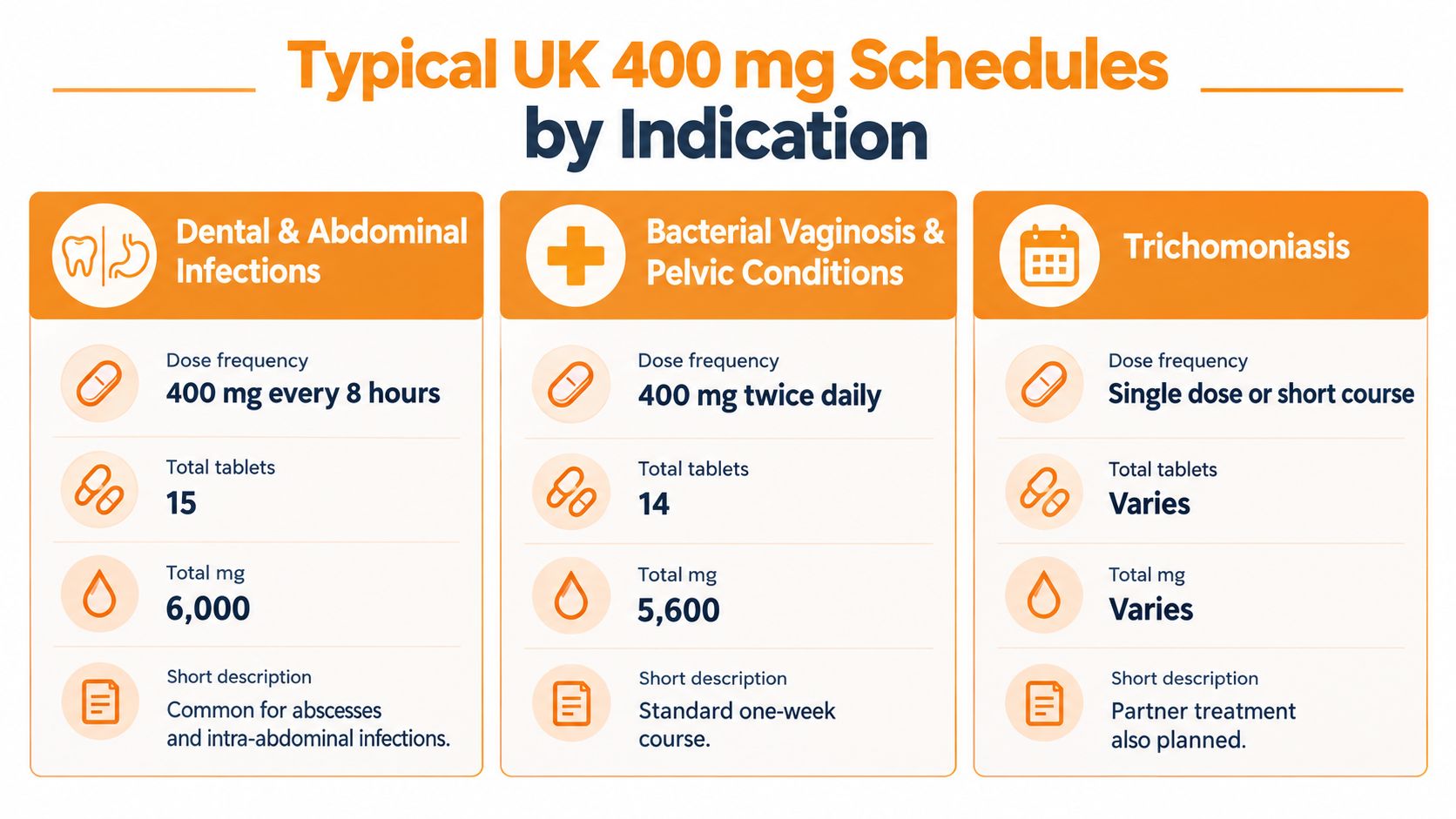
You can see why most courses come as 14 or 15 tablets, while trichomoniasis treatment varies depending on the specific plan your clinician prescribes.
Pharmacist's tip: If you think you are experiencing a side effect, report it through the MHRA Yellow Card scheme. Your pharmacist is also a good first point of contact if you are unsure whether something needs urgent review.
Navigating medication decisions during pregnancy and breastfeeding can feel overwhelming. Metronidazole tablet 400 mg requires an individual prescriber review, particularly in early pregnancy.
Doctors typically steer clear of metronidazole during the first trimester unless there is an urgent infection that needs treating. If you are pregnant, trying to conceive, or breastfeeding, make sure your prescriber knows before taking any dose.
Many new mothers understandably worry that metronidazole might pass into breast milk and affect their baby. Depending on the type of infection, the dose, and how long treatment lasts, a clinician might decide it is a reasonable option, recommend keeping a closer eye on things, or steer you toward an alternative. Do not stop breastfeeding or treatment without professional advice.
Never self-treat an infection during pregnancy or breastfeeding. Ask a registered UK prescriber to weigh up the benefits and risks.
What Longer Courses Involve
Short courses usually need no special tests. However, UK product information advises clinical and laboratory review for courses lasting longer than 10 days, or repeated treatment.
This is because longer exposure carries a small risk of nerve or brain effects. Warning symptoms include:
- Tingling or numbness in your hands or feet
- Loss of coordination or unsteady walking
- Dizziness, confusion or marked weakness
- Very rarely, a seizure
Monitoring may include a symptom check, medicine review, and blood tests where clinically suitable. These might assess blood counts, liver function or other concerns linked to your health and treatment. A registered prescriber can arrange appropriate follow-up and refer you for face-to-face assessment if needed.
For example, someone dealing with repeated abdominal infections may need several treatment courses. Their prescriber can review whether metronidazole remains suitable, rather than simply repeating an old prescription.
Breastfeeding parents may also appreciate information about breastfeeding supplements and support, but supplements do not replace clinical advice about antibiotics.
Pharmacist's tip: Keep a simple diary during longer treatment. Record each dose, new symptoms, and any changes in balance, sensation or mood. Contact your prescriber promptly if these symptoms appear, rather than waiting until the course ends.
If a clinician thinks metronidazole tablet 400 mg might suit your symptoms, a registered online pharmacy can offer a safe route to assessment. But let's be clear: this isn't a quick sales channel for antibiotics. It's a proper clinical pathway with prescriber review and pharmacist oversight at every step.
You'll typically start with a secure, GDPR-compliant questionnaire. It covers your symptoms, allergies, whether you're pregnant or breastfeeding, any existing health conditions, current medicines, and previous antibiotic reactions.
A registered prescriber then reviews everything you've submitted. They might approve treatment, ask for more information, arrange a follow-up call, or point you towards your GP, a sexual health clinic, a dentist, or a face-to-face examination instead.
Take a remote-working patient, for instance, who can't easily get to a daytime GP appointment. An online review fits around their schedule while still making sure symptoms get properly checked, whether that means testing or an in-person look.
Convenience should never replace diagnosis. Symptoms that are severe, unusual, recurrent, or linked to a possible sexually transmitted infection may need examination or laboratory testing.
Where treatment is appropriate, licensed medicines should come from MHRA-registered wholesalers. Courier Pharmacy sends orders in discreet, Signed For packaging with full tracking. After antibiotic treatment, the team may offer a follow-up call to check how you're getting on and talk through any concerns.
The service can also refer you for face-to-face care when symptoms suggest something more serious than a straightforward infection, such as severe pain, fever, pregnancy-related concerns, or symptoms that aren't improving.
You can learn more about using a UK online pharmacy before starting an assessment.
Prepare Before Your Review
Have these details ready:
- Your symptoms, when they started, and whether they're getting worse
- Your full medicine list, including vitamins and herbal products
- Any allergies or previous antibiotic reactions
- Pregnancy, breastfeeding, or contraception details
- Your preferred GP or clinic contact, if a referral becomes necessary
Pharmacist's tip: Keep your medicine packets nearby while filling out the questionnaire. Accurate names and doses help the prescriber review your request more quickly and safely.
Store your metronidazole 400 mg tablets at room temperature, somewhere dry and away from direct heat. The original packaging is designed to protect them, so keep them in there until you need them. And as with any medication, make sure they're well out of reach of children.
When your course is finished, don't just toss leftover tablets in the rubbish or flush them down the toilet. That's bad for the environment and potentially dangerous. Instead, return any unused tablets to your local community pharmacy — they'll dispose of them safely.
If your clinician has suggested keeping an eye on your liver while you're on this medication, you can also learn more about home liver function blood testing.
When to Seek Urgent Medical Help
Some side effects need immediate attention. Contact NHS 111, your GP, or A&E if you experience any of the following:
- Severe or bloody diarrhoea
- Sudden numbness or tingling, especially in the hands or feet
- Confusion, trouble with balance, or a seizure
- Yellowing of the skin or eyes (a possible sign of liver problems)
- Facial swelling, wheezing, or difficulty breathing
- A severe rash that blisters or peels
Don't wait around if you develop breathing difficulties, seizures, or sudden facial swelling. Call 999 straightaway.
In most cases, you should keep taking metronidazole exactly as prescribed — don't stop early just because you're feeling better. But if any of the above symptoms show up, don't hesitate. Get medical advice quickly.
This article is for general information only. It's not a substitute for personal advice from your prescriber, pharmacist, dentist, GP, or sexual health clinic.
How Quickly Does Metronidazole 400 mg Work?
Most people start feeling better within a few days, though it depends on what's being treated. Bacterial vaginosis often responds quickly, while deeper anaerobic infections may take longer. Either way, finish the full course—stopping early just because you feel fine can let the infection creep back.
Can I Take It With Food?
Yes, and you probably should. Taking each tablet with or just after a meal, along with a glass of water, helps settle your stomach. Some people find it quite harsh on an empty stomach otherwise.
What If I Miss a Dose?
If you remember fairly soon, take it then. But if you're close to your next scheduled dose, just skip the missed one and carry on as normal. Never take two doses to catch up. Doubling up won't work any faster and just increases the chance of side effects.
Does It Affect the Contraceptive Pill?
Good news here—metronidazole doesn't interfere with the pill's effectiveness in most cases. The catch is if the antibiotic triggers severe vomiting or diarrhoea. In that situation, follow the missed-dose guidance that came with your contraceptive, and consider using condoms for a few days to be safe.
When Can I Drink Alcohol?
Steer clear of alcohol completely during your treatment and for at least 48 hours after finishing the last tablet. The interaction is genuinely unpleasant—think pounding headaches, nausea, and flushing. It's also worth scanning the labels on cough syrups and mouthwashes, as some contain enough alcohol to cause problems.
A metallic taste in your mouth and slightly darker urine can both happen. They're harmless and clear up once treatment ends. On the other hand, if you develop tingling, numbness, confusion, or breathing difficulties, contact a doctor straight away.
Can It Treat Travellers' Diarrhoea?
It can, but it's rarely the first choice. Travellers' diarrhoea has many possible causes—bacteria, viruses, parasites—and plenty of cases resolve with rehydration alone. Getting proper medical advice matters here, especially if you notice blood in your stool, a high fever, severe cramping, or signs of dehydration.
Is Metronidazole Prescription-Only?
Yes. In the UK, it's classified as a Prescription-Only Medicine, meaning a GP, dentist, sexual health clinician, or registered online prescriber needs to assess whether it's right for you before it can be supplied.
What If Symptoms Continue?
Don't just request another course. If things aren't improving or seem to be getting worse, go back to your prescriber. You might need further testing, a different antibiotic, or an examination to understand what's really going on.
Courier Pharmacy can assess suitable treatments through a secure online questionnaire reviewed by a registered prescriber. Visit Courier Pharmacy to find out more.


