Micellar Cleansing Water: How It Works and When to Use It
Discover how micellar cleansing water works, its benefits for different skin types, and when to rinse it off. Expert UK pharmacist tips included.
You're home late, your eyes feel tired, and the last thing you want is a long skincare routine. Micellar cleansing water can remove everyday makeup, sebum and surface grime with little rubbing, but it isn't automatically the best choice to leave on every face. The key question is whether you should rinse it away or follow it with another cleanser. This guide explains what micellar water contains, how micelles work, how it compares with other cleansers, and when rinsing makes more sense, especially if your skin is reactive or eczema-prone.
- Micelles lift oily residue into a water-based formula.
- Gentle technique matters more than force, particularly around the eyes.
- Rinsing depends on your skin, product formula and cleansing load.
- “Sensitive skin” on the bottle doesn't guarantee low allergy risk.
- Persistent irritation needs advice from a pharmacist, GP or dermatologist.
What micellar cleansing water is
You may see micellar cleansing water described as a cleanser, toner and makeup remover in one bottle. In formulation terms, it is a water-based cleanser containing small clusters of surfactant molecules. These clusters, called micelles, help collect oil, makeup and surface dirt so a cotton or reusable pad can lift them away. Plain water cannot dissolve oily makeup effectively, which is why the formula behaves differently from a splash of water.
Micellar water became a familiar UK pharmacy and high-street product after Bioderma's Sensibio H2O entered UK pharmacy retail in 2013, following earlier use in French pharmacies. UK beauty coverage describes that launch as helping move micellar water from a niche French pharmacy product into a mainstream cleanser. Mintel data cited by Glamour's UK overview of micellar water recorded usage among UK women rising from 19% in 2017 to 27% in 2018.
Why the UK market matters
Micellar cleansing water has become a substantial UK skincare category. One market outlook estimated its value at USD 153.4 million in 2024, with a projection of USD 211.9 million by 2030 and a projected 5.6% CAGR from 2025 to 2030. Hypermarkets and supermarkets held the largest channel share in 2024, at 33.44%, according to Grand View Research's UK market outlook.
That market growth helps explain the wide choice on UK shelves. The name on the front does not predict how your skin will respond. Two bottles labelled “micellar water” may use different surfactants, preservatives, fragrance ingredients or plant extracts.
The practical definition: micellar water is a convenient cleansing step, not a guarantee that every formula suits every skin condition.
The rinse decision belongs to the formula and your skin. A leave-on product may suit some routines, while reactive or eczema-prone skin may feel better when residue is rinsed away, particularly after heavier makeup or repeated wiping.
How micelles clean your skin without harsh rubbing
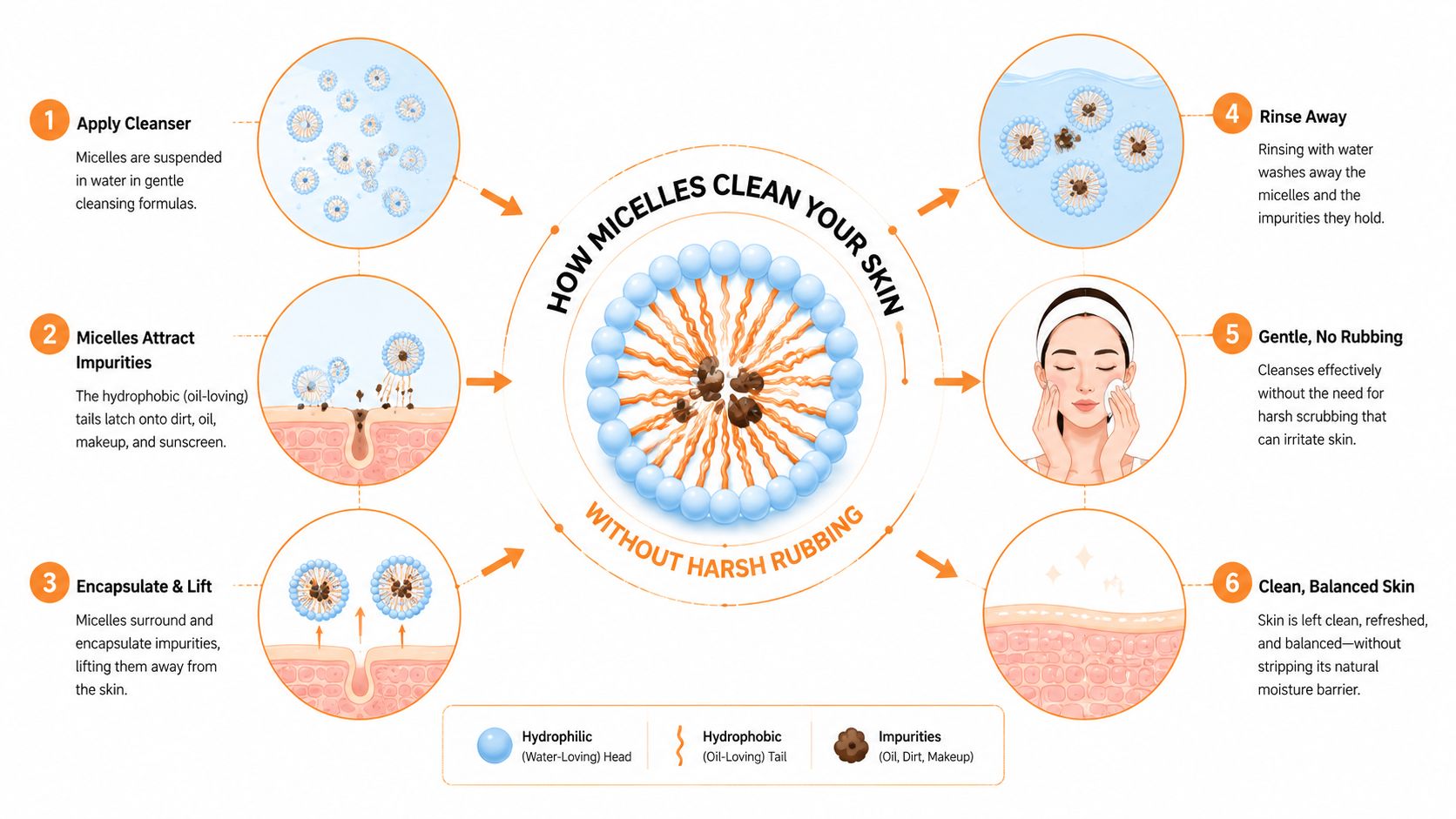
Micelles are clusters of cleansing molecules suspended in water. Each has an oil-loving centre that attracts sebum, makeup and other oily residue, plus a water-loving outside that remains in the water-based formula. This arrangement helps transfer loosened residue to a cotton pad, as explained in this technical overview of micellar cleansing.
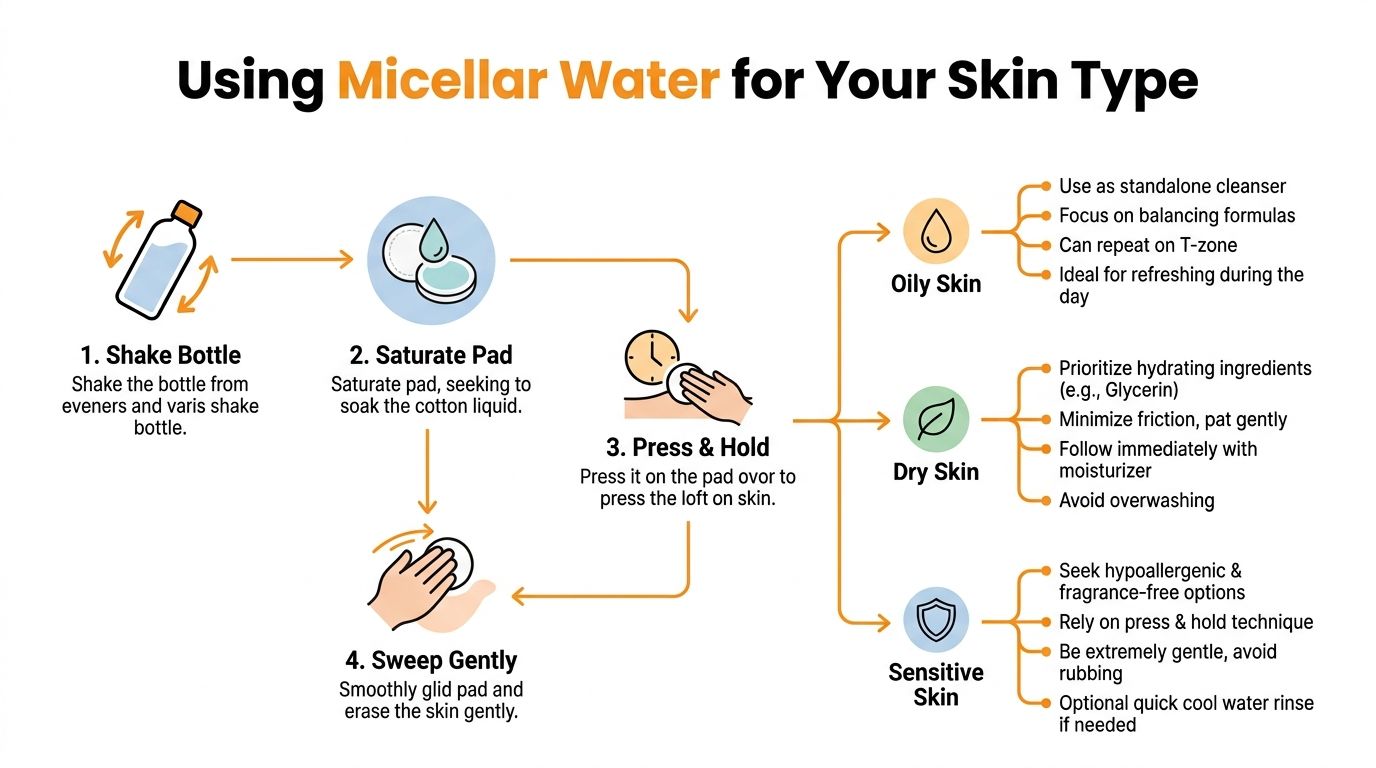
The technique matters as much as the chemistry. Saturate the pad, hold it against closed eyes for a few seconds, then sweep gently in one direction. Contact time lets the micelles loosen mascara or foundation, so your hand does less dragging. A barely damp pad encourages repeated wiping, which can irritate the skin even if the cleanser itself feels mild.
The ingredients behind the effect
UK retail formulas commonly use nonionic surfactants, including poloxamers and PEG-based solubilisers. Product labels may list Poloxamer 184, PEG-40 hydrogenated castor oil, disodium cocoamphodiacetate and glycerin. Glycerin and other humectants help the formula retain water and may make cleansing feel less stripping.
“Nonionic” refers to the surfactant's electrical charge. It does not mean the formula is free from potential irritants. Fragrance, botanical extracts and preservatives can still affect tolerability, especially when the skin barrier is already unsettled.
Why rinsing can matter
The skin around the eyes is thin, and repeated pressure can cause stinging. Reactive skin, eyelid eczema and a damaged barrier may tolerate less friction and less residue than comfortable, intact skin.
If you manage eczema and dermatitis, check the full formula rather than relying on the word “gentle”. A bland, fragrance-free product may be better tolerated. Even then, rinsing with lukewarm water can be sensible if the skin burns, feels tight or becomes itchy after use. Leave-on instructions suit some formulas, but they are not a reason to ignore your skin's response.
Use a fresh pad area for each part of the face. The micelles loosen the residue. Light pressure should be enough to remove it.
Micellar water versus other facial cleansers
You arrive home wearing water-resistant SPF, long-wear foundation and eye makeup. Micellar cleansing water may remove some of the surface residue, but an oil cleanser or balm will usually dissolve heavier, oily layers more effectively. A water-based wash can then remove what remains.
Foaming cleansers provide a fresh feel, although dry or reactive skin may experience tightness or stinging afterwards. Oil cleansers and balms generally need rinsing. Micellar water often has leave-on instructions, yet the better choice depends on the formula, what is on your face and how your skin feels after cleansing.
| Cleanser type | Best for | Rinse required | Waterproof makeup | Sensitive skin |
|---|---|---|---|---|
| Micellar cleansing water | Quick removal of light makeup and surface grime | Often no, but rinsing can help reactive skin | May need extra time or a second cleanser | Choose carefully and minimise rubbing |
| Oil cleanser | Makeup, sebum and water-resistant products | Usually yes | Often useful as a first cleanse | Can suit some people, provided the formula agrees with them |
| Cleansing balm | Heavy makeup and a richer first cleanse | Usually yes | Often useful | Check fragrance and botanical ingredients |
| Foaming face wash | Sweat, oil and a conventional facial wash | Yes | May not remove heavy eye makeup alone | Avoid formulas that leave tightness or stinging |
Where double cleansing fits
Double cleansing uses one product to loosen makeup, SPF or oil-based residue, followed by a second cleanser to wash the skin. Micellar water can be the first step when you are wearing substantial makeup. It is unnecessary for every routine, and repeated cleansing can leave the skin tight and uncomfortable.
If you have acne, remove makeup and SPF thoroughly without scrubbing blemishes. A second gentle cleanse can be useful when the first pad still shows visible product, but irritation may make spots look more inflamed.
The rinse decision deserves particular attention. A leave-on formula may suit comfortable, intact skin, whereas rinsing is often the safer trial for reactive or eczema-prone skin, especially if the product contains several surfactants, fragrance or botanical extracts. Rinse with lukewarm water if your face feels coated, tight, itchy or stings. Follow with a moisturiser that your skin already tolerates.
Decision rule: if your face feels clean, comfortable and free from visible residue, micellar water may be enough. If it feels coated, tight or still visibly made up, rinse or cleanse again.
For eye makeup, an oil-based remover may reduce the need for repeated wiping. Keep products out of the eye itself and stop using them if persistent stinging develops.
How to use micellar water correctly for your skin type
After a workout, micellar water can remove sweat and sunscreen before you moisturise. At the end of a makeup-heavy day, it works better as the first cleanse, not necessarily the last step. Start with clean hands, shake the bottle if instructed, and soak a cotton or reusable pad thoroughly. A dry pad drags; a saturated one glides with less friction.
A low-friction routine
Close your eyes and hold the pad over them for a few seconds. This gives water-resistant mascara or liner time to loosen, so you can sweep gently rather than rub back and forth. Typology's micellar water instructions also recommend gentle wiping over closed eyes, lips, face and neck.
Use a fresh pad, or a clean section, when it becomes visibly dirty. For long-wear lipstick, a separate pad helps prevent residue spreading across the rest of your face.
- Light makeup: one gentle pass may remove most surface product.
- Heavy SPF or foundation: use enough micellar water, then wash with a suitable cleanser.
- Waterproof makeup: hold, loosen and wipe. More pressure is not the answer.
- Bare skin after exercise: use it for a quick refresh, then rinse if sweat or product remains.
When to rinse it off
The label matters because some formulas are designed for leave-on use, while others are intended to be rinsed. Even a labelled leave-on product can leave surfactants, fragrance or preservatives on the skin. Rinse with lukewarm water if your face feels sticky, tight, itchy, warm or coated. These sensations suggest that the residue, rather than the cleansing action itself, is becoming uncomfortable.
Reactive or eczema-prone skin deserves a cautious trial. Rinse after wiping, particularly during a flare or when the formula contains fragrance, several surfactants or botanical extracts. Pat dry and apply a plain moisturiser you already tolerate. If you are prone to dry skin, a gentle rinse-off cleanser may feel more comfortable than leaving micellar residue behind.
For eye makeup, an oil-based remover can reduce repeated wiping. Keep products out of the eye itself and stop if stinging persists.
Hidden ingredients and allergy risks to watch for
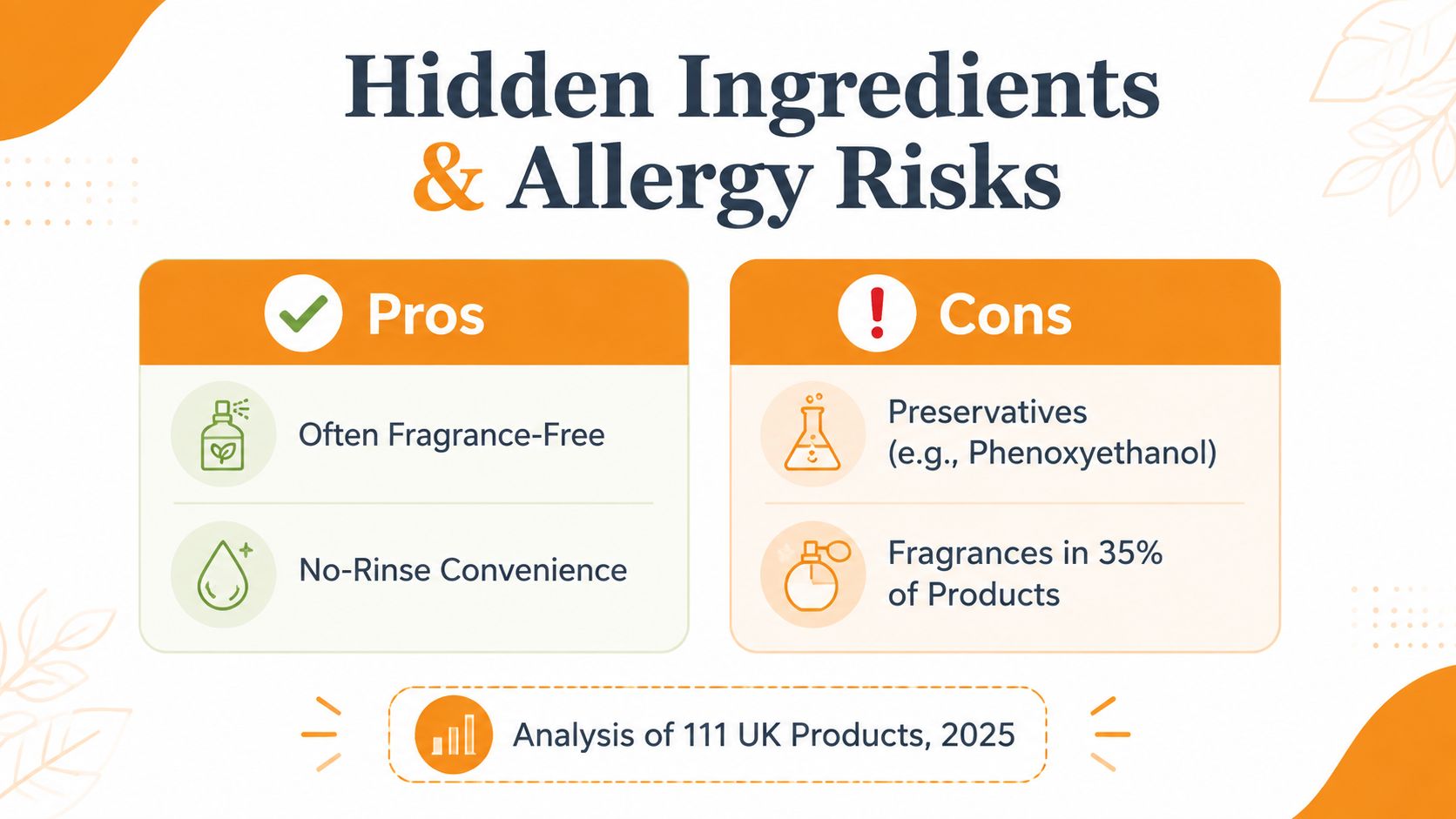
“Sensitive” is a marketing description, not a guarantee that a formula contains no recognised allergens. A UK-focused 2025 analysis of 111 micellar water products sold across 18 major UK health and beauty retailers identified 587 unique ingredients. Products contained an average of 20 ingredients, ranging from 7 to 50, according to this British Journal of Dermatology abstract.
The same dataset found 40% contained fragrance ingredients and 60% contained botanicals. The authors said micellar waters should be considered when assessing facial or eyelid eczema because some contain recognised contact allergens. This makes the ingredient list more useful than the front-label wording.
What to scan for on the label
If your skin reacts easily, read the full list rather than relying on claims such as “gentle” or “sensitive”. Look for:
- Fragrance ingredients, including parfum and any listed fragrance allergens.
- Botanical extracts, especially if scented or plant-based products have caused reactions before.
- Preservatives, which keep a water-based product safe but can trouble some users.
- Several cleansing agents, particularly when the formula leaves your skin dry or tight.
No single ingredient makes every product unsuitable. Your previous reaction history matters more than a fashionable claim. A fragrance-free option can reduce avoidable exposure, but it cannot remove every possible source of irritation. For eczema-prone or reactive skin, compare the complete formula and consider whether a simpler product is easier to tolerate. This is separate from deciding whether to rinse. Rinsing may reduce residue, but it does not change an allergy to an ingredient that has already contacted the skin.
Patch testing and product safety
Try a small area first if you have a history of contact allergy, and never test a new product directly on inflamed eyelid skin. Stop if redness, swelling, itching or burning develops, then ask a pharmacist or clinician for advice. People managing mast cell activation syndrome may need personalised guidance before trying new topical products.
Water-based cosmetics require effective preservation and clean handling. In August 2026, a UK safety alert recalled affected batches of Simple 730ml Kind to Skin Micellar Cleansing Water because they may have been microbiologically contaminated. The stated hazard was possible eye inflammation, as recorded in the GOV.UK product recall notice.
Check recall notices, batch details and expiry information. Do not share the bottle, touch its opening with used pads, or continue using it if the smell or appearance changes.
Real UK scenarios and pharmacist tips for everyday use
After settling the children, a busy parent may want the quickest possible bedtime routine. Micellar water can lift light makeup, but rinse it away if your face feels coated, tight or irritated. For heavier foundation, use it as the first step, then follow with a gentle cleanser so remaining pigment and oily residue are removed.
A shift worker returning home after a long journey may prefer a fragrance-free formula and a soft reusable pad. Use enough liquid to reduce dragging, and give the product time to loosen makeup before wiping. Stinging is a reason to stop, not something to tolerate while trying to finish the routine.
For a gym-goer travelling home, micellar water can remove sweat and some SPF temporarily. Rinse when you can, particularly if the skin feels sticky. Visible sunscreen or makeup still calls for a fuller cleanse.
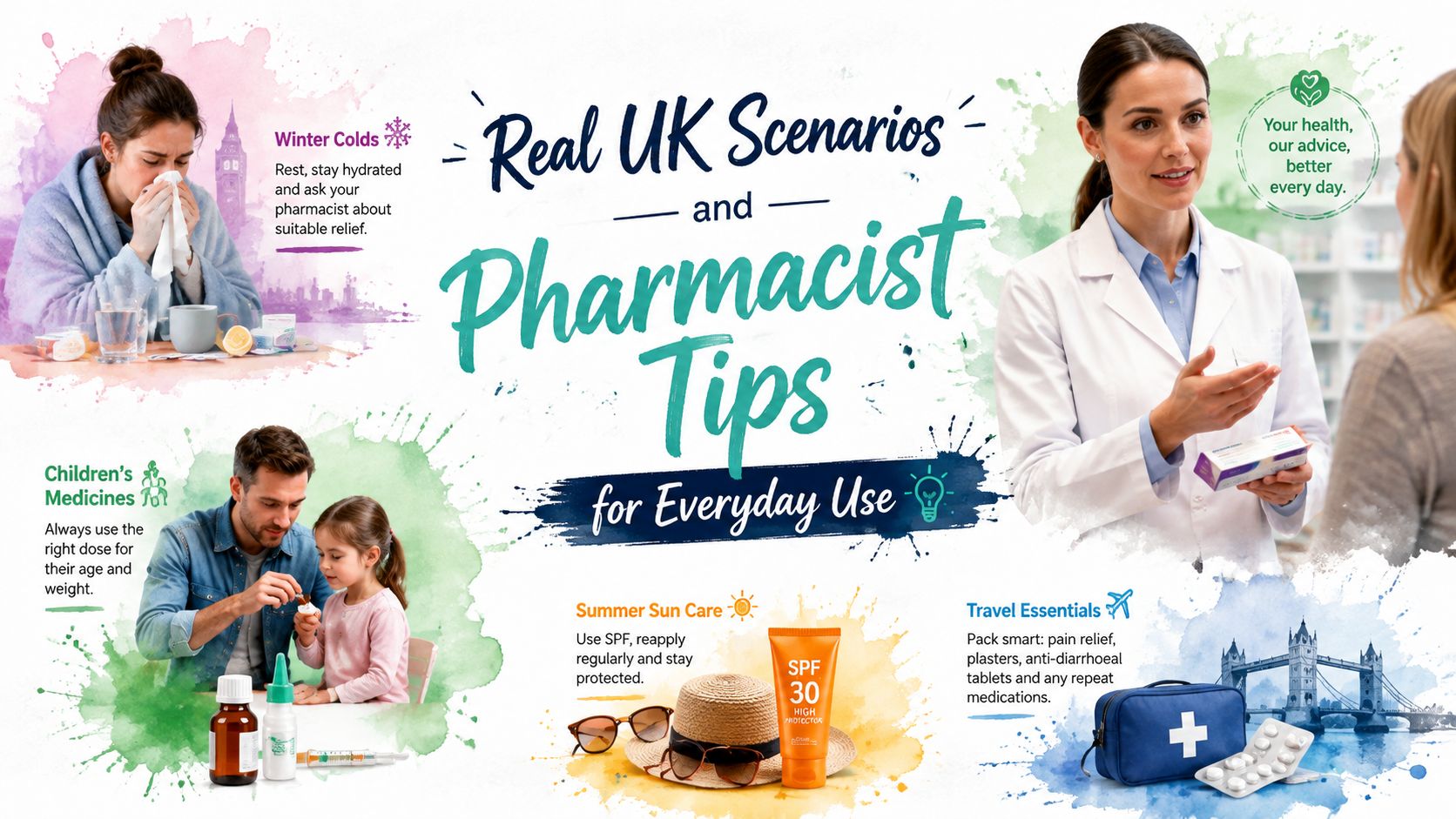
For eye makeup, keep the pad over closed lids rather than pressing against the eyeball. Hold it in place briefly, then wipe along the lashes with light pressure. This reduces friction on delicate eyelid skin.
Persistent redness, eyelid swelling, peeling or itching can indicate contact dermatitis. Stop the new product, rinse if comfortable, and seek advice if symptoms do not settle.
Store the bottle according to its label. Keep the opening clean, close the cap properly, and check recall information before use. Do not use a recalled batch.
Seek urgent help if swelling affects breathing, the lips or tongue swell, or severe eye pain or vision changes develop. These symptoms need prompt medical assessment, not another skincare experiment.
Choosing the right micellar water and when to seek help
Choose a formula based on your skin and cleansing needs, not just the word “gentle”. Look for fragrance-free options if your skin reacts easily, check the full ingredient list, and consider whether you'll remove waterproof makeup or heavy SPF. If the product leaves residue or stings, rinse it off or switch to a different cleanser.
For rosacea, avoid vigorous wiping and introduce new products carefully.
Summary
- Micellar cleansing water uses micelles to lift oily residue.
- Saturate the pad and press before wiping.
- Rinse when your skin feels coated, tight or reactive.
- Heavy SPF and waterproof makeup may need a second cleanse.
- Sensitive-skin labels don't rule out fragrance or botanicals.
- Stop a product if it causes ongoing irritation.
- Ask a pharmacist or GP about persistent symptoms.
This article is for information only. It isn't a substitute for personalised advice from a pharmacist, GP or dermatologist.
Courier Pharmacy can help with personalised advice about skin symptoms, allergies and suitable treatment options, alongside prescription and over-the-counter medicines. Visit Courier Pharmacy to explore its regulated online pharmacy services and discuss your needs with the team.
Suggested visuals
- Micelle concept map: Use bright lime green, pale yellow-green and light grey, with ornate brass plaque overlays in a painterly, steampunk-inspired style. Alt text: “Micellar cleansing water micelles trapping oil and makeup before removal.”
- Skin-type routine flowchart: Show the four cleansing steps with brass arrows and lime-green accents. Alt text: “Four-step micellar water routine for oily, dry and sensitive skin.”
- Ingredient safety panel: Contrast formulation benefits with fragrance, botanicals and preservatives. Alt text: “Micellar water ingredients and possible allergy risks for sensitive skin.”
- Pharmacist scenario illustration: Show a parent, shift worker and gym-goer using safe cleansing techniques. Alt text: “UK pharmacist tips for using micellar cleansing water in everyday routines.”
Meta description
Micellar cleansing water explained, including how micelles work, when to rinse, sensitive-skin advice, ingredient risks and practical UK pharmacist tips.
Suggested internal links
Byline and clinical review
Written by: Medical Mojo editorial team, UK health and pharmacy writers.
Clinically reviewed by: UK-registered pharmacist, credentials to be confirmed before publication.
How this content was created
We used the verified UK market, formulation, safety and skincare guidance supplied for this article, including UK retail data, a British Journal of Dermatology abstract, GOV.UK safety information and UK-facing product-use advice. The content was written for plain-English patient education and should undergo final clinical review before publication.
References
- Glamour UK. “What is micellar water?” Available at: https://www.glamourmagazine.co.uk/gallery/what-is-micellar-water
- Grand View Research. “UK micellar water market outlook.” Available at: https://www.grandviewresearch.com/horizon/outlook/micellar-water-market/uk
- British Journal of Dermatology. “UK micellar water product ingredient analysis.” Available at: https://academic.oup.com/bjd/article/195/Supplement_1/ljag086.351/8718363
- Pharmacy Journal. “Micellar water formulation and cleansing mechanism.” Available at: https://www.pharmacyjournal.in/assets/archives/2026/vol11issue1/11019.pdf
- GOV.UK. “Product recall, Simple 730ml Kind to Skin Micellar Cleansing Water.” Available at: https://www.gov.uk/product-safety-alerts-reports-recalls/product-recall-simple-730ml-kind-to-skin-micellar-cleansing-water-2608-0103
- Typology UK. “How to use micellar water.” Available at: https://uk.typology.com/library/how-to-use-micellar-water


