Migraine Tablets Pink and Yellow: A UK Guide
Migraine tablets pink and yellow: what they are, what each colour does, UK safety rules, and how to get a legitimate supply through an online pharmacy.

The throbbing has started, light feels painfully bright, and you've found a familiar pink-and-yellow pack in the cupboard. Migraine tablets pink and yellow usually means Migraleve Pink and Yellow, a two-stage UK migraine medicine. The pink tablet starts the attack treatment and includes an anti-sickness ingredient. The yellow tablet follows later for ongoing pain. This guide explains what each colour contains, how the regimen works, its codeine-related risks, how to identify the tablets safely, and when a migraine-specific option such as sumatriptan may be more suitable.
Five key takeaways
- Pink comes first: Migraleve Pink contains pain relief, codeine and buclizine for nausea.
- Yellow follows: Migraleve Yellow continues pain relief but contains no buclizine.
- Check your pack: Directions vary between product presentations, so follow the leaflet supplied with yours.
- Codeine needs care: It can cause sleepiness, constipation and dependence.
- Frequent attacks need review: Repeated migraine may need a GP plan rather than repeated self-treatment.
What the Pink and Yellow Migraine Tablets Actually Are
A migraine can make simple decisions feel surprisingly difficult. You may be trying to block the light, settle your stomach and remember which tablet comes first. The familiar two-tone pack is Migraleve Pink and Yellow, not one medicine in two strengths.
The pack contains two different formulations designed to work in sequence. Migraleve Pink starts treatment at the beginning of an attack. Migraleve Yellow follows later if pain continues. You can find product information for Migraleve Pink tablets through a UK pharmacy listing, but always check the leaflet inside your own pack.
Migraleve has a long-established place in UK pharmacy care. The official UK product information confirms that the pink tablet comes first, followed by yellow tablets at four-hour intervals when needed 1. The colour system helps communicate the order, especially when migraine makes reading complicated instructions harder.
Why codeine changes the safety advice
Both colours contain paracetamol and codeine. The pink tablet also contains buclizine, an anti-sickness ingredient. Codeine is an opioid, so it can cause drowsiness, constipation and dependence. It also means you must take care with alcohol, driving and other medicines that cause sleepiness.
Migraleve is supplied through UK pharmacy channels, with some presentations available without a prescription after a pharmacist checks suitability. Age restrictions matter, because codeine-containing medicines aren't suitable for everyone. The exact age group and directions depend on the specific pack and label.
The key question isn't, “Which colour is stronger?” It's, “What does each colour do, and is this the right medicine for my attack?” For some people with recurring migraine, a migraine-specific treatment such as sumatriptan may offer a more suitable route through the NHS.
Pink Versus Yellow, What Each Colour Does
The simplest way to remember the difference is this:
Pink starts the attack and adds nausea relief. Yellow continues pain relief without the anti-sickness ingredient.
Migraleve Pink contains paracetamol equivalent to 520 mg, codeine phosphate 8 mg and buclizine hydrochloride 6.25 mg per tablet, according to the official product information 1. Migraleve Yellow contains paracetamol equivalent to 520 mg and codeine phosphate 8 mg per tablet, with no buclizine 2.
| Feature | Migraleve Pink | Migraleve Yellow |
|---|---|---|
| Tablet colour | Pink | Yellow |
| Main ingredients | Paracetamol, codeine and buclizine | Paracetamol and codeine |
| Role | Starts acute migraine treatment and targets nausea | Continues pain relief |
| Usual place in sequence | First tablet phase | Follow-on tablet phase |
| Timing | At the start of the attack | Four hours later, then every four hours if needed |
| Anti-sickness ingredient | Buclizine included | No buclizine |
Why the ingredients differ
Buclizine is an antihistamine with an anti-sickness effect. Placing it in the pink tablet means the initial dose can address nausea while the pain medicines begin working. The yellow tablet removes buclizine, so later doses continue analgesia without repeatedly adding the anti-sickness ingredient.
That doesn't make yellow a stronger version. It has the same stated paracetamol and codeine quantities per tablet in the official information. It serves a different job in the staged regimen.
If nausea has settled but the headache remains, the yellow phase may seem logical. If vomiting continues, or you can't keep fluids and medicine down, ask a pharmacist or NHS 111 for advice. You can also check Migraleve Yellow tablets against the product details before taking an unfamiliar tablet.
Pharmacist's tip: Keep the two colours in their original labelled wallet. Loose tablets make it much easier to take the wrong colour or lose track of the dose.
How to Take the Pink and Yellow Regimen Safely
The official UK leaflet describes a staged dose. Adults take two pink tablets first, then two yellow tablets four hours later if needed, with further doses based on the exact product instructions 1. However, UK presentations don't all use identical directions. Some public-facing pack instructions state a lower total, while the SmPC describes an adult two-pink-tablet regimen with a maximum of two pink and six yellow tablets in 24 hours 1.
Follow your own box and leaflet, not a remembered instruction from another pack. Don't combine directions from different Migraleve presentations.
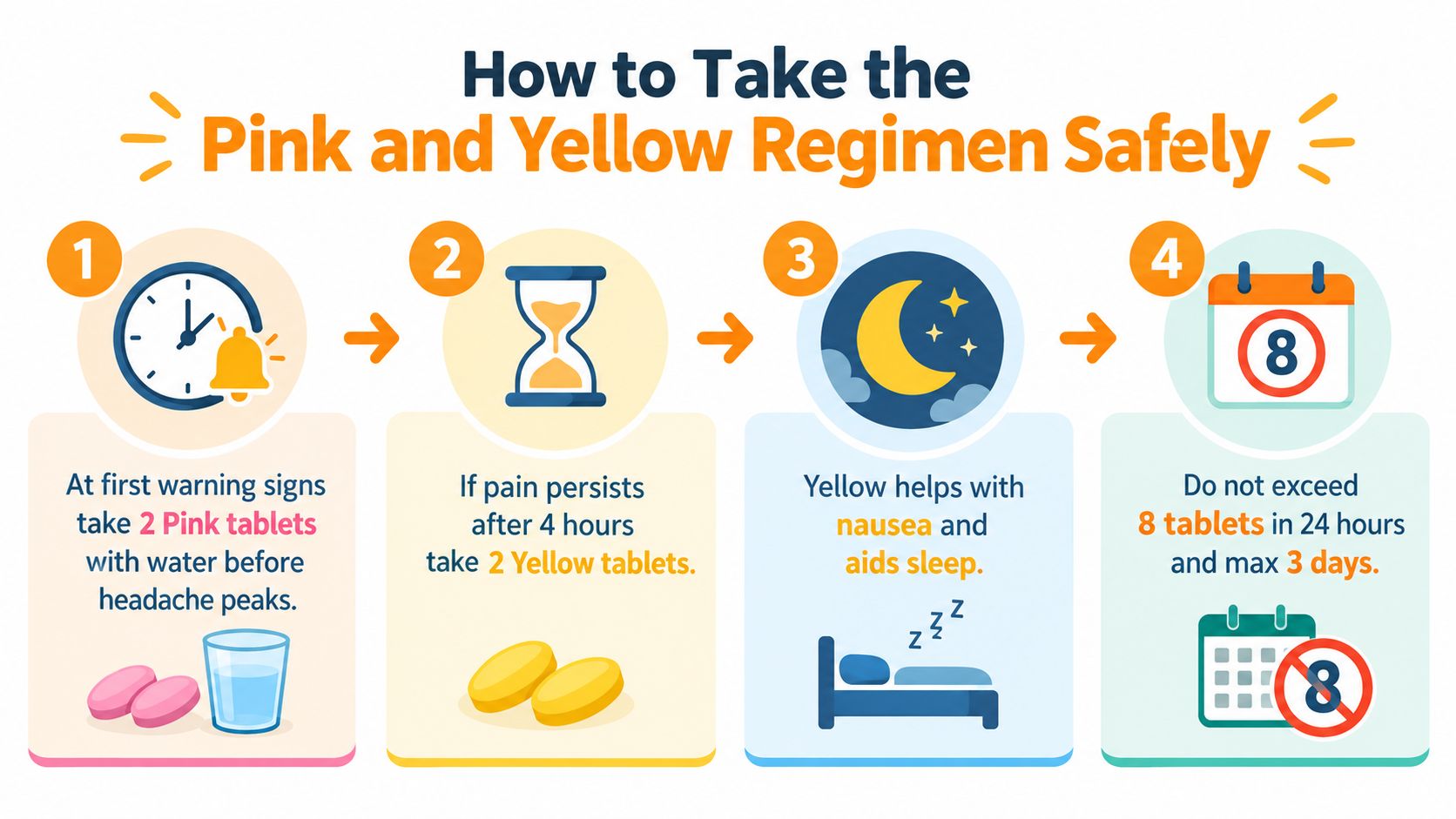
A safe routine looks like this:
- Read first: Check the age range, dose and daily maximum on your pack.
- Start early: Take the stated pink dose when the migraine begins, with water.
- Wait the stated interval: Take yellow only when the leaflet allows it, usually four hours later if pain remains.
- Record doses: Write down the time and colour, especially during a severe attack.
Take the tablets with food if your stomach feels unsettled. Avoid additional paracetamol or codeine products, including co-codamol and Solpadeine, unless a healthcare professional confirms that it's safe.
Pharmacist's safety check: The label on your exact pack wins. If the instructions seem different from advice you've seen online, pause and ask a pharmacist.
Migraleve is for short-term treatment of an acute attack, not daily migraine prevention. If attacks keep returning, discuss a longer-term plan with your GP. A different acute medicine, such as rizatriptan 10 mg orodispersible tablets, may suit some patients, but a prescriber or pharmacist must check your medical history first.
UK Safety Rules and When to Skip This Pack
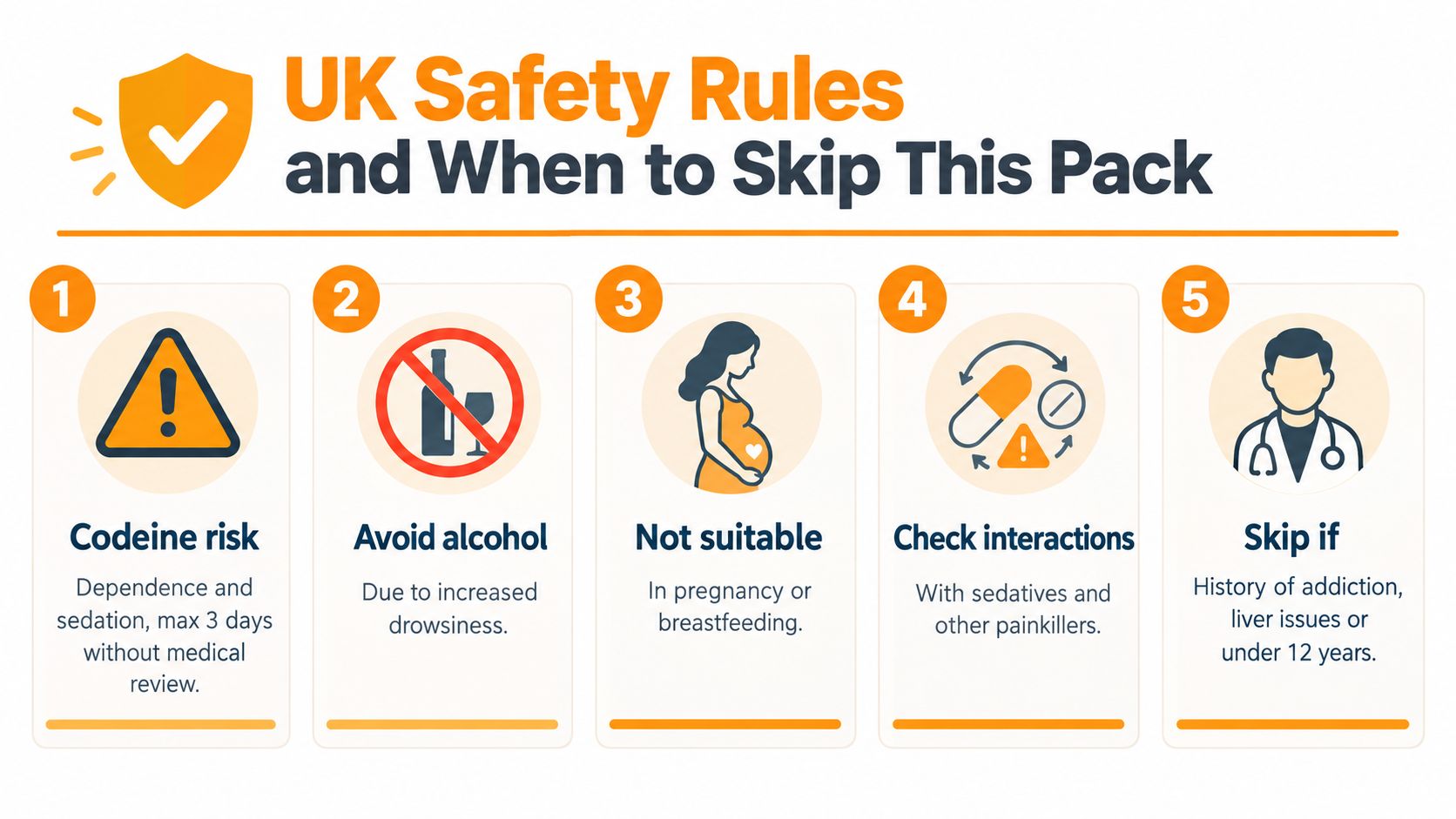
Codeine makes Migraleve different from a simple paracetamol product. It can cause sleepiness, constipation and dependence, and it may become a poor choice when you keep reaching for it during repeated attacks. The UK product information also highlights risks from combining codeine with other medicines or substances that slow the nervous system 1.
Children aged 12 and under shouldn't use codeine-containing products. For ages 12 to 18, UK pharmacy advice applies extra limits, and simpler painkillers should have been tried first. Pregnancy and breastfeeding also need specific medical advice, because codeine can affect the baby.
Avoid Migraleve if you haven't checked it with a professional and you:
- Drink alcohol: Alcohol can increase drowsiness and impair judgement.
- Take sedatives: Benzodiazepines, sleeping tablets and some antidepressants can add to sedation.
- Use other opioids: Don't combine codeine with another opioid unless prescribed and checked.
- Take other paracetamol: Combined products can cause accidental paracetamol overdose.
- Have liver problems or addiction concerns: Ask a clinician before using a codeine-containing medicine.
When another migraine treatment may fit better
The familiar pink-and-yellow pack isn't automatically the best treatment for every migraine. NHS Scotland guidance lists oral sumatriptan as a first-line acute option for adults, while other guidance considers an anti-inflammatory such as naproxen, or paracetamol with an anti-sickness medicine, depending on the person's circumstances 3.
Codeine combination medicines also carry a risk of medication-overuse headache. If your migraines are becoming more frequent, the medicine only partly works, or you feel tempted to repeat doses, ask for a review. A discussion about naproxen for migraine may be useful, but NSAIDs aren't suitable for everyone.
Pharmacist's tip: Tell the pharmacist how many days each month you take pain medicine, not just how many migraine attacks you have. Those are different pieces of information.
How to Check You Have the Right Tablets
Don't identify a loose pink or yellow tablet by colour alone. Different medicines can share similar colours, and a tablet separated from its box loses important information.
Migraleve packaging carries the brand name, a product licence number and a leaf-mark logo. The patient leaflet on the Electronic Medicines Compendium can help you cross-check the product details.
A four-step tablet check
- Inspect the imprint: Under good light, pink tablets are round and marked with “P”. Yellow tablets are capsule-shaped and marked with “M”.
- Compare the appearance: Check the colour and shape against the leaflet supplied with the pack.
- Search the licence number: Enter the PL number into medicines.org.uk to find the matching product information.
- Ask if unsure: Use the NHS 111 symptom checker or call NHS 111 rather than guessing.

Don't rely on loose pills in an unlabelled pharmacy bag, blister strips removed from their box or foreign packaging you can't read. If the pack arrives unsealed, lacks its leaflet or doesn't match the description, don't take the medicine until a pharmacist checks it.
Real UK Scenarios Where the Pack Helps or Hurts
A 34-year-old NHS night-shift nurse gets a menstrual migraine about once a month. She notices the early warning signs during her break and checks the pack directions before taking the pink dose. Later, after the required interval, she uses the yellow phase if pain remains. The staged design may fit an occasional attack, but she still needs to consider drowsiness before driving home or caring for others.
Now consider a 42-year-old parent whose attacks have become much more frequent. She started with occasional migraines, then began using codeine-containing products repeatedly as work and childcare became harder. The pink-and-yellow pack now offers short-lived relief while the underlying pattern worsens.
A GP review should cover her headache history, a treatment such as sumatriptan where suitable, a headache diary and whether preventive treatment deserves discussion. Options may include medicines such as propranolol or topiramate, but the GP must match treatment to her health, pregnancy plans and other medicines.
A teenager given the pack by a parent needs a separate safety check. Age limits and product directions apply even when the medicine came from a family cupboard. A pharmacist may refuse supply or advise medical review rather than treat the medicine as harmless.
A product can help an occasional attack and still be the wrong answer to a changing migraine pattern.
Getting a Legitimate Supply Through an Online Pharmacy
A pharmacy-only migraine medicine should come with a suitability check. For an online purchase, start by checking that the pharmacy is registered with the General Pharmaceutical Council. Look for the pharmacy's registration details and confirm them on the GPhC register, rather than trusting a logo alone.
A regulated online consultation usually asks about:
- Your migraine pattern: How often attacks happen and what symptoms they cause.
- Previous treatment: What you've tried, including paracetamol, anti-inflammatory medicines and triptans.
- Current medicines: Include painkillers, sleep medicines, antidepressants and other codeine products.
- Pregnancy and breastfeeding: These change which medicines may be suitable.
- Relevant health history: Tell the prescriber about liver problems, breathing problems, sedation or dependence concerns.
A prescriber may decline Migraleve or suggest another option if the answers point to medicine overuse, frequent attacks or an interaction. That isn't a failed consultation. It means the medicine needs a closer clinical fit.
For online pharmacy services in the UK, check what happens after the questionnaire. A legitimate service should explain prescription review, delivery, packaging and how to contact the pharmacy.
When the parcel arrives, check the seal, expiry date, label and patient leaflet. Don't use a pack with foreign-language packaging, missing information or damage until a pharmacist confirms it. Keep a record of what you take, and arrange a GP review if migraines keep recurring or become difficult to control.
Summary, Red Flags, and Common Questions
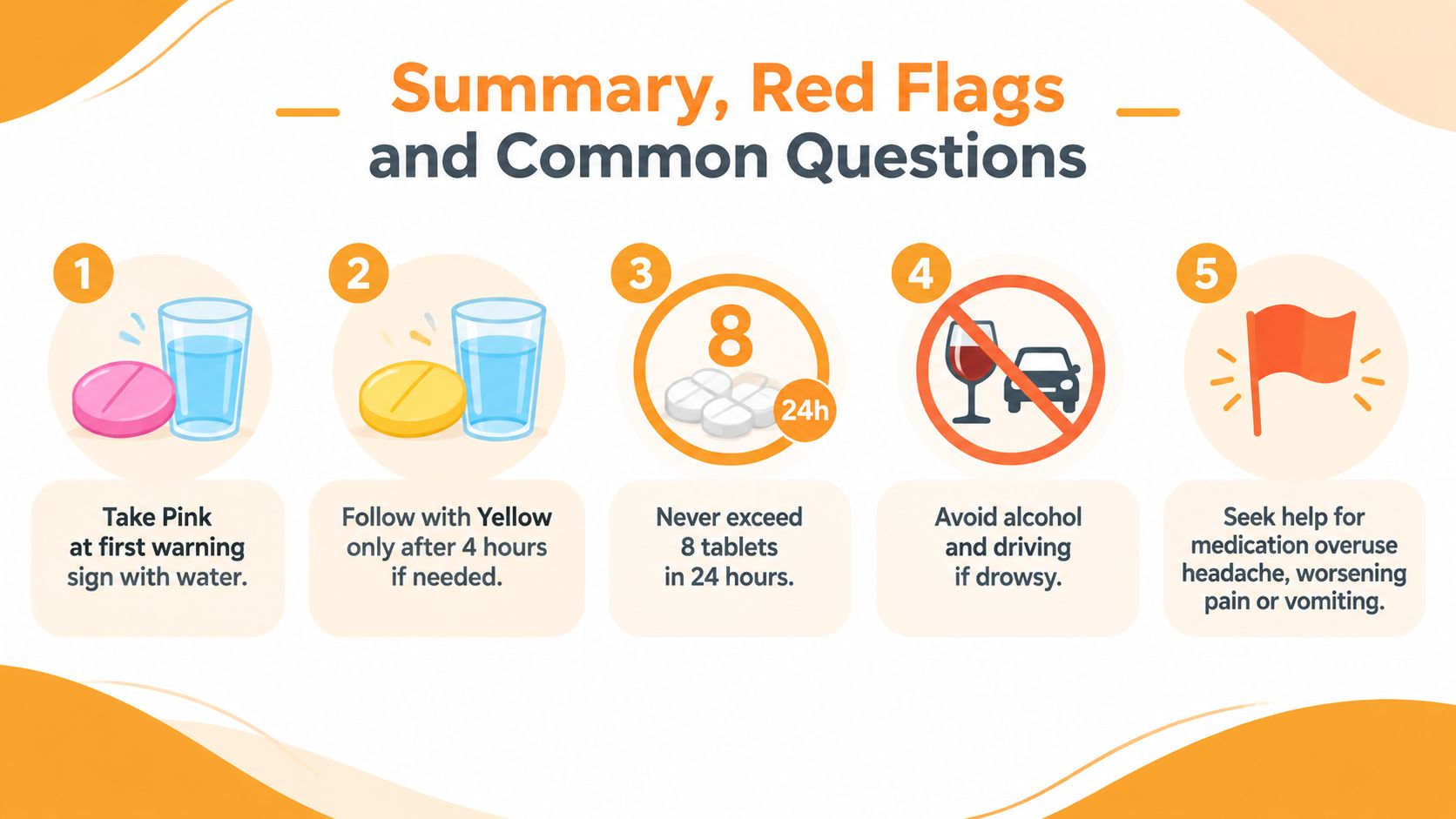
Use these five plain-English rules:
- Pink first: Take the pink phase at the start of the attack, following your leaflet.
- Yellow later: Take yellow only after the stated interval, usually four hours, if needed.
- Respect the limit: Never exceed the daily maximum printed on your exact pack.
- Avoid alcohol: Don't drink alcohol or drive if the medicine makes you sleepy.
- Check combinations: Don't add other codeine, opioid or paracetamol products without advice.
Get urgent NHS help if
- You develop a sudden, extremely severe headache.
- You have new weakness, confusion, speech trouble or vision loss.
- A head injury happened before the headache.
- You have a fever with a stiff neck.
- The migraine lasts longer than 72 hours.
Call 999 for life-threatening symptoms. Contact NHS 111 if you need urgent advice but don't have an emergency.
Common questions
Can you take Migraleve with sumatriptan?
Don't combine them without advice from a prescriber or pharmacist. Both products treat acute migraine, and your full medicine history matters before combining or switching treatments.
Is Migraleve safe while breastfeeding?
Don't use it while breastfeeding unless a healthcare professional specifically advises you. Codeine can pass into breast milk and may affect an infant.
What if you miss a dose?
Don't double the next dose. Check your pack leaflet, note when you last took medicine and ask a pharmacist if you're unsure.
Can you buy Migraleve without a prescription?
Some Migraleve presentations are available through UK pharmacy supply, while other medicines or circumstances may require a prescription. A pharmacist must check the product, age and medical history.
What if the yellow tablets are gone?
Don't substitute another painkiller automatically, and don't take extra pink tablets to replace them. Ask a pharmacist what is safe, especially if you've already taken paracetamol or codeine.
Should frequent migraine sufferers keep using it?
Frequent attacks deserve a GP review. A clinician can assess diagnosis, acute treatment, medication-overuse risk and possible prevention.
Summary
Migraleve Pink and Yellow uses two colours for two jobs.
Pink starts treatment and includes buclizine for nausea.
Yellow continues pain relief without buclizine.
Codeine means you must check age, interactions and drowsiness risks.
Follow your own pack leaflet because directions vary between presentations.
If attacks become frequent, ask your GP about migraine-specific treatment.
Courier Pharmacy provides UK online pharmacy consultations for suitable prescription and pharmacy medicines, including migraine treatments, with review by prescribers. Visit Courier Pharmacy to complete a confidential consultation and get advice on the next safe step for your symptoms.
Meta description
Migraine tablets pink and yellow explained for UK readers. Learn what Migraleve contains, how colours differ, safety rules and when to seek help.
Suggested internal links
- Migraleve Pink tablets
- Migraleve Yellow tablets
- Rizatriptan 10 mg orodispersible tablets
- What is naproxen
- Online pharmacy UK
Visual ideas for Medical Mojo
- Ingredient comparison: A painterly split-panel graphic showing pink and yellow tablets, with pale yellow-green labels and ornate brass plaque overlays. Alt text: “Comparison of Migraleve Pink and Yellow tablets and their active ingredients.”
- Dose sequence: A vertical timeline using bright lime green, light grey and brass clock details. Alt text: “Staged sequence showing pink tablets first and yellow tablets later during an acute migraine.”
- Safety checklist: A steampunk-inspired medicine cabinet with five brass warning plaques. Alt text: “UK safety checks for codeine-containing pink and yellow migraine tablets.”
- Tablet identification: A magnifying glass over tablet markings beside a leaflet, using a pale yellow-green background. Alt text: “How to identify Migraleve Pink and Yellow tablets by colour, shape and imprint.”
Byline and clinical review
Written by: Medical Mojo editorial team, patient health education writers.
Clinically reviewed by: UK-registered pharmacist, clinical medicines reviewer.
How this content was created
This article uses the UK Migraleve product information and patient leaflet, UK pharmacy guidance and NHS-linked migraine treatment guidance. The content was checked for dose wording, ingredient differences, codeine safety, age restrictions and urgent warning signs. It provides general information only and isn't a substitute for medical advice.
References
- Electronic Medicines Compendium. (2025) Migraleve Pink and Yellow, Summary of Product Characteristics. Available at: official UK product information.
- Electronic Medicines Compendium. (n.d.) Migraleve Pink and Yellow patient information leaflet. Available at: UK patient leaflet.
- NHS Scotland Right Decisions. (n.d.) Migraine treatment guidance. Available at: NHS Scotland migraine guidance.


