Moisturize Dry Scalp
Moisturize dry scalp. Learn how to moisturize a dry scalp with UK-friendly advice, safe OTC ingredients, pharmacist tips and red flags to see a clinician about
Your scalp feels tight after washing, tiny flakes are landing on your shoulders, and every oil or shampoo seems to make the problem more confusing. To moisturize a dry scalp, first work out whether you have simple dryness, dandruff or seborrhoeic dermatitis. A dry, irritated scalp may improve with gentle cleansing and a light emollient. Oily, recurring scale may need an antifungal shampoo instead. This guide explains how to sort the symptoms, apply moisture without coating your hair, choose suitable products, and recognise when to ask a pharmacist, GP or dermatologist for help.
- Sort the cause first: Tight, fine flakes suggest dryness, while recurring oily scale may suggest dandruff.
- Apply small amounts directly: Part the hair and target the scalp, not the lengths.
- Choose a light vehicle: Lotions, gels and spray-oils usually suit a hairy scalp better than heavy ointments.
- Avoid common irritants: Start with fragrance-free, moisturising products and avoid sodium lauryl sulfate.
- Know when to stop: Redness, swelling, pain, oozing, pustules, hair loss or ongoing symptoms need clinical advice.
Is Your Scalp Dry or Dandruff
You wash your hair, dry it, and an hour later your scalp already feels tight again. Then the flakes start, and it is hard to tell whether your scalp needs moisture or something different.
The quickest way to sort it is to look at the pattern, not just the flakes. Simple dryness often feels tight, sore, itchy or a bit stingy, especially after washing. The flakes are usually small, pale and dry. Dandruff is different. Seborrhoeic dermatitis sits further along the same scale, and can cause repeated flaking with oiliness, redness and inflamed patches. The British Association of Dermatologists explains the difference between dandruff and seborrhoeic dermatitis.
Quick answer: Moisturise a tight, dry scalp. Treat recurring oily or inflamed scale as possible dandruff or seborrhoeic dermatitis, where an antifungal shampoo may work better.
A helpful way to judge it is this. Dryness behaves like dry skin elsewhere on the body. The scalp feels uncomfortable and short of moisture. Dandruff and seborrhoeic dermatitis tend to keep coming back because moisture alone does not deal with the underlying irritation. If your symptoms sound more like general skin dryness, this UK guide to dry skin may help you compare what you are seeing.
| Clue | More likely simple dryness | More likely dandruff or seborrhoeic dermatitis |
|---|---|---|
| Scalp feeling | Tight, dry, irritated or itchy | Itchy, oily or inflamed |
| Flakes | Fine, white and powdery | Recurrent, larger, greasy or yellowish |
| Skin appearance | May look dry or mildly irritated | May look red with greasy plaques |
| Useful first thought | Gentle moisture and barrier care | Antifungal or medicated shampoo |
Dandruff is very common, so it often gets mistaken for “dry scalp”. That is why the first job is symptom-sorting. If the scalp mainly feels parched, gentle moisturising makes sense. If the scale is greasy, keeps returning, or comes with visible redness, heavy oils can end up adding mess without settling the cause.
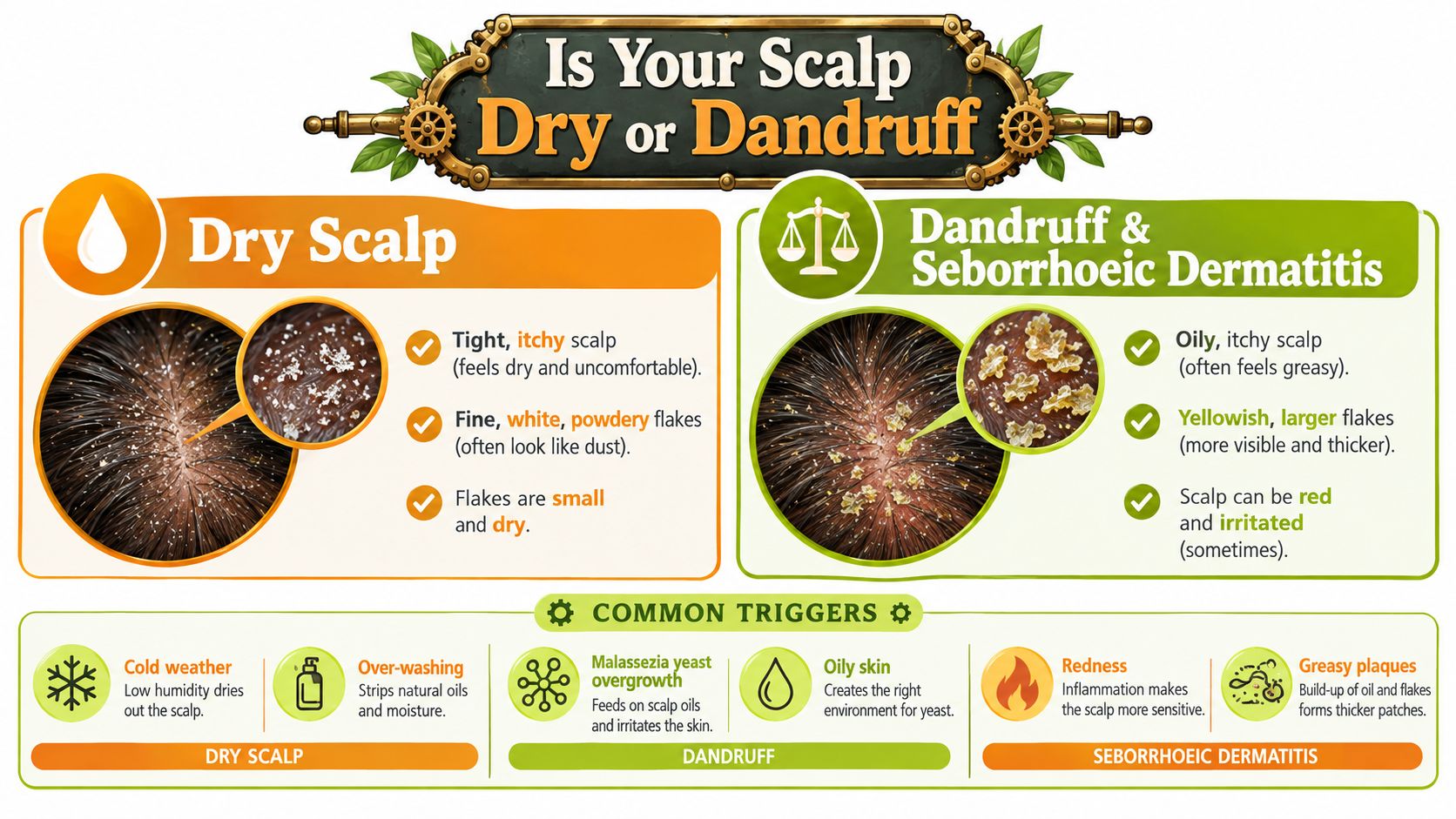
The practical question is do you need moisture, antifungal treatment, or both? The answer starts with whether your scalp mainly feels dry and tight, or whether the flakes keep returning with oiliness and inflammation.
Step by Step Moisturising Routine at Home
Start with a small amount of a leave-on emollient, which is a moisturising product that stays on the skin. Choose a lotion, gel or spray-oil rather than a thick ointment when you have plenty of hair. These lighter forms spread more easily and usually wash out with less effort.
Part the hair with your fingers or a comb. Dab the product onto the scalp in small sections, then smooth it gently in the direction of hair growth. Don't rub against the hair or scrub hard, because that can irritate the skin, block follicles and contribute to folliculitis.
A simple routine that fits busy days
Use the following approach:
- Begin with clean, comfortable skin: Wash with tepid water and a fragrance-free moisturising shampoo.
- Pat, don't rub: Remove excess water with a towel, then apply the emollient while the scalp still feels slightly damp.
- Use targeted amounts: Put product on dry patches rather than coating every strand.
- Repeat regularly: Apply at least twice daily, increasing to every three to four hours during marked dryness or a flare, following National Eczema Society emollient guidance.
- Patch-test new products: Apply a small amount to unaffected skin and wait 48 hours before using it widely.
You don't need to leave a heavy oil on overnight to get benefit. A small, well-placed amount often feels more comfortable and creates less build-up. If your shampoo stings, an emollient intended for washing may offer an alternative, although it can leave hair slightly greasy.
Pharmacist's tip: Heavy ointments can comfort very dry skin, but they're difficult to remove from hair. A lotion, gel or spray-oil is usually easier to manage on the scalp. You can read more about the use of Epaderm ointment if a clinician or pharmacist has suggested it for your skin.
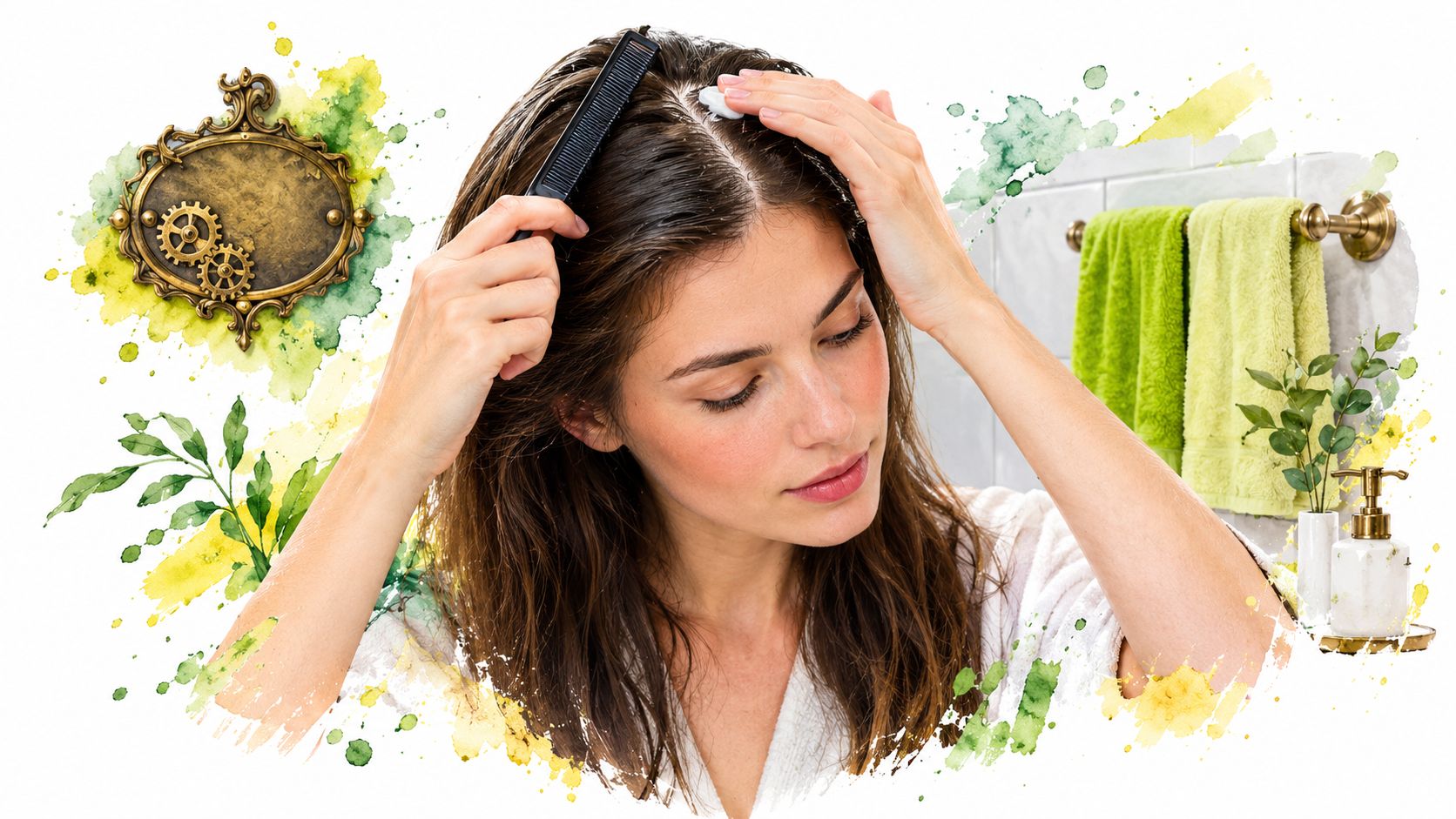
For example, a busy parent might part the hair after the evening wash, apply a few small dabs to the tightest areas, and smooth them down before bed. They could repeat the same quick application in the morning rather than trying to cover the whole scalp in oil.
Choosing the Right Product and Ingredients
Once your technique is clear, the product label becomes easier to judge. Vehicle means the form that carries the moisturising ingredients. It affects how the product feels, how easily it spreads and how much residue it leaves behind.
Emollient vehicles for a hairy scalp
| Vehicle | Feel on scalp | Hair effect | Best for |
|---|---|---|---|
| Lotion | Light and fluid | May leave mild greasiness | Large areas of dry scalp |
| Gel | Cooling and less oily | Usually easier to rinse | Itchy, warm-feeling areas |
| Spray-oil | Quick to target | Can add shine or oiliness | Small patches and textured hair |
| Cream | Richer and more protective | May weigh down roots | Localised dry skin |
| Ointment | Very occlusive and greasy | Hardest to remove | Very dry skin when specifically advised |
| Wash-off emollient | Softens during washing | Can leave residue | People who find shampoo irritating |
The Sheffield Formulary guidance on emollients supports applying leave-on products in the direction of hair growth. It also describes products that can be used before or during washing and then rinsed away. That distinction matters if you want to moisturize a dry scalp without making your hair feel coated.
Look for a fragrance-free, moisturising formula. Ingredients such as glycerin, panthenol, niacinamide, colloidal oatmeal and squalane may suit some people, but even gentle ingredients can irritate an individual scalp. Introduce one new product at a time so you can identify the cause if burning, itching or extra flaking begins.
Avoid sodium lauryl sulfate, also called SLS, when your scalp is sensitive or eczema-prone. UK NHS scalp guidance identifies SLS as a possible irritant and recommends fragrance-free moisturising shampoos. Strong fragrance can also cause trouble, especially when the skin barrier already feels sore.
Pharmacist's tip: Choose the simplest suitable formula first. If it feels comfortable after patch testing, use it consistently before adding another serum, oil or exfoliating product. More products don't necessarily mean more moisture.
For more help comparing rich and light options, see this UK guide to choosing a cream for dermatitis. Stop a product if it causes burning, swelling or a clear worsening of scale.
When an Antifungal Shampoo Helps Instead
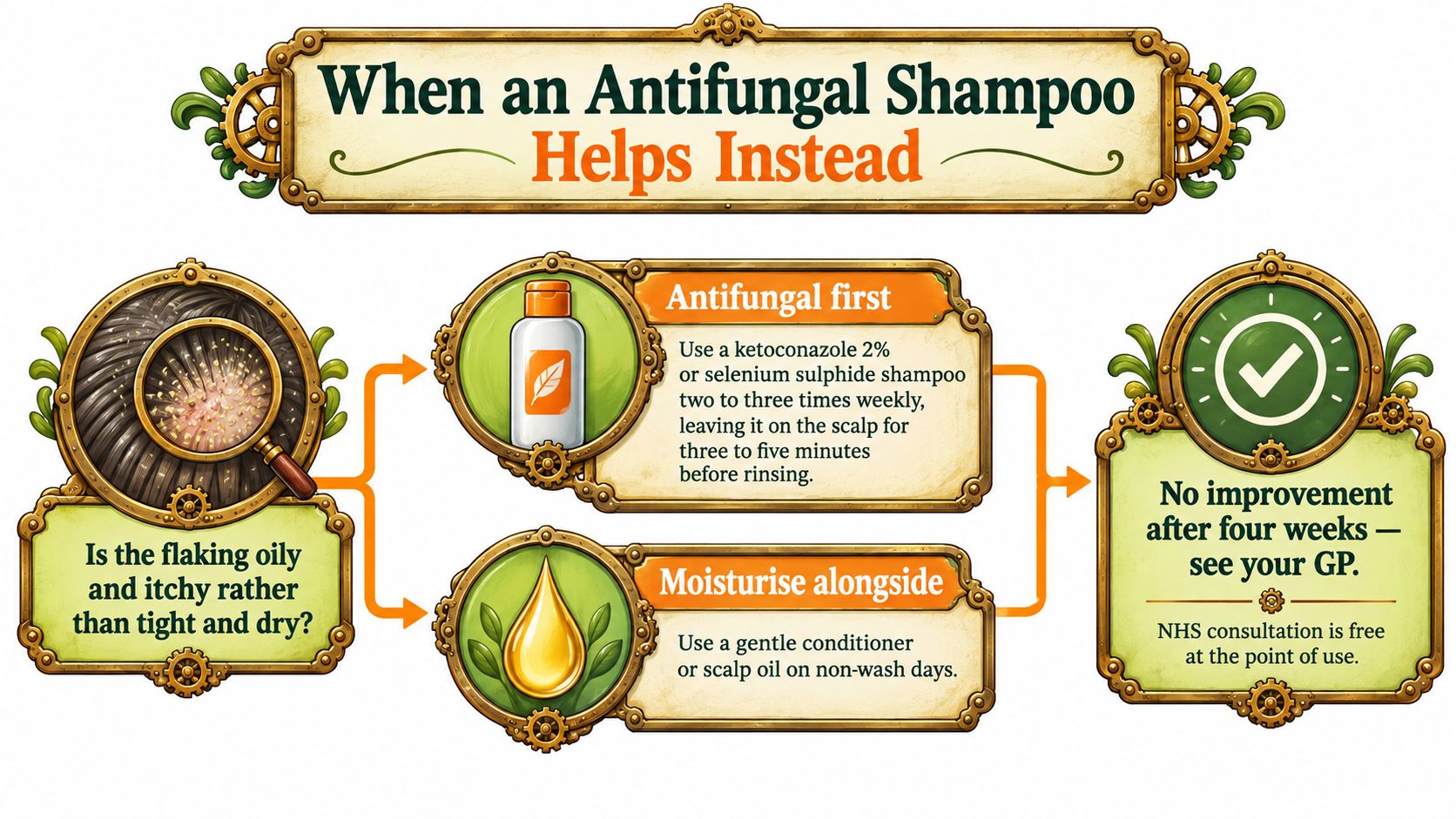
Moisturiser isn't the right first move for every flaky scalp. Recurrent scale that looks oily or yellowish, especially with redness and itch, can fit dandruff or seborrhoeic dermatitis. In that situation, ketoconazole or selenium sulphide shampoo may address the underlying problem more directly than oil alone.
NHS-linked guidance says ketoconazole commonly takes two to four weeks to work. Treatment products often need use two or three times each week, depending on the product label and advice from a pharmacist. Once symptoms settle, some people use ketoconazole every one to two weeks for months or years to reduce relapse. See the Grampian NHS guidance on dandruff and ketoconazole for the clinical approach.
Get the contact time right
Use the shampoo as directed. During each wash:
- Apply the first wash to remove oil and debris.
- Rinse, then apply the second wash.
- Leave the second application on the scalp for at least five minutes, unless the label says otherwise.
- Rinse thoroughly and avoid aggressive scrubbing.
The first wash cleans the surface. The second gives the active ingredient time to contact the scalp. Washing repeatedly or using an antifungal shampoo every day can leave an already dry scalp more irritated, so follow the product instructions rather than trying to speed things up.
Pharmacist's tip: You may moisturise residual dryness after treating dandruff, but don't use a thick occlusive product as a replacement for assessment. A product such as Daktarin cream isn't automatically suitable for a flaky scalp, so ask a pharmacist before applying medicines near the hairline.
Stop self-treating and seek medical advice if you develop marked redness, swelling, pain, pustules, oozing or hair loss. If symptoms haven't improved after the treatment period or keep returning, ask a GP or pharmacist to review the diagnosis.
Tailoring Your Routine to Real Life
A routine has to fit your hair, work and washing habits. A night-shift nurse with an oily scalp may need a quick, light application. Someone with long, colour-treated hair may need to protect the scalp without spreading product through the lengths.

Two routines for two different hair patterns
A nurse finishing a night shift might wash with lukewarm water, pat the scalp dry and use a spray-oil only along the tightest parting. A light product avoids a heavy feeling under a hat and keeps the routine short before sleep. If the scalp looks oily with recurring flakes, she should reassess whether dryness is the main issue.
A reader with long, colour-treated hair could divide the hair into sections and place lotion directly on the scalp. They should keep rich products away from the lengths unless those areas also need conditioning. Gentle washing and thorough rinsing can help reduce residue without repeatedly stripping the colour.
Textured hair may need wider partings and a smaller number of targeted applications. Oily hair may tolerate less product but still need moisture on irritated patches. Overnight oils aren't automatically wrong, but they can create build-up and won't treat dandruff, psoriasis or infection.
Pharmacist's tip: Use a low or warm hairdryer setting, not hot air. NHS scalp eczema guidance warns that hot hairdryers can worsen dryness, itching and irritation. Also consider whether hard water, frequent hot styling, tight hats or stress coincide with flare-ups, without assuming that one factor explains everything.
Keep the routine comfortable rather than perfect. If a product makes your scalp burn, or if scale worsens after application, stop it and seek advice.
Red Flags and When to See a Clinician
Self-care has a clear limit. Book an appointment with a GP or ask a pharmacist for help if symptoms are severe, unusual or fail to settle.
Stop and seek advice if you notice
- Marked redness or swelling: These signs can point to stronger inflammation or infection.
- Pain, pustules or oozing: Don't cover these symptoms with oil.
- Hair loss or broken areas: Arrange an assessment rather than continuing to experiment.
- Severe itch or burning: Stop products that sting and ask for guidance.
- No improvement after two to four weeks: Persistent symptoms may need a different diagnosis or treatment.
A clinician may consider eczema, psoriasis, seborrhoeic dermatitis, fungal infection or contact allergy. They may also prescribe a different vehicle, including a compounded formulation where allergies or sensitivities make standard products unsuitable. A regulated UK online pharmacy can provide prescribing and follow-up support when a consultation identifies an appropriate treatment, but urgent or severe symptoms still need the right clinical route.
Using a steroid and emollient safely
If a prescriber gives you a topical corticosteroid for scalp inflammation, follow their directions. UK Government and MHRA guidance says you can use an emollient and steroid on the same day, but leave 20 to 30 minutes between applications. The emollient may dilute the steroid if you apply the products together. Read the MHRA safety guidance on topical corticosteroids and emollients for the reasoning behind this spacing.
Pharmacist's tip: If inflammation returns within days or weeks of stopping a steroid, don't restart it automatically. Contact the prescriber so they can check the cause and treatment plan.
Scalp ringworm can also cause scaling and hair changes. If that seems possible, seek medical assessment and read the information on ringworm and its treatment rather than relying on moisturiser.
Your Scalp Care Summary and Next Steps
A dry, tight scalp after washing usually needs barrier care. Greasy scale that keeps coming back points more towards dandruff or seborrhoeic dermatitis, where moisturiser alone often falls short. Getting that first sort right matters, because the wrong approach can feel soothing for a day, then leave the scalp heavier, itchier or more flaky.
Keep the routine simple. Use a small amount of a suitable emollient, part the hair so it reaches the skin rather than coating the hair shaft, and smooth it on in the direction of hair growth. NHS guidance on emollients and the National Eczema Society's advice on emollients both support regular, gentle use, especially when the skin barrier is dry and irritated.
Vehicle matters as much as ingredient. On a hairy scalp, lighter options are often easier to spread and wash out than heavy ointments, while still reducing water loss from the skin. If your scalp is sensitive, keep products fragrance-free and avoid sodium lauryl sulfate where possible. Gentle washing, lukewarm water and less hot drying can make as much difference as the product itself. Gloucestershire Hospitals also advises practical scalp and hair-care measures for eczema-prone skin in its guide to hair care for eczema.
If flakes are oily, yellowish or clustered around the hairline, eyebrows or ears, treatment may need an antifungal shampoo rather than more moisturiser. UK prescribing and patient guidance on seborrhoeic dermatitis and dandruff reflects that pattern, including the advice in the Grampian Formulary, the Barnsley patient information sheet and the Sheffield Formulary skin guidance. The British Association of Dermatologists also explains how seborrhoeic dermatitis commonly behaves in its patient leaflet on seborrhoeic dermatitis.
If treatment includes both a steroid and an emollient, keep using them exactly as directed and leave a gap between applications, as set out in the MHRA advice on topical corticosteroids and withdrawal reactions. They are doing different jobs, and applying them separately helps each one work properly.
Courier Pharmacy's regulated online service can help you work out whether your scalp needs an emollient, antifungal treatment or a clinician's review. Visit Courier Pharmacy to complete a secure consultation and discuss suitable prescription or OTC scalp care with the team.
Disclaimer: This article is for information only and isn't a substitute for personal medical advice, diagnosis or treatment.


