Morning After Pill Side Effects: A Clear and Simple Guide
Feeling worried about morning after pill side effects? Our pharmacist-led guide explains what to expect from Levonorgestrel and ellaOne in the UK.
In this article
- Five Key Takeaways
- Understanding the most common side effects
- Feeling sick or nausea
- Headaches and dizziness
- Changes to your next period
- Fatigue and tiredness
- Breast tenderness and abdominal pain
- Comparing Levonorgestrel and ellaOne side effects
- How do they actually work?
- Levonorgestrel vs. ellaOne at a glance
- What to do if you're sick after taking the pill
- Less common side effects and when to seek medical help
- Warning signs you should not ignore
- Your questions on safety and repeated use, answered
- Will taking the morning after pill affect my future fertility?
- Is it safe to take the morning after pill more than once?
- How to get the morning after pill in the UK
- Your options for accessing emergency contraception
- Summary
- Frequently Asked Questions
- Can I drink alcohol after taking the morning after pill?
- Does the morning after pill protect against STIs?
- Will the morning after pill work if I have already ovulated?
- Will I gain weight after taking the morning after pill?
- How will I know if the morning after pill has worked?
- Can I use the morning after pill as regular contraception?
The most common morning after pill side effects are mild, and many people don’t get any at all. When they do happen, things like feeling sick or a temporary change to your next period usually clear up in a day or two. The pill is a safe and effective way to prevent an unplanned pregnancy after unprotected sex.
This guide gives you straightforward, reassuring information. We'll walk you through what to expect, how to manage any mild symptoms, and when to speak with a healthcare professional. We want you to feel prepared and in control of your health decisions.
Five Key Takeaways
- Most people have no side effects. Serious side effects are very rare.
- Common effects are mild. Nausea, headaches, and tiredness are the most likely, but usually pass within 24 hours.
- Your next period might change. It could be a few days early, late, heavier, or lighter. This is normal.
- Vomiting is the main concern. If you are sick within three hours of taking the pill, you need another dose.
- It does not affect future fertility. This is a common myth; the pill's effects are short-term.
Understanding the most common side effects
It’s completely normal to feel a bit on edge after taking emergency contraception. You might be wondering how your body will react. The good news is that most people sail through without a hitch, but knowing what to expect can make the experience less stressful.
Any side effects are usually just your body’s response to a temporary shift in hormones. They almost always fade within a day or two.
Feeling sick or nausea
Nausea is one of the most talked-about morning after pill side effects, but it’s less common than you might think. If you do feel a bit queasy, it is typically mild and passes quickly.
Practical tips:
- Take it with food. A small meal or a snack can help settle your stomach.
- Stay hydrated. Sipping water, ginger tea, or peppermint tea can work wonders.
- Rest up. Give your body a break if you feel unwell. Avoid anything too strenuous.
For more information, you can read our guide on managing nausea and vomiting. If you know you're prone to sickness, treatments like ondansetron 8mg tablets can help.
Pharmacist's tip: "If you are sick (vomit) within three hours of taking Levonorgestrel or ellaOne, the pill may not have been absorbed. Contact a pharmacist or doctor straight away, as you will need to take another dose."
Headaches and dizziness
A mild headache or a spell of dizziness can sometimes happen after taking emergency contraception. This is your body reacting to the hormones and is generally nothing to worry about.
How to manage:
- Drink plenty of water.
- Rest in a quiet, comfortable space until the feeling passes.
- Use over-the-counter painkillers like paracetamol for a headache, following the packet instructions.
Changes to your next period
It’s very common for the morning after pill to throw your next period off schedule a bit. This is a sign the pill has worked by changing your hormonal cycle to prevent pregnancy.
Your period might arrive:
- A few days earlier than expected.
- A few days later than usual.
- It may also be lighter or heavier than normal.
This is a normal response, and your cycle should return to its regular rhythm the following month. If your period is more than 7 days late, take a pregnancy test to be sure.
Fatigue and tiredness
Feeling more drained than usual is another common reaction. The hormonal changes can be surprisingly tiring, making you feel like you need an early night. The best remedy is simple: listen to your body and rest.
Real-life example: Sarah, a busy parent juggling work and school runs, took the morning after pill on a Tuesday. She felt unusually wiped out that afternoon and skipped her usual evening routine for an early night. By the next morning, she felt completely back to her normal self.
Breast tenderness and abdominal pain
Some people notice their breasts feel a bit tender or get mild cramping in their lower abdomen. These symptoms are similar to what you might get before your period and are caused by the same hormones.
Pharmacist's tip: "A warm bath or a hot water bottle can be incredibly soothing for mild abdominal cramps. Gentle care, similar to how you manage typical period discomfort, goes a long way."
Comparing Levonorgestrel and ellaOne side effects
In the UK, you will generally have a choice between two pills: Levonorgestrel and ellaOne. They both prevent pregnancy but work in slightly different ways. Understanding these differences can help you feel more confident.
A pharmacist will ask a few quick, confidential questions to help decide which option is best for you. This usually depends on how long it has been since you had unprotected sex.
How do they actually work?
Both pills work by delaying ovulation – the moment your ovaries release an egg. If there is no egg, sperm cannot fertilise it. They are a preventative measure and do not cause an abortion.
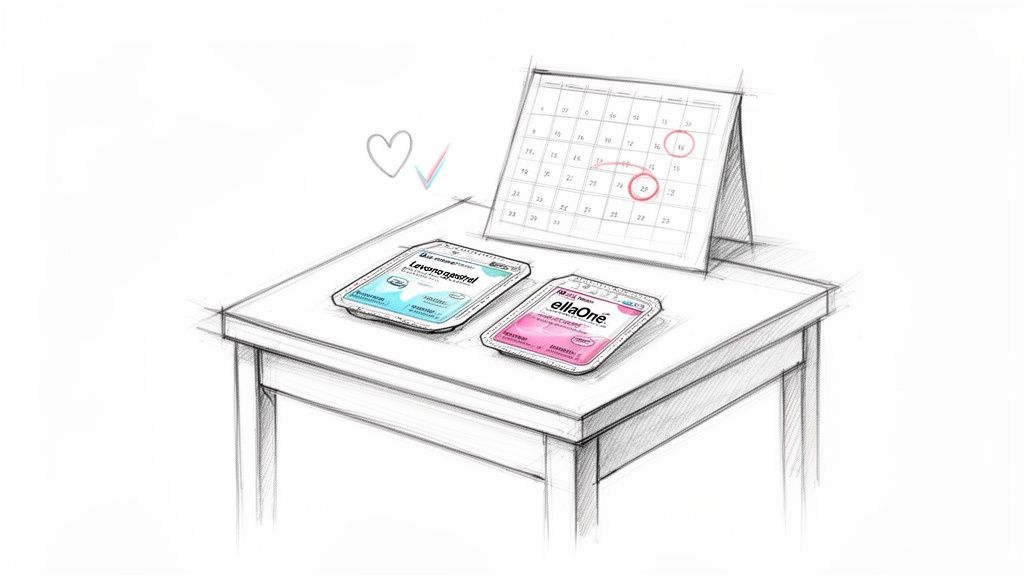
- Levonorgestrel (like the brand Levonelle) is a synthetic version of the hormone progesterone. It is most effective when taken within 72 hours (3 days) of unprotected sex.
- ellaOne (containing ulipristal acetate) adjusts how progesterone acts in your body. This gives it a longer window of effectiveness: up to 120 hours (5 days).
Levonorgestrel vs. ellaOne at a glance
This table breaks down the key differences, from their effective window to the most common side effects.
| Feature | Levonorgestrel (e.g., Levonelle) | ellaOne (Ulipristal Acetate) |
|---|---|---|
| Active Ingredient | Levonorgestrel (a synthetic hormone) | Ulipristal Acetate (a progesterone modulator) |
| Effectiveness Window | Up to 72 hours (3 days) after unprotected sex | Up to 120 hours (5 days) after unprotected sex |
| Most Common Side Effects | Nausea, headache, abdominal pain, period changes | Headache, nausea, abdominal pain, period changes |
| Impact on BMI | May be less effective if your BMI is over 26 | Generally considered more effective for higher BMIs |
| Breastfeeding | Considered safe; small amounts may pass into milk | Avoid breastfeeding for 1 week after taking |
| Interaction with Hormonal Contraception | You can start or resume most hormonal contraception immediately | Wait 5 days before starting or resuming hormonal contraception |
The list of potential side effects is almost identical for both. The main differences are the timing and how they interact with other contraceptives.
What to do if you're sick after taking the pill
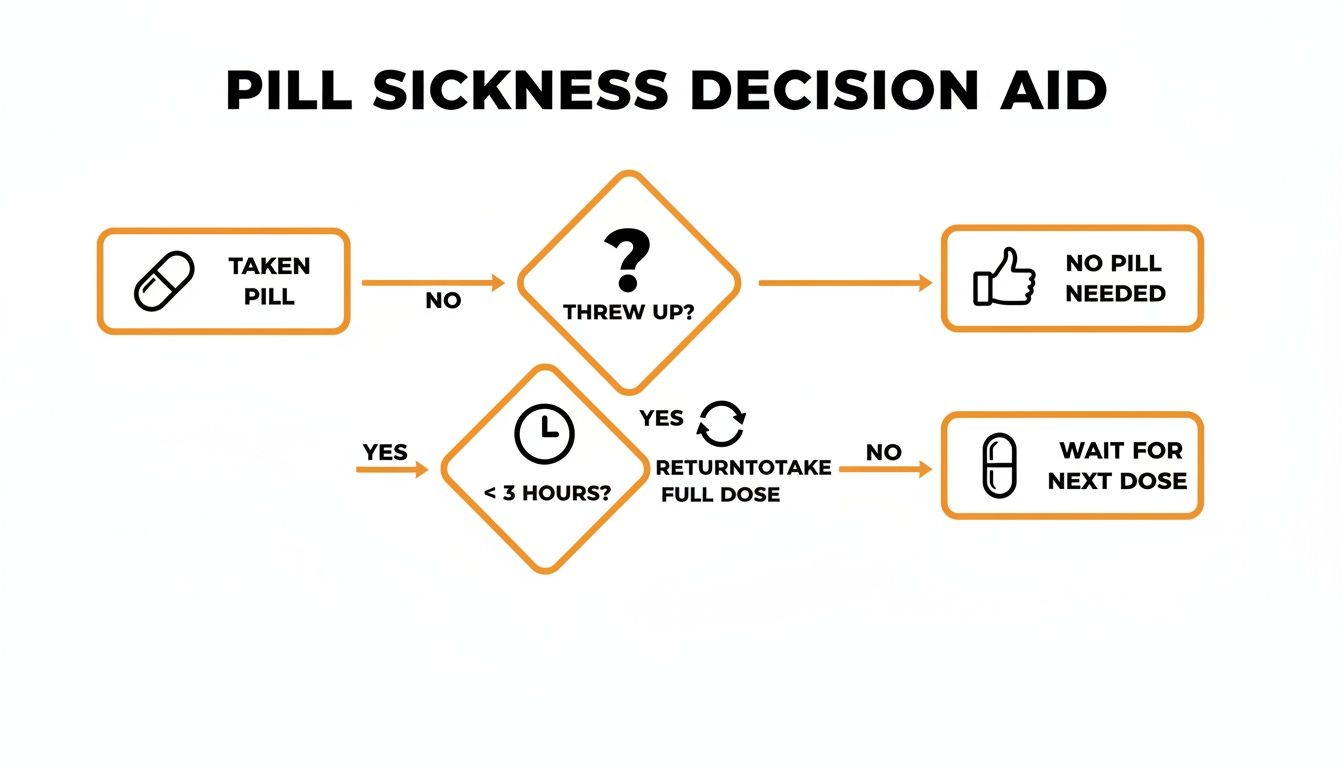
It is crucial to know what to do if you vomit after taking the pill. Your body may not have had enough time to absorb the medication, meaning it might not work.
What to do if you vomit after taking the pill? If you vomit within three hours of taking either Levonorgestrel or ellaOne, you must speak to a pharmacist or doctor about getting another dose right away.
Pharmacist's tip: "It's a good idea to keep your receipt or the pill box. If you get sick and need a replacement, showing the pharmacist what you took and when can speed things up and help them get you sorted quickly."
Less common side effects and when to seek medical help
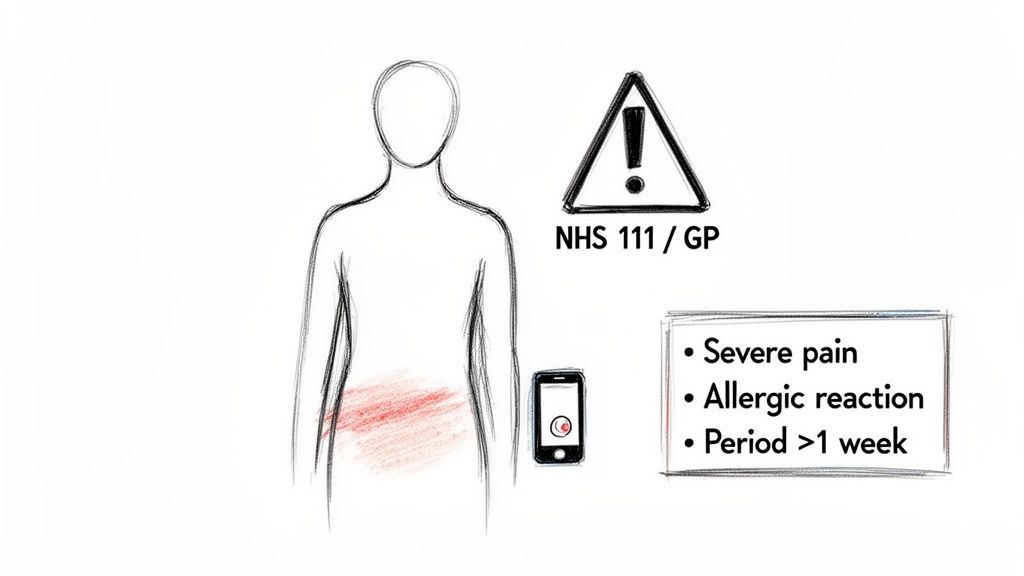
Serious side effects from the morning-after pill are very rare. However, it is sensible to know which signs mean you should contact a healthcare professional. Knowing what to look for allows you to act quickly if something doesn’t feel right.
Warning signs you should not ignore
While most morning-after pill side effects are mild and pass quickly, some symptoms need immediate attention. These can sometimes point to a more serious issue, like an allergic reaction or an ectopic pregnancy. An ectopic pregnancy is when a fertilised egg implants outside of the womb. It's rare but serious.
When to seek urgent help: You should contact your GP, go to an urgent treatment centre, or call NHS 111 straight away if you experience any of the following:
- Severe lower abdominal pain, especially if it's sharp and on one side.
- Signs of an allergic reaction, like an itchy rash (hives), dizziness, or swelling of the face, lips, or tongue.
- Sudden or heavy vaginal bleeding that is unusual for you.
Real-life example: Chloe, a shift worker, took emergency contraception. A week later, she developed a sharp, stabbing pain on her right side. She remembered the advice she had been given and called NHS 111. They advised her to go to an urgent care centre to check for a possible ectopic pregnancy. It turned out to be a harmless cyst, but seeking help was the right decision.
Your questions on safety and repeated use, answered
It's normal to have questions about safety. Let's tackle some of the most common worries about the morning after pill with clear, evidence-based answers to help you feel confident and informed.
Will taking the morning after pill affect my future fertility?
No. There is no evidence that taking the morning after pill has any impact on your long-term fertility. The pill works by temporarily delaying ovulation. Once the medication leaves your system, your natural cycle and fertility return to normal.
Taking the morning after pill, even more than once, will not make it harder to get pregnant in the future. We have helpful resources if you want to learn more about supporting your fertility journey.
Is it safe to take the morning after pill more than once?
Yes, it is safe to take the morning after pill on more than one occasion. You can even take it more than once in the same menstrual cycle if needed. The hormone does not build up in your body.
However, it is not designed to be your main method of contraception. Regular methods like the daily pill or an IUD are far more effective for long-term pregnancy prevention. For more info, read our guide on how to manage or delay your period.
How to get the morning after pill in the UK
Getting emergency contraception in the UK is straightforward and confidential. You have several accessible options, so you can get help without any fuss. The most important thing is to act quickly, as the pill is most effective when taken promptly.
Your options for accessing emergency contraception
You have a few reliable and non-judgemental routes to get the morning after pill.
- Community Pharmacies: Most high street pharmacies offer this service.
- Sexual Health Clinics: They provide emergency contraception for free.
- Your GP Surgery: You can make an urgent appointment for a prescription.
- Registered Online Pharmacies: This is a convenient and private option.
Using a regulated digital service like a registered online pharmacy in the UK allows you to complete a secure medical questionnaire from home. A qualified prescriber reviews your answers and approves the treatment if suitable. The medication is then delivered quickly in discreet packaging.
Summary
In summary, the side effects of the morning after pill are usually mild and short-lived, with many people experiencing none at all. Common effects like nausea or changes to your next period are normal and typically resolve within a couple of days. The most important thing to remember is to seek a replacement dose if you vomit within three hours of taking the pill.
The two main types, Levonorgestrel and ellaOne, are both safe and effective, but the best choice depends on your specific situation. Emergency contraception does not affect future fertility and is a safe backup, but not a replacement for regular contraception. If you have any concerns or experience severe symptoms, always seek medical advice.
Frequently Asked Questions
Can I drink alcohol after taking the morning after pill?
Yes, you can. Alcohol does not make the morning after pill less effective. However, if you drink so much that you vomit within three hours of taking it, you will need to get another dose as it may not have been absorbed.
Does the morning after pill protect against STIs?
No, it does not. The morning after pill only prevents pregnancy. It offers no protection against sexually transmitted infections (STIs). If you have had unprotected sex, consider getting an STI test from a sexual health clinic or your GP.
Will the morning after pill work if I have already ovulated?
It depends on the pill. Levonorgestrel is unlikely to be effective if you have already ovulated. ellaOne may still work if you are very close to ovulating. However, no emergency pill is guaranteed to work post-ovulation.
Will I gain weight after taking the morning after pill?
No, long-term weight gain is not a known side effect. It is a single dose of hormones that leaves your system quickly. You might experience some temporary bloating or water retention for a day or two, but this is not actual weight gain.
How will I know if the morning after pill has worked?
The only way to be certain is when you get your next period. It’s normal for your period to be a few days early or late. If your period is more than seven days late, or it seems much lighter than usual, you should take a pregnancy test.
Can I use the morning after pill as regular contraception?
You should not. It is not as reliable as regular methods like the daily pill or an implant. Using it frequently can also be expensive and may cause more side effects, like an irregular cycle. Think of it as a backup plan, not your main strategy.
At Courier Pharmacy, we provide confidential, expert-led access to a wide range of health treatments, including emergency contraception. Our discreet online service ensures you get the care you need, quickly and safely. Find out more about how Courier Pharmacy can support your health needs.
Disclaimer: This article is for informational purposes only. It is not a substitute for professional medical advice, diagnosis, or treatment. Always seek the advice of your pharmacist, doctor, or other qualified health provider with any questions you may have regarding a medical condition.
How this content was created: This article was written based on reliable, evidence-based sources, including the NHS, NICE guidelines, and peer-reviewed clinical studies. All information was checked for clinical accuracy by a qualified UK pharmacist to ensure it is trustworthy, patient-friendly, and up-to-date.
Author: [Author Name], [Credentials] Clinically Reviewed by: [Reviewer Name], [Credentials]
References: [1] NHS (2022). Side effects of the emergency contraceptive pill. [online] nhs.uk. Available at: https://www.nhs.uk/conditions/contraception/side-effects-emergency-contraception/ [Accessed 20 Oct. 2023]. [2] Faculty of Sexual and Reproductive Healthcare (FSRH) (2023). FSRH Guideline: Emergency Contraception. [online] FSRH. Available at: https://www.fsrh.org/standards-and-guidance/documents/fsrh-guideline-emergency-contraception-march-2017/ [Accessed 20 Oct. 2023].


