Mounjaro Peak Time: When Does It Work and What Should You Expect?
Discover the Mounjaro peak time for weight loss. Our UK guide explains how long Mounjaro takes to work, its side effects timeline, and pharmacist tips.

In this article
- Your Key Takeaways
- What is the Mounjaro peak time?
- What to expect: your week-by-week timeline
- How to navigate the Mounjaro side effects timeline
- When should I seek help for side effects?
- Practical tips for maximising your Mounjaro results
- Summary: Your Mounjaro Journey Explained
- Frequently Asked Questions (FAQs)
- What is the best day of the week to take Mounjaro?
- When does Mounjaro start working for weight loss?
- How long do Mounjaro side effects last?
- What happens if I miss my Mounjaro dose?
- Does Mounjaro make you tired?
- Why do I feel Mounjaro most on day 2 or 3?
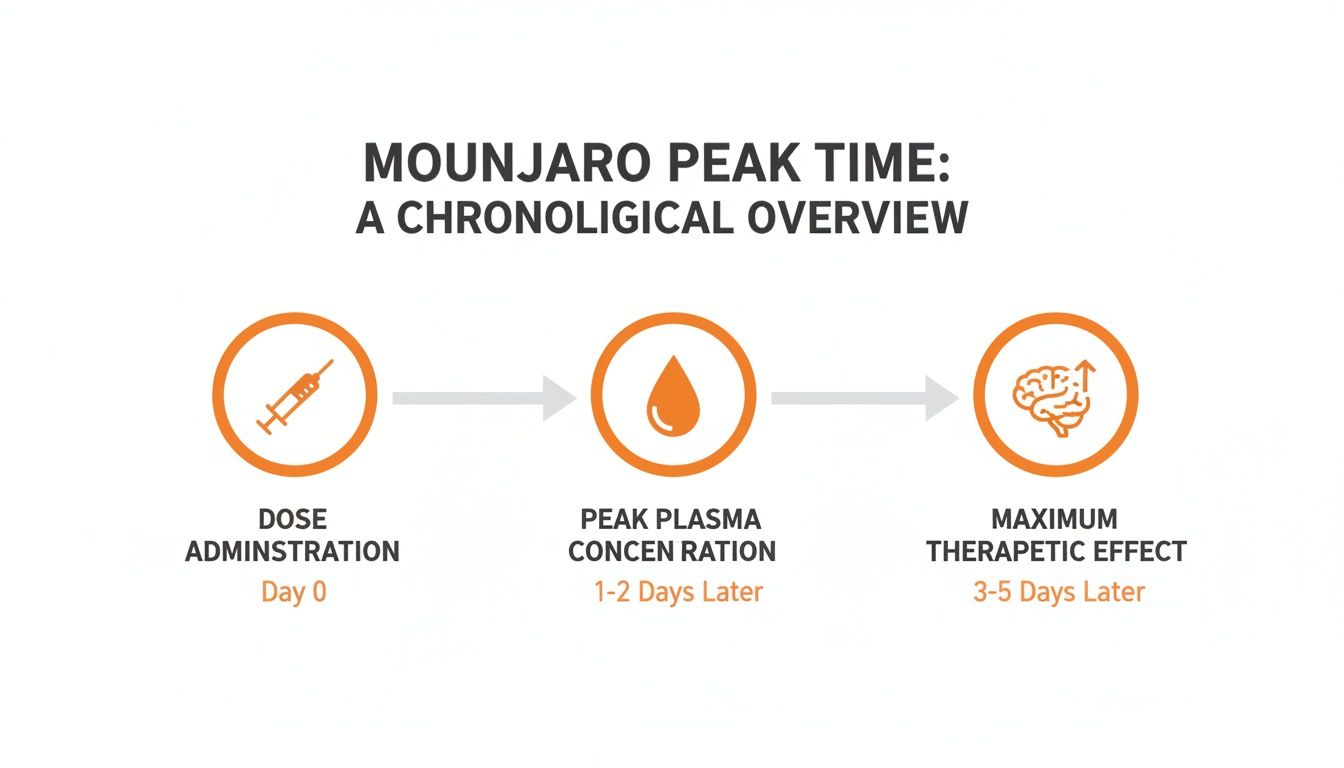
Mounjaro (tirzepatide) reaches its peak concentration in your blood between 8 and 72 hours after your weekly injection. However, you'll likely start feeling its main effects, like reduced appetite, more consistently after 2 to 4 weeks, once your body adjusts and your dose is optimised. Think of it less like an instant switch and more like a dimmer dial slowly turning up. Its powerful effects on appetite control and blood sugar are gradual. This guide will walk you through what ‘peak time’ means for you, what to expect week-by-week, and how to manage your journey with confidence. We’ll also share practical pharmacist tips to help you get the most from your treatment.
Your Key Takeaways
- Peak Concentration: The drug level is highest in your blood 8–72 hours after injection.
- Peak Effects: You’ll feel the most consistent appetite control after 2–4 weeks.
- Side Effects: Nausea is most common in the first 72 hours and often fades over time.
- Best Injection Time: The time of day doesn't matter, but the day of the week does. Be consistent.
- Results are Gradual: Noticeable weight loss takes a few weeks to a month to become apparent.
What is the Mounjaro peak time?
When we talk about Mounjaro's peak time, we are usually referring to two different things: its peak concentration in your blood and its peak therapeutic effect for weight loss.
- Peak Concentration: This is when the amount of tirzepatide (the active ingredient) in your bloodstream is at its highest. This happens anywhere from 8 to 72 hours after you inject your dose [1].
- Peak Therapeutic Effect: This is when you feel the medication working at its best to control your appetite and help with weight loss. This usually takes longer, often becoming consistent after 2 to 4 weeks as the medicine builds up to a 'steady state' in your system.
What to expect: your week-by-week timeline
Knowing what to expect can make your Mounjaro journey feel much more manageable. Here’s a simple breakdown.
| Time Period | What's Happening in Your Body | What You Might Feel |
|---|---|---|
| Weeks 1–2 | Your body is adjusting to the starting dose. | Subtle changes in appetite. Some initial, mild nausea. |
| Weeks 2–4 | Your dose may be increased, enhancing the medication's effects. | Stronger feelings of fullness. Side effects may peak. |
| Month 2+ | The drug reaches a 'steady state' level in your system. | Consistent appetite control and more noticeable results. |
Imagine a busy parent preparing the family dinner. After a few weeks on Mounjaro, they might suddenly realise they are no longer mindlessly snacking while they cook. That is the slow, steady power of the medication making a real difference in daily habits.
For a closer look at how dose adjustments fit into this timeline, you might find our guide on the Mounjaro fifth dose helpful.
How to navigate the Mounjaro side effects timeline
It is completely normal to worry about side effects. The good news is that for most people, they are temporary. The most common issues, like nausea or constipation, usually appear within the first 72 hours after an injection. This is when the drug level is highest in your blood [2]. These effects are most common when you first start Mounjaro or just after your dose has been increased.
Pharmacist's tip: To manage nausea, try eating smaller, blander meals throughout the day. Avoid fatty or very sugary foods, and make sure you sip water regularly. Keeping hydrated makes a big difference.
For example, a shift worker who injects on a Friday might feel a bit queasy over the weekend. By timing their injection before their days off, they can rest and manage any side effects without disrupting their work week.

When should I seek help for side effects?
Most side effects are mild and manageable. However, you should contact your doctor or pharmacist if they are severe or don't go away. Seek urgent medical attention if you experience signs of a serious allergic reaction (like swelling of your face, lips, or throat), severe stomach pain, or changes in your vision.
Practical tips for maximising your Mounjaro results
Mounjaro is a powerful tool, but your daily habits unlock its full potential. With around 1.6 million adults in Great Britain having used weight loss drugs recently, learning how to adapt your lifestyle is a shared experience [3]. This section focuses on you, not just the medicine.

It's all about learning to listen to your body’s new appetite signals and building consistent routines. A regular gym-goer, for example, might find they need to swap their usual pre-workout snack for a smaller, protein-focused meal to feel their best.
Pharmacist's tip: Consistency is key. Taking your dose on the same day each week helps maintain a steady level of the medicine in your body. This provides reliable appetite control and better results.
Pharmacist's tip: Plan your meals. Mounjaro reduces your appetite, but your body still needs nutrients. Planning balanced meals ensures you get the protein, fibre, and vitamins you need to stay healthy and energised.
The Ultimate Mounjaro Diet Guide can give you some excellent pointers on what to eat.
Summary: Your Mounjaro Journey Explained
To sum up, Mounjaro reaches its peak level in your blood within three days of injection, which is when side effects like nausea can be most noticeable. However, its true power for weight loss and appetite control becomes most consistent after several weeks of use. Patience is vital. By listening to your body, managing side effects with simple steps, and staying consistent with your weekly dose, you set yourself up for the best possible results on your weight loss journey.
Frequently Asked Questions (FAQs)
What is the best day of the week to take Mounjaro?
There is no "best" day. Choose a day that fits your schedule and allows you to manage potential side effects. Many people prefer a Friday or Saturday so they have the weekend to adjust if they feel any nausea or fatigue. The most important thing is to take it on the same day each week.
When does Mounjaro start working for weight loss?
While Mounjaro starts working immediately on a hormonal level, you may not see significant weight loss on the scales for a few weeks. Most people begin to notice a consistent reduction in appetite and weight after being on the medication for at least 2 to 4 weeks.
How long do Mounjaro side effects last?
Most common side effects, like nausea and diarrhoea, are temporary. They tend to be most prominent in the first few days after an injection or after a dose increase. For most people, these side effects lessen or disappear completely as their body gets used to the medication over several weeks.
What happens if I miss my Mounjaro dose?
If you miss a dose, take it as soon as you remember, as long as there are at least 3 days (72 hours) until your next scheduled dose. If there are fewer than 3 days left, skip the missed dose and take your next one on the regular day. Do not take two doses at once.
Does Mounjaro make you tired?
Some people report feeling fatigued, especially when first starting Mounjaro or after increasing their dose. This could be due to the medication itself or because you are eating fewer calories. This feeling usually improves as your body adapts. Ensure you are staying hydrated and eating nutrient-dense foods.
Why do I feel Mounjaro most on day 2 or 3?
You may feel the effects of Mounjaro most strongly on the second or third day because this is when the drug concentration in your bloodstream reaches its peak. This can make the appetite-suppressing effects and potential side effects, like nausea, more noticeable during this window.
Meta description: Curious about the Mounjaro peak time? Learn when Mounjaro starts working for weight loss, what to expect week-by-week, and how to manage side effects.
Internal links to include:
- what to do if you're not losing weight on Mounjaro
- the Mounjaro fifth dose
- whether Mounjaro causes hair loss
- The Ultimate Mounjaro Diet Guide
- UK Mounjaro statistics on click2pharmacy.co.uk
Byline: Written by: The Medical Mojo Editorial Team Clinically reviewed by: [Pharmacist Name], MPharm
How this content was created: This article was written by our in-house editorial team using reliable, evidence-based sources. We prioritised information from the NHS, NICE, and high-quality clinical studies. The content was then reviewed for clinical accuracy by a qualified UK pharmacist to ensure it is safe, clear, and trustworthy. All information is for educational purposes and is not a substitute for professional medical advice.
References: [1] Eli Lilly and Company. 2023. Mounjaro (tirzepatide) injection, for subcutaneous use. [Online]. Available at: https://www.accessdata.fda.gov/drugsatfda_docs/label/2023/215866s005lbl.pdf (Accessed: [Date]) [2] The Electronic Medicines Compendium (emc). 2023. Mounjaro KwikPen Summary of Product Characteristics (SmPC). [Online]. Available at: https://www.medicines.org.uk/emc/product/14432/smpc (Accessed: [Date]) [3] Medical Xpress. 2024. 1.6 million adults in Great Britain used weight loss drugs in the past year. [Online]. Available at: https://medicalxpress.com/news/2024-01-million-adults-great-britain-weight.html (Accessed: [Date])


