Nasal Antibiotic Cream Uses and Safety
Learn what nasal antibiotic cream treats, which ingredients clinicians use, how to apply it, and when to seek medical advice safely.

Nasal antibiotic cream is usually prescribed for bacterial carriage or a clinician-identified nasal infection, not for ordinary congestion, crusting or sinus symptoms without assessment. For MRSA decolonisation in UK hospitals, mupirocin 2% is typically applied to both nostrils three times daily for 5 days, alongside chlorhexidine body washing.
You may be looking at a blocked nose, a sore patch or a crust that keeps returning, and wondering whether an antibiotic cream will sort it out. That's understandable, but the nose is easy to misread. Dry air, allergies, viral illness, irritation and bacterial infection can look similar at first.
This guide explains where nasal antibiotic cream fits, how prescribed products differ, how to apply them safely, and when to seek help. It also explains why a short decolonisation course is different from treating suspected sinusitis. A pharmacist can check the product and technique, but symptoms that worsen or fail to settle need clinical assessment.
Five key takeaways
- Use matters: Nasal antibiotic cream targets selected bacterial problems, not general stuffiness.
- Mupirocin is protocol-led: UK MRSA pathways commonly use mupirocin 2% three times daily for 5 days, with body washing and follow-up screening 1.
- Formulation matters: Intranasal mupirocin isn't automatically interchangeable with a skin ointment 2.
- Technique matters: Apply a small amount to the front inside of each nostril, then gently press the nostrils together.
- Stewardship matters: Don't share, save or repeatedly reuse antibiotic cream without a prescriber's advice.
What nasal antibiotic cream is for
A blocked nose rarely needs an antibiotic. Crusting after a cold, hay fever or dry indoor air may reflect irritation rather than infection. Nasal antibiotic cream is prescribed for a defined bacterial reason, such as confirmed staphylococcal carriage, a selected local infection, or a planned decolonisation course before a medical procedure.
Mupirocin 20 mg/g nasal ointment is licensed in the UK to eliminate nasal carriage of staphylococci, including MRSA, in adults, adolescents and children aged 1 year and older 2. This purpose differs from treating cheek pressure, post-nasal drip or a runny nose, which often have viral, allergic or inflammatory causes. Suspected sinus infection and prescribed nasal decolonisation therefore require different decisions, even when the nose feels blocked.
The common mistake
Yellow crusts or tenderness at the nostril entrance do not identify the cause. Irritation, nose-picking, eczema, a boil and bacterial infection can look similar. A clinician or pharmacist should assess the pattern before an antibiotic is selected, particularly if pain, swelling or spreading redness is present.
Formulation and application also matter. A licensed nasal product may be suitable for use inside the nostrils, while a skin ointment may be intended only for the surrounding skin. They are not automatically interchangeable. Using the wrong preparation can irritate delicate tissue and encourages antibiotic use without a clear indication.
NICE found that broad routine nasal decontamination for surgical patients did not reduce overall surgical-site infection rates. It also found no reduction in Staphylococcus aureus surgical-site infection or all-cause infection among carriers when treatment was used routinely 3. UK practice therefore favours targeted, prescribed protocols rather than treating every crust or blocked nose.
Practical rule: Treat the diagnosis, not the appearance of the crust.
For questions about symptoms, the nasal infection treatment guide outlines issues a clinician may ask about. It cannot replace an examination or prescription. Seek advice from a GP, NHS 111 or a regulated pharmacy service if symptoms worsen, persist or are difficult to interpret.
Understanding carriage, infection and decolonisation
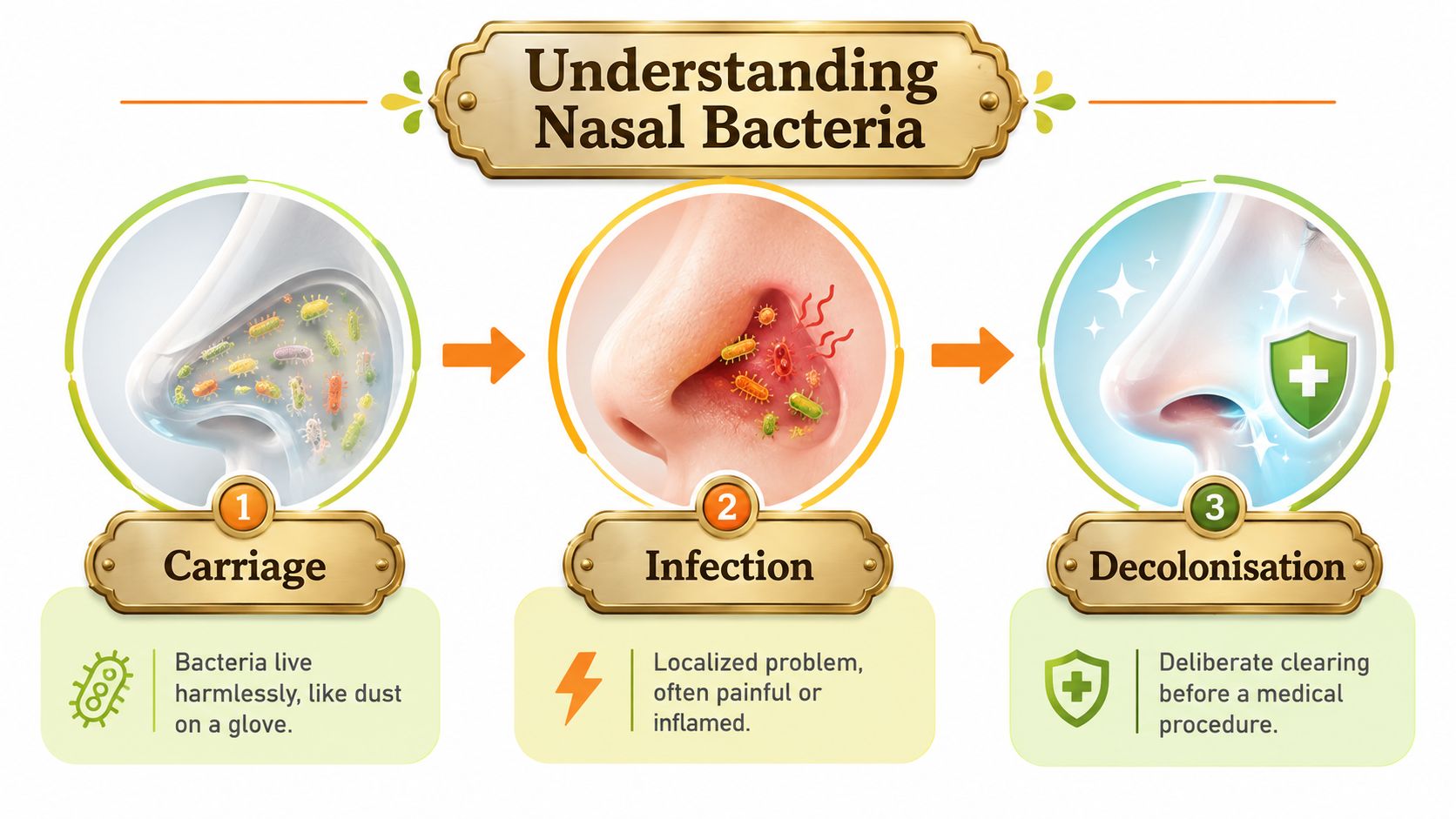
A person can carry bacteria in the nostrils without feeling unwell. This state is carriage, also called colonisation. The bacteria are present, but they are not necessarily damaging tissue or causing symptoms.
An infection involves local tissue damage and may cause pain, warmth, swelling, pus or spreading redness. A painful boil at the nostril entrance needs assessment, because cream alone may not be enough. Sinus pressure, blocked nasal passages and discharge can also have inflammatory or viral causes, so they do not automatically indicate a bacterial infection.
Decolonisation is a prescribed attempt to reduce bacterial carriage, usually for a defined clinical reason such as a positive MRSA screen or preparation for selected surgery. It is a planned course, not a way to treat each crust, blocked nose or episode of facial pressure.
Where the cream fits
For MRSA decolonisation, the referenced UK hospital protocol uses mupirocin 2% in both nostrils alongside chlorhexidine body washing. The course lasts 5 days, followed by repeat screening at least 2 days after completion 1. Follow the prescribed schedule and use the specified formulation. Applying extra cream or extending the course does not make treatment safer or more effective.
Some protocols use another nasal antibacterial product, including a preparation containing neomycin and chlorhexidine, for a specific indication. The formulation and application instructions must match the prescription. The Bactroban nasal and topical treatment page describes one product option, but a clinician or pharmacist must confirm that it is suitable for the intended site and purpose.
Antibiotic cream will not treat a viral cold, allergic rhinitis or dry-air crusting. It will not relieve sinus pressure caused by inflammation alone. Suspected sinusitis needs clinical assessment when symptoms are severe, prolonged or worsening.
A local infection may need oral antibiotics, drainage or treatment for an underlying skin condition. Decolonisation may require body wash and repeat screening. One tube cannot safely cover all three situations.
Active ingredients and prescribed options
The correct nasal product depends on the problem being treated. A suspected sinus infection, a local skin infection and prescribed MRSA decolonisation are different clinical situations, so the active ingredient, formulation and course must match the diagnosis.
Mupirocin is used in many NHS MRSA decolonisation protocols. UK hospital guidance describes applying mupirocin to both anterior nostrils three times daily for 5 days, commonly alongside body washing and repeat screening 4. This is a targeted carriage-eradication plan, not a general treatment for sinus pressure or a blocked nose. Repeated or prolonged use can encourage resistance, so the prescribed course should not be extended or repeated without review.
Fusidic acid may be prescribed for a selected, localised bacterial skin infection. It is not a routine treatment for nasal blockage, facial pressure or inflammation. The prescriber must confirm whether the product is intended for the skin around the nostril or for use inside it. This guide to Fucidin cream explains its usual skin-related uses and limitations.
Neomycin-containing combinations, including Naseptin with chlorhexidine, may be used in selected prescriber-led nasal treatment. Allergy is a particular safety check, especially if the patient has reacted to neomycin or similar products before.
A specialist may occasionally request a bespoke preparation containing bacitracin or gentamicin. A regulated pharmacy should confirm the ingredient, strength, base and directions against a clear prescription. This option is not a substitute for deciding whether the patient has infection, carriage or another cause of symptoms.
| Active ingredient | Typical prescribed use | Formulation notes | Key safety checks |
|---|---|---|---|
| Mupirocin | Staphylococcal, including MRSA, nasal carriage | Specialist intranasal ointment, often used in a timed decolonisation pathway | Confirm it is the nasal formulation, follow the course, avoid unplanned repeat use |
| Fusidic acid | Selected localised bacterial skin infection | Often supplied as a skin cream or ointment | Check whether use is intended inside the nostril or around it |
| Neomycin with chlorhexidine | Specific nasal antibacterial treatment | Combination nasal cream, such as Naseptin | Check allergy history, particularly previous neomycin reactions |
| Bacitracin or gentamicin | Uncommon, specialist or bespoke use | May require a prescriber-led compounded formulation | Confirm the exact strength, base, directions and monitoring plan |
Licensed products and compounding
Licensed medicines have defined ingredients, strengths and patient information. A compounding pharmacy prepares a specific formulation against a prescription, which may help when a patient has an allergy, needs a particular base or cannot use an available product.
Compounding does not resolve an uncertain diagnosis. Check pregnancy, breastfeeding, allergies and other nasal products before use. Never use another person's tube, even when the packaging appears familiar.
How to apply nasal antibiotic cream safely
A decolonisation course is applied to the front of the nostrils, not used as a general treatment for a blocked or painful nose. Follow the dispensing label and product leaflet. Directions differ between medicines, so your prescription takes priority.
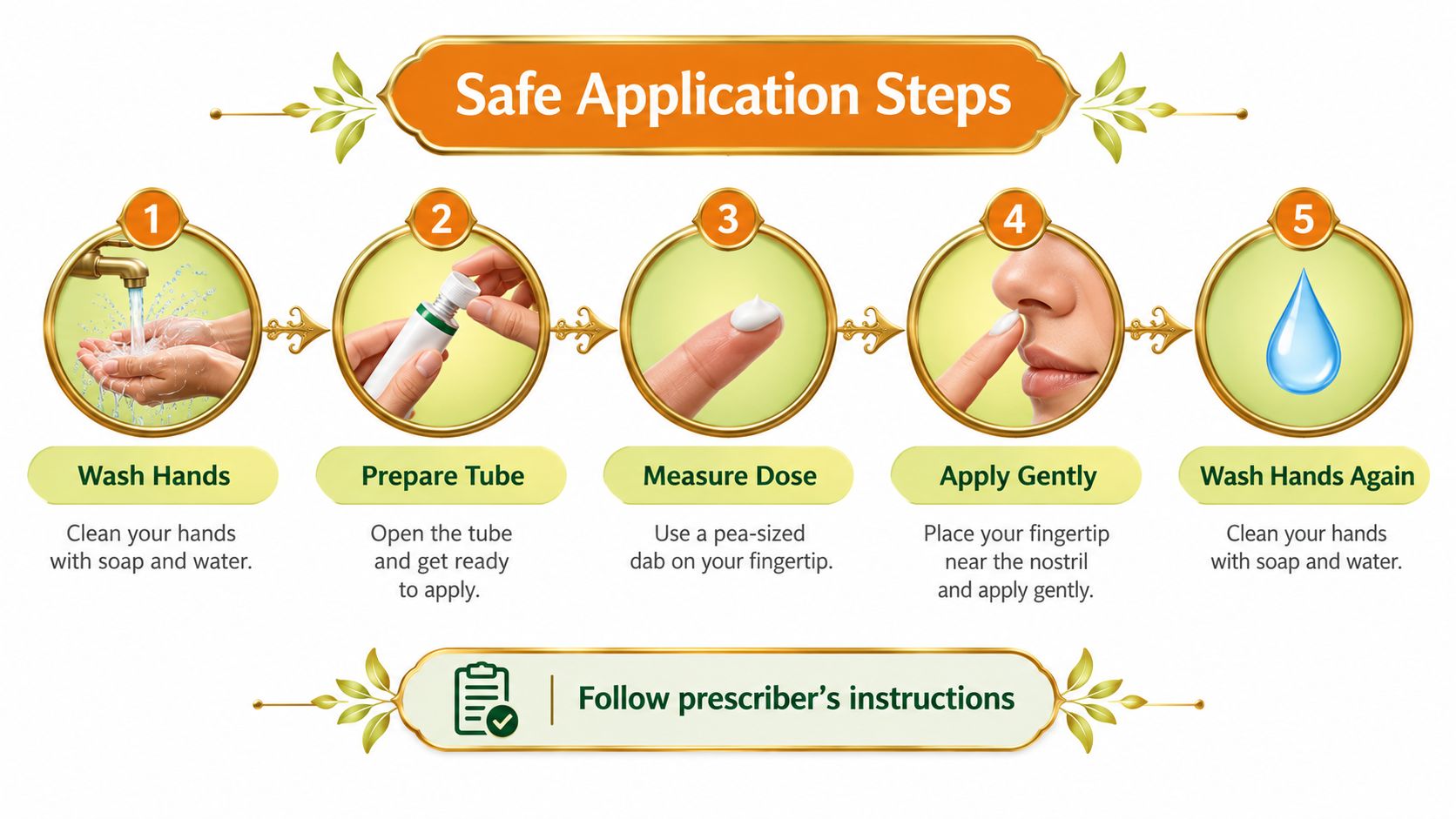
Use this sequence unless your clinician gives different instructions:
- Wash your hands with soap and water, then dry them.
- Check the tube for the name, active ingredient and expiry date. Confirm that it is the nasal formulation.
- Use a small amount, often described as a pea-sized or match-head-sized dab for each nostril, according to the product instructions.
- Apply it just inside the nostril, across the front inner surface. Do not push a finger, cotton bud or nozzle deep into the nose.
- Press the nostrils together gently so the cream spreads over the lining.
- Wipe the nozzle clean if the instructions require this. Do not wash medicine into the tube.
- Wash your hands again after application.
The aim is contact with the front nasal lining, where staphylococcal carriage commonly occurs. Rubbing hard can cause soreness, bleeding and small breaks in the skin. Applying more cream will not make the course work faster.
Avoiding preventable errors
Keep the tube for one person only. Do not apply nasal cream to the eyes, or transfer it to broken skin unless the label specifically allows that use. Store it as directed and keep it away from children.
Complete the prescribed course, even if the nose feels better. If you miss an application, do not double the next dose. Check the leaflet or ask a pharmacist, because missed-dose advice varies between products.
For a visual explanation of gentle application, watch the following demonstration, then follow your own prescription rather than copying another product's schedule.
The Naseptin nasal cream information page can help identify product-specific questions to raise with a pharmacist. It does not replace the directions on your dispensing label.
Real-life scenarios and pharmacist tips
A busy parent may receive a positive MRSA screen before a child's planned operation. The child also picks the nose, so the nostrils look sore. The important detail is the prescribed protocol, not the appearance. If the hospital prescribes mupirocin for 5 days with chlorhexidine washes, the parent should keep to every scheduled application and ask the ward team about any missed dose.
Pharmacist's tip: Check the tube's name and expiry date before the first use. A similar-looking skin ointment may not be the nasal formulation.
A night-shift worker in a shared house develops a painful lump at the nostril entrance. They share towels and wonder whether an old antibiotic tube will help. A clinician should assess the lump, check for spreading cellulitis and decide whether topical treatment is suitable. A boil may need a different plan, especially if pain, swelling or fever increases.
Pharmacist's tip: Keep cotton buds at the front only. Deep cleaning can injure the lining and worsen bleeding or crusting.
These situations show why internet remedies and leftover medicines can mislead. One person may need decolonisation. Another may need treatment for a boil. A third may have dry, irritated skin.
Pharmacist's tip: Don't layer nasal antibiotic cream over another ointment unless a prescriber or pharmacist confirms the combination. Multiple products can irritate the lining and make it harder to tell which product caused a reaction.
If crusting worsens, pain spreads or the medicine causes a new rash, pause and seek advice rather than adding another product. The Courier Pharmacy ordering and consultation process explains why a clinician may need details about symptoms, medicines and medical history before supplying treatment.
Risks, side effects and when to seek help
Most reactions to a prescribed nasal ointment remain local. Mild stinging, dryness, redness or an unpleasant taste can occur and may settle. Irritation that persists or worsens needs advice, particularly if the product was intended for a decolonisation protocol rather than a suspected sinus infection.
Allergic reactions need prompt action. Stop using the product and seek urgent help for facial or throat swelling, breathing difficulty, a widespread rash or sudden weakness. Call 999 for severe breathing problems or a rapidly developing reaction.
Antimicrobial resistance is another reason to follow the prescription closely. Repeated courses, sharing tubes, keeping leftovers for a different problem or stopping early can expose bacteria to the medicine without completing the planned treatment. Mupirocin should not be used for prolonged or repeated periods unless a clinician has specifically advised it, because this can encourage resistance.
Tell the prescriber or pharmacist about other nasal sprays, creams and recent antibiotics. A safety check can identify an irritating combination, confirm that the formulation is suitable for nasal use and prompt a review if the symptom does not fit decolonisation. Previous safe use does not guarantee that the same product suits a new symptom.
| Concern | Likely cause | Reader action |
|---|---|---|
| Mild brief stinging or dryness | Local irritation | Follow the label and ask a pharmacist if it persists |
| Increasing redness or soreness | Irritation, allergy or infection | Stop self-directed use and seek clinical advice |
| Spreading rash or swelling | Possible allergic reaction | Stop the medicine and seek urgent medical help |
| Worsening pain or fever | Infection may be progressing | Arrange same-day assessment |
| Blood-stained discharge | Trauma, inflammation or another nasal problem | Seek medical advice, especially if it continues |
| Swelling around the eye | Possible spread of infection | Seek urgent same-day care |
| Symptoms unchanged after the course | Wrong diagnosis, resistance or another cause | Contact the prescriber for review |
Seek same-day help for worsening facial pain, fever, blood-stained discharge, swelling around the eye or symptoms that remain after the prescribed course. These features may indicate a sinus or other infection, rather than nasal carriage requiring decolonisation. They need clinical assessment, not another tube.
Practical summary and common questions
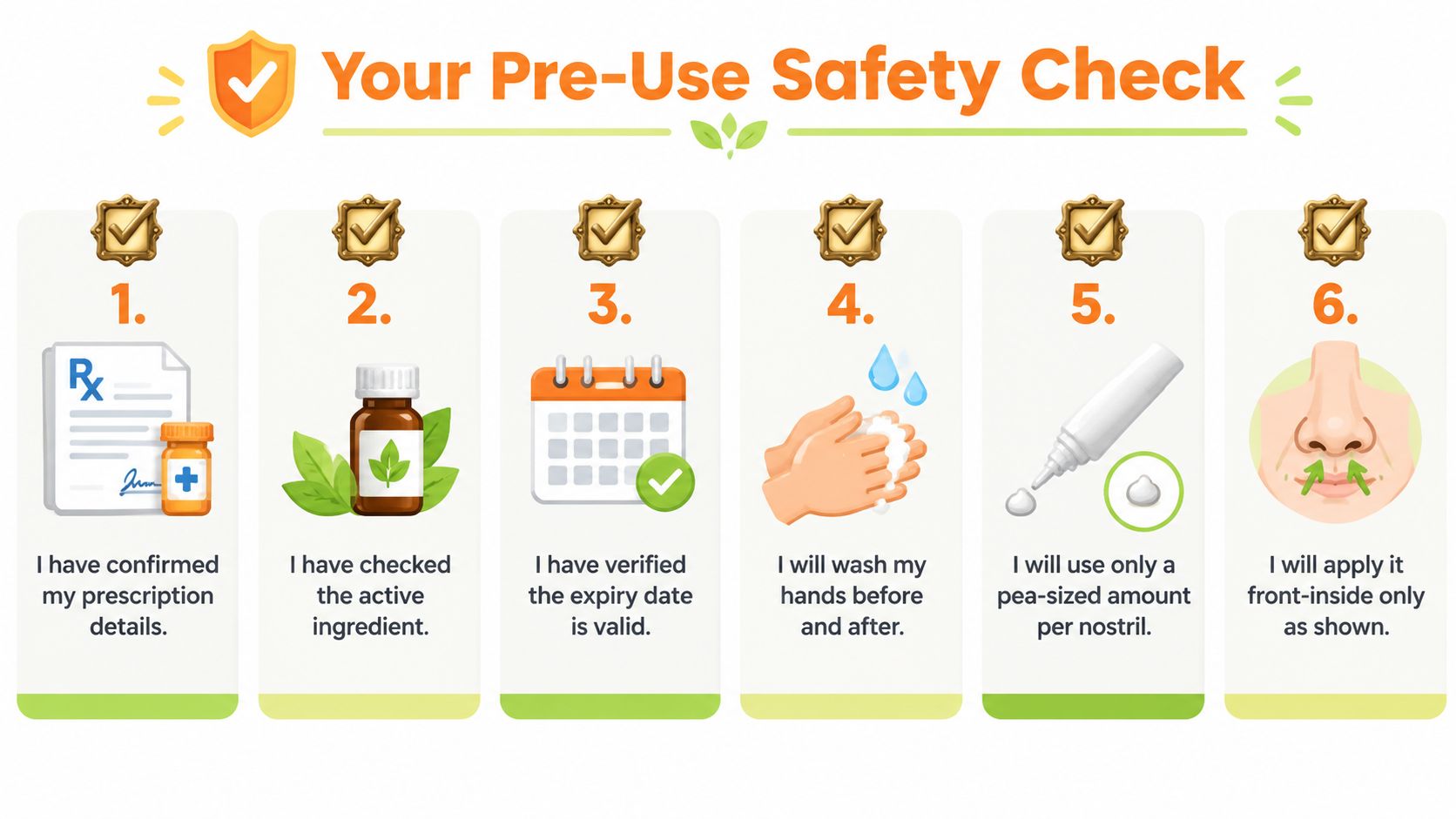
Start with a safety check before using any course. A suspected sinus infection and a prescribed nasal decolonisation course are different problems, so the product, formulation and instructions must match the purpose.
- Confirm the prescription: Check the product, dose and treatment days.
- Check the ingredient: Make sure it is the nasal formulation where required.
- Check the expiry: Do not use an out-of-date tube.
- Wash your hands: Clean hands before and after application.
- Use the right amount: Follow the label's measured amount for each nostril.
- Apply at the front: Spread it gently inside the nostril without deep insertion.
- Finish the course: Do not stop early or save the remainder.
- Keep it personal: Never share the tube.
Does nasal antibiotic cream treat sinus pain?
Usually, no. Sinus pain may result from a viral illness, allergy or inflammation, none of which is treated by nasal antibiotic cream. Severe or worsening pain, fever, facial swelling or eye symptoms need clinical assessment.
How long does mupirocin nasal treatment last?
A UK MRSA decolonisation schedule may use mupirocin 2% three times daily for 5 days, alongside chlorhexidine body washing, as described in the relevant local medicines guidance 1. Your label may specify something different. Follow the prescription rather than changing the timing yourself.
Why combine nasal cream with body wash?
MRSA can be carried on body sites beyond the nose. A prescribed decolonisation pathway may therefore combine nasal treatment with chlorhexidine washing, with follow-up checks where advised. This approach is not the same as treating facial pain or congestion.
What should I do if I miss a dose?
Check the product leaflet or ask a pharmacist. Do not apply extra cream unless the instructions say to. Return to the prescribed schedule and complete the course as directed.
Can I use a compounded alternative if I have allergies?
Possibly, but only after a prescriber confirms that an alternative is needed and specifies a suitable formulation. The pharmacy should check the active ingredient, base and known allergies. A compounded product is not automatically safer, particularly inside the nose.
Can a pharmacist diagnose a sinus infection?
A pharmacist can check the medicine, explain application and identify warning signs. They may recommend GP or urgent assessment when symptoms suggest sinus infection, cellulitis or another condition that needs examination. A decolonisation prescription does not prove that current pain is caused by bacterial infection.
When should I seek urgent help?
Seek urgent help for facial swelling, breathing difficulty, spreading redness, high fever, swelling around the eye or rapidly worsening pain. Blood-stained discharge, increasing soreness or symptoms that remain after the prescribed course also warrant medical advice. Do not keep applying cream while waiting for review if the symptoms are worsening.
What is the main safety message?
Nasal antibiotic cream is appropriate only when the diagnosis, formulation and schedule fit the intended use. Apply the prescribed amount carefully, avoid sharing or saving leftovers, and do not repeat treatment without clinical review.
Summary
- Nasal antibiotic cream is not a general treatment for congestion or sinus pain.
- Mupirocin commonly supports targeted MRSA decolonisation.
- Some UK protocols pair nasal treatment with chlorhexidine body washing.
- A product made for skin is not automatically suitable for intranasal use.
- Apply a small amount to the front inside of each nostril.
- Do not share, save or repeat antibiotic cream without advice.
- Seek urgent help for swelling, fever, spreading redness, eye symptoms or breathing problems.
Meta description: Nasal antibiotic cream explained for UK patients, including mupirocin use, safe application, MRSA decolonisation, side effects and when to seek help.
Byline: Written by the Medical Mojo editorial team, with UK pharmacy and medicines-information expertise.
Clinical review: Reviewed by a UK-registered pharmacist, with product-specific advice checked against the cited NHS, NICE and UK medicines information.
How this content was created: We based this article on the cited NHS and NHS-affiliated MRSA guidance, NICE recommendations, UK product information and patient leaflets. The content underwent a clinical accuracy review for formulation, application, antimicrobial stewardship and urgent warning signs. It is informational only and not a substitute for medical advice.
References
- Greater Glasgow and Clyde Medicines Handbook. MRSA eradication policy. Available at: NHS MRSA eradication policy.
- Electronic Medicines Compendium. Mupirocin 20 mg/g nasal ointment patient information leaflet. Available at: UK mupirocin nasal ointment leaflet.
- National Institute for Health and Care Excellence. Surgical-site infection guidance and nasal decontamination evidence. Available at: Peer-reviewed review of NICE guidance.
- Wirral University Teaching Hospital NHS Foundation Trust. MRSA decolonisation patient information. Available at: MRSA decolonisation leaflet.
- Electronic Medicines Compendium. Mupirocin nasal ointment patient information. Available at: Mupirocin product information.
- National Institute for Health and Care Excellence. Nasal decolonisation and antimicrobial resistance recommendation. Available at: NICE nasal decolonisation recommendation.
Courier Pharmacy can arrange a clinician-led assessment for suitable nasal treatments, including prescribed options where appropriate, with formulation and safety checks considered. Visit Courier Pharmacy to start an online consultation and discuss your symptoms with the appropriate clinical team.


