No Morning Erections: Why It Happens and What to Do
No morning erections? Understand why they occur, when to seek help, and practical steps to address the issue with proven treatments and lifestyle changes.
[6]
- Primary keyword: no morning erections
- Secondary keywords: morning erections, nocturnal erections, erectile dysfunction, low testosterone, erectile health
- Search intent: Understand why morning erections may be absent and when to seek medical advice
- Target reader: UK adults concerned about a change in spontaneous erections
- Product or service mention: Clinician-led assessment, testing and treatment options
- Internal links available: Courier Pharmacy pages for erectile dysfunction, testosterone, testing and tadalafil
If you wake without an erection occasionally, that usually isn't a problem. Persistent loss of morning erections, especially with low libido or erection difficulties at other times, deserves a medical review.
You may have noticed the change after a poor night's sleep, a stressful week, or a few drinks. Morning erections happen during sleep, so you might miss them before waking. This article explains what they mean, what can affect them, and how to decide whether you need help.
Understanding Morning Erections and When to Worry
A man may wake after several mornings without an erection and immediately wonder whether he has erectile dysfunction. That conclusion is understandable, but a change in morning erections is a clue, not a diagnosis.
Nocturnal erections occur during sleep, often around the rapid-eye-movement, or REM, phase. You may wake before one occurs, or after it has ended, so the absence of an erection at the moment you open your eyes does not prove that none happened overnight. British Society for Sexual Medicine guidance

Occasional absence versus a lasting change
Sleep disruption, stress, tiredness, alcohol, illness and some medicines can alter both sleep stages and erection patterns. A single missed morning erection therefore provides limited information.
The pattern matters more than one observation. Persistent absence deserves closer attention when erections are also less common during masturbation or sexual activity, or when you have lower desire, fatigue, mood changes, testicular changes or reduced exercise tolerance. These symptoms can relate to sexual, hormonal or general health, including cardiometabolic factors such as blood-vessel health and diabetes risk.
Erections at other times provide useful context. If they remain normal, sleep or timing may explain what you notice. If starting or maintaining an erection becomes difficult more generally, read about erectile dysfunction and arrange a confidential discussion with a GP or sexual-health service.
Practical rule: Treat a single missed morning erection as information, not a diagnosis. A lasting change, especially alongside other symptoms, is a reason to seek assessment. A clinician can review your sexual history, medicines, hormones and cardiovascular health rather than judging your health from one morning.
The Science Behind Nocturnal Erections
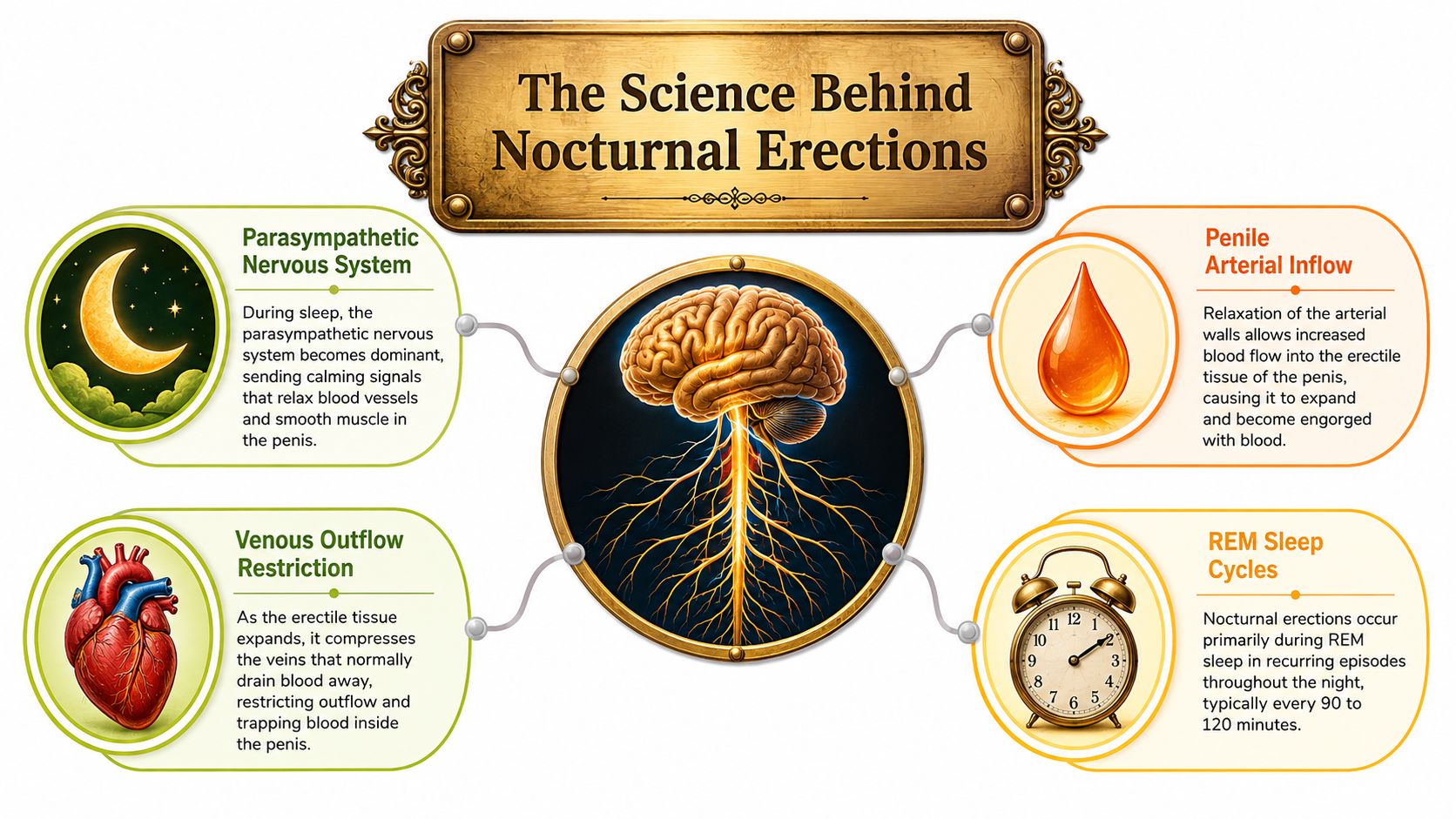
A nocturnal erection depends on communication between the brain, nerves, blood vessels and erectile tissue. Parasympathetic nerves, which are more active during rest, signal the penile arteries to widen. Increased blood flow then fills the smooth-muscle chambers inside the penis.
Firmness also depends on trapping that blood. As the erectile tissue expands, it compresses veins that would otherwise carry blood away. Limited arterial flow can prevent adequate firmness, while poor venous trapping can make an erection fade quickly. This physiology explains why sleep-related erections can offer clues about vascular and nerve function, without diagnosing a specific condition.
Why sleep matters
Sleep-related erections commonly occur during REM sleep, the stage associated with vivid dreaming and changing brain activity. A person can have several episodes overnight and remain unaware of them. Waking between episodes, or waking during another sleep stage, may leave no visible sign in the morning.
Most men have several REM-related erections per night, with each lasting roughly 20 to 30 minutes. These episodes do not follow the clock, so the time you wake can affect what you observe. A missed morning erection is therefore a limited clue, not a record of the whole night.
Persistent changes still merit attention because diabetes, vascular disease, neurological conditions, hormone problems and some medicines can affect the nerves, blood flow or erection response. These factors may also matter for wider cardiometabolic health.
Nocturnal penile tumescence testing can measure erections during sleep, but it may require an overnight hospital admission. Clinicians usually begin with a detailed history and examination before considering specialised testing.
For a visual explanation, this educational video about nocturnal erections may help.
Common Causes of Absent Morning Erections
An occasional missed morning erection is common and may reflect sleep timing, fatigue or stress. Persistent absence is more informative, especially when erections are also less reliable during sex or masturbation. It remains a clue, not a diagnosis, so the pattern needs context.
| Cause type | Key features | Examples |
|---|---|---|
| Organic | Steady or gradual change across several situations | Vascular or nerve disorders, diabetes, hormone problems, medication effects |
| Psychogenic | Varies with stress, anxiety or circumstances | Performance worry, depression, relationship strain |
| Lifestyle or sleep-related | Begins after a change in routine or recovery | Poor sleep, fatigue, alcohol or illness |
| Mixed | Physical and emotional factors reinforce each other | Health anxiety after a physical change, or stress alongside diabetes |
Physical contributors
Erection depends on blood flow, nerve signals and hormones working together. A change that persists across settings may prompt checks of blood pressure, glucose, cholesterol and other relevant risks, alongside questions about libido and sexual function. Low testosterone is more plausible when absent morning erections occur with low libido, fatigue or other clinical signs. Information about testosterone replacement therapy should not replace proper testing, which requires suitable timing and clinical context.
Medicines can affect erection quality. Bring a dated list of antihypertensives, SSRIs, and 5-alpha-reductase inhibitors started in the last 3 months, along with sedatives, anti-androgens, anticonvulsants and recreational drugs. Do not stop prescribed treatment without medical advice.
Psychological and daily-life factors
Stress keeps the body in an alert state, while anxiety can create a feedback loop: monitoring erections increases worry, which can make erections harder to achieve. Sleep loss, alcohol, depression and relationship difficulties may contribute. These factors can occur alongside physical causes, so a psychological explanation does not mean the symptoms are imaginary.
Real-Life Scenarios - Ageing, Stress, and Medications
A busy parent in his forties wakes repeatedly to settle a child, works long days and feels tense about work. After a difficult week, he notices no morning erections.
He still feels sexually interested and can achieve an erection during intimacy. In this setting, broken sleep, stress and fatigue may explain an occasional change. If erections return as sleep improves, that provides useful context. The episode remains a clue, not a diagnosis, and ongoing concerns deserve medical advice.

A shift worker with several risk factors
A 52-year-old shift worker taking antihypertensives presents differently. His shifts change from days to nights, his sleep occurs at varying times, and spontaneous erections have declined persistently. Erections are also less reliable during sex.
Irregular waking can make morning erections difficult to observe, like checking a clock that runs on a changing schedule. Persistent loss across sleep, masturbation and partnered sex needs a proper review. A clinician may assess blood pressure, diabetes risk, cholesterol, medication effects and testosterone when appropriate. These checks connect sexual symptoms with cardiometabolic health, rather than treating the erection change in isolation.
Context matters: Duration, sleep, libido and erections in other settings make the symptom more informative.
Fatigue, alcohol, stress and bladder fullness can also change erections from one morning to the next. Central and North West London NHS guidance notes that persistent absence is more informative when erections also decrease during sleep, masturbation or sexual activity. Central and North West London NHS guidance
If treatment for erectile difficulties is considered, information about tadalafil 5mg for erectile dysfunction and benign prostate enlargement should be reviewed with a clinician, including suitability and possible interactions.
How Clinicians Evaluate Absent Morning Erections
A GP begins by asking what has changed, rather than ordering every possible test. Occasional absence may reflect sleep disruption, stress or alcohol. A persistent pattern, especially alongside erection difficulties during sex or masturbation, deserves a broader assessment because it is a clue, not a diagnosis.
Step one starts with your history
Record when the change began and how often you notice it. Describe sleep quality, shift work, stress, alcohol, smoking, exercise, libido, and erections during masturbation or partnered sex. Irregular waking can hide a sleep-related erection, like checking a clock that follows a different schedule each day.
Bring a complete list of medicines and supplements, including recent dose or treatment changes. The timing may point to a possible medicine effect, while questions about mood, urinary symptoms, testicular changes and neurological symptoms help distinguish physical and psychological contributors.
Step two checks wider health
The clinician may measure blood pressure and ask about diabetes, cholesterol, weight, smoking and family history. These checks connect sexual symptoms with vascular and cardiometabolic health. They also help identify risks that may need attention even when erection changes are occasional.
Step three uses targeted tests
Possible tests include glucose or HbA1c, cholesterol and testosterone. Testosterone follows a daily rhythm, so sampling is commonly recommended between 7 a.m. and 11 a.m. Night and shift workers may need testing within three hours of waking, because sleep timing affects that rhythm. Laboratory-medicine review
If the first morning sample is borderline low, a clinician may repeat it and consider LH, FSH and prolactin before referral or treatment. A single result should be interpreted alongside libido, examination findings and general health, not used alone to explain the symptom.
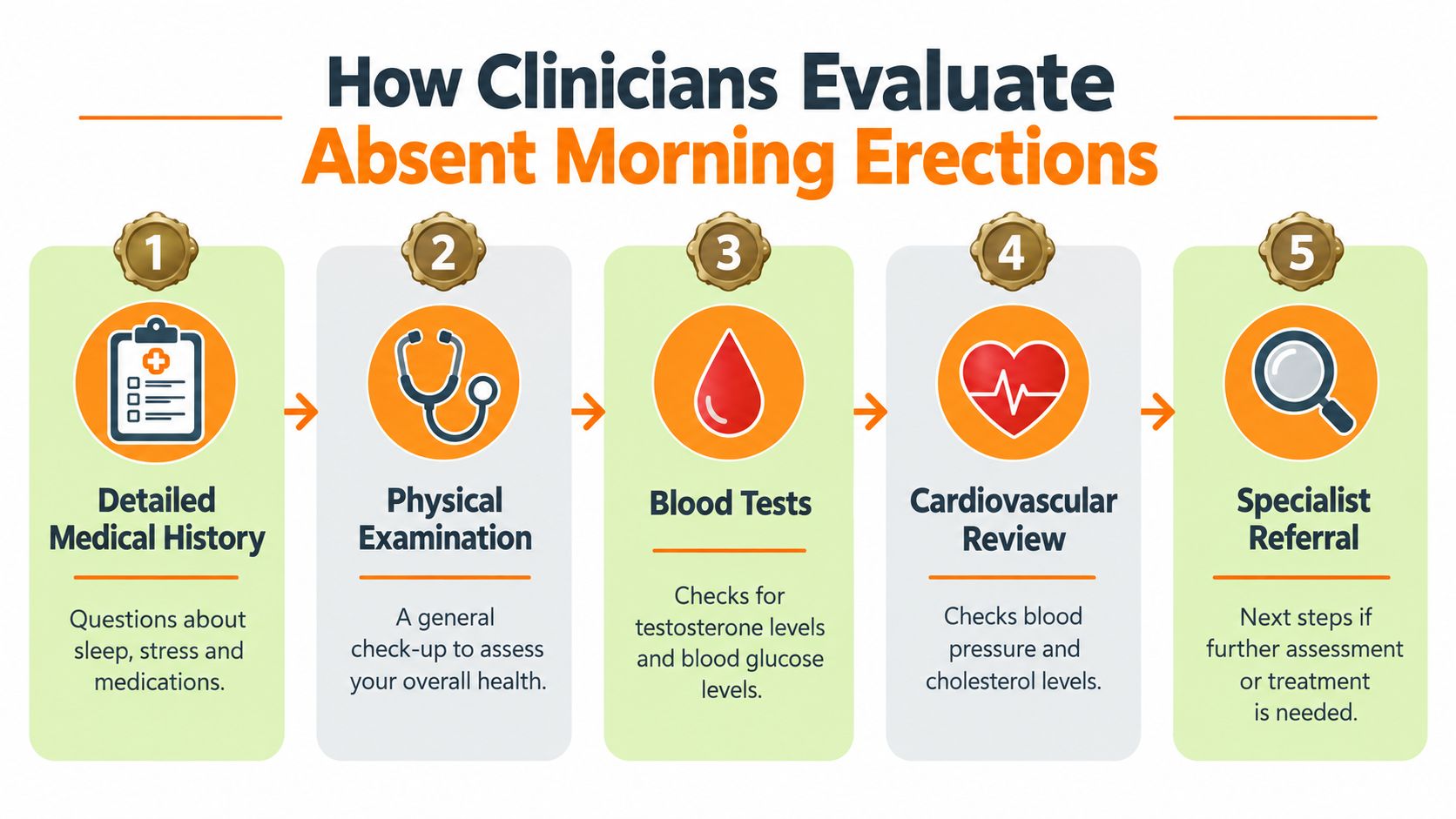
Steps four and five assess causes and next actions
Recurring erection problems can accompany high blood pressure, high cholesterol, diabetes, anxiety, depression, hormone problems, alcohol use, tiredness or prescribed medicines, as outlined by NHS information on erection problems. Nocturnal testing or specialist referral may follow when the cause remains unclear.
A male hormone health check can support a discussion, but a home result is not a diagnosis.
Evidence-Based Treatments and Lifestyle Changes
Treatment depends on the cause. Improving sleep won't correct a medicine effect by itself, and erectile medication won't address every cardiovascular risk.
Start with changes that support general health:
- Protect sleep: Keep a regular sleep routine where possible, especially after shift work.
- Review alcohol: Notice whether erections change after drinking and discuss reduction if needed.
- Move regularly: Physical activity supports cardiovascular health and can improve confidence.
- Manage stress: Counselling, relaxation practice and practical workload changes may help.
- Treat health conditions: Follow plans for blood pressure, diabetes and cholesterol.
- Review medicines: Ask a prescriber whether alternatives exist. Never stop treatment alone.
Medical treatment needs a reason
PDE-5 medicines, such as sildenafil or tadalafil, can help some men with erectile dysfunction. They don't diagnose the cause of no morning erections, and they may not suit people taking nitrate medicines or those with certain health conditions.
Testosterone treatment may help confirmed hypogonadism, but clinicians should base it on symptoms and appropriately timed results. Low libido, fatigue and other signs matter more than a single morning observation.
Psychological support can help when anxiety, depression or relationship stress contributes. Physical and psychological treatment often work together, especially when a man has started fearing sexual failure after an earlier erection problem.
A clinician may also address weight, diabetes, blood pressure, smoking and sleep disorders. These steps support sexual function while reducing wider health risks.
For safe use of a prescribed medicine, follow the directions and read how to take tadalafil. Ask a pharmacist about interactions, alcohol and what to do if the medicine doesn't work.
Pharmacist's tip
Check medicines before buying supplements. Products marketed for testosterone or sexual performance can interact with prescribed treatment. Share the complete list with a pharmacist or GP.
Pharmacist's tip
Don't double a missed dose. If you're unsure how to use an erectile-dysfunction medicine, check the patient information leaflet or ask a pharmacist.
Pharmacist's tip
Avoid nitrate combinations. Tell your prescriber about chest-pain medicines before discussing PDE-5 treatment.
When to Seek Help and Next Steps
Book a GP or sexual-health appointment if the change keeps happening, especially if erections have reduced in other situations. A persistent pattern may point to a treatable physical, hormonal, medication-related or psychological cause.
Seek prompt medical advice if you also notice:
- Sudden or progressive loss: The change appeared quickly or continues to worsen.
- Low libido or marked fatigue: Desire and energy have changed together.
- Testicular symptoms: You notice pain, swelling or a change in size.
- Neurological symptoms: You develop numbness, weakness or altered sensation.
- Diabetes symptoms: You have unusual thirst, frequent urination or unexplained weight change.
- Heart or circulation symptoms: You experience chest pain or breathlessness with exertion.
Call 999 for chest pain, severe breathing difficulty, sudden weakness on one side, or other emergency symptoms. Don't wait for an erection problem to resolve an urgent medical issue.
Keep a short symptom record
For several weeks, note:
- Whether you woke during the night
- Your sleep pattern and work shifts
- Morning erections or other spontaneous erections
- Erections during masturbation or sex
- Libido, mood and stress
- Alcohol, recreational drugs and medicine changes
This record gives your GP a clearer picture. It can also reduce repeated checking, which may increase anxiety.
Erectile dysfunction can share risk factors with cardiovascular disease. That doesn't mean every missing morning erection predicts heart disease. It does mean persistent changes, especially alongside smoking, diabetes, high blood pressure, obesity or reduced exercise tolerance, deserve wider health assessment.
In summary:
- Occasional absence is usually not a diagnosis.
- REM sleep, stress, alcohol and fatigue can affect what you notice.
- Persistent loss matters more when erections reduce elsewhere.
- Low testosterone is only one possible cause.
- A GP can review medicines, sleep and cardiovascular risk.
- Many causes are treatable once identified.
Courier Pharmacy provides online consultations, home and venous blood-testing services, and access to prescription treatments where a UK-qualified prescriber considers them suitable. Visit Courier Pharmacy to learn about confidential assessment and treatment options for erection concerns.
Frequently asked questions
Is it normal to have no morning erections?
Occasionally, yes. Sleep quality, stress, alcohol, illness and fatigue can change whether you notice one. Persistent absence, especially with sexual difficulties or low libido, deserves medical advice.
Does no morning erection mean erectile dysfunction?
No. A single missed erection cannot diagnose erectile dysfunction. The concern becomes stronger when erections also become difficult during sex, masturbation or sleep.
Does no morning erection mean low testosterone?
Not by itself. Low testosterone becomes more likely when absent erections occur with low libido, fatigue or other hormone-related symptoms. A clinician may arrange an early-morning blood test and repeat it if needed.
Can stress cause no morning erections?
Yes. Stress and anxiety can affect sleep and the body's erection signals. If erections remain present in other situations, that may suggest a psychological contribution, although physical and emotional causes can overlap.
Can alcohol affect morning erections?
Alcohol can affect sleep quality and erection function. Notice whether symptoms follow drinking, but don't assume alcohol explains a lasting change without considering other causes.
Should I ask for sildenafil or tadalafil?
Ask a clinician or pharmacist first. These medicines can help erectile dysfunction, but they aren't suitable for everyone and don't replace assessment of blood pressure, diabetes, medicines or hormone symptoms.
When should I see a GP?
Arrange an appointment if the change persists, worsens or affects sex. Seek help sooner if you have low libido, testicular changes, neurological symptoms, diabetes symptoms, chest pain or breathlessness.
Can a shift pattern explain the change?
It can make erections harder to notice because you wake at different points in your sleep cycle. However, a lasting reduction across sleep, masturbation and sex still needs assessment.
Are morning erections caused by sexual dreams?
Not necessarily. They can happen during sleep without sexual desire and may coincide with a full bladder. Their presence or absence doesn't measure how attracted you feel to a partner.
Suggested visuals
- Sleep-cycle illustration: Use bright lime green, pale yellow-green and light grey, with an ornate brass plaque showing REM sleep and nocturnal erections. Alt text: “Sleep-cycle illustration showing REM sleep and nocturnal erections.”
- Clinical assessment pathway: Use brass-style numbered markers with lime and pale yellow-green panels. Alt text: “Five-step clinical pathway for assessing absent morning erections.”
- Cardiometabolic health graphic: Show blood vessels, nerves, sleep and medicines connected around a central figure. Alt text: “Health factors that can contribute to persistent loss of spontaneous erections.”
- Pharmacist consultation scene: Use a painterly, steampunk-inspired style with a brass medicine cabinet overlay. Alt text: “Pharmacist discussing medicines and erectile health with a patient.”
Internal links to consider
- Erectile dysfunction treatment information
- Testosterone replacement therapy
- Male hormone health checks
- Tadalafil for erectile dysfunction and benign prostate enlargement
Meta description: No morning erections can be harmless occasionally. Learn what persistent changes may mean, possible causes, tests, treatments and when to see a GP.
Byline: Written by the Medical Mojo editorial team, with UK patient-health writing experience.
Clinical review: Clinically reviewed by a UK-registered healthcare professional.
How this content was created: We used UK clinical guidance, NHS resources, professional sexual-health information and peer-reviewed research. The content was checked for medical accuracy, UK relevance, safe wording and clear signposting to professional care.
References
British Society for Sexual Medicine (2018) ‘2017 British Society for Sexual Medicine guidelines on the management of erectile dysfunction'. Journal of Sexual Medicine, 15(4), pp. 430 onwards. Available at: Oxford Academic (Accessed: 14 October 2026).
El-Sakka, A.I. et al. (2004) Study of nocturnal and early-morning erections in men attending a UK erectile-dysfunction clinic. Available at: PubMed Central (Accessed: 14 October 2026).
Central and North West London NHS Foundation Trust (n.d.) Worried about erections? Available at: CNWL NHS sexual-health guidance (Accessed: 14 October 2026).
NHS (n.d.) ‘Erection problems and erectile dysfunction'. Available at: NHS health information (Accessed: 14 October 2026).
NHS (n.d.) ‘Erection problems and erectile dysfunction'. Available at: NHS content widget (Accessed: 14 October 2026).
South West London Integrated Care Board (n.d.) ‘Erectile dysfunction'. Available at: South West London clinical guidance (Accessed: 14 October 2026).
Gloucestershire Hospitals NHS Foundation Trust (n.d.) Erectile dysfunction guideline. Available at: Gloucestershire Hospitals NHS guidance (Accessed: 14 October 2026).
Laboratory medicine review (2023) ‘Testosterone testing and the diagnosis of male hypogonadism'. Available at: PubMed Central (Accessed: 14 October 2026).
This article is for general information only. It isn't a substitute for diagnosis or personalised medical advice.


