Your Guide to Normal Blood Glucose Levels for Non-Diabetics in the UK
What are normal blood glucose levels for non diabetics? Our UK guide covers testing, understanding your results, and simple steps for staying healthy.
In this article
- Five Key Takeaways
- What are normal blood glucose levels?
- The normal range for non-diabetics
- What your blood sugar numbers mean
- The different lenses: key blood sugar tests
- What is a good HbA1c level?
- How to check your blood glucose levels
- In the clinic with your GP or nurse
- At-home finger-prick tests
- Modern home collection kits
- What to do about a borderline result
- Interpreting your HbA1c results
- Reversing a borderline result: a real-life example
- Everyday factors that affect your blood sugar
- The big three: food, sleep, and stress
- Less obvious influences on your glucose
- When to speak with a health professional
- Urgent symptoms to watch for
- Booking a follow-up
- Summary
- Frequently Asked Questions (FAQs)
Normal fasting blood glucose levels for a non-diabetic adult in the UK should be between 4.0 and 5.4 mmol/L. Think of this as the ideal operating range for your body's energy system. Understanding what these numbers mean is a proactive step you can take for your long-term health, putting you in control. Monitoring your blood glucose isn't just about managing diabetes risk; it’s a direct window into your metabolic health, affecting everything from daily energy to your risk of future chronic conditions.
This guide will walk you through what your blood glucose levels are telling you. We’ll break down the different types of tests, what the results mean, and how everyday life can cause your numbers to shift. You'll learn how to interpret borderline results and what to do next, giving you the clarity to take charge.
Five Key Takeaways
- Normal Fasting Range: For non-diabetics, a healthy fasting blood glucose level is 4.0–5.4 mmol/L.
- Prediabetes is a Warning: An HbA1c of 42–47 mmol/mol signals prediabetes, a crucial window to make changes.
- Lifestyle is Key: Diet, sleep, stress, and exercise are the main factors that influence your blood sugar.
- Testing is Accessible: You can check your levels at a GP surgery or conveniently at home with modern test kits.
- Don't Ignore Symptoms: High thirst, frequent urination, or unexplained fatigue warrant a prompt chat with your GP.
What are normal blood glucose levels?
Imagine glucose as the primary fuel for your body's cells. Your body has an intricate system designed to keep this fuel supply perfectly balanced. When blood glucose is consistently too high, it acts like a slow, corrosive force on your blood vessels and organs. This can cause damage over time, even if you feel completely fine right now.
Keeping your blood glucose in a healthy range helps protect your entire system. It also keeps your energy levels on an even keel. This is a fundamental part of building a healthier future.
The normal range for non-diabetics
If you're in the UK, your test results will be in mmol/L (millimoles per litre). It’s crucial to know what a "good" number looks like.
For a healthy adult without diabetes, the target fasting range is 4.0 to 5.4 mmol/L. Research from institutions like Liv Hospital suggests an ideal average is around 4.8 mmol/L (or 86 mg/dL in US units) [1]. You can read more about the research behind healthy blood sugar levels on livhospital.com.
A sophisticated network of hormones works like your body's metabolic command centre to keep your levels in this tight range. If you're interested in the deeper science, our guide on what PPARs are and how they work in your body is a great place to start. Understanding these controls helps connect your lifestyle choices to your metabolic health.
What your blood sugar numbers mean
Getting a blood sugar reading can feel like you’ve been given a complex puzzle. But once you understand what you're looking at, those numbers tell a powerful story about your health.
Let's break down the different ways we measure blood glucose. It’s not about fixating on a single number. Instead, it's about understanding the patterns that give you a clear picture of your metabolic health.
The different lenses: key blood sugar tests
When a clinician checks your blood sugar, or when you test it yourself, the result usually comes from one of a few key tests. Each one offers a unique perspective on how your body is managing sugar.
- Fasting Glucose: This is your body’s baseline. It’s a snapshot of your blood sugar after at least eight hours without food or drink (except water). This test gives a great indication of your underlying glucose control.
- Post-Meal (Postprandial) Glucose: This test reveals how well your body handles incoming fuel. It measures your glucose one to two hours after a meal. A healthy response involves a temporary rise followed by a swift return to normal.
- HbA1c: This is the gold standard for getting the bigger picture. The HbA1c test reflects your average blood sugar levels over the past two to three months. This long-term view makes it a reliable indicator of your overall metabolic health.
Pharmacist's tip: A one-off high reading can be unsettling, but try not to worry. Many things can temporarily nudge your blood sugar up, from a stressful meeting to a bad night's sleep. A consistent pattern of high readings is what really matters for your long-term health.
What is a good HbA1c level?
For an adult without diabetes, an ideal HbA1c level is below 42 mmol/mol. This result tells you that, on average, your blood sugar has been in a healthy range for the last few months. Clinicians use the HbA1c test for health check-ups and to diagnose prediabetes and diabetes.
A key part of maintaining a good HbA1c is keeping your fasting glucose in check.
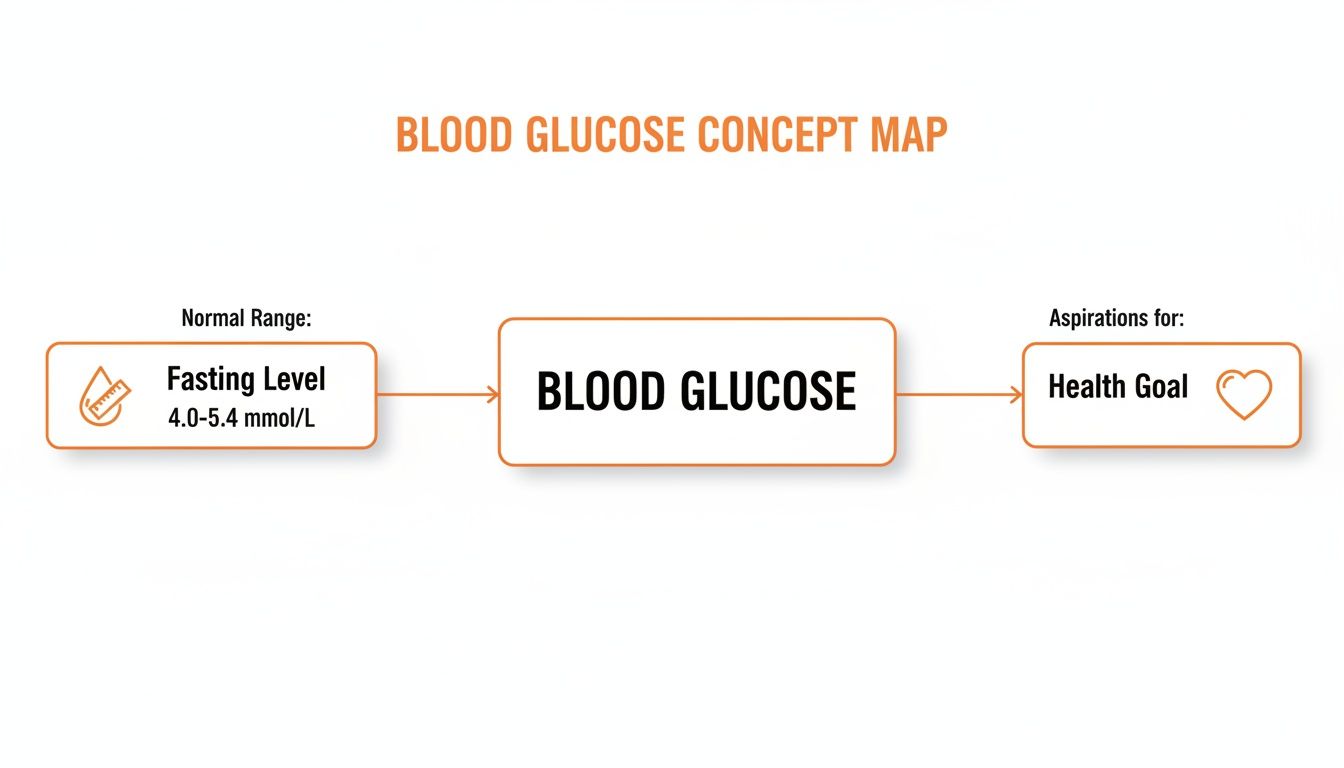
As you can see, the optimal range for a fasting blood glucose test is between 4.0 and 5.4 mmol/L. Staying within this target is a fundamental part of achieving your wider health goals.
How to check your blood glucose levels
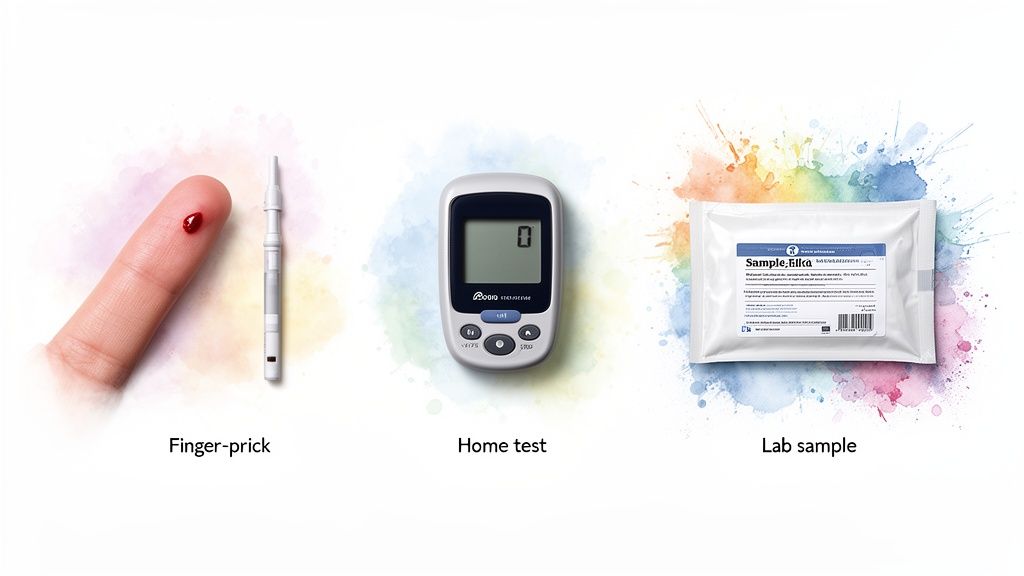
So, you want to find out what your blood glucose levels are. That's a great step towards understanding your health better. Thankfully, you have a few ways to get this done. These range from a traditional visit to your GP to modern kits you can use at home.
Each method has its place. Let’s look at the main options available in the UK to help you decide which is right for you.
In the clinic with your GP or nurse
The most conventional route is a blood test at your local surgery. A nurse or phlebotomist takes a small blood sample from a vein in your arm. The lab then analyses it. This is how you get a highly accurate fasting glucose or HbA1c result.
Because it’s done in a controlled, clinical setting, this is the gold standard for a definitive diagnosis. The only downside is the inconvenience. You need to book an appointment, travel to the clinic, and wait for the results.
At-home finger-prick tests
For a long time, the finger-prick test has been the standard for home monitoring. You use a small, spring-loaded needle called a lancet to prick your finger. This produces a tiny drop of blood.
You then touch this drop to a test strip in a handheld glucose meter. Within seconds, the machine gives you a glucose reading. These kits are brilliant for getting an immediate snapshot of your blood sugar.
Pharmacist's tip: Always wash and dry your hands properly before doing a finger-prick test. Even a tiny amount of sugar from food on your skin can skew the reading and give you a falsely high number.
Modern home collection kits
A recent innovation is the at-home blood collection kit. These kits let you collect your own sample from home, bypassing a clinic appointment.
While some use the familiar finger-prick method, newer devices make it even simpler. You just stick a small device to your upper arm and press a button. It uses light suction to draw a small blood sample painlessly.
Once collected, you seal your sample in the pre-paid packaging and post it to a certified lab. A few days later, you receive your secure, lab-accurate results online. This approach gives you the accuracy of a lab test with the convenience of doing it at home.
If you're considering this option, our guide to using a home blood test in the UK is a fantastic resource that walks you through the process.
What to do about a borderline result
Getting a blood test result that isn’t quite ‘normal’ but not a diabetes diagnosis can be unsettling. It’s easy to feel worried or confused. However, this is a crucial moment for your health—and one where you have a lot of power.
This grey area is known as prediabetes. It simply means your blood sugar levels are higher than they should be, but not yet high enough for a type 2 diabetes diagnosis. You’re not alone; it’s incredibly common. In England, around 1 in 9 adults have blood sugar levels in the prediabetic range [2]. That’s 5.1 million people whose bodies are sending a clear warning signal.
Think of it as an amber traffic light. You haven't hit a red light, but your body is telling you to slow down. This is your chance to make changes before your health is seriously impacted.
Interpreting your HbA1c results
So, what does a borderline result look like on your report? When we talk about prediabetes, we’re usually referring to the HbA1c test. This test gives a great overview of your average blood sugar over the last two to three months.
The thresholds are clear, and it’s important to understand where you fall.
| HbA1c Level (mmol/mol) | Category | What This Means for You |
|---|---|---|
| Below 42 | Normal | Your average blood glucose is within a healthy range. |
| 42 to 47 | Prediabetes | Your blood sugar is higher than normal. This raises your risk of type 2 diabetes and is a critical window for intervention. |
| 48 or above | Type 2 Diabetes | Your blood sugar is consistently high, meeting the criteria for a diabetes diagnosis. |
A result between 42 and 47 mmol/mol is the key indicator for prediabetes. It tells us your body is starting to struggle with processing glucose. The great news? With proactive steps, you can often bring these numbers back down into the normal range.
Pharmacist's tip: If your result comes back in this prediabetic range, the first step is simple: don’t panic. See it as valuable information. The next step is to book a follow-up with your GP or a pharmacist to discuss a personal plan. This is a turning point, not a final destination.
Reversing a borderline result: a real-life example
Let’s look at a realistic example. Imagine Sarah, a 38-year-old busy parent from Birmingham. Her days are hectic, she often grabs quick snacks, and unwinds with a takeaway after the kids are in bed. During a routine health check, her HbA1c is 46 mmol/mol.
Her GP explains this is prediabetes. Instead of feeling defeated, Sarah takes it as a wake-up call. She starts small:
- She swaps her daily pastry for Greek yoghurt with berries.
- She aims for a brisk 20-minute walk during her lunch break.
- She cuts back takeaways to a weekend treat and cooks simple meals during the week.
Six months later, another blood test shows her HbA1c has dropped to 40 mmol/mol—firmly back in the healthy range. She also feels far more energetic. Sarah’s story shows how small, consistent lifestyle changes can turn things around.
If you’re looking for professional advice to start your own journey, our online pharmacy UK services are available to provide support.
Everyday factors that affect your blood sugar
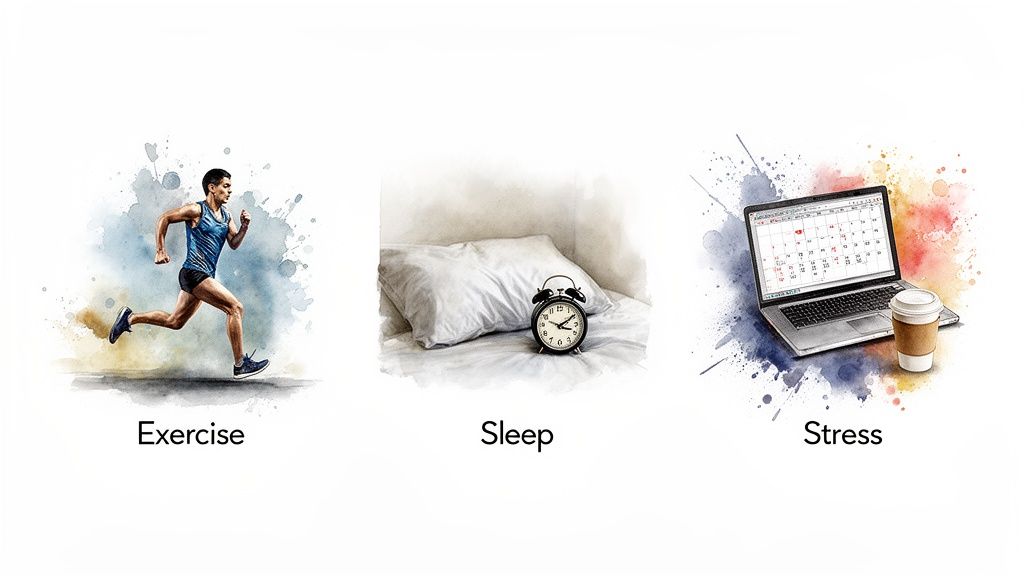
It’s easy to think of your blood sugar as a fixed number. In reality, it's much more dynamic. Your glucose levels constantly change in response to your daily life. While food is a major player, other factors can nudge your levels up or down.
Getting to grips with these influences is key to understanding your metabolic health. It helps explain why a reading might be unexpectedly high. It also shows that managing blood glucose is about balancing your whole lifestyle, not just policing your plate.
The big three: food, sleep, and stress
These three pillars have the most powerful impact on your blood sugar levels. They are also deeply interconnected.
- Food Choices: This is the most obvious one. Carbohydrates—from bread and pasta to fruits and sweets—break down into glucose. The type and amount of carbs you eat determine how quickly and how high your blood sugar rises.
- Sleep Quality: A single night of poor sleep can disrupt your hormones. It increases cortisol (the stress hormone) and makes your body’s cells more resistant to insulin. This means your blood sugar may climb higher and stay elevated for longer.
- Stress Levels: Stress triggers a "fight or flight" response. Your body releases cortisol and adrenaline. These signal your liver to dump stored glucose into your bloodstream. This biological response can cause a significant spike without you eating a thing.
Less obvious influences on your glucose
Beyond the main three, other elements of your daily routine can alter your readings.
Physical Activity Exercise is a powerful tool for managing blood sugar. Your muscles use glucose for energy, which helps lower it in your bloodstream. However, the type of exercise matters:
- Moderate exercise, like a brisk walk, will typically lower blood sugar.
- Intense exercise, such as sprinting, can temporarily raise blood sugar as your body releases adrenaline.
Illness and Medication When you’re fighting off an infection, your body is under stress. It releases hormones that can raise your blood sugar. Likewise, some common medications, particularly steroids, can increase glucose levels.
Real-Life Example: The Shift Worker Think about a shift worker, like a nurse. On a normal day shift, their blood sugar is stable. But after a few night shifts, their sleep is disrupted. Their body is under constant stress, and they often see their fasting glucose levels creep up. This perfectly illustrates the powerful link between routine and metabolic health.
For those wanting a clearer picture, continuous glucose monitors (CGMs) can be insightful. Devices like the Freestyle Libre 2 Plus sensor provide real-time data, helping you connect your actions to your body's response.
When to speak with a health professional
Getting to grips with your blood sugar numbers is a great first step. But knowing when to chat with a health professional is just as important. A home test gives you clues, but it doesn't replace the expert eye of a clinician.
Whether your results are normal, high, or in the prediabetes range, the next step is to take action. Your local pharmacist or GP can help you make sense of it all.
Urgent symptoms to watch for
Sometimes, your body sends out clear distress signals that your blood sugar might be significantly high. If you notice any of the symptoms below, you should not wait. Contact your GP practice or call NHS 111 for advice as soon as possible.
- Feeling intensely thirsty
- Needing to urinate far more often than usual
- Losing weight without trying
- Feeling completely wiped out
- Experiencing blurred vision
Getting these checked out promptly means you can get the right support straight away.
Booking a follow-up
If a home test shows a borderline or high reading, book a non-urgent appointment with your GP. They can arrange a formal lab test to confirm the results. They will also talk through a personalised plan with you.
Taking your results to a health professional is a proactive step for your long-term health. For more detailed information on related conditions, our guide on diabetes is a great place to start. It allows you to become an active partner in your own care.
Summary
In summary, normal blood glucose levels for non-diabetics are a key indicator of your metabolic health. A fasting level between 4.0 and 5.4 mmol/L is the target. An HbA1c test gives a long-term view, with a healthy result being below 42 mmol/mol. A result between 42 and 47 mmol/mol indicates prediabetes. This is a crucial warning sign but also a chance to make positive changes. Your lifestyle—including diet, exercise, sleep, and stress—plays a huge role in these numbers. By understanding these factors and knowing when to talk to a healthcare professional, you can take control of your health and work towards a healthier future.
Disclaimer: This article is for informational purposes only and does not constitute medical advice. Always consult with a qualified healthcare professional for any health concerns or before making any decisions related to your health or treatment.
Frequently Asked Questions (FAQs)
What is a dangerous level of blood sugar for a non-diabetic? There isn't a single "dangerous" number, as one-off spikes can happen. However, if a non-diabetic person's fasting blood glucose is consistently above 7.0 mmol/L, or their HbA1c is 48 mmol/mol or higher, it meets the criteria for a type 2 diabetes diagnosis. This requires medical attention to prevent long-term complications.
Can stress alone cause high blood sugar in non-diabetics? Yes, it can. When you're stressed, your body releases hormones like cortisol that prompt your liver to release stored glucose. This can cause a temporary spike in your blood sugar levels, even if you haven't eaten anything. Chronic stress can contribute to consistently higher glucose levels over time.
How often should a non-diabetic check their blood glucose? For most healthy adults without risk factors, a blood glucose test every 1-3 years as part of a routine health check is usually sufficient. If you have risk factors like a family history of diabetes, are overweight, or have had a borderline result before, your GP may recommend more frequent testing.
Is it possible to completely reverse prediabetes? Yes, for many people it is. Prediabetes is an early warning, not a final diagnosis. By making sustained lifestyle changes—like improving your diet, increasing physical activity, managing weight, and reducing stress—you can often bring your blood sugar levels back down to a normal range and prevent the progression to type 2 diabetes.
Does drinking water affect a fasting blood sugar test? Drinking plain water before a fasting blood glucose test is perfectly fine and is actually encouraged. It does not affect the result. However, you must avoid all other drinks, including tea, coffee, and juice, as they can interfere with the test and give an inaccurate reading.
What is the best time to check blood sugar if not diabetic? The most useful test is a fasting blood glucose test. This should be done in the morning after you have not eaten or drunk anything (except water) for at least 8 hours. This provides a stable baseline reading that reflects your underlying glucose control.
Meta description: Learn about normal blood glucose levels for non-diabetics in the UK. This guide explains healthy ranges, HbA1c, testing, and what to do with your results.
Internal links:
- What are the PPARs? A Guide to Your Body’s Metabolic Switch
- A Guide to Using a Home Blood Test in the UK
- Online Pharmacy UK
- Freestyle Libre 2 Plus Sensor
- Diabetes
Author: Scott McDougall, MPharm Clinical Reviewer: James O'Loan, MPharm
How this content was created: This article was written by a qualified pharmacist using information from reputable, evidence-based sources including the NHS, NICE, and peer-reviewed clinical studies. All content has been clinically reviewed by a senior pharmacist to ensure it is accurate, up-to-date, and easy for a UK audience to understand.
References: [1] Liv Hospital. What Are Normal Blood Sugar Levels For Non-Diabetics? [Online]. Available at: https://int.livhospital.com/what-are-normal-blood-sugar-levels-for-non-diabetics/ (Accessed: [Date of access]) [2] Office for National Statistics (ONS). 2022. Risk factors for pre-diabetes and undiagnosed type 2 diabetes in England: 2013 to 2019. [Online]. Available at: https://www.ons.gov.uk/peoplepopulationandcommunity/healthandsocialcare/healthinequalities/bulletins/riskfactorsforprediabetesandundiagnosedtype2diabetesinengland/2013to2019 (Accessed: [Date of access])


