Nutritionist vs Dietitian UK: Who Should You See in 2026
Confused by nutritionist vs dietician in the UK? Learn the key differences, protected titles, qualifications and when to see each professional.
SEO brief
Primary keyword: nutritionist vs dietitian
Secondary keywords: UK dietitian, registered dietitian, AfN register, HCPC registration, nutrition advice, weight loss support
Search intent: help readers choose the right professional for their health concern
Target reader: UK adults, carers, and anyone comparing nutrition help online
Product/service mention (if any): none in the main body, Courier Pharmacy in the closing CTA only
Internal links available: use the mandatory URLs in the sections where they are assigned
You're tired, it's late, and your gut has been playing up for weeks. You've typed nutritionist vs dietitian into Google, then added “near me”, because you want a straight answer, not another page of jargon. The short answer is this, a dietitian is the safer pick for medical or complex health problems, while a nutritionist can be fine for general lifestyle support if their training is solid. The difference matters because the title, the regulation, and the scope of practice are not the same.
Five quick takeaways for busy readers:
- Dietitian is the only nutrition-related title with statutory legal protection in the UK, and the British Dietetic Association says dietitians are the only nutrition profession with statutory regulation [1].
- Nutritionist is not legally protected in the UK, so the title can cover very different training backgrounds [1].
- If your issue links to a medical condition, a dietitian is usually the better fit [2].
- If you want general healthy eating support, a well-qualified nutritionist may be enough [2].
- Salary data also reflects the split, with Indeed UK reporting £33,102 for dietitians and £27,842 for nutritionists [1].
Introduction: Why the Nutritionist vs Dietitian Question Matters
A busy parent with IBS symptoms doesn't need a lecture. They need to know who can actually help, and who's best left for general advice. That's why the nutritionist vs dietitian question matters so much in the UK, because the titles sound similar, but they do not mean the same thing [1], [2].
The practical answer is simple. If the problem is medical, ongoing, or linked to a diagnosis, a dietitian is usually the right first call. If the goal is broad support with habits, meal planning, or healthier routines, a qualified nutritionist may be suitable, provided their background is strong and clear [2].
If you're unsure where to start, a useful first check is whether the issue is about prevention or clinical care. For people trying to make sense of tests, treatment choices, or symptoms that won't settle, the distinction is often more important than the label on the website. A related example is how people compare testing routes before booking, such as the guidance in this UK genomic testing guide.
The Core Difference Between Nutritionists and Dietitians
Protected title versus unprotected title
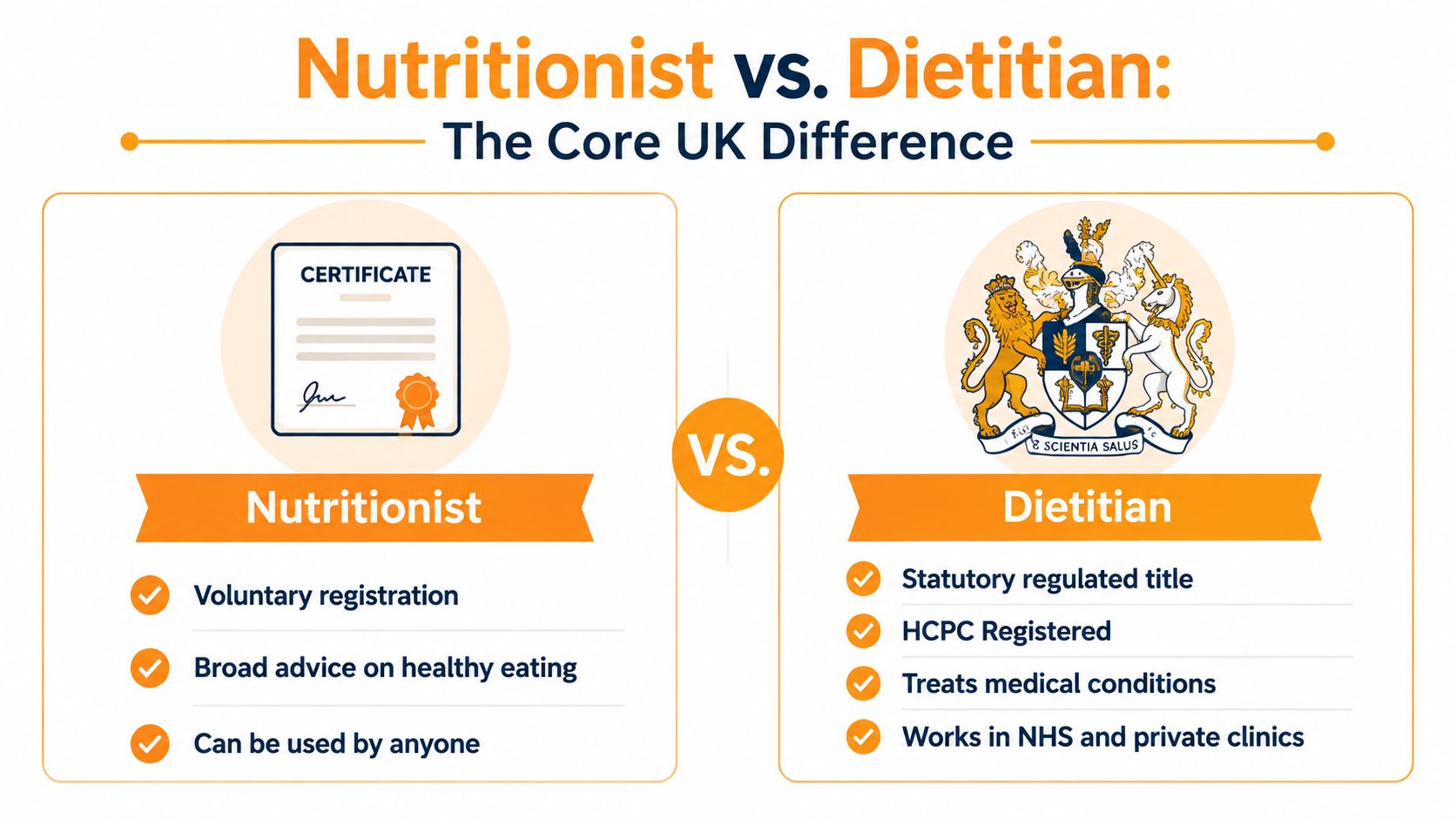
In the UK, dietitian is the only nutrition-related title with statutory legal protection. The British Dietetic Association states that dietitians are the only nutrition profession with statutory regulation [1]. That means the title is tied to defined standards, and only people who meet those standards can use it [1].
Nutritionist is different. The title is not legally protected in the UK, so it can be used by a wider range of people with very different backgrounds [1]. Some nutritionists are highly trained and registered with recognised bodies, while others have far less formal preparation. The title alone does not tell you enough.
Why registration still matters
A good nutritionist should usually be on a recognised register, because that gives you a better clue about training and standards. In the UK, the main route people often check is the Association for Nutrition register, including the UK Voluntary Register of Nutritionists (UKVRN). It is voluntary, but it still helps you separate structured training from loose self-description.
For dietitians, the legal route matters more. HCPC registration gives a clear accountability framework, and that is part of why dietitians are the standard choice in regulated clinical settings. If you are choosing between them for a health problem, start with the question, “Is this advice for wellbeing, or for a medical condition?”
Practical rule: If the issue changes medicines, diet safety, or medical care, choose a regulated clinical professional first.
A busy parent with IBS symptoms does not need a lecture. They need to know who can help, and who is best left for general advice. The same applies to people trying to manage GLP-1 weight-loss support, where appetite changes, nausea, and reduced intake can make the right advice more important than the title on a website.
Job-market data also shows the difference is not just theoretical. Indeed UK reports an average base salary of £33,102 for dietitians versus £27,842 for nutritionists, a gap of about £5,260 a year [1]. That does not prove better care on its own, but it does show the market values the regulated clinical route differently [1].
For everyday readers, the clean takeaway is this. The real divide runs between regulated clinical practice and broader lifestyle advice. Dietitian means regulated clinical nutrition. Nutritionist means nutrition advice, but the quality and scope can vary much more [1], [2]. If you are also comparing wider health services, the same logic applies when you are checking advice on supplements and vitamins and minerals.
Qualifications, Registration and Regulation in the UK
How a dietitian earns the title
A UK dietitian must complete a recognised training path and meet professional standards tied to HCPC regulation. That matters because dietitians work within a formal clinical framework, and NHS employers expect that level of accountability. It also means they can work across healthcare settings where nutrition needs to be handled carefully.
For patients, that translates into a safer experience when the situation is complicated. If someone has diabetes, an eating disorder, allergy issues, or another medical problem, the dietitian's training is built for that type of work [2].
How to judge a nutritionist
A nutritionist may have strong training, but the title itself does not guarantee it. That is why the AfN Accredited Register and UKVRN are useful checks. They won't turn a nutritionist into a dietitian, but they do help you filter out vague or unverified claims.
BDA membership is another useful marker when you're checking dietitian credibility, especially if you want reassurance that the practitioner works within a recognised professional culture. You don't need to become an expert yourself. You just need to ask for the registration details and verify them before you book.
A quick check is often enough to protect yourself from sloppy advice. Ask what they're registered with, what training they completed, and whether they handle cases like yours regularly.
If you're buying medicines or looking at practical health support, the same habit helps. Read the label, check the registration, and don't assume the website headline tells the full story. The same caution applies when people compare online health services such as UK online pharmacy options.
The difference is not just “qualified versus unqualified”. It's regulated clinical practice versus broader lifestyle advice. That's why a careful patient should always match the professional to the problem, not just the search result.
Scope of Practice and Typical Services Compared
A dietitian and a nutritionist may both talk about food, but they do different jobs. A dietitian assesses nutritional status, spots dietary problems linked to illness, and helps manage special diets for conditions such as eating disorders, digestive disorders, food allergies, and chronic diseases [2]. A nutritionist usually focuses on general dietary advice, habit change, and preventive support [2].
Scope of practice comparison
| Aspect | Dietitian | Nutritionist |
|---|---|---|
| Main role | Clinical nutrition care | General dietary advice |
| Medical conditions | Can diagnose and manage diet-related problems linked to illness [2] | Usually gives general advice, not the same protected authority for special diets [2] |
| Best fit | Complex, higher-risk, diagnosis-linked cases | Lifestyle change, routine healthy eating, preventive support |
| Typical setting | NHS, clinics, hospitals, private practice | Private practice, wellness, coaching, lifestyle support |
| Useful for | Condition-specific nutrition plans | Behaviour change and everyday eating habits |
A busy parent with IBS symptoms may need a dietitian if symptoms are severe, persistent, or tied to another diagnosis. A shift worker trying to stop late-night grazing may find a nutritionist helpful if the issue is mainly routine and energy balance. A gym-goer who wants meal structure for training can go either way, but should still check training and scope first.
A person on a GLP-1 weight-loss pathway is different again. If appetite, side effects, or nutritional adequacy become an issue, the clinical side matters more, so a dietitian is usually the safer choice. If the goal is general coaching around meals and habits, a nutritionist may still have a place, but only if the advice stays within their competence.

The best practical rule is easy to remember. Medical problem, choose a dietitian. Lifestyle problem, a skilled nutritionist may be enough. If you're trying to make sense of how weight-related services fit into care, see the broader weight loss support guidance.
When to See a Dietitian and When a Nutritionist Is Enough
Choose the professional that matches the risk
A dietitian is the safer choice when the problem may affect health, treatment, or day-to-day functioning. That includes digestive symptoms, allergies, eating disorders, diabetes, or weight management linked to medicines and clinical monitoring [2]. A nutritionist may still help with food structure and habits, but if there is any sign that the issue is medical, the clinical route should come first.
A nutritionist can be enough when the person is otherwise well and wants practical support with routine changes. Meal planning for a hectic week, building a steadier breakfast habit, and improving food choices without medical monitoring all sit in that space [2]. The question is not which title sounds better. It is whether the person is trained for the actual problem in front of them.
Real-life scenarios
- Postpartum parent after gestational diabetes: A dietitian is usually the better first choice if they need help after pregnancy, because blood sugar history, recovery, and longer-term risk may all need proper review. A nutritionist may help with meal routine and confidence around food, but only if the clinical issues have been assessed and there are no concerns needing medical follow-up.
- Carer supporting an older relative with poor appetite: A dietitian is the sensible route if there is weight loss, frailty, swallowing difficulty, or concern about malnutrition. A nutritionist can still help with simple meal ideas and encouragement, but older adults often need a more careful look at causes and nutrient needs.
- Person managing MCAS or long COVID with food changes: Start with a dietitian if symptoms are unpredictable, restrictive eating is developing, or there is concern about nutrient shortfalls. A nutritionist may still be useful for gentle food structure, but these cases can overlap with complex symptoms that need a clinical assessment first.
- Person starting GLP-1 treatment: A dietitian is usually the better match if nausea, reduced intake, constipation, or nutrient gaps become part of the picture. A nutritionist can support general habits, but medication-linked nutrition issues need regulated clinical judgement.
The practical rule is simple. If the question is likely to affect treatment, safety, or diagnosis, treat it as a dietitian matter. If the issue is mainly about routine, consistency, and everyday eating, a skilled nutritionist may be enough.
A pharmacist would add one more check. Anyone already taking medicines, supplements, or using a weight-loss pathway should have advice that fits the full picture, not just the food diary. A short, structured consultation can stop problems early, especially where symptoms, medication changes, and dietary restrictions overlap.
Practical rule: Ask, “Could this advice change my treatment or safety?” If the answer is yes, choose a dietitian.
Pharmacist's tip
Before you book, check what the practitioner is registered with, whether they regularly work with your issue, and whether they will refer on if the problem sits outside their scope. If you have red flags such as blood in stool, sudden weight loss, trouble swallowing, or persistent vomiting, contact the NHS urgently. If you are on a GLP-1 pathway, tell the practitioner about every medicine and supplement you use so the advice fits your treatment and avoids clashes.
How Testing and Coaching Services Complement Professional Advice
Testing can help, but it can also distract people from the issue if they treat it like a shortcut. A home blood test, a Tasso device, a finger-prick kit, or a SIBO breath test can provide useful information, but the result still needs interpretation in context. Testing works best when it supports a proper nutrition plan, not when it replaces one.
Where testing fits
A patient may start with a pharmacist-led conversation, then use targeted testing if symptoms or goals need more clarity. If a result points towards a clinical issue, a registered dietitian becomes more relevant. If the problem is mostly lifestyle-based, a nutritionist may still be enough, but the test should guide the conversation, not dominate it.
This is also where functional genomic testing enters the picture. People use it to explore how they might optimise nutrition, but it should be treated as a starting point for discussion, not a final answer. The same is true for appetite and weight-management support during GLP-1 treatment, where coaching can help, but medical oversight still matters.
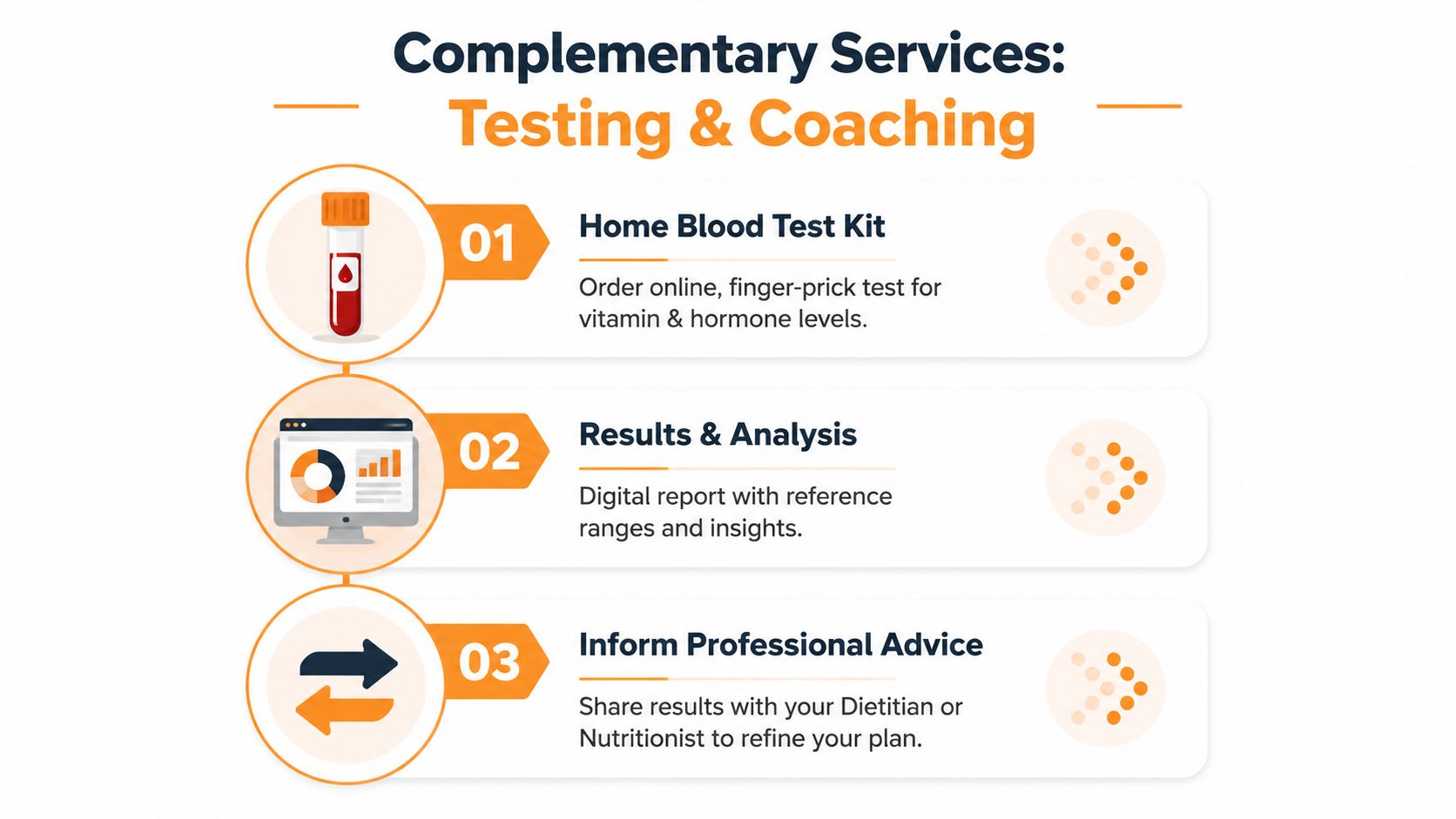
A sensible sequence looks like this. First, identify the symptom or goal. Next, check whether testing is likely to change the plan. Then, match the result to the right professional so the advice stays grounded. For more detail on testing routes, see this UK guide to home blood testing.
Pharmacist's tip
Bring a full list of medicines, supplements, and over-the-counter products to any nutrition or testing appointment. Small interactions and duplications are easy to miss.
Pharmacist's tip
If you get a result you do not understand, do not guess. Ask for the reference range and what it means for your symptoms.
Pharmacist's tip
Testing is most useful when it leads to action. If nobody can explain the next step, the test probably wasn't the right one.
The bottom line is simple. Testing and coaching can complement nutrition advice, but they do not replace it. The best outcomes usually come from matching the result to the right level of professional support.
Frequently Asked Questions About Nutritionists and Dietitians
Can an online nutritionist be as good as an in-person one?
Yes, if the practitioner is properly qualified and stays within scope. Online support works well for habit change, meal planning, and follow-up conversations. For complex symptoms or medical conditions, a dietitian is often the safer starting point.
How do I check if someone is properly registered?
Ask for their registration body and look it up before booking. For dietitians, check HCPC registration. For nutritionists, look for recognised registers such as the AfN route or UKVRN, and ask about training and experience.
Can a dietitian help with weight loss?
Yes. Dietitians often support weight management, especially when the issue links to health conditions, medicines, or structured eating support. They can help you make changes that fit your medical needs, not just your calorie target.
Can a nutritionist help with weight loss?
Yes, if the goal is general lifestyle change and the advice stays non-medical. A nutritionist may help with routines, meal structure, and motivation. If weight loss involves a diagnosed condition or medication, a dietitian is usually the better match.
What if I book the wrong professional first?
That happens often, and it is not a disaster. A good practitioner should tell you if your case sits outside their scope and direct you on. The important thing is to avoid staying with the wrong fit when symptoms are ongoing.
Do I need a referral to see a dietitian in the UK?
Not always. Some people use the NHS pathway, while others go private and book directly. If your issue is persistent, severe, or medically complex, start with the NHS or ask a regulated clinician for guidance.
Is “dietician” the same as dietitian?
No. Dietitian is the correct spelling for the regulated profession. Dietician is a common misspelling, so make sure you check the actual credential rather than the spelling alone.
Are nutritionists always less qualified than dietitians?
Not always, but the title itself is less tightly controlled. Some nutritionists have excellent training, while others do not. That is why registration and scope matter more than the job title on its own.
Can food intolerance issues be handled by either one?
Sometimes, but the safer choice depends on how serious the symptoms are. If the problem is severe, persistent, or tied to another condition, a dietitian is the better option. If it is mild and mainly about food choices, a qualified nutritionist may help.
What should I ask before I book?
Ask what they're registered with, what problems they usually handle, and whether they work with people like you. That saves time and helps you avoid advice that sounds broad but misses the point.
Summary and Next Steps
A dietitian is the UK's protected, regulated nutrition professional. A nutritionist is not protected in the same way, so training and registration matter much more [1]. If your concern is medical, complex, or linked to treatment, choose a dietitian first [2].
If your goal is general healthy eating, a skilled nutritionist may be enough. The best choice depends on the scope of the problem, not just the label. Check registration, ask about experience, and match the professional to the risk level.
If you're still unsure, start with the question, “Is this a lifestyle issue or a clinical one?” That single check usually points you in the right direction. When in doubt, use a regulated route and get advice that fits your symptoms, medicines, and goals.
If you want practical help choosing the right next step, Courier Pharmacy can support you with pharmacist consultations, testing, and treatment pathways that sit alongside nutrition advice rather than replacing it. If you're weighing up symptoms, medicines, or weight-management support, visit the site and speak to a team that can help you decide what fits best.


