Over The Counter Meds For Constipation: A UK Pharmacist's Guide
A UK pharmacist's guide to over the counter meds for constipation. Learn how to choose a safe and effective treatment with practical, expert advice.

In this article
- Five Key Takeaways For Quick Relief
- How Different Types Of Laxatives Actually Work
- Bulk-Forming Laxatives: The Sponges
- Osmotic Laxatives: The Water Magnets
- Stimulant Laxatives: The Motivators
- Stool Softeners: The Emulsifiers
- Choosing The Best OTC Medicine For Your Situation
- Your Symptoms, Your Solution
- Special Considerations For Different Life Stages
- Using OTC Laxatives Safely And Effectively
- Common Side Effects And What To Expect
- Medication Interactions You Must Know About
- The Risk Of Laxative Dependence
- When Your Constipation Needs a Doctor's Attention
- Red Flag Symptoms To Watch For
- Going Beyond The Pharmacy Shelf
- Lifestyle Changes For Long-Term Bowel Health
- The Power of Diet and Fibre
- The Crucial Role of Hydration
- Gentle Movement for a Healthy Gut
- Summary: Making the Right Choice for You
- FAQs: Your Questions Answered By A Pharmacist
- How long can I safely use an OTC laxative?
- Is it ever okay to mix different laxatives?
- What should I do about constipation when travelling?
- Are "natural" laxatives automatically safer?
When you’re struggling with constipation, the pharmacy aisle can feel a bit overwhelming. Box after box promises fast relief, but how do you know which one is right for you? It's a common feeling—bloated, sluggish, and just plain uncomfortable. This guide is designed to feel like a chat with a friendly pharmacist, cutting through the jargon to give you clear, practical advice on choosing the best over the counter meds for constipation.
Five Key Takeaways For Quick Relief
Before we dive in, here are five essential tips from our pharmacist to keep in mind:
- Start Gentle: Unless you need immediate relief, always begin with a milder option like a bulk-forming laxative (Fibre gel) or a stool softener. It’s better for your body's natural rhythm.
- Hydration is Key: Laxatives need water to work. "I can't stress this enough," says our pharmacist. "Aim for 6-8 glasses of water a day. Without it, some products can make the problem worse."
- Know the Timeline: A stimulant laxative like Senna works overnight (6-12 hours), while an osmotic laxative like Movicol can take 1-3 days. Match the product to your need for urgency.
- Short-Term Use Only: Think of these as a temporary fix for no more than a week. If you're still struggling after that, it's time to speak to a healthcare professional.
- Watch for Red Flags: Severe pain, blood in your stool, or unexplained weight loss are signs to stop taking OTC medication and see your GP immediately.
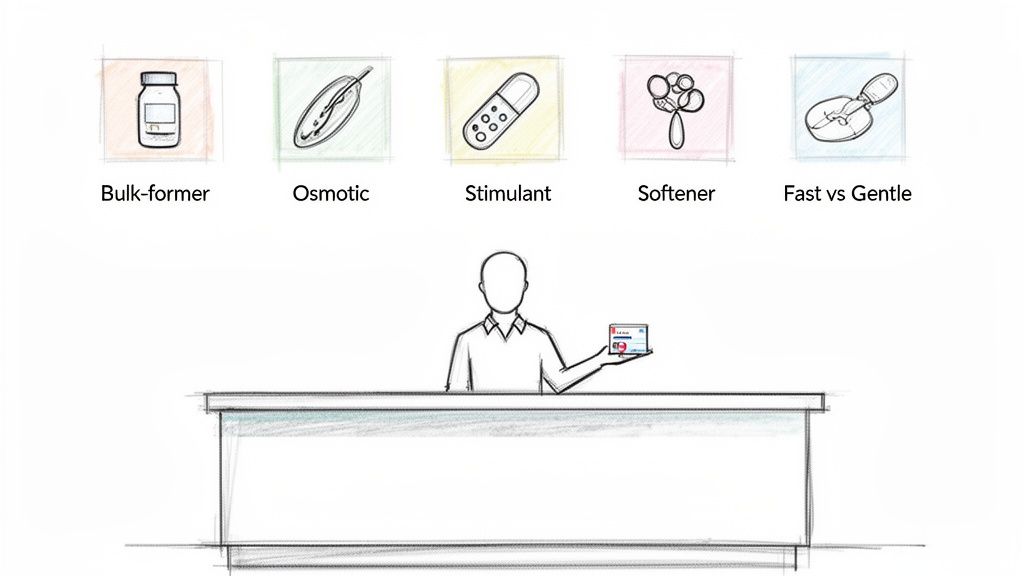
How Different Types Of Laxatives Actually Work
Walking down the pharmacy aisle, you're faced with a wall of options for constipation. To make the right choice, it helps to understand what's actually going on inside the bottle. Each type of laxative has a unique way of encouraging your system to get moving again.
Think of it like clearing a traffic jam. Do you need to add more cars to create momentum, draw in some help from the sidelines, or give the cars a direct push? Laxatives work in similarly distinct ways. Let's break down the four main types you'll find on UK shelves.
Bulk-Forming Laxatives: The Sponges
Bulk-forming laxatives are often the gentlest starting point. They work by absorbing water in your gut, much like a sponge, which softens and increases the size—or 'bulk'—of your stool.
This added bulk stimulates the natural wave-like muscle contractions in your gut (a process called peristalsis), gently encouraging things to move along. It's the closest thing to mimicking what high-fibre foods do for your body naturally.
Because they work in harmony with your digestive system, they take a little longer to kick in, usually between 12 to 72 hours. Patience is key here.
- Common UK Brands: Fybogel, Ispaghula Husk
- Best For: People who need to gently increase their fibre intake and can wait a day or two for relief.
- Pharmacist's Tip: "You must drink plenty of water with these," our pharmacist advises. "A patient once told me they took a sachet without enough water and felt even more blocked. Think of adding flour to a mixture without enough liquid—it just gets thicker. It’s the same principle." You can find out more about how products like Fybogel sachets work and how to use them safely.
Osmotic Laxatives: The Water Magnets
Osmotic laxatives take a different approach. Instead of becoming part of the stool itself, they act like water magnets, drawing fluid from your body’s tissues directly into your bowel.
This influx of water does two things: it softens hard, dry stools and increases the volume of liquid in the colon. The result? Everything becomes easier and more comfortable to pass.
The action is generally gentle but effective, making it a very popular choice. Relief usually comes within one to three days, depending on the specific product and dose. They are a reliable middle-ground option for many people.
- Common UK Brands: Movicol, Laxido (which contain Macrogol), Lactulose
- Best For: Individuals with hard, pebble-like stools who need effective softening.
- Pharmacist's Tip: "It’s normal to feel a bit gassy or bloated when these start working. I often tell people this is a sign the medicine is doing its job by pulling water into the bowel. It usually settles down within a day."
Stimulant Laxatives: The Motivators
When you need a more direct approach, stimulant laxatives are the 'motivators'. They work by directly stimulating the nerve endings in the walls of your intestines.
This action triggers the intestinal muscles to contract more forcefully and frequently, pushing the stool along its path toward the exit. Think of it as giving your digestive system a direct nudge to speed things up.
These are among the faster-acting options, typically producing a bowel movement within 6 to 12 hours. For this reason, they are often taken at bedtime for overnight relief. Their popularity is clear; in England, senna-based products are the most frequently prescribed laxative, with 4,452,918 items dispensed in a single year.
- Common UK Brands: Senokot (Senna), Dulcolax (Bisacodyl)
- Best For: Occasional, short-term relief when you need a predictable, overnight result.
- Pharmacist's Tip: "These are very effective but should be used as a short-term solution only. I had a customer who used them for weeks and found their bowel became 'lazy'. It’s crucial to use them for a few days at most to avoid your body becoming reliant on them."
Stool Softeners: The Emulsifiers
Finally, we have stool softeners. Their main job isn't to make you go, but to make it easier to go when you do. They work like an emulsifier, allowing more water and fat to be absorbed into the stool.
This process makes the stool softer and more slippery, reducing the need to strain. They don't directly stimulate the bowel, so the effect is very gentle.
The onset of action is typically between 12 and 72 hours, as it takes time for the medication to mix with and soften the existing stool.
- Common UK Brands: DulcoEase (Docusate Sodium)
- Best For: Preventing constipation, especially after surgery or childbirth, or for people with conditions like haemorrhoids where straining should be avoided.
- Pharmacist's Tip: "These are my go-to recommendation for new mothers or post-op patients. They're excellent for preventing straining, but they aren't the best choice if you're already very blocked up. They're designed to ease passage, not force a movement."
Choosing The Best OTC Medicine For Your Situation
You now know how the different types of laxatives work, which is the first big step. The next is figuring out which one is right for you. When you're standing in the pharmacy aisle looking at all the options, the goal is to match a product to your specific symptoms and needs—exactly what a pharmacist would help you do.
The right choice usually comes down to a few simple questions. Are you after fast, urgent relief, or would a gentler, overnight solution fit your life better? Is the main issue that you're just not going to the toilet often enough, or are you struggling with stools that are hard and painful to pass? Your answers will point you straight to the most helpful type of laxative.
Your Symptoms, Your Solution
The best guide you have is your own body and the specific discomfort you're feeling. Different situations need different tools, and what works wonders for one person might not be the best fit for another.
- For Hard, Difficult-to-Pass Stools: If straining is the biggest problem, your number one priority is to soften things up. This is the perfect job for an osmotic laxative (a ‘water magnet’) like Macrogol or a dedicated stool softener like docusate sodium. They work by pulling more water into your bowel, which makes everything much easier and more comfortable to pass.
- For Infrequent Bowel Movements: What if your stools are actually soft, but you’re simply not having a bowel movement often enough? In that case, you might need something to give your system a nudge. This is where a stimulant laxative (a ‘motivator’) comes in handy for short-term relief. Products with senna or bisacodyl, like Dulcolax Bisacodyl 5mg tablets, are designed to give you predictable, overnight relief.
- For a Gentle, Natural Approach: If you're not in a huge rush and prefer to support your body's natural rhythm, a bulk-forming laxative ('the sponge') is an excellent place to start. Products like Fybogel add soft bulk to your stool, which gently encourages natural movement over one to three days.
This simple flowchart can help you see which path to take based on what you're experiencing.
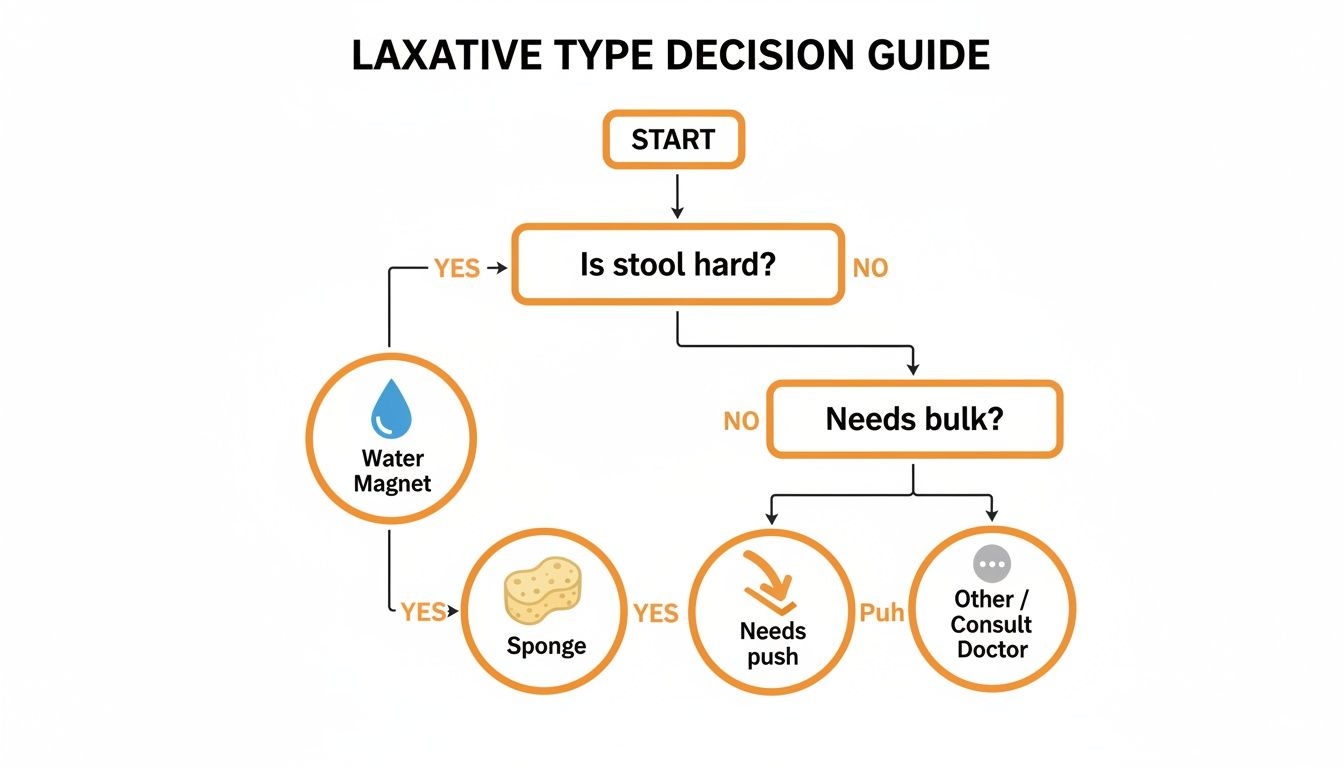
As the guide shows, figuring out if your stool is hard is the most critical first step in choosing the right kind of treatment.
Special Considerations For Different Life Stages
Your age and overall health play a massive role in deciding which OTC constipation medicines are the safest and most suitable. It's really important to choose carefully, especially for more vulnerable groups.
During Pregnancy and Breastfeeding Between hormonal shifts and the pressure from a growing baby, constipation is incredibly common during pregnancy. But, of course, safety is the top priority.
Pharmacist's Tip: "For expectant mothers, I almost always recommend starting with the gentlest options. Bulk-forming laxatives like Fybogel or osmotic laxatives like lactulose are generally considered safe as they aren't absorbed into the bloodstream. It's always best to check with your GP or midwife before taking any medication during pregnancy."
Stimulant laxatives are usually best avoided unless a doctor has specifically recommended them.
For Older Adults As we get older, our digestive systems can naturally slow down, making constipation a more frequent visitor. Older adults are also more likely to be on other medications, so picking the right laxative is crucial to avoid interactions.
Osmotic laxatives are often a great choice because they're both effective and gentle. The key is to make sure you're drinking plenty of fluids to prevent dehydration. Stool softeners can also be a big help, especially for anyone who needs to avoid straining.
For Children Treating constipation in children demands extra care, and you should always speak to a pharmacist or GP before giving a child any type of laxative. Doses are very different for little ones, and only certain products are appropriate.
- Osmotic laxatives like macrogol-based products are often the first choice for doctors treating children, as they work well and are generally well-tolerated.
- Lactulose is another gentle osmotic option that's frequently used for younger patients.
You should only ever give a stimulant laxative to a child under the direct supervision of a healthcare professional. Trying to treat a child's constipation with over-the-counter products without getting advice first is not a good idea.
Using OTC Laxatives Safely And Effectively
Picking a laxative off the shelf is just the first step. The real art lies in using it correctly to get safe, effective relief without causing more problems. While these products are incredibly helpful, they're not something to be taken lightly. You have to work with your body, not against it, and that means understanding the potential side effects, interactions, and the golden rules of use.
Every type of laxative has its own personality, and with that comes a unique set of potential side effects. The good news is that they're usually mild and predictable. For instance, it's completely normal to feel a bit bloated or gassy when you first start a bulk-forming laxative as your gut gets used to the extra fibre. Likewise, stimulant laxatives can cause gentle tummy cramps as they wake up your bowel muscles. Knowing what’s normal helps you tell the difference between a minor adjustment and a sign to stop.
Common Side Effects And What To Expect
Understanding these common reactions puts you in the driver's seat. After all, the goal is to get relief, not trade one type of discomfort for another.
- Bulk-Formers (e.g., Fybogel): Expect some initial bloating and wind. This is actually a sign the fibre is doing its job. You can minimise it by starting with a low dose and slowly increasing it, and most importantly, drinking plenty of water.
- Osmotics (e.g., Macrogol): These can also cause bloating and gas as they pull water into your bowel. A few people might feel a bit of mild nausea, but this usually settles down quickly.
- Stimulants (e.g., Senna, Bisacodyl): Mild cramping is the most common guest at this party. It’s simply the feeling of your intestinal muscles getting a direct nudge to start contracting.
- Stool Softeners (e.g., Docusate): These are the gentle giants of the laxative world and have very few side effects, though some people may notice mild stomach cramps.
Medication Interactions You Must Know About
This is where taking over the counter meds for constipation requires real attention. Laxatives can change the way your body absorbs other medicines, sometimes making them less effective or even ramping up their side effects.
A Pharmacist’s Tip: "Water isn't just a good idea when you're taking laxatives—it's an essential part of the treatment. For bulk-formers and osmotics to work, they need fluid. Without enough water, a bulk-forming laxative can turn into a thick, hard mass and actually worsen a blockage. Aim for at least 6-8 glasses of water a day to ensure everything works smoothly and safely."
You should always have a word with a pharmacist if you take any other medication, but be extra cautious if you're on:
- Diuretics (Water Pills): Combining these with laxatives can be a recipe for dehydration and electrolyte imbalances.
- Heart Medications (e.g., Digoxin): Some laxatives can affect your body's potassium levels, which can seriously interfere with these drugs.
- Certain Antibiotics: Laxatives can speed things up in your digestive tract, meaning your body might not have enough time to absorb the full dose of your antibiotic.
- Blood Thinners (e.g., Warfarin): If laxative use leads to severe diarrhoea, it can mess with your vitamin K levels and, in turn, affect how your blood clots.
The Risk Of Laxative Dependence
One of the most critical things to remember is that these medicines are for short-term relief only. Using stimulant laxatives for more than a week is a bad idea, as it can lead to what's often called 'laxative dependence'.
This isn't an addiction in the classic sense. Rather, your bowel can get lazy, becoming reliant on that artificial push from the stimulant to get things moving. Over time, the nerve endings in your colon can become less sensitive, and the muscles may weaken, making it even harder to go to the loo on your own. It’s a vicious cycle where you end up feeling like you need the laxative just to function normally. For more insights on how patient data informs these recommendations, you can learn about our patient consultation data processes.
When Your Constipation Needs a Doctor's Attention
Over-the-counter remedies are fantastic for the occasional bout of constipation, but it's important to see them for what they are: a temporary fix, not a long-term solution. Knowing when to put the packet down and pick up the phone to your GP is crucial for your health. Think of it like a DIY repair—sometimes you need to call in a professional to sort out the underlying problem properly.
Recognising these limits isn’t just about playing it safe; it’s about getting to the root cause of your discomfort. Persistent constipation can sometimes be a signpost for another health issue that needs a proper look.
Red Flag Symptoms To Watch For
If you spot any of the following, it’s time to stop self-treating and book an appointment with your GP or have a word with a pharmacist right away. These are clear signals from your body that it needs a professional medical review.
- Severe or Worsening Pain: While mild cramping can sometimes happen with laxatives, severe, persistent, or escalating abdominal pain is not normal.
- Blood in Your Stool: This is a big one. It always needs a doctor's visit, whether it appears as bright red streaks or as dark, tarry-looking stools.
- Unexplained Weight Loss: If you're losing weight without trying, it’s a significant sign that something needs investigating.
- No Relief After a Week: Have you been using an OTC laxative for seven days with no improvement? It's time to get checked out.
- A Persistent Change in Bowel Habits: If your constipation is a new thing and it's been going on for more than two weeks, a GP can help figure out what’s behind it.
This isn't a small-scale issue, either. The NHS spent an estimated £162 million treating constipation in England in a single year, with hospital admissions for the condition hitting the equivalent of 196 people every day.
Going Beyond The Pharmacy Shelf
When simple, off-the-shelf laxatives just aren't cutting it, it might be time for a different approach. This is where more specialised services can make a real difference, helping to pinpoint and treat the root cause of your digestive woes.
A Pharmacist's Tip: "Don't ever feel like you're 'bothering' a healthcare professional with constipation. It can seriously impact your quality of life and can sometimes be linked to other conditions. Getting it checked out is always the right call."
At Courier Pharmacy, we can help you take that next step. For example, some chronic digestive issues are actually caused by an imbalance of bacteria in the gut. We offer specialised SIBO (Small Intestinal Bacterial Overgrowth) breath testing to accurately diagnose this condition, which can be a hidden driver of bloating and constipation.
If a stronger, prescription-only treatment is what's needed, our prescribers can carry out a full consultation to find the most suitable medication for you. Sometimes, persistent gut issues can be a sign of conditions like inflammatory bowel disease. You can learn more about what causes IBD and why a proper diagnosis is so important. Our goal is to be your partner in achieving long-term digestive wellness.
Lifestyle Changes For Long-Term Bowel Health
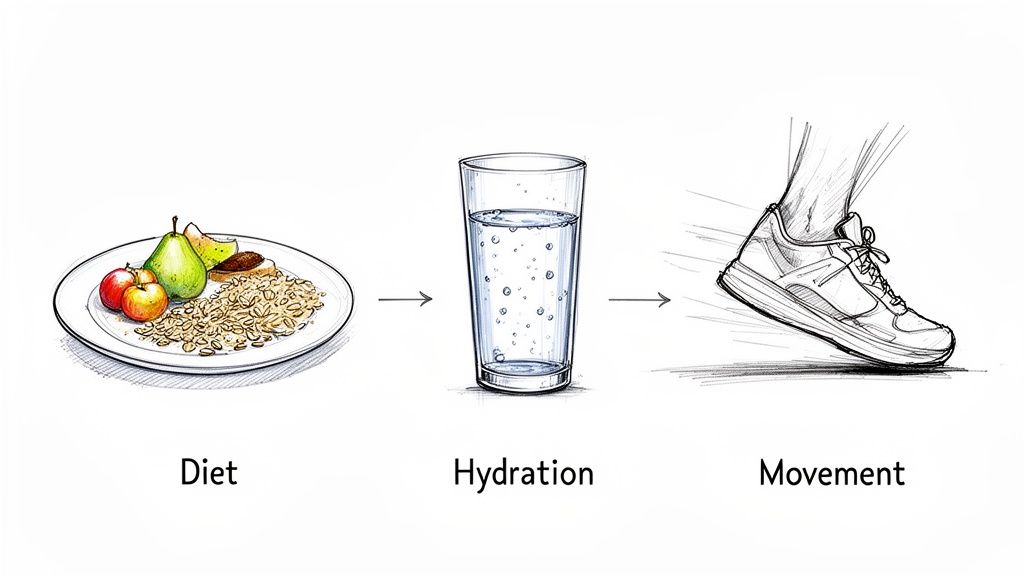
While over-the-counter meds for constipation are a brilliant short-term fix, they're not the whole story. For genuine, lasting relief and better digestive wellness, we need to look beyond the pharmacy shelf and address the root causes. Building a foundation of good bowel health can stop constipation from becoming a frustrating, recurring problem.
Lasting change really comes down to three core pillars: what you eat, how much you drink, and how often you move your body. Get these right, and you empower your body's natural rhythm, which means relying less on medication in the long run.
The Power of Diet and Fibre
One of the biggest culprits behind constipation is a diet that’s low in fibre. This is a common issue across the UK, where low-fibre diets, combined with more sedentary lifestyles, are fuelling the demand for constipation treatments. You can read more about the public health side of this on the official government review website.
The ideal target is around 22 to 34 grams of fibre a day, but a word of caution: ramping up your intake too fast can backfire, causing uncomfortable bloating and gas.
A Pharmacist’s Tip: "I always advise people to increase their fibre intake slowly. Start by adding one high-fibre food to your day—perhaps a piece of fruit with breakfast or a handful of beans with your evening meal. Give your body a few days to adjust before adding more. It’s a marathon, not a sprint."
Great sources of fibre include:
- Fruits: Pears, apples, and especially prunes are excellent choices.
- Vegetables: Think broccoli, carrots, and leafy greens.
- Whole Grains: Oatmeal, whole-wheat bread, and brown rice are fantastic.
- Legumes: Lentils, beans, and chickpeas pack a powerful punch.
The Crucial Role of Hydration
Fibre and water are a team; one simply can't work properly without the other. Fibre’s magic lies in its ability to absorb water, which adds soft bulk to your stool and helps it pass smoothly. If you're not drinking enough, that extra fibre can actually make things worse by hardening the blockage.
Aim for at least 6-8 glasses of water or other fluids spread throughout the day. It’s a simple change, but it’s one of the most effective tools for staying regular.
Gentle Movement for a Healthy Gut
Regular physical activity is the final piece of the puzzle. When you move your body, you’re not just working your muscles—you're also encouraging the natural wave-like contractions of your intestines, which helps move everything along.
This doesn't mean you need to hit the gym for an intense session. Something as simple as a brisk 30-minute walk each day can make a huge difference, helping to keep your digestive system active and efficient.
Summary: Making the Right Choice for You
Navigating the world of over-the-counter meds for constipation doesn't have to be confusing. The key is to match the product to your specific symptoms: use osmotic laxatives or stool softeners for hard stools, stimulants for infrequent movements, and bulk-formers for a gentle, natural approach.
Always remember these are for short-term use. The most effective long-term strategy involves lifestyle changes: increasing your intake of fibre and water, and getting regular exercise. If your symptoms persist for more than a week or you experience any 'red flag' symptoms like severe pain or blood, it's essential to seek professional medical advice.
FAQs: Your Questions Answered By A Pharmacist
How long can I safely use an OTC laxative?
Most over-the-counter laxatives are intended for short-term relief, typically for no longer than one week. If you find you still need a laxative after seven days, it's a clear signal to stop self-treating and consult your GP or pharmacist. Long-term use, especially of stimulant laxatives, can lead to your bowel becoming dependent.
Is it ever okay to mix different laxatives?
No, you should not mix different types of laxatives unless specifically told to by a healthcare professional. "Combining laxatives can lead to severe side effects like intense cramping, diarrhoea, and dehydration," warns our pharmacist. "If one type isn't working, the solution isn't to add another, but to seek advice on whether you're using the right one for your problem."
What should I do about constipation when travelling?
Travel constipation is very common due to changes in routine and diet. To manage it, stay well-hydrated, try to stay active, and consider taking a gentle stool softener or bulk-forming laxative a day or two before you travel. It's also wise to pack a trusted stimulant laxative, like senna, for any stubborn cases that might arise.
Are "natural" laxatives automatically safer?
Not necessarily. While products like senna are plant-derived, they are still potent stimulant laxatives and carry the same risks and side effects as synthetic ones. The term "natural" does not mean a product is free from side effects or safe for long-term use. Always follow the packet instructions and use any laxative with care.
When occasional constipation strikes, having the right information is key. But for ongoing digestive health concerns, professional guidance can make all the difference. At Courier Pharmacy, we offer expert consultations and a range of diagnostic services to help you find the root cause of your symptoms. Whether you need advice on prescription treatments or specialised testing, we're here to provide truly personalised care. Find out more at https://courierpharmacy.co.uk.


