Ozempic for weight loss: a UK patient’s guide
Considering Ozempic for weight loss in the UK? This guide explains how it works, what to expect, and your options for safe access. Read our expert tips.
In this article
- Five key takeaways
- How semaglutide actually works in your body
- It talks to your brain
- It works on your stomach
- It supports your pancreas
- Ozempic's three key actions for weight management
- Wegovy vs Ozempic: understanding your UK options
- The main weight loss injections
- NHS vs private clinics
- What happens when you stop your treatment?
- The reality of weight regain
- Protecting your muscle mass
- Managing side effects and ensuring your safety
- Common side effects
- Practical tips for feeling your best
- Serious side effects: when to seek help
- How to get weight loss treatment safely in the UK
- Access through the NHS
- Using a regulated private provider
- Spotting unsafe websites
- Summary
- Frequently asked questions
- Is Ozempic the same as Wegovy?
- How much weight can I realistically lose?
- Do I have to change my diet and exercise habits?
- Can I drink alcohol while taking Ozempic?
- How long does it take to see results?
- What happens if I miss a dose?
- Who should not use Ozempic?
- How do I get Ozempic for weight loss in the UK?
Yes, Ozempic can help with weight loss, but it is not officially licensed for this in the UK. Instead, Ozempic is approved here only to treat type 2 diabetes. The good news is that a medication called Wegovy, which contains the exact same active ingredient (semaglutide), is licensed for weight loss.
This guide cuts through the confusion. We'll explain how these modern medicines work by dialling down hunger signals and helping you feel full. You will learn about the real-world results you can expect, potential side effects, and how to access treatment safely and legally in the UK.
Five key takeaways
- Licensing is key: In the UK, Ozempic is licensed for type 2 diabetes. Wegovy is the brand licensed for weight loss. They contain the same active drug, semaglutide.
- It’s a tool, not a cure: You get the best results by pairing the medication with healthier eating and more activity.
- Results can be significant: Clinical trials show people lost an average of 15% of their body weight over 68 weeks using the weight loss dose of semaglutide [1].
- Safety first, always: Only use a regulated UK pharmacy. They will always require a full medical consultation before prescribing.
- Side effects are common: Nausea is a frequent side effect, especially when you start. It usually settles down as your body adjusts.
How semaglutide actually works in your body
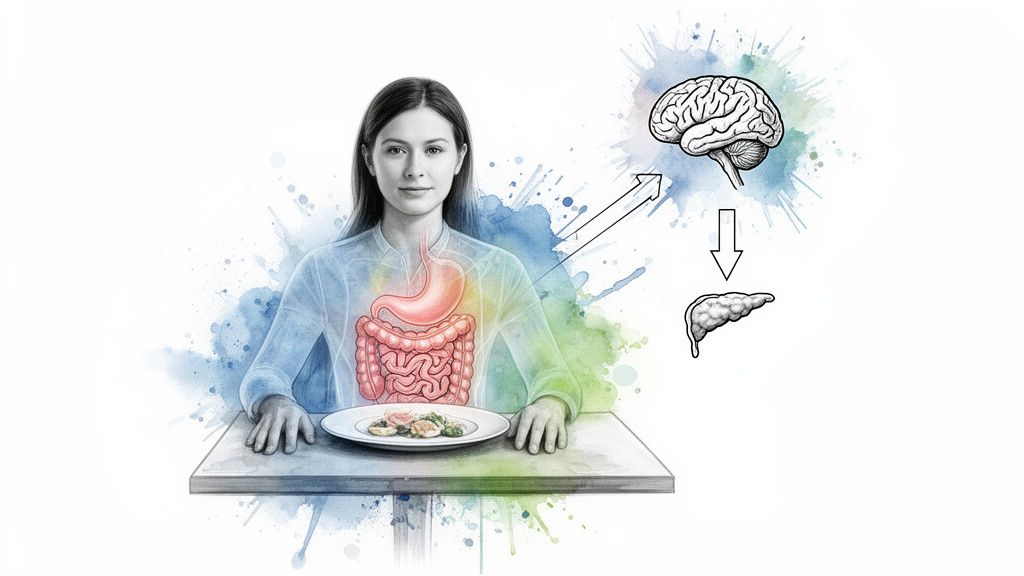
To understand how Ozempic helps with weight loss, you need to know about its active ingredient, semaglutide. Semaglutide mimics a natural hormone your body already makes called GLP-1 (glucagon-like peptide-1). After you eat, your gut releases GLP-1. It sends a message to your brain that says, "you're full".
Semaglutide copies the action of GLP-1, but it is much more powerful and lasts a lot longer. Think of it as turning up the volume on that natural "I'm full" signal. This creates a powerful three-part effect that is key to managing your weight.
It talks to your brain
First, semaglutide works on the appetite control centre in your brain. It helps quieten the constant “food noise” and reduces hunger cravings [2]. This makes it easier to feel satisfied with smaller portions.
Many people find this changes their relationship with food. It is not about willpower. Instead, it changes the biological signals that drive hunger.
It works on your stomach
Next, the medicine directly affects your digestive system. It slows down how quickly your stomach empties after a meal. This process is called gastric emptying.
This might sound simple, but it has a huge impact. Food stays in your stomach for longer, which gives you a lasting feeling of fullness. It helps you go longer between meals without feeling hungry.
Pharmacist's tip: This slow digestion is why eating smaller, more frequent meals can help manage side effects like nausea. It stops your stomach from feeling overly full.
It supports your pancreas
Finally, semaglutide helps your pancreas. It encourages your pancreas to release insulin, but only when your blood sugar is high (like after a meal). This helps smooth out your blood sugar levels.
Stable blood sugar reduces the energy crashes and cravings that often follow sharp spikes and dips. For many people, stable energy is a massive help when sticking to a healthier lifestyle.
Ozempic's three key actions for weight management
| Action | What it does | How it helps you |
|---|---|---|
| Brain signalling | Targets the brain’s appetite centre to increase fullness. | Reduces hunger and helps you feel satisfied with less food. |
| Slowed digestion | Delays your stomach emptying after a meal. | Helps you feel physically fuller for longer. |
| Insulin support | Helps the pancreas release insulin when blood sugar is high. | Contributes to stable energy and reduces sugar cravings. |
Wegovy vs Ozempic: understanding your UK options
The conversation around weight loss injections has exploded in the UK. It is vital to understand your options clearly.
The main weight loss injections
In the UK, Wegovy is the brand name for semaglutide that is licensed for weight management. For most people, this is the official and most direct route to using semaglutide for weight loss. Ozempic contains the same active drug but is only licensed for treating type 2 diabetes.
Another option is Mounjaro (active ingredient: tirzepatide). It is a newer medicine that mimics two hormones (GLP-1 and GIP). This makes it another powerful tool for managing both blood sugar and weight.
NHS vs private clinics
The huge interest in these medicines has led to supply challenges, especially within the NHS. The NHS follows strict criteria from NICE (National Institute for Health and Care Excellence) [3].
Typically, NHS patients need to have:
- A very high BMI (usually over 35).
- At least one weight-related health problem, like high blood pressure.
- A referral to a specialist weight management service.
Due to high demand, waiting lists can be very long. This is where regulated private clinics play a key role. They offer a safe, legal, and medically supervised way for people to get treatment if they meet the criteria for private care.
Pharmacist's tip: Always check that an online service is a GPhC-registered UK pharmacy. A legitimate provider will always insist on a full medical consultation to ensure the treatment is safe and suitable for you.
What happens when you stop your treatment?
It is important to know what happens when you stop taking weight loss medication. Obesity is a long-term condition that needs ongoing management. Medicines like semaglutide are excellent tools, but they are not a permanent cure.
When you stop the injections, their effects on your appetite wear off. The natural hunger signals that the medicine quietened will return. If you have not built solid, healthy habits, it can be very difficult to keep the weight off.
The reality of weight regain
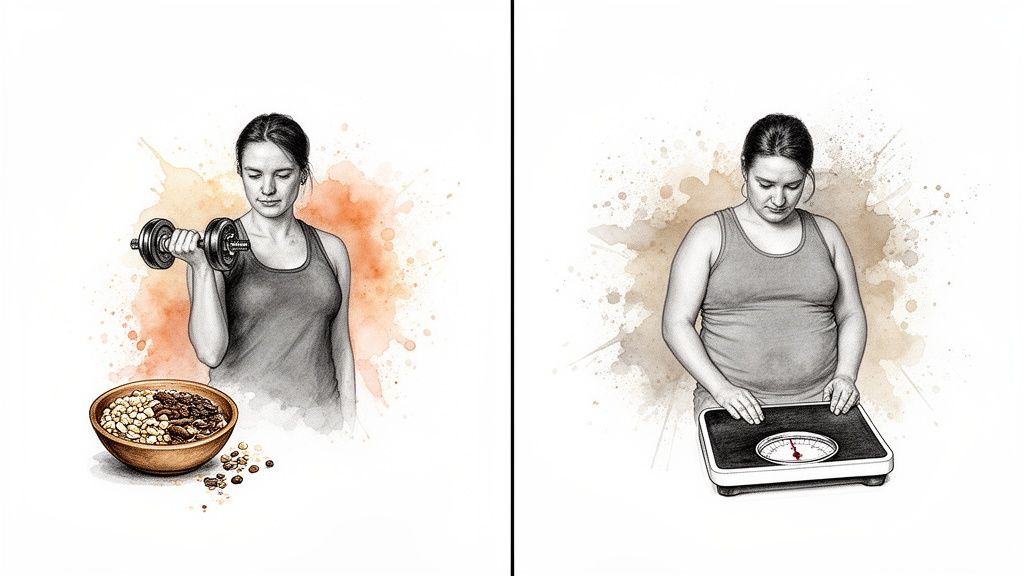
Evidence shows that many people regain weight after stopping treatment if their lifestyle changes have not become habits. This is not a personal failure. It is the biology of a chronic condition returning once medical support is removed.
A major study showed that one year after stopping semaglutide, people had regained two-thirds of the weight they had lost [4]. This shows that you need a long-term plan from day one. The goal is to use the medicine as a launchpad to build sustainable habits that last a lifetime.
Real-life example: a busy parent
Sarah, a 42-year-old teacher and mum of two, used Wegovy for a year. It helped her lose 18% of her body weight. She used the time to learn about nutrition and found a love for evening walks after the kids were in bed. When she stopped the medication, her hunger returned, but she had new habits. She continued her walks and prepped healthy lunches, which helped her maintain most of her weight loss.
Protecting your muscle mass
It is critical to preserve muscle during any weight loss journey. When you lose weight quickly, your body can shed muscle as well as fat. This is bad for your health and your metabolism.
To protect your muscle, you should:
- Prioritise protein: Eat enough high-quality protein with your meals. Protein helps your body maintain and repair muscle tissue.
- Embrace strength training: Add resistance training to your week. This could be lifting weights, using bands, or doing bodyweight exercises.
Pharmacist's tip: Aim for at least two strength training sessions a week. This sends a powerful signal to your body to hold on to its muscle, even when you are eating fewer calories.
Real-life example: a shift worker
David, a 35-year-old nurse working shifts, struggled with unhealthy canteen food. Wegovy helped him control his cravings. He started bringing high-protein snacks like Greek yoghurt and nuts to work. He also joined a 24-hour gym to do strength training after his night shifts. This helped him lose fat while feeling stronger and more energetic.
Managing side effects and ensuring your safety
Starting a new medication can feel daunting. With GLP-1 medicines, knowing what to expect helps you manage the journey safely.
Most side effects are temporary. They are a sign your body is getting used to the new treatment. The most common issues are digestive, which makes sense because the medicine slows your digestion.
Common side effects
- Nausea: This is the most common side effect, especially when you start or increase your dose.
- Diarrhoea or constipation: Changes to your bowel habits are common.
- Bloating or stomach discomfort: You might feel gassy or have mild cramps.
Practical tips for feeling your best
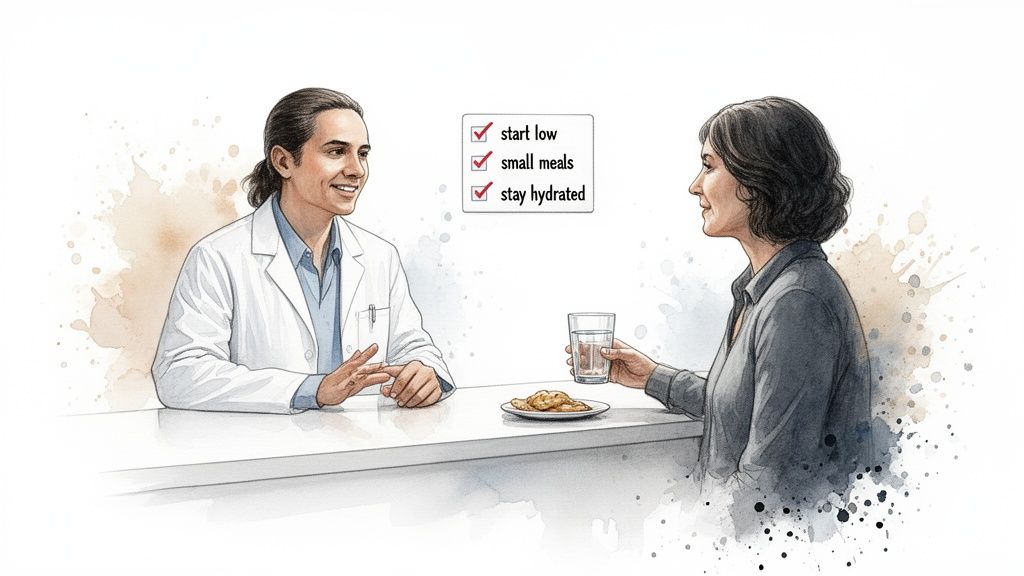
The best way to manage side effects is dose titration. This means starting on a low dose and increasing it slowly under your prescriber's guidance. This gives your body time to adapt.
A few other simple tips can make a big difference:
- Eat smaller, more frequent meals: This stops your stomach from getting too full.
- Choose blander foods: If you feel queasy, stick to simple things like toast or rice.
- Stay upright after eating: Lying down right after a meal can cause indigestion.
For a more detailed guide, read our article on coping with nausea from GLP-1 medications.
Serious side effects: when to seek help
Though much less common, you must know about more serious potential side effects.
Seek immediate medical attention if you experience:
- Severe abdominal pain: Especially if it is sudden, does not go away, and spreads to your back. This could be a sign of pancreatitis (an inflamed pancreas).
- Signs of a severe allergic reaction: This includes swelling of your face, lips, or throat, difficulty breathing, or a severe rash.
How to get weight loss treatment safely in the UK
Navigating weight loss treatments can feel like a minefield. But getting safe, legal access in the UK is straightforward once you know the correct steps. Your health is the top priority.
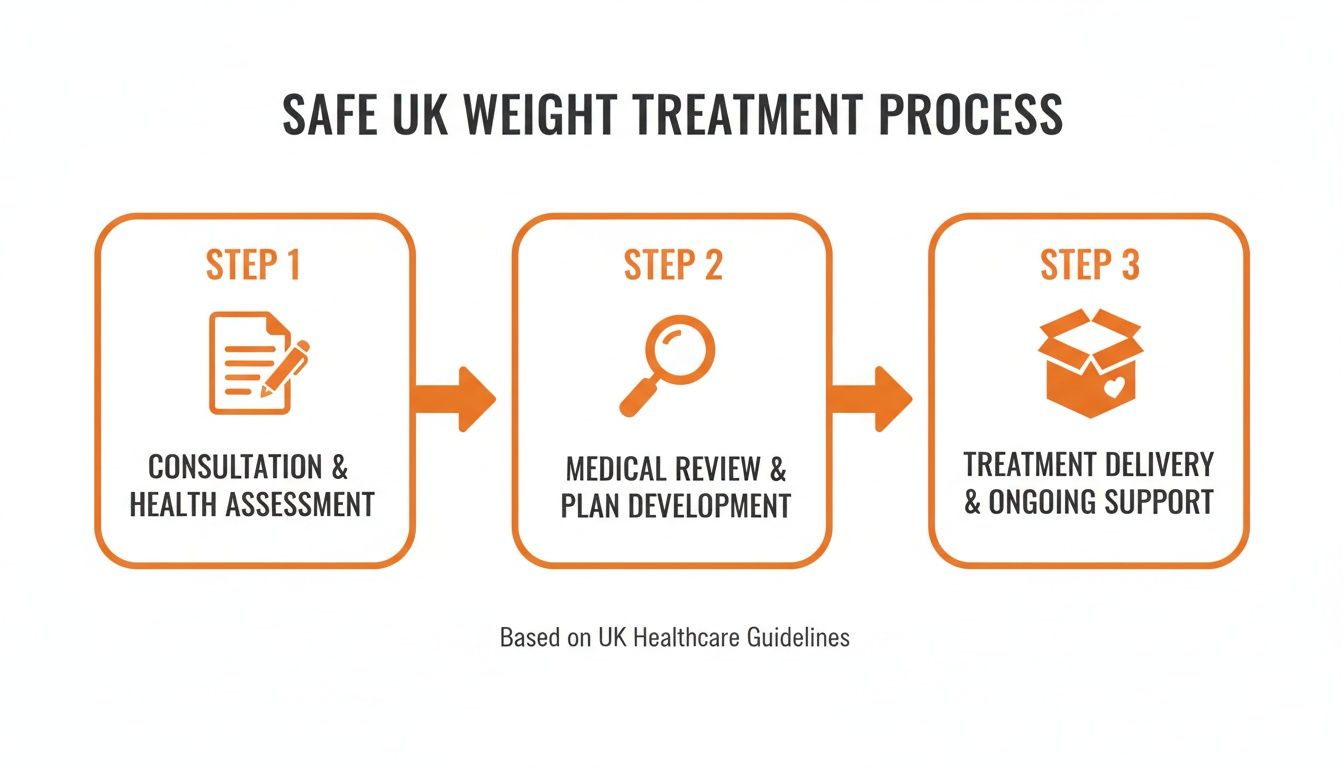
There are two main routes: the NHS or a regulated private provider.
Access through the NHS
Getting specialist weight management services on the NHS is guided by NICE [3]. These guidelines ensure treatments go to those who need them most. However, demand is very high and there are ongoing supply shortages, so waiting lists can be extremely long.
Using a regulated private provider
A regulated private provider is a safe and compliant alternative. The process is built around patient safety. Any legitimate online pharmacy in the UK will follow these steps:
- Confidential Online Consultation: You fill out a thorough online questionnaire about your medical history and health.
- Clinical Review: A GPhC-registered prescribing pharmacist or a doctor carefully reviews your consultation.
- Dispensing and Delivery: If approved, a registered UK pharmacy dispenses your medication and ships it securely.
Spotting unsafe websites
The huge demand for these treatments has led to a rise in unsafe and illegal online sellers. The MHRA has warned about fake weight loss pens being sold in the UK [5]. These counterfeit products can contain harmful substances.
Steer clear of any website that:
- Sells prescription-only medicine without a prescription.
- Does not list a registered UK pharmacy address and contact details.
- Offers prices that seem too good to be true.
Summary
In the UK, Ozempic is licensed for type 2 diabetes, not weight loss. Wegovy, which contains the same active ingredient (semaglutide), is the brand licensed for weight management. These medicines work by mimicking a natural hormone that reduces your appetite and helps you feel fuller for longer.
For the best results, you must combine the medication with a healthy diet and regular exercise. While side effects like nausea are common at first, they usually improve over time. You can get treatment safely through the NHS (if you meet strict criteria) or a regulated private clinic. Always use a GPhC-registered pharmacy to ensure your safety.
Frequently asked questions
Is Ozempic the same as Wegovy?
Yes and no. Both medicines contain the same active ingredient, semaglutide. However, in the UK, they are licensed for different conditions. Ozempic is for type 2 diabetes, while Wegovy is for weight management. They also have different dosing schedules.
How much weight can I realistically lose?
Clinical trials for semaglutide showed an average weight loss of 15% of body weight over 68 weeks when combined with lifestyle changes [1]. Real-world results vary from person to person. It depends on your starting weight and commitment to diet and exercise.
Do I have to change my diet and exercise habits?
Yes, absolutely. These medications are not a magic pill. They are tools to support lasting lifestyle changes. The medicine helps manage your appetite, making it easier to build healthier habits for long-term success.
Can I drink alcohol while taking Ozempic?
It is best to limit alcohol. Alcohol contains empty calories that can hinder your weight loss. It can also affect your blood sugar levels. Combining alcohol with the medication may also worsen side effects like nausea.
How long does it take to see results?
Many people notice a reduced appetite in the first couple of weeks. Significant weight loss usually becomes more noticeable after a few months. Treatment involves slowly increasing the dose to find the right level for you, so progress is gradual and sustainable.
What happens if I miss a dose?
If you miss a dose and your next one is more than 5 days away, take the missed dose as soon as you remember. If the next dose is less than 5 days away, skip the missed one and continue your normal schedule. Never take a double dose to catch up.
Who should not use Ozempic?
You should not use semaglutide if you have a personal or family history of medullary thyroid carcinoma or Multiple Endocrine Neoplasia syndrome type 2 (MEN 2). It is also not suitable if you are allergic to any of its ingredients. A full medical consultation is essential to check if it's safe for you.
How do I get Ozempic for weight loss in the UK?
You cannot get Ozempic prescribed for weight loss in the UK, as this is 'off-label' use. A prescriber will recommend the licensed alternative, Wegovy. You can get this through a specialist NHS service if you meet the strict criteria, or via a regulated private clinic after a full clinical consultation.
Disclaimer: This article is for informational purposes only and does not constitute medical advice. Always consult with a healthcare professional for any health concerns or before starting a new treatment.
Meta description: Looking into Ozempic for weight loss in the UK? Our expert guide explains the difference between Ozempic and Wegovy, how they work, and how to get treatment safely.
Byline: Written by: [Author Name + Credentials] Clinically reviewed by: [Reviewer Name + Credentials]
How this content was created: This article was written based on high-quality, evidence-based sources, including the NHS, NICE, and peer-reviewed medical journals. All information was checked for clinical accuracy by a registered UK pharmacist to ensure it is safe, clear, and trustworthy for our UK audience.
References: [1] Wilding, J.P.H., et al. (2021). Once-Weekly Semaglutide in Adults with Overweight or Obesity. New England Journal of Medicine, 384(11), pp.989–1002. Available at: https://www.nejm.org/doi/full/10.1056/NEJMoa2032183 [2] Friedrichsen, M., et al. (2021). The effect of semaglutide 2.4 mg once weekly on energy intake, appetite, control of eating, and gastric emptying in adults with obesity. Diabetes, Obesity and Metabolism, 23(3), pp.754–762. Available at: https://dom-pubs.onlinelibrary.wiley.com/doi/10.1111/dom.14280 [3] NICE (2023). Semaglutide for managing overweight and obesity. [online] National Institute for Health and Care Excellence. Available at: https://www.nice.org.uk/guidance/ta875 [4] Wilding, J.P.H., et al. (2022). Weight regain and cardiometabolic effects after withdrawal of semaglutide: The STEP 1 trial extension. Diabetes, Obesity and Metabolism, 24(8), pp.1553–1564. Available at: https://dom-pubs.onlinelibrary.wiley.com/doi/10.1111/dom.14725 [5] MHRA (2023). MHRA warns public not to buy pre-filled pens claiming to contain Ozempic or Saxenda. [online] GOV.UK. Available at: https://www.gov.uk/government/news/mhra-warns-public-not-to-buy-pre-filled-pens-claiming-to-contain-ozempic-or-saxenda


