Painkiller for Period Pain: A UK Pharmacist's Guide
Find the right painkiller for period pain in the UK. Compare ibuprofen, naproxen and paracetamol, with safe dosing, red flags and online pharmacy help.
For most UK adults, an NSAID such as ibuprofen taken at the first twinge is the most effective OTC painkiller for period pain. Use paracetamol instead if NSAIDs aren't suitable.
The alarm goes off, your lower abdomen starts cramping, and you're deciding whether to push through work, childcare, a gym session or another night shift. Period pain is common, but severe pain shouldn't be dismissed as something you have to tolerate. UK estimates range from 45% to 97% for any period pain in community samples, while severe pain has been reported in up to 29% of women NICE.
This guide gives you a practical pharmacist-led route through the main options. You'll learn how ibuprofen, naproxen, mefenamic acid and paracetamol differ, how to time and dose them safely, which choice fits common health situations, and when ongoing pain needs a GP review.
Five key takeaways
- Start early: Take ibuprofen when bleeding or the first cramp begins, rather than waiting for severe pain.
- Choose NSAIDs first: Ibuprofen is the usual OTC first choice when you can safely take NSAIDs.
- Use paracetamol carefully: It's the main alternative when NSAIDs cause problems or aren't suitable.
- Don't mix NSAIDs: Never take ibuprofen, naproxen or mefenamic acid together.
- Escalate persistent pain: NICE supports a limited trial of paracetamol or an NSAID. If relief remains poor after three months, ask about further pain management and referral NICE.
What counts as period pain and what this guide covers
You may have typical period cramps, or pain that signals another pelvic problem. Primary dysmenorrhoea causes cramping without an underlying condition. It usually affects the lower abdomen, sometimes spreading to the back or thighs, and follows the pattern of the menstrual bleed.
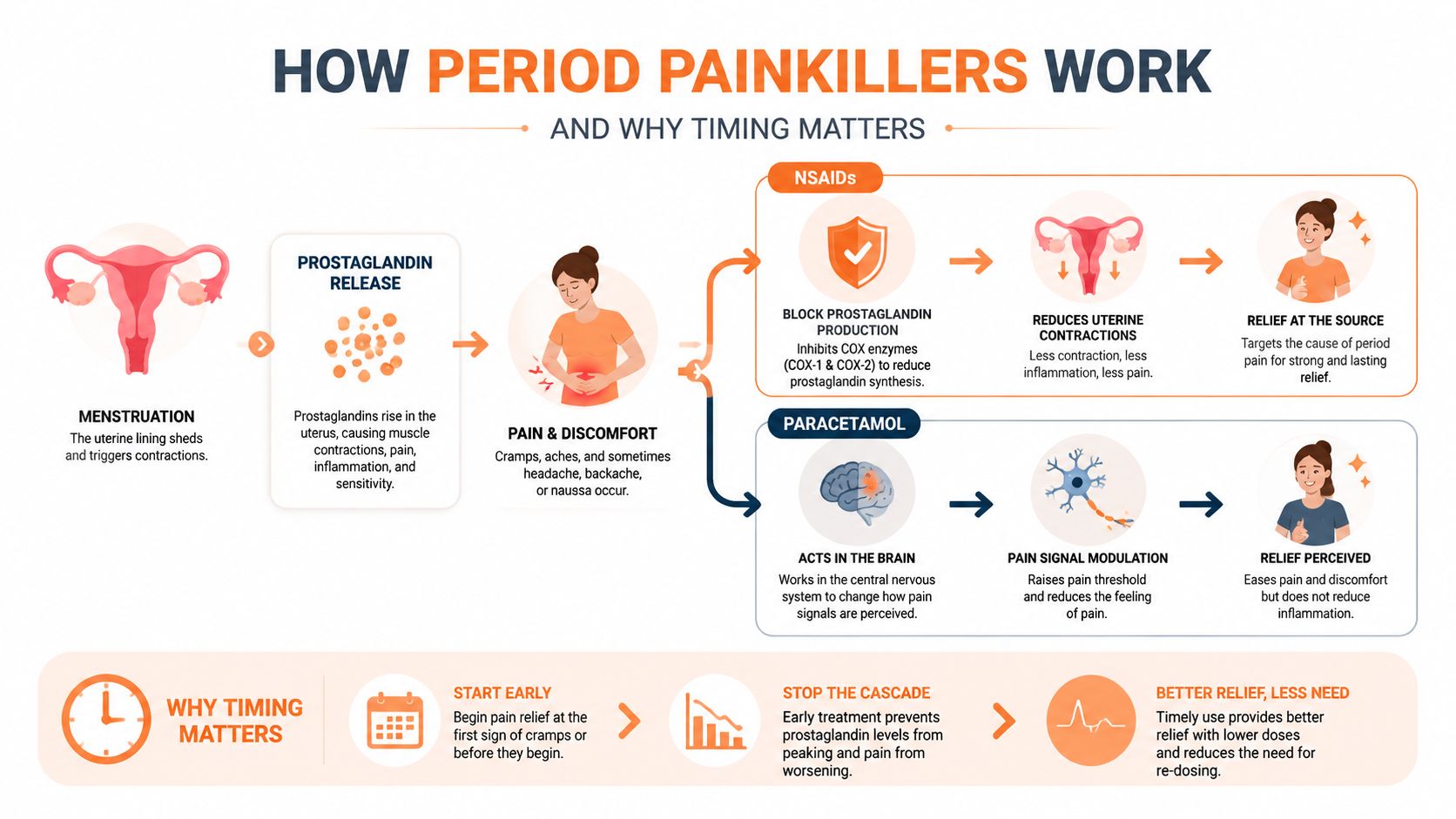
Natural chemicals called prostaglandins make the womb contract as it sheds its lining. Greater prostaglandin activity can make those contractions painful. The next section explains how painkillers act on this process and why the timing of treatment matters.
Secondary dysmenorrhoea has another cause, such as endometriosis, adenomyosis or fibroids. Pain that changes, continues outside your period, or affects sex, bowel movements or urination needs more than a different brand of painkiller. Arrange a GP review, particularly if symptoms are worsening or disrupting normal life.
Your safest starting option depends on your health and plans. With typical cramps and no reason to avoid NSAIDs, ibuprofen is usually the pharmacist's first choice. Asthma, reflux, kidney problems, trying for a baby, contraceptive use and breastfeeding can change that choice. Use this period pain treatment guide for practical background, then ask a pharmacist when your situation is not straightforward.
This article explains:
- How the medicines work and why timing affects results.
- Differences between common UK painkillers.
- Safe adult dosing, including using paracetamol with an NSAID.
- Options for asthma, reflux, kidney disease, pregnancy plans, contraception and breastfeeding.
- Symptoms needing a GP appointment or urgent assessment.
- How an online pharmacy can support treatment and follow-up.
For a visual explanation, watch the embedded video below.
How period painkillers work and why timing matters
Period cramps begin when the womb releases prostaglandins. These chemicals make the womb contract more strongly and can briefly reduce blood flow through the womb muscle, producing the familiar cramping pain.
NSAIDs, such as ibuprofen and naproxen, block cyclo-oxygenase enzymes. This lowers prostaglandin production, so they act on a main driver of cramps rather than only changing how the brain processes pain. For typical period pain, that makes an NSAID the practical first choice when your health allows it.
Paracetamol works mainly through the central nervous system. It can reduce pain and suits people who cannot take NSAIDs or find them difficult to tolerate, although it does not reduce uterine prostaglandins in the same way.
Timing beats brand switching
Take your first NSAID dose when bleeding begins or at the first warning cramp. If your cycle is predictable, starting the day before your expected period may give better control. Check with a pharmacist or prescriber before doing this, especially if you have asthma, reflux, kidney problems, are trying for a baby, or take regular medicines.
Continue a suitable dose regularly for two to three days rather than waiting until pain becomes severe, as advised by the NHS. Keep doses at work, university or in your gym bag if your period often starts away from home.
Take ibuprofen or another NSAID with food where possible. Even toast is preferable to an empty stomach if you are prone to indigestion.
For background on a longer-acting option, read what naproxen is used for. Stop self-treating and arrange a GP review if pain is changing, continuing outside your period, or interfering with daily life.
Comparing the main painkillers for period pain
For most adults, ibuprofen is the sensible starting point for period cramps. It is an NSAID that targets the chemical process driving pain. A Cochrane review found NSAIDs relieve period pain better than placebo and generally outperform paracetamol, without identifying one NSAID as the clear winner.
| Medicine | Typical UK adult use | Main benefit | Key cautions |
|---|---|---|---|
| Ibuprofen | 200 to 400 mg up to three times daily | Strong OTC first choice for cramps | Avoid or seek advice with asthma, ulcers, stomach, heart, kidney or liver problems |
| Naproxen | Often 250 mg up to three times daily when prescribed | Longer-lasting cover for some people | Prescription use may be more suitable, and stomach irritation remains a concern |
| Mefenamic acid | Prescription medicine, with the dose set by the prescriber | Useful when pain and heavy bleeding occur together | Not suitable with some stomach, kidney, heart or pregnancy risks |
| Paracetamol | 500 mg to 1 g at the recommended intervals | Gentler on the stomach and useful when NSAIDs aren't suitable | Do not exceed the daily limit, and take care with liver disease or heavy alcohol use |
Choose paracetamol first if you have asthma that worsens with NSAIDs, reflux or a history of stomach irritation. It is also the safer starting discussion when you are trying for a baby, although pregnancy planning still warrants pharmacist or GP advice. If you use the combined pill or another hormonal contraceptive and still have significant pain, an NSAID can be reasonable if you have no other contraindication. Persistent pain despite treatment needs review rather than repeated self-treatment, particularly if endometriosis is suspected.
Naproxen may provide steadier cover through a long shift or overnight, but it is still an NSAID. The same stomach, kidney, heart and asthma cautions apply, and it is usually prescribed.
A prescriber may choose mefenamic acid when pain occurs with heavy bleeding. Read the information on mefenamic acid tablets, but do not start a prescription NSAID without a suitability check. Stop self-treating and arrange a GP review if pain changes, continues outside your period, or interferes with daily life.
Safe dosing and how to take period painkillers
A painful day is when dosing errors happen. Before taking anything, read the packet and check other medicines, especially cold or flu remedies that may already contain paracetamol. Use the strength printed on the pack, not memory.
For common UK adult doses:
- Ibuprofen: Take 200 to 400 mg up to three times daily, with food. Do not exceed 1,200 mg in 24 hours unless a prescriber gives different instructions. Check the directions for ibuprofen 400 mg tablets before taking them.
- Paracetamol: Take 500 mg to 1 g every four to six hours, if needed. The NHS standard limit is 4 g in 24 hours, equal to eight 500 mg tablets NHS inform.
- Naproxen: Follow the prescription or pharmacy label. A commonly prescribed regimen may use 250 mg up to three times daily, with a maximum of 750 mg, but your own instructions take priority.
Adults can take paracetamol and ibuprofen together if needed because they work in different ways. Try each medicine alone first, so you can identify what helps and what causes unwanted effects NHS. Never combine two NSAIDs, such as ibuprofen and naproxen.
Common dosing mistakes
Liquid and soluble products contain the same active medicine as tablets, but their strengths can differ. Check the label rather than assuming one spoonful or tablet equals another. Slow-release products have separate instructions. Do not crush or repeat them like standard tablets.
Missed a dose? Do not take extra to compensate. Follow the packet or prescription timing and take the next dose when due. Avoid alcohol, drink enough fluids, and stop an NSAID if significant stomach upset develops.
Put each dose time in your phone. This simple record helps prevent double dosing when pain and tiredness affect your concentration.
Use the lowest dose that controls your symptoms, then stop when the pain settles. If you need painkillers repeatedly or they no longer control the pain, arrange a GP review rather than increasing the dose yourself.
Choosing the right painkiller for your situation
Your medical history decides which painkiller is safest. A pharmacist should check your conditions and medicines before recommending an NSAID such as ibuprofen, naproxen or mefenamic acid.
Asthma, reflux and stomach problems
Asthma with previous wheezing after ibuprofen or aspirin means you should avoid those medicines unless a clinician specifically advises otherwise. Choose paracetamol as the first option and tell the pharmacist exactly what reaction you had.
Reflux alone does not always exclude an NSAID. A past ulcer, stomach bleeding or severe indigestion does. Ask a pharmacist or prescriber before using an anti-inflammatory painkiller. They may decide that an NSAID with stomach protection, such as a proton pump inhibitor, is suitable, or recommend paracetamol instead.
Kidney disease, blood thinners and heart risk
Kidney disease, heart disease, high cardiovascular risk or blood-thinning treatment all call for professional advice before an NSAID. These medicines can worsen stomach and kidney risks, particularly if you are dehydrated.
Paracetamol is often the safer starting choice, provided it suits your other medicines and health conditions. Bring your full medicine list, including regular OTC products, and ask: “What prescription medicines and regular OTC products do you take?”
Trying for a baby, pregnancy and breastfeeding
Trying to conceive or the possibility of pregnancy changes the choice. Ask before taking an NSAID. Paracetamol is commonly considered first line in pregnancy. Use the lowest effective amount for the shortest necessary time, following advice from your midwife, GP or pharmacist.
During breastfeeding, ibuprofen and paracetamol are generally the first options considered when they suit you and you follow the label. Ask before using naproxen or mefenamic acid, especially for repeated courses.
The combined pill and hormonal coil do not usually prevent you using standard period painkillers. New or worsening pain and heavy bleeding still need medical review. If you are under 16, ask a pharmacist or GP rather than taking aspirin. NHS advice says aspirin should not be used under age 16.
Red flags and when to see a GP
If period pain repeatedly disrupts work, sleep, exercise or relationships, stop switching between painkillers and book a GP appointment. Self-treatment should not continue when the basic approach is failing.
Arrange a routine review if you have:
- Pain that remains poorly controlled after a three-month trial of paracetamol or an NSAID.
- Pain between periods or during sex.
- Very heavy bleeding, including hourly changes of sanitary protection or passing clots.
- Bleeding between periods.
- Bowel or bladder symptoms that follow a cycle-related pattern.
- Fertility concerns or a clear change in your usual period pattern.
These symptoms may indicate endometriosis, adenomyosis, fibroids or another cause of secondary dysmenorrhoea. A GP can review your symptoms, medication history and pain diary, then arrange blood tests, a pelvic ultrasound or referral to gynaecology when appropriate.
When urgent help matters
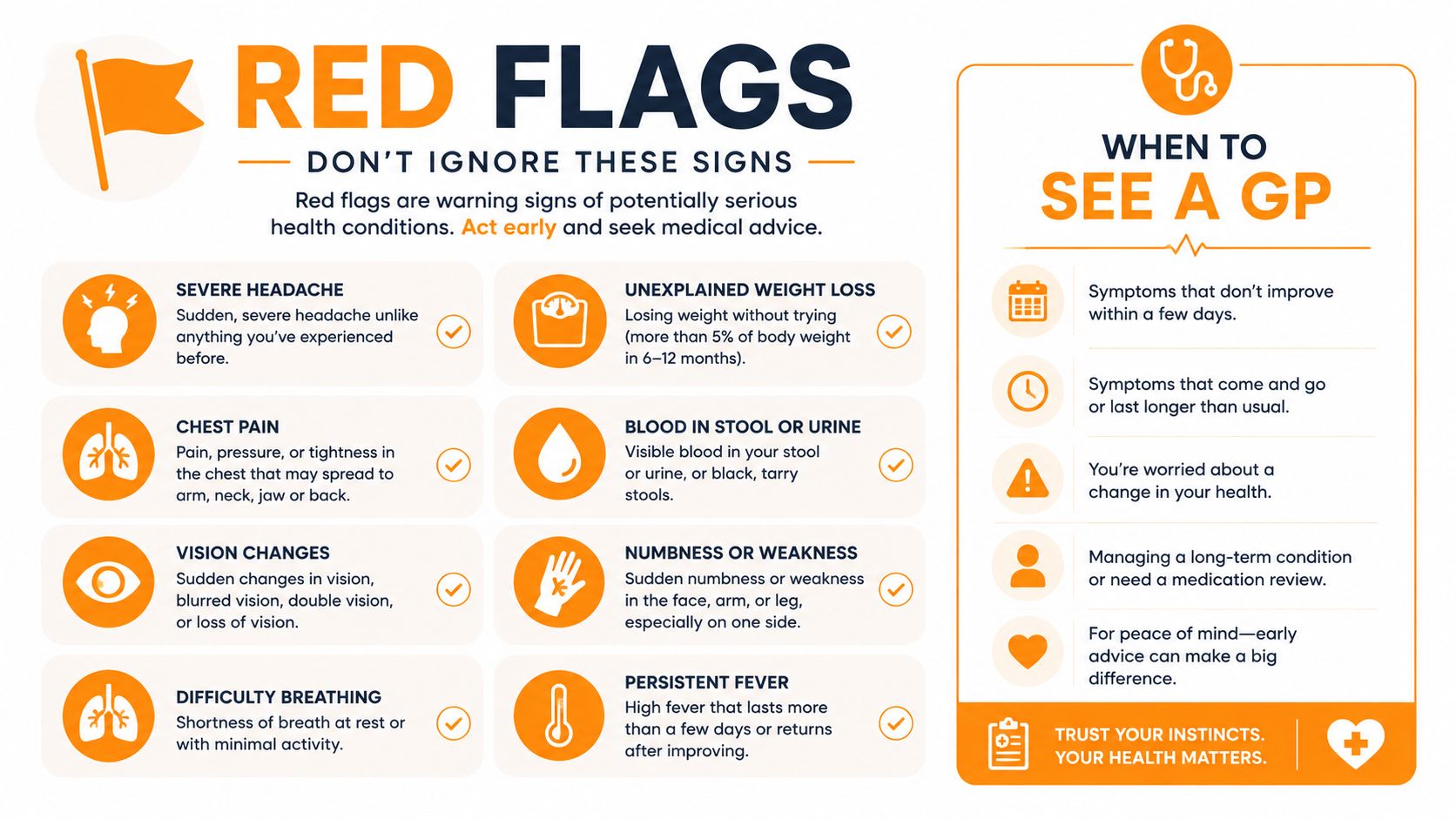
Get same-day medical advice for sudden severe pelvic pain, fainting or fever. Contact NHS 111 if you are unsure where to go, especially when the pain differs from your usual cramps or pregnancy is possible.
Do not wait for a routine appointment if severe symptoms are worsening. The following guide highlights symptoms that need professional assessment:
How an online pharmacy can help with period pain
A regulated UK online pharmacy can help with straightforward period pain by supplying suitable treatment and arranging a pharmacist-led consultation. It does not replace urgent assessment or a GP when warning symptoms appear.
The consultation should cover:
- When pain starts and whether cycles are regular.
- Asthma, reflux, ulcers, kidney or heart problems.
- Pregnancy, breastfeeding or plans to conceive.
- Contraception and all regular medicines.
- Heavy bleeding, pain during sex, and bowel or bladder symptoms.
A GPhC-registered pharmacist can assess this information by message or telephone. For prescription treatment such as mefenamic acid or a higher-strength NSAID, the pharmacist must first check that it is appropriate. Possible red flags should result in advice to contact a GP or NHS 111, rather than automatic supply.
Courier Pharmacy offers an online route for consultations about OTC and prescription medicines, including period-pain products, subject to clinical assessment. Before ordering through its online pharmacy service, check delivery arrangements, repeat-request procedures and whether communication with your NHS GP requires your consent.
Use an online service only when your symptoms fit a clear self-care plan. Sudden severe pain, fainting, fever or possible pregnancy complications need urgent medical advice, not a delayed online order. If treatment keeps failing or your symptoms change, arrange a GP review.
Key takeaways and quick answers on period painkillers
Five practical actions
- Start ibuprofen early: If it's safe for you, take the labelled dose with food at the first twinge.
- Ask about another NSAID: A prescriber may consider naproxen or mefenamic acid when relief remains incomplete.
- Add, don't double up: Paracetamol can be combined with ibuprofen when appropriate, but never add a second NSAID.
- Avoid codeine unless prescribed: It can cause drowsiness, constipation and dependence, so it isn't a routine first choice.
- Book a review: Arrange GP advice when pain worsens, changes pattern or continues to disrupt daily life across repeated cycles.
Can ibuprofen reduce menstrual flow?
It may reduce menstrual bleeding modestly because it lowers prostaglandin activity. It isn't a substitute for assessment when bleeding is very heavy or has changed suddenly.
Do painkillers affect contraception?
Ibuprofen and paracetamol don't usually interfere with the combined pill or barrier methods. Vomiting or severe diarrhoea can affect some oral contraceptive protection, so ask a pharmacist if that happens.
Can you take them with migraine with aura?
Paracetamol is usually an option. NSAIDs are often suitable too, but migraine with aura can involve other health and contraceptive considerations, so seek individual advice if you take regular migraine treatment.
Are they safe while breastfeeding?
Ibuprofen and paracetamol are generally first-line choices while breastfeeding when you can take them safely. Ask before using prescription NSAIDs or repeated courses.
When should you suspect endometriosis?
Suspect it when pain changes, occurs outside menstruation, affects sex, bowel movements or urination, or remains inadequately controlled after the NICE-supported three-month trial. Persistent severe pain isn't something you should solve by endlessly rotating painkillers.
In summary, choose an NSAID early if it's safe, use paracetamol when it isn't, and follow the daily limits. Don't combine NSAIDs. Keep a record of pain, bleeding and medicine use. Ask a pharmacist about personal risks. See your GP when symptoms change or fail to settle.
Courier Pharmacy offers pharmacist-reviewed online access to suitable OTC and prescription options for period pain, including treatment that requires a clinical assessment. Visit Courier Pharmacy to check your options and arrange a consultation if standard self-care isn't giving you enough relief.
Suggested internal links
- Period pain treatment
- What is naproxen
- Mefenamic acid tablets
- Ibuprofen 400 mg tablets
- Online pharmacy services
Suggested visual ideas
- Process infographic: A painterly flow diagram showing prostaglandins, uterine contractions and early NSAID action, using bright lime green, pale yellow-green, light grey and ornate brass plaque overlays. Alt text: “How NSAIDs and paracetamol work for period pain and why early timing matters.”
- Decision-path visual: A steampunk-inspired pharmacist decision tree for asthma, reflux, kidney disease, pregnancy and suspected endometriosis. Alt text: “Pharmacist decision path for choosing a safe period painkiller in common UK situations.”
- Red-flag checklist: A pale yellow-green checklist with brass details showing symptoms that need GP or urgent advice. Alt text: “Period pain warning signs that need GP review or same-day medical advice.”
- Medicine comparison panel: A light grey comparison board for ibuprofen, naproxen, mefenamic acid and paracetamol. Alt text: “Comparison of common UK painkillers for period pain, including benefits and safety cautions.”
Meta description
Painkiller for period pain explained by a UK pharmacist. Compare ibuprofen, naproxen and paracetamol, with safe dosing and red flags for GP review.
Byline
Written by Medical Mojo Editorial Team, patient health content specialists.
Clinical review
Clinically reviewed by a UK-registered pharmacist, with medicine advice checked against current NHS and NICE guidance.
How this content was created
We created this guide from NHS, NICE, NHS-linked formulary and Cochrane information supplied for review. The advice was organised into practical pharmacy decisions, checked for dose limits and safety warnings, and reviewed for UK relevance. It's for information only and isn't a substitute for personal medical advice.
References
National Institute for Health and Care Excellence. (n.d.) Dysmenorrhoea background information and prevalence. Available at: NICE Clinical Knowledge Summaries (Accessed: 19 August 2026).
National Health Service. (n.d.) Period pain. Available at: NHS (Accessed: 19 August 2026).
Cochrane. (n.d.) Non-steroidal anti-inflammatory drugs for dysmenorrhoea. Available at: Cochrane Evidence (Accessed: 19 August 2026).
National Institute for Health and Care Excellence. (n.d.) Endometriosis initial management and referral visual summary. Available at: NICE guidance (Accessed: 19 August 2026).
NHS Somerset. (n.d.) Reproductive health prescribing guidance. Available at: NHS Somerset (Accessed: 19 August 2026).
NHS. (n.d.) Ibuprofen for adults. Available at: NHS medicines guidance (Accessed: 19 August 2026).
NHS inform. (n.d.) When should I take painkillers? Available at: NHS inform (Accessed: 19 August 2026).
NHS-linked patient information. (n.d.) Period pain patient information sheet. Available at: Barnsley NHS patient guidance (Accessed: 19 August 2026).


