Your Complete Guide to Period Delay Tablets UK
Discover how period delay tablets UK work, where to get them safely, and what to expect. Your expert guide to Norethisterone, side effects, and alternatives.

In this article
- Five Key Takeaways on Period Delay Tablets
- How Period Delay Tablets Actually Work
- The Role of Progesterone in Your Cycle
- How Norethisterone Intervenes
- What Happens When You Stop Taking Them
- Using Period Delay Tablets Correctly and Safely
- Starting Your Treatment
- Maximum Duration and Stopping the Tablets
- Practical Advice for Safe Use
- Understanding Potential Side Effects and Safety
- Common and Mild Side Effects
- Norethisterone Side Effects At a Glance
- Less Common but More Serious Risks
- Who Should Avoid Period Delay Tablets?
- How to Get Period Delay Tablets in the UK
- Your Main Healthcare Options
- Using a Regulated Online Pharmacy
- A Real-Life Example: Sarah's Honeymoon Plan
- Frequently Asked Questions (FAQs)
- Can I use period delay tablets as contraception?
- Will this affect my future fertility?
- What should I do if I miss a dose?
- How often can I use period delay tablets?
- Summary
Planning a holiday, wedding, or a big event, only to realise your period is due to arrive at the worst possible time? It’s a common frustration, but there's a safe and effective solution. Period delay tablets are prescription-only medicines that give you the freedom to temporarily postpone your period, so you can focus on enjoying your plans without disruption.
This guide provides everything you need to know about using period delay tablets in the UK, with real-life examples and practical tips from our pharmacists.
Five Key Takeaways on Period Delay Tablets
Here's a quick rundown of what you need to know before you get started.
| Takeaway | Brief Explanation |
|---|---|
| Hormonal Pause Button | They work by keeping your progesterone levels high, which stops your womb lining from shedding and starting your period. |
| Timing is Everything | You must start taking them 3 days before your period is due for them to be effective. |
| Not a Contraceptive | This is crucial: they do not protect against pregnancy. You must continue using your regular contraception. |
| Prescription Needed | You can’t buy them off the shelf in the UK. A prescription from a doctor or qualified pharmacist is required. |
| Side Effects are Possible | Most people tolerate them well for short-term use, but some may experience mild side effects like bloating or nausea. |
How Period Delay Tablets Actually Work
Ever wondered how it’s possible to just… pause your period? It might sound like something out of a sci-fi film, but the science behind it is surprisingly logical. Getting your head around how these tablets work with your body's natural hormones is the key to using them safely and with confidence.
The secret is all about temporarily tricking your body with a hormone mimic. Period delay tablets, which most often contain a medicine called Norethisterone, give your system a synthetic version of the hormone progesterone. This hormone is a major player in your menstrual cycle.
The Role of Progesterone in Your Cycle
Think of your cycle as a finely tuned hormonal dance. After you ovulate, in the second half of your cycle, your body naturally ramps up its production of progesterone. Its main job is to get the lining of your womb (the endometrium) ready for a potential pregnancy.
Progesterone basically tells this lining to stay put—to remain thick, stable, and full of nutrients. As long as your progesterone levels are high, the lining doesn't break down. If you don't become pregnant, your natural progesterone levels take a sharp dive. This drop is the signal your body needs to start shedding the womb lining, which is what your period actually is.
How Norethisterone Intervenes
This is exactly where period delay tablets come in. By taking Norethisterone, you’re artificially keeping your progesterone levels high, effectively telling your body to ignore the natural signal to start your period.
The tablet tells your body, 'Hold on, we're not ready to shed the womb lining just yet.' This action prevents the breakdown of the endometrium and, as a result, postpones your period.
It’s a bit like propping up a wall with temporary supports. As long as you keep taking the tablets as prescribed (usually one tablet, three times a day), those supports stay in place, and the wall—your womb lining—remains intact.
What Happens When You Stop Taking Them
Once you decide you’re ready for your period and stop taking the tablets, that artificial hormonal support is gone. Your progesterone levels drop off quickly, just like they would at the end of a natural cycle. This sudden drop finally gives your body the delayed signal to start menstruation.
You can usually expect your period to arrive within two to three days of taking your last tablet. This is known as a withdrawal bleed, and it's your body's natural response to the change in hormones, allowing your cycle to get back on track. The whole process is temporary and designed only for short-term, occasional use.
It’s worth noting that while Norethisterone is great for delaying a period, its hormonal action is different from the combined contraceptive pill or the more complex hormonal balancing involved in managing menopause symptoms. If you’re looking into other areas of hormonal health, you might find it helpful to understand more about Hormone Replacement Therapy (HRT) and how it works.
Using Period Delay Tablets Correctly and Safely
Knowing exactly how to use period delay tablets is crucial for them to work properly and safely. Following the right dosage and timing is what gets you the results you want for that holiday, wedding, or big event, without any unwelcome surprises. Let’s walk through the process.
The standard instruction for Norethisterone is to take one 5mg tablet three times a day. Consistency is your best friend here, so try to take them at roughly the same time each day—perhaps with breakfast, lunch, and dinner.
Starting Your Treatment
The most critical rule is timing. You absolutely must start taking the tablets three days before your period is due to start. If you begin any later than this, the hormonal process that triggers your period might have already kicked off, making the tablets much less likely to be effective.
So, mark your calendar and set a reminder. If you're a bit unsure of your exact start date, it's always better to begin a day earlier (four days before) than a day late.
This simple diagram shows how the tablets work by keeping your progesterone levels high. This holds your uterine lining in place and successfully puts your period on pause.
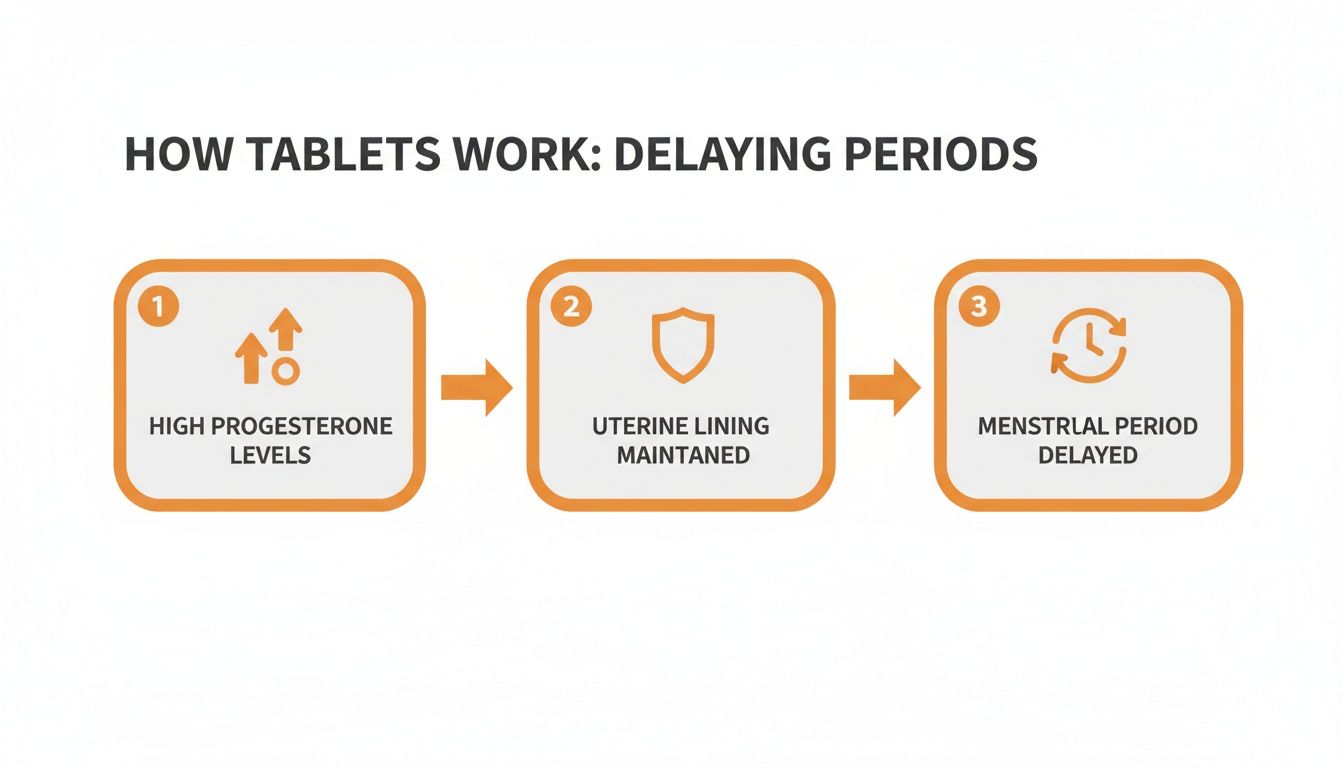
As long as you're supplying this artificial progesterone, the signal for your period to start is effectively blocked.
Maximum Duration and Stopping the Tablets
You can continue taking the tablets for as long as you need to delay your period, up to a maximum of 17 days of treatment. This adds up to a 20-day delay in total when you include the three days you take them before your period was due. This is generally considered the safe upper limit for occasional use.
When you're ready for your period to arrive, just stop taking the tablets. There’s no need to wean yourself off them. Your period, which is technically a withdrawal bleed, will typically start within two to three days after your last dose.
Pharmacist's Tip: "I always advise patients to set three daily alarms on their phone to avoid missing a dose. If you do forget one, take it as soon as you remember, unless it's nearly time for the next. Never double up on doses—it won't increase effectiveness and might just heighten side effects."
Practical Advice for Safe Use
For many women in the UK, period delay tablets offer an accessible and effective solution. The cost for a standard course of Norethisterone 5mg is often quite reasonable, making it a popular choice. For instance, you can find a 7-day delay course for around £12.90 from some online pharmacies, reflecting a wider trend of women using regulated digital health services for convenient and discreet care.
If you want to explore this route, you can find out more about getting Norethisterone 5mg tablets through a safe and confidential online consultation.
Remember these key points to ensure everything goes smoothly:
- Stay Hydrated: Make sure to drink plenty of water, as some people can experience mild bloating.
- Listen to Your Body: While mild side effects can happen, it's important to contact your prescriber if you feel unwell or have any concerns.
- Not a Contraceptive: This is a crucial one—Norethisterone does not protect against pregnancy. You must continue using your regular contraception.
Understanding Potential Side Effects and Safety
Making a smart decision about your health means looking at the whole picture. While period delay tablets offer brilliant convenience for that holiday or special event, it’s crucial to get to grips with the potential side effects and safety checks before you start.
This section offers a straightforward, honest guide to help you weigh everything up confidently. Like any medicine, Norethisterone can have side effects, but it’s good to know that not everyone gets them. Most are mild and tend to fade away once you stop the tablets. Knowing what to look out for keeps you in control and helps you recognise when it might be time to ask for advice.
Common and Mild Side Effects
The most common side effects often feel a lot like the usual pre-menstrual symptoms you might already know well. This happens because you’re temporarily adding a synthetic version of a natural hormone to your system.
Many people report things like:
- Bloating or fluid retention: You might feel a bit puffy, or find your jeans feel a little snugger than usual.
- Breast tenderness: Your breasts could feel more sensitive, much like they sometimes do just before a period.
- Mood changes: Some people find they feel more irritable, a bit low, or just generally experience more mood swings.
- Nausea: A feeling of sickness is possible, but this can often be eased by taking the tablet with a meal.
- Headaches: Mild headaches are another side effect that can pop up.
These symptoms are usually nothing to worry about and should clear up after you finish your course of tablets. It's also worth knowing there are other progestogen-based options; for example, you can learn more about Provera 10mg tablets, which may be a suitable alternative to discuss with your prescriber.
Norethisterone Side Effects At a Glance
This table provides a simple breakdown of the common and less common side effects of Norethisterone, helping you quickly understand what to look out for.
| Side Effect Category | Examples | What to Do |
|---|---|---|
| Common & Mild | Bloating, breast tenderness, mood swings, nausea, headaches. | Usually manageable and temporary. Try taking with food. If symptoms are bothersome, speak to a pharmacist. |
| Less Common & Serious | Signs of a blood clot: sharp chest pain, sudden breathlessness, painful leg swelling. | Seek immediate medical attention (call 999 or go to A&E). These symptoms are rare but require urgent care. |
| Allergic Reaction | Rash, itching, swelling of the face/lips/tongue, difficulty breathing. | Seek immediate medical attention. This is a medical emergency. |
Less Common but More Serious Risks
Now, let's talk about the more serious stuff. While it's very rare, there is a small but significant increased risk of developing a blood clot (also known as venous thromboembolism, or VTE) when taking Norethisterone. This is precisely why a thorough medical consultation is a non-negotiable first step before you can get a prescription.
Pharmacist's Tip: "A pharmacist will always ask you about your medical history and that of your close family. They’ll specifically want to know about blood clots, migraines with aura, liver issues, or certain types of cancer. This screening is absolutely vital to make sure the medication is safe for you."
You must get urgent medical help if you experience any signs that could point to a blood clot, such as:
- Sudden shortness of breath
- A sharp pain in your chest
- Coughing up blood
- Painful swelling in one of your legs
Who Should Avoid Period Delay Tablets?
It’s important to be clear: period delay tablets aren't suitable for everyone. A healthcare professional simply won’t prescribe them if you have certain pre-existing health conditions that could increase your risk.
You should avoid using Norethisterone if you:
- Have a personal or family history of blood clots (thrombosis).
- Think you might be pregnant, or if you are currently breastfeeding.
- Have or have previously had breast cancer or other hormone-sensitive cancers.
- Are experiencing vaginal bleeding that hasn't been explained by a doctor.
- Have severe liver problems.
This isn’t a complete list, which is why being totally open and honest about your medical history during your consultation is so important. It allows the prescriber to make the safest decision for your health, ensuring you can use period delay tablets UK services with total peace of mind. Your safety always comes first.
How to Get Period Delay Tablets in the UK
Figuring out your healthcare options can sometimes feel a bit overwhelming, but getting period delay tablets in the UK is actually pretty straightforward once you know where to go. Because Norethisterone is a prescription-only medicine, you can’t just grab it off a shelf at your local chemist. This rule is there for a good reason—to make sure it’s a safe and suitable choice for you.
But "prescription-only" definitely doesn't mean it's a hassle. You have a couple of clear, reliable ways to get this medication safely. Let’s walk through the proper channels so you can choose the one that feels right.
Your Main Healthcare Options
When you need a prescription for period delay tablets, you’ve basically got two main routes. Both are perfectly safe and regulated, but they offer different levels of convenience and speed.
- Your Local GP or Sexual Health Clinic: The traditional way is to book an appointment with your GP. They’ll chat with you about your medical history, check that Norethisterone is a safe option, and then write a prescription you can take to any pharmacy.
- Regulated Online Pharmacies: A more modern, and often faster, alternative is using a GPhC-registered online pharmacy. This gives you a discreet and convenient way to get a prescription without needing a face-to-face appointment.
The rise of digital healthcare has made services like these incredibly popular. It’s all part of a bigger trend in UK healthcare spending, which reached around £283 billion in 2022. This growth has helped expand accessible reproductive health services, including treatments for period management. You can explore more about the oral contraceptive pills market on ResearchandMarkets.com.
Using a Regulated Online Pharmacy
For many people, the sheer convenience of an online pharmacy UK service is a game-changer. It cuts out the wait for a GP appointment and lets you sort out your health on your own schedule. The whole process is designed to be simple, safe, and completely confidential.
Here’s a quick rundown of how it usually works:
- Complete a Medical Questionnaire: You’ll fill out a secure and private online form. This will ask about your health, medical history, and any other medicines you’re taking.
- Clinician Review: A qualified UK-based prescriber, like a doctor or pharmacist, carefully goes over your answers to make sure the treatment is safe for you.
- Discreet Delivery: If you’re approved, the pharmacy dispenses your medication and posts it directly to you in plain, discreet packaging.
Pharmacist's Tip: "Always, always check that an online pharmacy is registered with the General Pharmaceutical Council (GPhC). Look for their registration number on the website. This is your guarantee that they meet UK safety and quality standards, meaning you’ll receive genuine, safe medication."
A Real-Life Example: Sarah's Honeymoon Plan
To see how this works in the real world, let’s look at a common scenario.
Sarah was getting ready for her dream honeymoon. A few weeks before the big trip, she glanced at her calendar and had that sinking feeling—her period was due right in the middle of it. She wanted to soak up every moment without having to worry about cramps or tracking down tampons abroad.
Feeling a bit stressed, she searched for how to get period delay tablets UK and came across Courier Pharmacy. That evening, she filled out the confidential medical questionnaire, answering questions about her health. The next morning, she got a notification that a pharmacist had approved her request. The tablets arrived discreetly in the post just two days later, giving her one less thing to worry about before her holiday.
Frequently Asked Questions (FAQs)
Here are the answers to some of the most common questions about using period delay tablets safely and effectively.
Can I use period delay tablets as contraception?
No, absolutely not. Period delay tablets like Norethisterone do not prevent pregnancy. You must continue using your regular contraception, such as the pill or condoms, while taking them.
Pharmacist's Tip: "Think of period delay tablets as a pause button for your period, not a barrier against pregnancy. A patient once assumed it worked like the pill and had a pregnancy scare. It's vital to keep your normal contraception going."
Will this affect my future fertility?
There is no evidence to suggest that using Norethisterone for short-term, occasional period delay has any long-term impact on your fertility. Your natural cycle should return to normal within a month or two after you stop taking the tablets.
What should I do if I miss a dose?
If you forget a tablet, take it as soon as you remember, unless it’s nearly time for your next scheduled dose. Never take two doses together to catch up, as this can increase the risk of side effects. Missing a dose may cause some spotting or breakthrough bleeding.
How often can I use period delay tablets?
These tablets are intended for occasional use for special events, not for regular or long-term management of your cycle. You can safely delay your period for up to 17 days. If you find you need to delay your period frequently, it's best to speak with your GP about long-term solutions, like the combined contraceptive pill.
Real-Life Example: "A patient, Chloe, was using the tablets several times a year for work trips. We discussed her needs and I recommended she speak to her GP, who switched her to a long-cycle contraceptive pill. It was a much better long-term solution for her lifestyle."
Summary
Period delay tablets offer a safe and effective way to manage your menstrual cycle for important events, giving you freedom and peace of mind. The key is to use them correctly: start three days before your period is due, take them three times a day, and remember they are not a form of contraception. Always get them from a regulated source like your GP or a registered online pharmacy after a proper medical consultation. By following these guidelines, you can confidently take control of your plans without letting your period get in the way.
Ready to manage your cycle without the hassle? Start your journey today with Courier Pharmacy. Visit https://courierpharmacy.co.uk to complete a confidential online consultation and get prescription period delay tablets delivered discreetly to your door.


