Your Period on the Pill: A Pharmacist's Guide to Bleeding
Confused about your period on the pill? This UK guide explains withdrawal bleeds, spotting, and breakthrough bleeding. Get clear, pharmacist-backed answers.
In this article
- Five key takeaways
- Understanding withdrawal bleeds vs natural periods
- What is a withdrawal bleed?
- How is it different from a natural period?
- Withdrawal bleed vs natural period: what's the difference?
- Common causes of spotting and breakthrough bleeding
- Starting a new pill
- Missing a pill or taking it late
- Illness or medication interactions
- Other health and lifestyle factors
- Knowing when bleeding is normal or needs a check-up
- What is usually normal
- When to contact a doctor or pharmacist
- When to check in with your doctor about bleeding on the pill
- How to manage and prevent unexpected bleeding
- Running pill packs together
- When to switch your pill
- Exploring other contraceptive options
- Summary
- FAQs
Confused about the "period" you get on the pill? You are not alone. Many people think this monthly bleed is a normal period, but what happens in your body is quite different. The bleed you experience on the combined pill is actually a 'withdrawal bleed', caused by the break from hormones.
This guide clears up the confusion. We explain what a withdrawal bleed is and how it differs from a true period. We will also explore why you might get unexpected spotting. You will learn what is normal and when to chat with a professional. Our goal is to replace worry with clear, practical knowledge.
Five key takeaways
- It’s not a real period. The bleed during your pill-free week is a 'withdrawal bleed'. It happens because of the drop in hormones when you take a break.
- Spotting is common. Do not be alarmed by unexpected bleeding, especially in the first three months of a new pill. This is normal and usually settles down.
- Consistency is key. Take your pill at the same time every day. This keeps your hormone levels stable and reduces the chance of random spotting.
- You can skip it. It is generally safe to skip your withdrawal bleed by running pill packs back-to-back. Check with your pharmacist first. Find out more in our guide on period delay treatments.
- When in doubt, ask. Contact your GP or pharmacist if your bleeding is heavy, painful, or happens after sex. They are there to help.
Understanding withdrawal bleeds vs natural periods
To understand what happens in your body on the pill, you need to know the difference between a withdrawal bleed and a natural period. They might look similar, but the hormones behind them are completely different.
Think of the combined pill as a 'pause' button for your natural cycle.
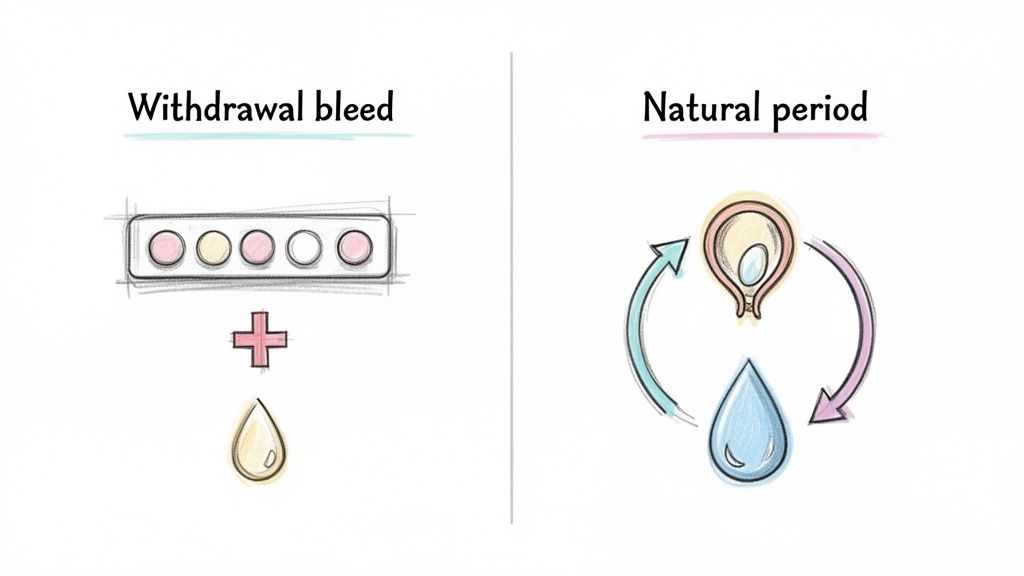
The synthetic oestrogen and progestogen in the pill keep your own hormone levels stable. This prevents your ovaries from releasing an egg each month. This process is called ovulation. Without ovulation, you cannot get pregnant.
What is a withdrawal bleed?
A withdrawal bleed is the bleeding you get during the seven-day break from the combined contraceptive pill.
If you take a combined pill, you likely take active pills for 21 days, followed by a seven-day break. During this break, you stop taking the synthetic hormones. This sudden drop in hormone levels causes the lining of your womb (the endometrium) to shed. This shedding is what we call a withdrawal bleed.
How is it different from a natural period?
A natural menstrual period is the end of a more complex hormonal cycle. Your body’s own hormones rise and fall through the month. This builds up your womb lining to prepare for a potential pregnancy. This cycle includes ovulation, where an egg is released.
If the egg is not fertilised, your natural hormone levels drop. This drop signals your body to shed the thickened womb lining. The result is a period. A true period shows that ovulation happened, but a fertilised egg did not implant.
In short: a natural period follows ovulation. A withdrawal bleed is a response to stopping the pill's hormones. The pill stops ovulation from happening at all.
Withdrawal bleed vs natural period: what's the difference?
This table breaks down the main characteristics of bleeding on the combined pill compared to a natural menstrual period.
| Feature | Withdrawal Bleed (Combined Pill) | Natural Menstrual Period |
|---|---|---|
| Main Trigger | A planned drop in synthetic hormones during the pill-free break. | A natural drop in the body's own hormones after ovulation, if pregnancy doesn't occur. |
| Ovulation | Does not happen. The pill's main job is to prevent it. | Always follows ovulation. A period confirms an egg was released but not fertilised. |
| Biological Purpose | Medically, it has no purpose. It was designed to mimic a natural cycle for reassurance. | To shed the womb lining that was built up to support a potential pregnancy. |
| Typical Flow | Often lighter, shorter, and may involve less cramping than a natural period. | Can vary widely. It is often heavier and may come with more intense cramps. |
Understanding this difference is empowering. It shows the bleed is just a managed part of your contraception. It is not a sign of your natural fertility. It also explains why it's safe to skip this bleed. For more information, you can explore treatments like Norethisterone tablets.
Common causes of spotting and breakthrough bleeding
Unexpected bleeding between your planned withdrawal bleeds is very common. This is often called breakthrough bleeding or spotting. It can be a nuisance, but it often has a simple explanation.
This bleeding can range from light brown discharge to something like a light period. Understanding the common triggers can help you feel more in control.
Starting a new pill
When you first start any hormonal contraceptive, your body needs time to adjust. Think of it as your system learning a new routine. The hormones from the pill must override your natural cycle.
Spotting is very common during the first three months of taking a new pill. Your womb lining is simply adapting to the different hormonal messages. This can cause some light, irregular bleeding. This almost always settles on its own as your body adjusts.
Featured Snippet Answer: Breakthrough bleeding is most common in the first three months of starting a new contraceptive pill as your body adjusts to the new hormone levels.
Missing a pill or taking it late
Consistency is key to making the pill work effectively. The pill works by keeping a stable level of hormones in your system. If you miss a pill or take it several hours late, that level can dip.
This sudden hormone drop can signal your womb lining to shed. This triggers a bit of spotting or a light bleed.
Pharmacist's tip: Set a daily alarm on your phone. Or, tie taking your pill to an existing daily habit, like brushing your teeth before bed. This makes it much harder to forget.
- Combined Pill: Missing one pill can sometimes cause spotting. The chances increase if you miss two or more.
- Progestogen-Only Pill (POP): This pill is more time-sensitive. Taking it just three hours late (or 12 hours for newer pills) can trigger spotting.
Illness or medication interactions
Sometimes, other things happening in your body can affect your pill. Certain illnesses, especially those causing vomiting or severe diarrhoea, can stop your body from absorbing the pill properly. If the pill is not absorbed, it is like missing a dose.
Other medications can also interfere with how well your pill works. They can speed up how your body breaks down the contraceptive hormones. This lowers the dose you get and can cause spotting.
Common culprits include:
- Certain antibiotics (like rifampicin and rifabutin).
- Some epilepsy medications.
- The herbal remedy St. John's Wort.
- Some drugs used to treat HIV.
Pharmacist's tip: Always tell any doctor, dentist, or pharmacist that you are on the pill before they prescribe anything new. They can check for potential interactions.
Real-life example: a busy parent
Asha, a 35-year-old busy parent, had a stomach bug with severe diarrhoea for two days. A few days later, she noticed some spotting and was worried. She called her GP surgery for advice. The practice nurse explained that the illness likely stopped her pill from being absorbed properly. She advised Asha to use condoms for the next seven days to ensure she was protected from pregnancy.
Other health and lifestyle factors
Sometimes, spotting is not directly related to the pill. It can be due to other health factors. It is important to consider the health of your cervix and womb.
These can include:
- Sexually transmitted infections (STIs): Infections like chlamydia can cause inflammation and bleeding, especially after sex.
- Cervical changes: Conditions like cervical ectropion are common and can cause spotting. More rarely, cervical cancer can be a cause, so stay up to date with your smear tests.
- Fibroids or polyps: These are non-cancerous growths in the womb that may cause irregular bleeding. Find out more in our guide on managing heavy periods.
Pharmacist's tip: If you ever bleed after sex, or if you have any new, persistent, or unusually heavy bleeding, get it checked out by your GP or at a sexual health clinic.
Knowing when bleeding is normal or needs a check-up
Figuring out if your bleeding is normal can be confusing. Most of the time, spotting is just your body adjusting. But it is crucial to know the signs that mean you should get it checked.
This section gives you that clarity. We will break down what is usually okay and what symptoms are red flags. Being informed helps you stay in control of your health.
What is usually normal
For most people, unexpected bleeding on the pill is temporary and harmless. This is especially true when you first start a new contraceptive pill.
Here are scenarios that are generally considered normal:
- Light spotting. This is very common in the first three months of starting a new pill.
- Brownish discharge. This is often just old blood leaving the body.
- Bleeding after a missed pill. This is a classic side effect from a dip in hormone levels.
- Slightly irregular bleeding. Your cycle might take a while to settle into a new routine.
Breakthrough bleeding on the pill usually lasts for a few days to a week. It can appear on and off for the first three months while your body settles.
When to contact a doctor or pharmacist
While spotting is common, you should never ignore certain types of bleeding. New bleeding patterns can sometimes point to other issues.
Real-life example: a shift worker
Chloe is a 28-year-old nurse who works shifts. She found it hard to take her pill at the same time each day. She started getting irregular spotting. She spoke to her pharmacist, who suggested trying a different pill with a wider 'safe' window for taking it. The pharmacist also discussed long-acting options like the coil or implant, which Chloe decided to explore with her GP.
This flowchart can help you think through common causes of pill-related spotting.
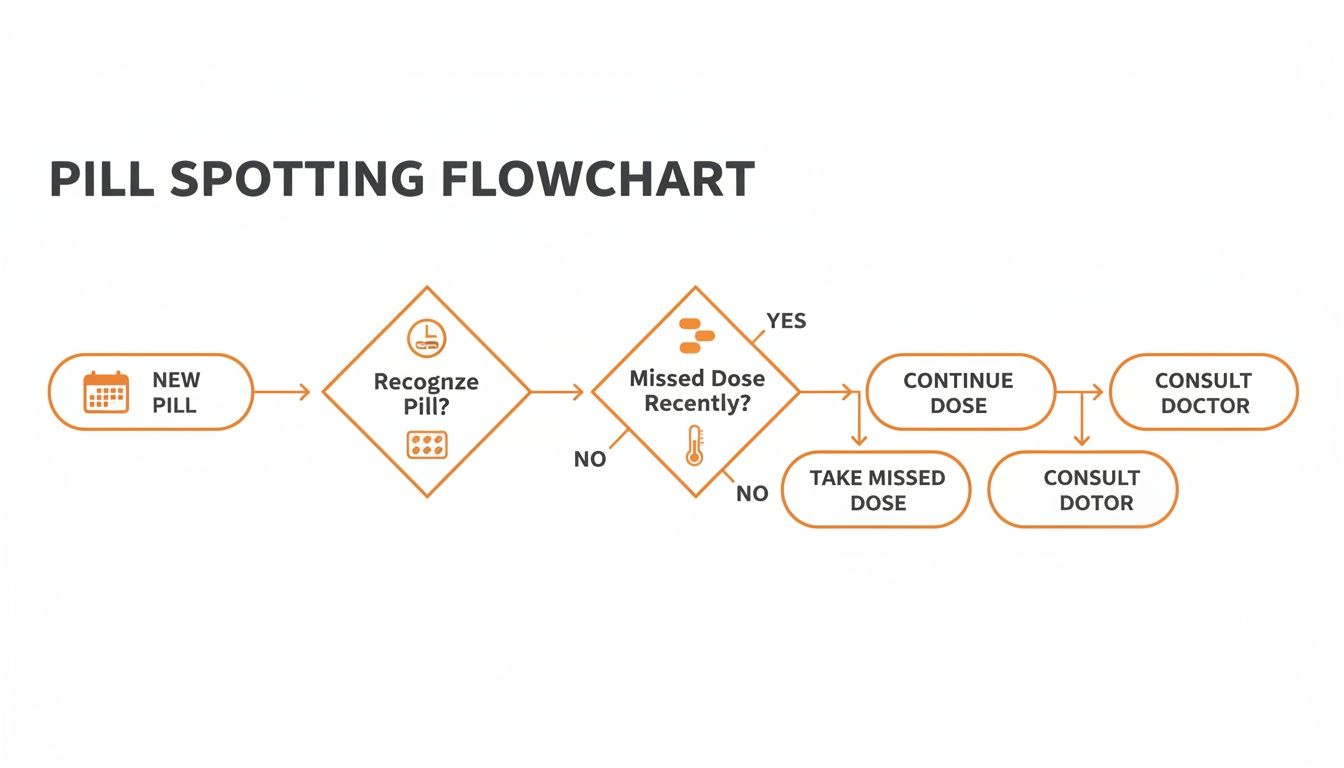
The visual guide shows that starting a new pill, missing a dose, or being unwell are common reasons for spotting.
When to check in with your doctor about bleeding on the pill
This table helps you quickly tell the difference between normal bleeding and when to seek advice.
| Symptom or Bleeding Pattern | Usually Normal (Especially in the first 3 months) | When to Contact a Doctor or Pharmacist |
|---|---|---|
| Light Spotting | Yes, very common as your body adjusts. | If it continues for more than 3-4 months without settling. |
| Bleeding After Sex | No, this should always be checked out. | Always. This can be a sign of infection or cervical changes. |
| Very Heavy Bleeding | No, withdrawal bleeds are typically lighter. | If you're soaking through a pad or tampon every 1-2 hours. |
| Bleeding with Pain | Mild cramps can be normal. | If you have severe pelvic pain, dizziness, or a fever. |
| New Bleeding Pattern | No, if you've been settled on a pill for months. | If bleeding starts unexpectedly after being stable on your pill. |
Ultimately, you know your body best. If something feels wrong, it is always better to seek advice. A quick chat can provide reassurance or identify if you need further checks. Learn more about what heavy bleeding might involve in our guide to the full blood count test.
How to manage and prevent unexpected bleeding
Figuring out why you have unexpected bleeding is the first step. Now, let's talk about what you can do about it. Getting a handle on spotting will help you feel more confident.
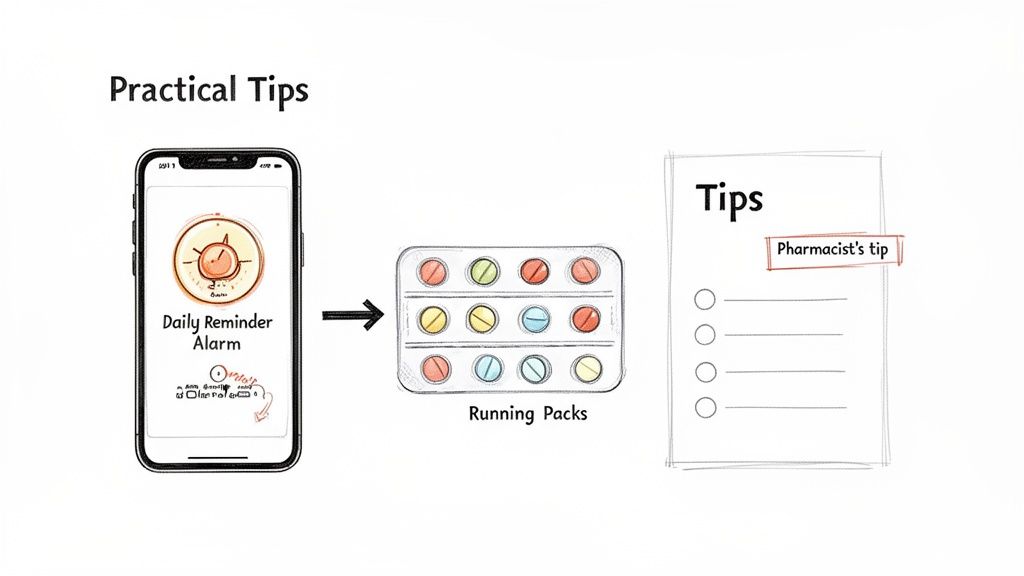
The best way to prevent breakthrough bleeding is simple: be consistent. Take your pill at the same time every day. This keeps your hormone levels stable and avoids the dips that can trigger bleeding.
Running pill packs together
A big perk of the combined pill is skipping your withdrawal bleed. It is a completely safe choice, especially for a holiday or big event. You just skip the seven-day break and start your next pack of active pills.
Be aware that doing this can sometimes make breakthrough bleeding more likely. This is particularly true if you run packs together for several months. Your body might eventually shed a bit of the womb lining anyway.
When to switch your pill
You have taken your pill perfectly for over three months, but the spotting continues. It might be time for a change. Not all pills are the same; they contain different types and doses of hormones.
A different formulation could be a better match for your body. Your GP or pharmacist can suggest an alternative that might work better. If the bleeding is heavy, they might also discuss options like Tranexamic Acid tablets to help control it.
Exploring other contraceptive options
Sometimes, the pill is not the right fit, and that is okay. If you find remembering a daily pill is difficult, there are plenty of other great options.
Many people now use Long-Acting Reversible Contraceptives (LARCs). These are brilliant 'fit and forget' solutions:
- The implant: a tiny rod that sits under the skin of your arm.
- The hormonal coil (IUS): a small T-shaped device placed in your womb.
- The copper coil (IUD): a hormone-free version of the coil.
- The contraceptive injection: an injection you get every 8 or 13 weeks.
These methods are very effective. They take away the daily pressure of remembering a pill.
Summary
The "period" you get on the combined pill is a withdrawal bleed, not a true menstrual period. It is caused by the drop in hormones during your pill-free week. Spotting or breakthrough bleeding is very common, especially in the first three months of starting a new pill. Taking your pill at the same time every day is the best way to prevent it. While most spotting is normal, you should always see a doctor if bleeding is very heavy, painful, or happens after sex. If spotting persists, switching to a different pill or another method of contraception might be the right solution for you.
FAQs
Is a period on the pill a real period? No, the bleed you get on the combined pill is a 'withdrawal bleed'. It is your body's reaction to the pause in hormones during your pill-free week. A real period only happens after ovulation, which the pill prevents.
Why am I bleeding in the middle of my pill pack? This is called breakthrough bleeding or spotting. It is very common, especially in the first three months of a new pill. Other causes include missing a pill, taking it late, illness, or interactions with other medicines.
Can I get pregnant if I'm spotting on the pill? Spotting itself does not mean the pill is not working. However, if the spotting is because you missed pills or were sick, your protection from pregnancy could be lower. Use condoms for seven days if you have missed pills.
Is it bad to skip your period on the pill? No, it is generally safe to skip your withdrawal bleed by taking active pill packs back-to-back. There is no medical need to have this bleed. Some people find they get more spotting if they do this for several months.
Why is my withdrawal bleed so light and short? This is a normal effect of the pill. The hormones keep your womb lining thinner than it would be naturally. Because there is less lining to shed, the bleed is often much lighter and shorter than a natural period.
When should I worry about bleeding on the pill? You should see a doctor if your bleeding is very heavy (soaking a pad every hour or two), painful, or happens after sex. Also, seek advice if spotting continues for more than three months, or if a new bleeding pattern starts after you have been stable on a pill for a long time.
Does stress cause spotting on the pill? While stress can affect your body's hormones, it's more likely to cause spotting indirectly. When you are stressed, you are more likely to forget to take your pill on time. This is a direct cause of breakthrough bleeding.
Disclaimer: This article is for informational purposes only. It is not a substitute for professional medical advice, diagnosis, or treatment. Always seek the advice of your doctor or another qualified health provider with any questions you may have regarding a medical condition.
How this content was created This article was written based on reliable, evidence-based sources, including the NHS, NICE guidelines, and peer-reviewed medical journals. All information was checked for clinical accuracy by a registered UK pharmacist. We aim to provide clear, practical, and trustworthy health information.
Byline: Written by The Medical Mojo Content Team Clinically reviewed by [Pharmacist's Name, Credentials]
References
- NHS. (2021). Combined pill. [Online] Available at: https://www.nhs.uk/conditions/contraception/combined-contraceptive-pill/ (Accessed: [Date])
- Faculty of Sexual and Reproductive Healthcare (FSRH). (2019). FSRH Guideline: Combined Hormonal Contraception. [Online] Available at: https://www.fsrh.org/standards-and-guidance/documents/combined-hormonal-contraception/ (Accessed: [Date])
- Discover more about these contraceptive trends and their impact
- Explore our services and see how we can support your health journey at courierpharmacy.co.uk


