Pessary for Thrush: Your UK Treatment Guide 2026
Your complete UK guide to using a pessary for thrush. Learn how to use clotrimazole pessaries, what to expect, and when to see a doctor.

SEO brief
Primary keyword: pessary for thrush
Secondary keywords: thrush pessary, clotrimazole pessary, vaginal thrush treatment, Canesten pessary, recurrent thrush, thrush treatment in pregnancy
Search intent: informational with practical self-care guidance
Target reader: UK adults with symptoms of vaginal thrush, plus carers and health-curious readers
Product/service mention (if any): UK pharmacy treatment options including OTC and online prescribing routes
Internal links available: Assumed from Courier Pharmacy pages provided in the brief
Pessary for thrush
If you're reading this while feeling sore, itchy, and fed up, you're not alone. A pessary for thrush is one of the most common and effective UK treatments for vaginal thrush, and for many people it's the simplest way to treat the infection directly where it starts. A pessary is a small medicated tablet or capsule that you place inside the vagina, where it dissolves and releases antifungal medicine.
Thrush is usually straightforward to treat, but the practical details matter. The right strength, the right timing, and knowing when self-care stops being enough can make all the difference. If you want an overview of treatment options for vaginal thrush care, this guide will help you use a pessary confidently and safely.
Introduction
Vaginal thrush often appears at the worst moment. It starts with itching or soreness, then suddenly you're trying to work, parent, sleep, or get through a shift while feeling distracted and uncomfortable. In most uncomplicated cases, a pessary for thrush is a practical local treatment that targets the infection inside the vagina rather than treating the whole body.
A pessary works a bit like a targeted delivery system. You place the medicine where it's needed, it dissolves, and the antifungal gets to work directly on the yeast causing symptoms.
Here are the key points worth keeping in mind:
- Use it at night: Bedtime gives the pessary the best chance to stay in place.
- Choose the right course: Some pessaries are single dose, others are used over several nights.
- Expect gradual relief: Symptoms often start easing within a few days, not always overnight.
- Avoid using it during your period: Bleeding can wash the medicine out.
- Know when to get help: Repeat infections or symptoms that don't settle need review.
Practical rule: The best thrush treatment is the one you can use correctly and finish.
What is a pessary and how does it treat thrush
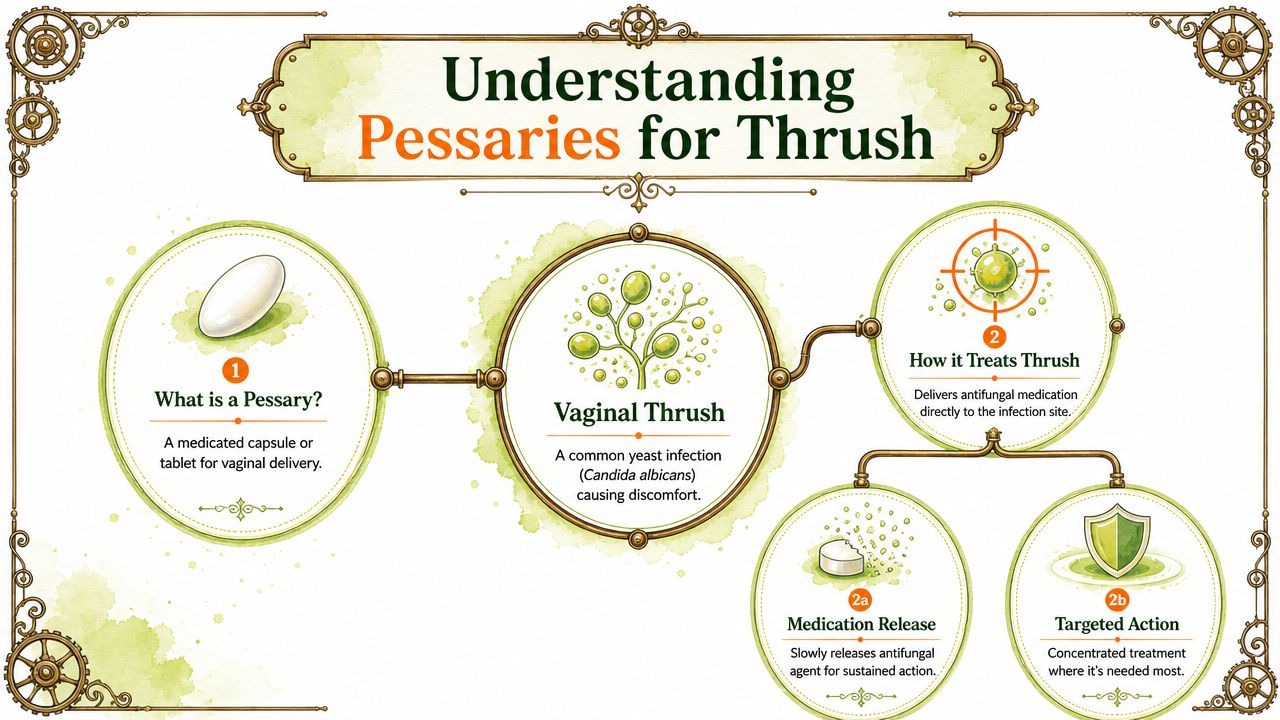
Thrush is a yeast infection in the vagina, most often caused by Candida albicans. It can cause itching, soreness, discharge, and irritation around the vulva. When symptoms fit the usual pattern, a pessary is often a straightforward treatment choice.
A pessary is a small medicated tablet designed for vaginal insertion. Once inside, body warmth and moisture help it dissolve and release antifungal medicine, usually clotrimazole, directly into the area affected by infection.
A simple way to think about it
An oral capsule travels through the body before it reaches the infection. A pessary treats the area locally. That local action is why many people like it, especially if they want to avoid an oral medicine or need an option that fits pregnancy guidance.
UK guidance now favours 200mg for 3 nights or 500mg as a single dose over the older 100mg option for uncomplicated vulvovaginal candidiasis. A 500mg clotrimazole pessary offers 70 to 80% cure rates within 7 days and is considered equivalent to a single 150mg oral fluconazole capsule, while avoiding fluconazole's pregnancy and breastfeeding restrictions in this setting [1].
UK thrush pessary options
Different strengths suit different routines. The best option is often the one you can use properly.
| Treatment type | Dosage | Duration | Best for |
|---|---|---|---|
| Clotrimazole pessary | 100mg | 6 nights | Longer lower-dose course when advised |
| Clotrimazole pessary | 200mg | 3 nights | People who prefer a short course |
| Clotrimazole pessary | 500mg | Single dose | People who want one bedtime treatment |
A lot of patients ask if lower dose means gentler or safer. In practice, it usually makes more sense to think about adherence. If you know you'll forget night two or three, the single-dose option may be more realistic. If you prefer a shorter amount of medicine each night, a 3-night course can feel easier.
Local treatment works best when it actually stays in contact with the vaginal lining long enough to do its job.
Choosing the right pessary for you
Most UK patients will come across clotrimazole or miconazole products. They work in a similar way as antifungals, but the product details, pack format, and dosing schedule vary. In routine pharmacy practice, clotrimazole pessaries are among the most familiar options.
Single dose or short course
The choice usually comes down to your symptoms, your circumstances, and whether self-treatment is appropriate.
A single-dose pessary may suit you if:
- You want simplicity: One bedtime dose is easier to remember.
- Your schedule is hectic: Busy parents and shift workers often prefer one-and-done treatment.
- You've used it before successfully: Familiar treatment can reduce worry.
A short course may suit you if:
- You prefer a routine: Some people like a clear nightly plan.
- You don't mind repeat dosing: Three nights can feel manageable.
- A clinician recommends it: This matters most in pregnancy or if symptoms are less clear-cut.
UK Thrush Pessary Options at a Glance
| Treatment Type | Dosage | Duration | Best For |
|---|---|---|---|
| Clotrimazole pessary | 500mg | One night | Quick, simple treatment |
| Clotrimazole pessary | 200mg | 3 nights | Short-course treatment |
| Clotrimazole pessary | 100mg | 6 nights | Longer course when specifically advised |
| Combination pack | Pessary plus external cream | Varies | Internal treatment plus itch relief |
Combination packs can help when the itching outside is the main thing making you miserable. The pessary treats the internal infection, while an external cream can soothe the skin around the vulva.
If you're looking at a specific product, Canesten pessaries 200mg are one example of a short-course clotrimazole option used in the UK.
How to insert it with confidence
A lot of treatment failures are really timing failures or technique problems. The medicine itself is usually fine, but people insert it too early in the day, rush the process, or worry so much that they don't place it high enough.
Try this simple routine:
- Wash and dry your hands.
- Read the leaflet, even if you've used one before.
- Insert the pessary at bedtime.
- Wear a panty liner if you're worried about residue.
- Finish the full course if you're using a multi-night product.
Real-life example 1: A busy parent with two small children often tells me the hardest part isn't the medicine. It's finding ten quiet minutes before bed. In that case, a single bedtime pessary often works better than a course that depends on remembering several evenings in a row.
Pharmacist's tip: Keep the pessary by your toothbrush or phone charger on the night you plan to use it. That tiny prompt can stop a bedtime dose from being forgotten.
How to use a thrush pessary correctly step-by-step
Using a pessary isn't difficult, but the first time can feel awkward. A calm routine helps.
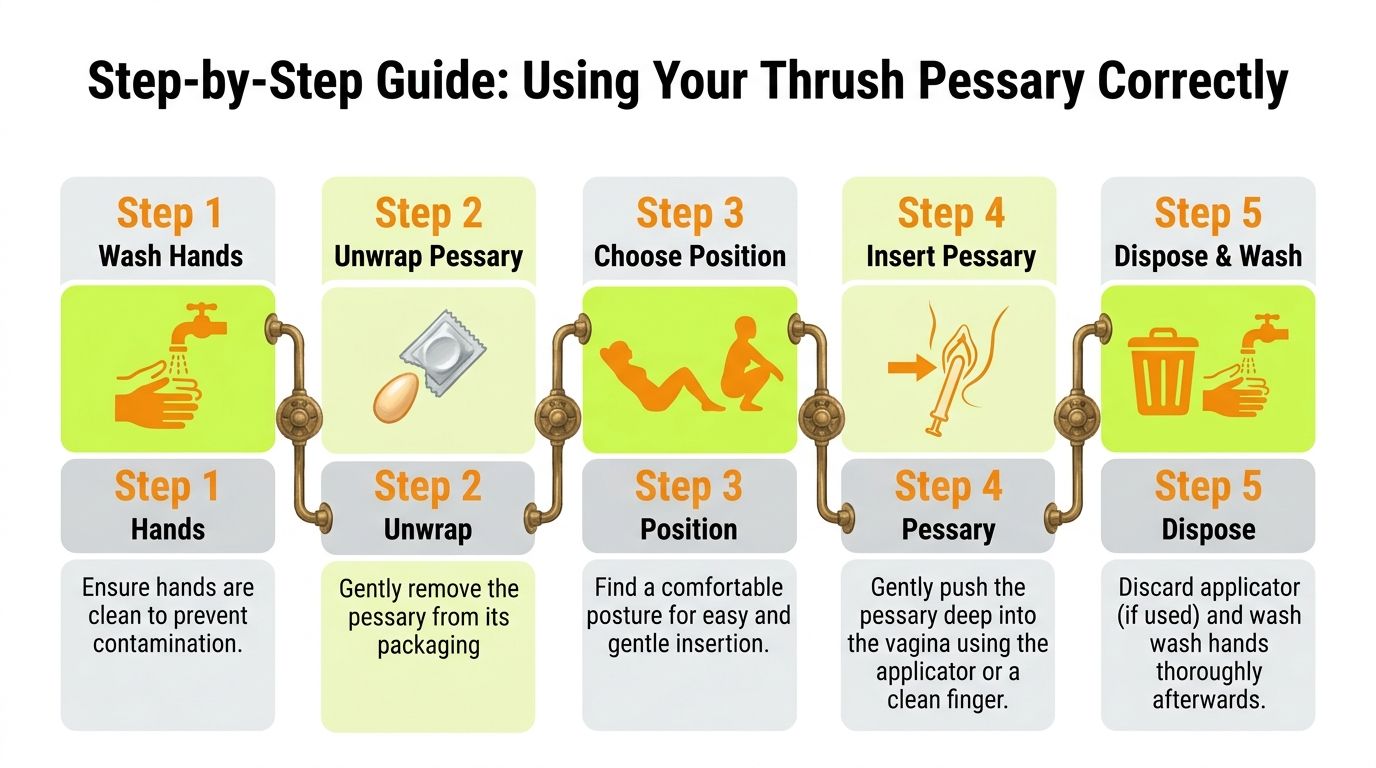
Step-by-step guide
- Wash your hands first. Clean hands reduce the chance of extra irritation.
- Open the pack carefully. Remove the pessary from the foil just before use.
- Read the patient leaflet. It will tell you whether to use an applicator or a finger.
- Get into a comfortable position. Lying on your back with knees bent often works well. Some people prefer standing with one foot raised.
- Insert the pessary gently. Place it high into the vagina, using the applicator if supplied or a clean finger if the leaflet says that is suitable.
- Use it at bedtime. This helps it stay in place while you lie down.
- Wash your hands again. Then try to stay lying down if you can.
If insertion feels fiddly, pause and relax your pelvic muscles. Tension makes everything harder.
Pharmacist's tip: If you're anxious, take a few slow breaths before insertion. A relaxed pelvic floor makes the process much easier and more comfortable.
Real-life example 2: A shift worker on alternating nights might plan a 500mg pessary for the first evening off after a run of shifts. That's often more practical than trying to remember a treatment while getting home exhausted at 6am.
What happens next
A pessary can leave a chalky or creamy residue as it dissolves. That's normal. It doesn't mean the treatment has failed.
For uncomplicated thrush, a single 500mg clotrimazole pessary is a highly effective regimen. People usually notice symptom improvement within 3 days, with full resolution expected within 1 week. If symptoms persist beyond 7 days, they should speak to a GP [2].
NHS guidance also states that 100mg pessaries are used for 6 consecutive nights, while 200mg pessaries are used for 3 nights [2].
What to expect after treatment and potential side effects
Some symptoms settle quickly. Others fade more slowly, especially if the skin has become sore from scratching.

What improvement usually feels like
Many people notice that the itch eases first. Burning and tenderness can take a bit longer because irritated skin needs time to calm down even after the yeast has started clearing.
Common things people notice after using a pessary include:
- Chalky discharge: This is often leftover pessary material dissolving.
- Mild local irritation: A small amount of stinging can happen.
- Mess the next morning: A liner can be handy.
If dryness or irritation lingers after the infection has started settling, some people also use supportive products such as YES vaginal moisturiser for comfort, depending on the cause of symptoms and whether active infection is still present.
Common what-if situations
Pregnancy changes treatment choices. Recurrent symptoms change the plan too. Diabetes can also make thrush more likely and can make symptoms harder to ignore.
A common scenario is someone who used a single-dose pessary correctly, feels a bit better by day three, but still has some tenderness. That can be normal. Another person might have no real improvement at all by a week. That's different and needs review.
This short video gives a useful overview of thrush symptoms and treatment:
Pharmacist's tip: If you use latex condoms or diaphragms, check the product leaflet for your pessary and any cream you use alongside it. Some vaginal treatments can affect barrier contraception, so it's wise to plan ahead and use caution.
Managing thrush in special situations
Not every case of thrush is routine. Some situations need a different choice, a different timeline, or a clinician's input.
Pregnancy and breastfeeding
Pregnancy is the clearest example. In pregnancy, oral azoles such as fluconazole should be avoided, and intravaginal clotrimazole pessaries are the required treatment route. Options include a single 500mg pessary or 100mg pessaries nightly for 6 nights, and all azole treatments typically achieve a 75% cure rate for vaginal candidiasis [3].
If you're pregnant and unsure whether it really is thrush, don't guess. A pharmacist or GP can help you choose the safest route.
A pregnant patient might ask whether an oral capsule would be quicker. In practice, pregnancy is exactly when local treatment becomes especially useful. It treats the infection where it is, without using the oral option that should be avoided.
Periods, diabetes, and repeat episodes
Menstruation matters more than people realise. Clotrimazole pessaries should not be used during menstruation because bleeding can wash the medicine out and reduce effectiveness. It's better to wait until bleeding has stopped before starting treatment [4].
Diabetes can make thrush more troublesome. If infections seem harder to shift or keep coming back, don't just keep buying the same treatment repeatedly. That pattern needs checking.
Some people also ask about oral alternatives such as fluconazole 150mg thrush capsule. That can be suitable in some adults, but it isn't the right choice in pregnancy, and it's not always the best fit when symptoms are recurrent or the diagnosis is uncertain.
Red flags that mean stop self-treating
Self-care is useful, but it has limits. Book a GP or sexual health review if any of these apply:
- You keep getting thrush: Recurrent vaginal thrush means 4 or more episodes in 12 months [5].
- Treatment hasn't worked: If symptoms don't improve within 1 week, you need further assessment [5].
- Symptoms don't fit usual thrush: A bad smell, unusual discharge, pelvic pain, or fever needs a proper check.
- You're at the age extremes: Thrush is less typical under 16 and over 60, so diagnosis matters more.
- You may have something else: Bacterial vaginosis and some skin conditions can mimic thrush.
The right treatment only works if the diagnosis is right.
A review may involve a history, an examination, or a vaginal swab. That isn't overkill. It's often the quickest route to finding out whether this is resistant yeast, another infection, or something non-infectious altogether.
When to see a doctor or get tested
When a check-up matters
See a doctor or sexual health clinic if symptoms carry on after treatment, come back often, or don't sound like typical thrush. Recurrent vaginal thrush is defined as 4 or more episodes in 12 months, and symptoms that do not improve within 1 week need review to rule out resistant strains or other conditions such as bacterial vaginosis [5].
You should also get checked if you are under 16 or over 60, because vaginal thrush is less common in those age groups and a proper diagnosis is important [4].
A clinician may take a swab to confirm whether yeast is present and to check whether something else is causing the symptoms. That can feel like an extra step, but it often prevents more frustration.
Practical prevention and follow-through
If you end up needing an appointment, make it easier on yourself:
- Keep a symptom diary: Note itching, discharge, soreness, cycle timing, and treatment dates.
- Write down what you've used: Include the product name and whether it helped.
- Mention pregnancy or diabetes early: It changes the advice.
- Finish what you've started: If you're on a multi-night course, don't stop early because you feel a bit better.
Pharmacist's tip: Bring or photograph the box of the treatment you've used. It saves guesswork and helps the clinician assess what happened.
Summary and Frequently Asked Questions (FAQs)
A pessary for thrush is a vaginal antifungal treatment that works locally where the infection is. For many adults with uncomplicated vaginal thrush, it's a practical and effective option. Bedtime use usually works best because the medicine stays in place longer. A bit of residue the next day is common and usually harmless. If symptoms don't settle, keep returning, or don't sound like usual thrush, it's time for a proper review. Information in this article is for general education and isn't a substitute for personal medical advice.
If you want a regulated online route for treatment and advice, Courier Pharmacy's online pharmacy service is one UK option for accessing medicines and clinical review where appropriate.
FAQs
Can a pessary for thrush fall out?
A small amount of residue can come out as the pessary dissolves. That's normal. Using it at bedtime helps keep the medicine in place for longer.
How long does a pessary take to work?
People often start to feel better within a few days. NHS guidance says symptom improvement usually begins within 3 days, with full resolution expected within a week for uncomplicated thrush [2].
Can I use a pessary during my period?
No. UK guidance says to wait until bleeding has stopped because menstrual flow can wash the medicine out and make it less effective [4].
What is the chalky discharge after using a pessary?
It's usually leftover pessary material dissolving and leaving the body. That is common and isn't usually a sign of a problem.
Can I use a pessary if I'm pregnant?
Often yes, but pregnancy changes the treatment choice. Intravaginal clotrimazole is used in pregnancy, while oral fluconazole should be avoided [3].
What if I've had thrush several times this year?
That needs a proper review. Recurrent vaginal thrush means 4 or more episodes in 12 months [5].
Is a pessary better than an oral capsule?
Not always better, but often very practical. A pessary treats the infection locally, and in pregnancy it is the preferred route rather than oral fluconazole [3].
How is thrush different from bacterial vaginosis?
Thrush usually causes itching and soreness. Bacterial vaginosis more often causes a different type of discharge and odour. If symptoms don't fit the usual thrush pattern, get checked.
Courier Pharmacy is a UK-regulated online pharmacy that offers access to treatment through secure online questionnaires reviewed by prescribers. If you're unsure whether a pessary is right for you, or you need help moving from simple self-care to a more personalized plan, it can be a practical route to treatment advice, repeat symptom review, and discreet medicine supply where appropriate.
Meta description: Pessary for thrush explained by a UK pharmacist. Learn how to use it, what to expect, safety tips, and when to seek medical help.
Suggested internal links for medicalmojo.co.uk
- Vaginal thrush symptoms and treatment guide
- Fluconazole for thrush explained
- Bacterial vaginosis vs thrush
- Thrush in pregnancy
- When to use a sexual health clinic
- Vaginal irritation causes and self-care
Byline
Written by Medical Mojo Editorial Team, reviewed by a UK-registered pharmacist
Clinical review line
Clinical review by an independent UK pharmacist
How this content was created
This article was written using UK patient guidance and formulary sources, with a focus on practical pharmacy advice, safe self-care, and clear referral points. It was clinically reviewed for accuracy, tone, and UK relevance before publication.
References
[1] Nottinghamshire Area Prescribing Committee (n.d.) Vaginal candidiasis. Available at: https://www.nottsapc.nhs.uk/media/obppwbo4/vaginal-candidiasis.pdf
[2] NHS (n.d.) How and when to use clotrimazole for thrush. Available at: https://www.nhs.uk/medicines/clotrimazole-for-thrush/how-and-when-to-use-clotrimazole-for-thrush/
[3] South West Devon Formulary and Referral (n.d.) Vaginal candidiasis. Available at: https://southwest.devonformularyguidance.nhs.uk/formulary/chapters/5-infections/genital-tract-infections/vaginal-candidiasis
[4] NHS (n.d.) Who can and cannot use clotrimazole for thrush. Available at: https://www.nhs.uk/medicines/clotrimazole-for-thrush/who-can-and-cannot-use-clotrimazole-for-thrush/
[5] The Femedic (n.d.) Which thrush treatment is best? A doctor explains. Available at: https://thefemedic.com/thrush/which-thrush-treatment-best-doctor-explains/


