Propecia vs Finasteride: What's the Real Difference? A UK Guide
Propecia vs finasteride: A concise UK guide comparing cost, effectiveness, and safety to help you choose your hair loss treatment.
In this article
- Five Key Takeaways
- What is finasteride and how does it work?
- The role of DHT in hair loss
- How finasteride blocks DHT
- Propecia vs finasteride: a side-by-side comparison
- Cost: the biggest difference
- Effectiveness and safety
- In-depth comparison table
- Is finasteride right for you?
- Who should use finasteride?
- Who must avoid finasteride?
- Rare but serious side effects
- How to get finasteride safely in the UK
- Two main ways to get a prescription
- How to spot a safe online pharmacy
- Summary
- FAQs
When treating male pattern hair loss, the names Propecia and finasteride often cause confusion. The short answer is they are medically the same thing. Propecia is the original brand name for the hair loss drug, while finasteride is the active ingredient, now available as a much cheaper generic version. For most men, choosing between them comes down to brand preference and budget.
This guide cuts through the jargon to give you a clear, honest comparison. We'll explore how finasteride works, compare the costs, and explain how to get treatment safely in the UK. By the end, you'll have all the information you need to discuss your options with a healthcare professional.
Five Key Takeaways
- Same Active Ingredient: Both Propecia and generic finasteride contain exactly 1mg of finasteride.
- Identical Effect: They work in the same way, have the same effectiveness, and the same potential side effects.
- Cost is the Main Difference: Branded Propecia is significantly more expensive than the generic version.
- Prescription Required: You need a prescription from a qualified UK prescriber for both options.
- Long-Term Commitment: Finasteride is a long-term treatment. Stopping will reverse any hair regrowth.
What is finasteride and how does it work?
To understand the Propecia vs finasteride debate, you first need to know how the active ingredient works. The science is simple. Finasteride tackles the root hormonal cause of male pattern baldness.
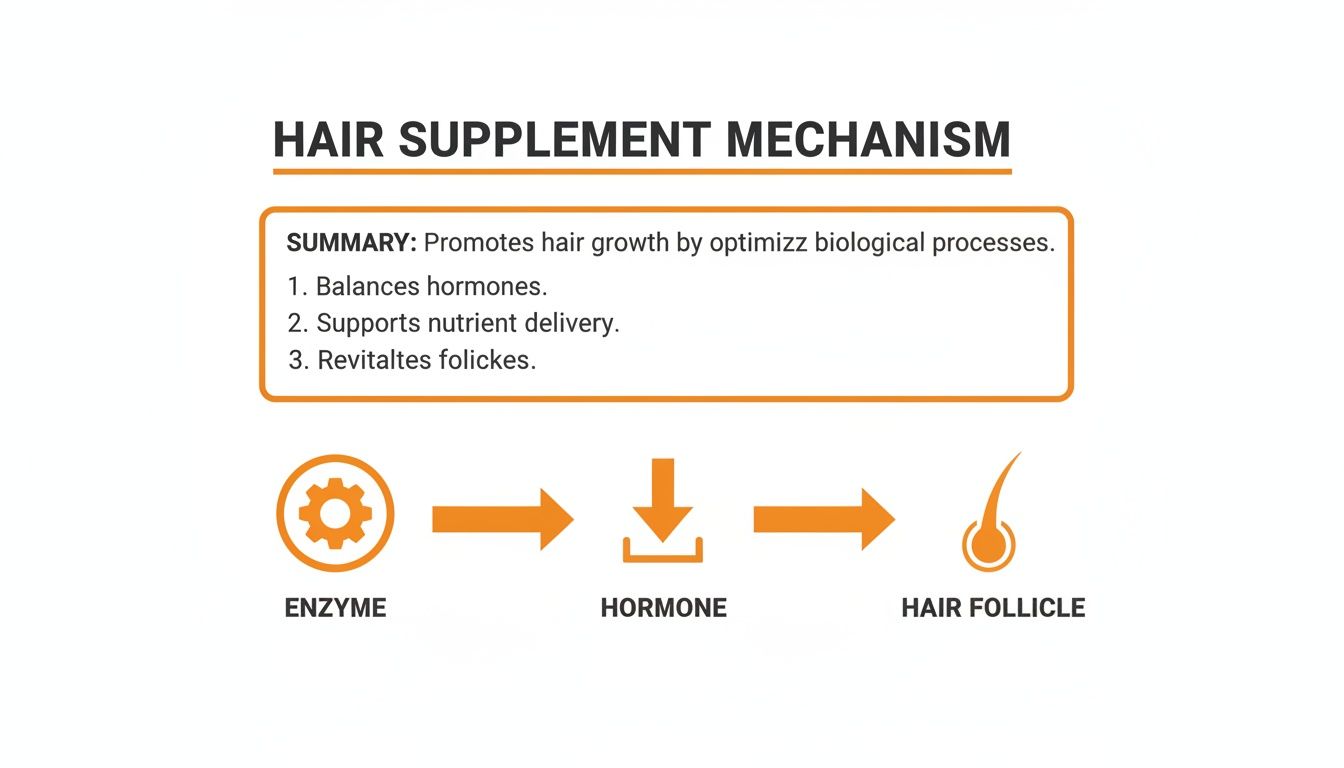
The main hormone behind this type of hair loss is called dihydrotestosterone (DHT). Your body converts some of your testosterone into DHT using an enzyme called 5-alpha reductase.
The role of DHT in hair loss
For men who are genetically prone to hair loss, DHT is the problem. It attaches to hair follicles on the scalp and makes them shrink. This process is called 'miniaturisation'.
This shrinking shortens the hair's growth cycle. Each new hair grows back thinner and weaker. Eventually, the follicle shuts down and stops producing hair altogether.
How finasteride blocks DHT
This is where finasteride steps in. It is a type of drug called a 5-alpha reductase inhibitor. Its job is to block the enzyme that turns testosterone into DHT.
By blocking this enzyme, finasteride significantly reduces the amount of DHT in your scalp. Clinical studies show it can lower scalp DHT levels by over 60% [1].
Pharmacist's tip: Think of finasteride as a gatekeeper. It doesn't affect your testosterone levels. It just stops the enzyme that creates the hair-damaging hormone, DHT. This targeted action is why it works so well.
Lower DHT levels give your shrunken hair follicles a chance to recover. This can stop hair loss from getting worse. For many men, it can also lead to thicker, healthier hair regrowth over time.
Propecia vs finasteride: a side-by-side comparison
While Propecia and generic finasteride are medically the same, a few key differences affect which one you might choose. The main factor is cost, but it's also worth understanding manufacturing standards and what you get for your money.
For most men, the decision comes down to price. The cost gap between branded Propecia and generic finasteride is large, which is a major factor for a long-term treatment.
Cost: the biggest difference
Propecia is the original branded medication, so it has a premium price. You pay for the famous Merck brand name and the research that went into developing the drug.
Generic finasteride is much cheaper. When a drug's patent expires, other licensed companies can make it. This competition drives prices down for consumers.
Pharmacist's tip: Generic medicines are a key way the NHS saves money without compromising on care. Choosing generic finasteride makes long-term hair loss treatment much more affordable.
Over a year, choosing the generic version can save you hundreds of pounds. This makes it easier to stick with your treatment consistently.
Real-life example: Alex, the young professional Alex is a 28-year-old marketing professional in Manchester. He needs an effective hair loss treatment that fits his budget. For him, generic finasteride provides the same medical benefit as Propecia at a much lower cost.
Effectiveness and safety
A common question is: "Is the cheap version as good?" In the UK, the answer is a definite yes.
The Medicines and Healthcare products Regulatory Agency (MHRA) has very strict rules. For a generic drug to be approved, it must be bioequivalent to the original. This means it has to:
- Contain the exact same amount of the active ingredient.
- Work in the body in the same way.
- Have the same medical effect.
This means 1mg of generic finasteride is just as effective and safe as 1mg of Propecia. Because the active ingredient is the same, the risk of side effects is also identical.
In-depth comparison table
This table lays out the key factors to help you decide.
| Factor | Propecia (Brand) | Finasteride (Generic) |
|---|---|---|
| Active Ingredient | Finasteride 1mg | Finasteride 1mg |
| Effectiveness | The original standard | Medically identical to Propecia |
| Typical Cost | High (premium brand price) | Low (significant savings) |
| Manufacturer | Merck & Co., Inc. | Various licensed manufacturers |
| Appearance | Tan, octagonal tablet | Varies (often round, white) |
| Prescription Needed | Yes | Yes |
This comparison makes it clear. The choice isn't about how well the medicine works. It's about cost and personal preference.
Real-life example: James, the established user James is a 45-year-old business owner from London who has used Propecia for years with great results. He trusts the brand, and the peace of mind is worth the extra cost to him. He prefers to stick with what he knows.
Is finasteride right for you?
Deciding to start a new treatment is a big step. It’s important to know if finasteride is a safe and suitable choice for you. The medication is licensed to treat male pattern hair loss in men over 18.
This means the ideal person is a man who has noticed classic signs of the condition. This could be a receding hairline or thinning on the crown of the head.
Who should use finasteride?
Finasteride works best for men with this specific type of genetic hair loss. It is a long-term treatment designed to stop further hair loss and, in many cases, encourage some regrowth.
It is not designed for other types of hair loss, like alopecia areata (patchy hair loss) or hair loss from stress.
Pharmacist's tip: Always get a proper diagnosis before starting treatment. A chat with a GP or qualified prescriber will confirm the cause of your hair loss. This ensures you choose the right treatment for the right reason.
Who must avoid finasteride?
The safety rules for finasteride are very clear. This medicine is strictly for adult men only.
The following groups must never use finasteride:
- Women: Finasteride can cause serious birth defects in a male baby. Women who are pregnant or may become pregnant should not even handle crushed tablets.
- Children and teenagers: The medicine is not approved for anyone under 18.
You must also tell your doctor if you have liver problems or are being tested for prostate cancer. Finasteride can affect the results of a prostate-specific antigen (PSA) blood test. You can learn more about the prevalence of conditions treated by finasteride in the UK market.
Rare but serious side effects
Most men tolerate finasteride very well. However, you should be aware of rare but serious side effects.
When to seek urgent medical help Stop taking finasteride and speak to your doctor immediately if you notice:
- Changes in your breast tissue, such as lumps, pain, or nipple discharge.
- Signs of a severe allergic reaction, like swelling of your face, lips, or throat.
- Changes in your mood, such as depression or thoughts of self-harm.
These side effects are very rare, but your safety is the top priority.
How to get finasteride safely in the UK
Getting finasteride safely and legally in the UK is a regulated process. The most important rule is that you must have a prescription from a qualified professional.
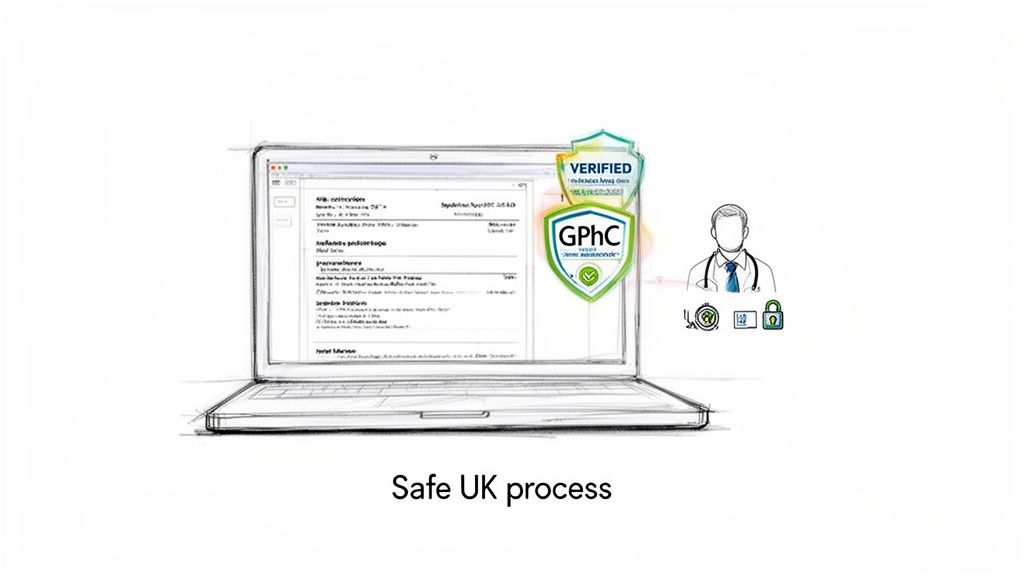
This safety measure ensures a healthcare professional has assessed you. They will confirm the treatment is suitable and safe for you.
Two main ways to get a prescription
- Your GP: The traditional way is to see your NHS or private GP. They can assess you and provide a prescription to take to a pharmacy.
- A regulated online pharmacy: A convenient and popular option. You complete an online consultation, which a UK-based prescriber reviews.
Real-life example: Ben, the shift worker Ben is a 29-year-old paramedic with unpredictable shifts. Booking a GP appointment is difficult. He used a regulated online service, filling out a health form late at night. A clinician reviewed it the next day and dispatched the medication to his home safely and discreetly.
Services like Courier Pharmacy offer a secure and simple process. You can explore our guide to using a safe online pharmacy in the UK.
How to spot a safe online pharmacy
The internet has many unsafe websites selling medication. It is vital to use only a legitimate, UK-based pharmacy.
Pharmacist's tip: Always check the pharmacy's registration details. A legitimate UK online pharmacy must be registered with the General Pharmaceutical Council (GPhC). You should find their registration number on the website and check it on the official GPhC register.
Quick safety checklist:
- GPhC Registration: The site must show its GPhC number.
- UK Address: A physical UK address should be listed.
- Consultation Required: You must complete a consultation with a prescriber.
- Clear Contact Info: It should be easy to contact a pharmacist.
Summary
In the Propecia vs finasteride debate, the conclusion is simple. Both medicines contain the same active ingredient, finasteride 1mg, and work in exactly the same way to treat male pattern hair loss. They are equally effective and have the same safety profile.
The main difference is the price. Propecia is the well-known, more expensive brand. Generic finasteride offers the same medical benefits at a much lower cost, making long-term treatment more accessible. The choice is yours, based on your budget and preference. Whichever you choose, always get it from a legitimate source with a prescription.
FAQs
Is Propecia more effective than generic finasteride? No. Both contain 1mg of finasteride and are medically identical. The UK regulator, the MHRA, ensures that generic versions have the same effectiveness and safety as the original brand.
How long does finasteride take to work? You need to be patient. Most men see hair loss stop within 3 to 4 months of daily use. Visible regrowth and thickening can take 6 to 12 months to appear.
What happens if I stop taking finasteride? Finasteride only works while you are taking it. If you stop, your DHT levels will rise again, and hair loss will resume. Any hair you kept or regrew will likely be lost within 6 to 12 months.
Can you buy finasteride over the counter in the UK? No. Finasteride is a prescription-only medicine in the UK. This ensures a doctor or qualified prescriber checks that it is a safe and appropriate treatment for you before you start.
Do the sexual side effects of finasteride go away? A very small number of men experience sexual side effects. For many of these men, the issues resolve on their own while they continue treatment. If not, the side effects almost always disappear after stopping the medication.
Can I cut a 5mg finasteride tablet into quarters? This is not recommended. It's impossible to cut a tablet into four perfectly equal pieces. This leads to an inconsistent daily dose, which can reduce the treatment's effectiveness and safety. Always use the 1mg tablets prescribed for hair loss.
Disclaimer: This article is for informational purposes only and does not constitute medical advice. Always consult with a qualified healthcare professional for any health concerns or before starting a new treatment.
Meta Description Propecia vs finasteride: what’s the difference? Our UK guide breaks down the cost, effectiveness, and safety of these hair loss treatments to help you choose.
Internal Links to Include
- Product page: Propecia 1mg tablets
- Related guide: Minoxidil versus a minoxidil and finasteride combination
- Service page: Online pharmacy in the UK
- Related guide: The link between prostaglandin D2 and male pattern baldness
Byline and Review Written by: [Author Name], [Author Credentials] Clinically reviewed by: [Reviewer Name], [Reviewer Credentials]
How This Content Was Created This article was written based on high-quality, reliable sources, including information from the NHS, NICE guidelines, and peer-reviewed clinical studies. All content has been checked for clinical accuracy by a qualified UK healthcare professional to ensure it is trustworthy, up-to-date, and patient-focused.
References [1] Drake, L. et al. (1999). The effects of finasteride on scalp skin and serum androgen levels in men with androgenetic alopecia. Journal of the American Academy of Dermatology, 41(4), pp.550-554. Available at: https://www.jaad.org/article/S0190-9622(99)70280-4/fulltext70280-4/fulltext) [2] Merck & Co., Inc. (2011). PROPECIA® (finasteride) tablets Patient Information Leaflet. Available at: https://www.medicines.org.uk/emc/files/pil.2194.pdf


