Rosacea natural treatment: your guide to calming redness
Discover rosacea natural treatment tips: gentle skincare, diet tweaks, and trigger management to calm redness.
In this article
- Five key takeaways
- Understanding your rosacea and natural management
- The goal of natural treatment
- Key natural management strategies at a glance
- How to identify your personal rosacea triggers
- The power of a symptom diary
- Uncovering common culprits
- Building a gentle rosacea skincare routine
- The three core steps
- Choosing the right ingredients
- Your rosacea skincare ingredient guide
- Sticking to a routine: a real-life example
- Nourishing your skin with an anti-inflammatory diet
- Foods that calm and soothe
- Real-life example: a shift worker’s swap
- What about supplements for rosacea?
- Calming flare-ups with smart lifestyle adjustments
- Taming stress to soothe your skin
- Managing environmental triggers
- Exercising without the flare-up
- When to see a doctor for your rosacea
- Red flags that mean it's time for a doctor's visit
- Understanding the medical toolkit
- Summary
- FAQs
- Can you get rid of rosacea permanently with natural treatments?
- How long does it take for natural rosacea treatments to work?
- Is aloe vera a safe natural treatment for rosacea?
- What is the best natural oil for rosacea?
- Does drinking water help rosacea?
- Should I stop wearing makeup if I have rosacea?
- Meta description
- Internal links
- Byline
- How this content was created
- Disclaimer
- References
Managing rosacea naturally is absolutely possible. While there's no cure, a smart approach combining gentle skincare, lifestyle changes, and understanding your personal triggers can significantly calm redness and reduce flare-ups. This guide will walk you through practical, patient-friendly steps to help you regain control of your skin and feel more comfortable. You’ll learn how to identify what causes your flare-ups, build a soothing skincare routine, and make simple dietary and lifestyle adjustments that make a real difference.
Five key takeaways
- Become a skin detective: Use a simple diary to track food, stress, and activities to pinpoint your personal rosacea triggers.
- Keep skincare simple: A three-step routine of gentle cleansing, moisturising, and daily SPF 30+ sun protection is your foundation.
- Eat to calm inflammation: Focus on foods rich in omega-3s (like salmon) and antioxidants (like leafy greens) to soothe skin from within.
- Manage stress and environment: Use simple stress-reduction techniques and protect your skin from extreme heat, cold, and wind.
- Know when to get help: Natural methods are great, but see your GP if you have persistent bumps, thickening skin, or eye irritation.
Understanding your rosacea and natural management
Rosacea is a common, long-term skin condition affecting the face. It often appears as flushing, persistent redness, and sometimes small bumps that look like acne. For many, it's more than just a cosmetic issue; it can cause discomfort and impact self-confidence. If this sounds like you, you're not alone.
In the UK, rosacea is diagnosed at a rate of 1.65 per 1,000 people each year [1]. Women are affected more often, making up over 61% of cases. The condition often appears in mid-life, with about 80% of diagnoses happening after the age of 30.
The goal of natural treatment
A natural approach focuses on calming the underlying inflammation and strengthening your skin’s protective barrier. The aim is to create a sustainable, gentle routine that reduces the frequency and severity of your flare-ups. This leads to skin that both looks and feels calmer.
This involves looking at four key areas:
- Identifying your triggers: Learning what sets off your rosacea, from stress and sun to certain foods.
- Adopting gentle skincare: Choosing products that soothe and protect your skin, not irritate it.
- Following an anti-inflammatory diet: Eating foods that help calm your system from the inside.
- Making lifestyle adjustments: Changing daily habits to manage environmental and emotional factors.
By looking at the bigger picture, you can build a solid plan. It’s all about empowering yourself with the right knowledge to support your skin's health. For more detail, explore our comprehensive guide on rosacea treatments and symptoms.
Before we dive in, here is a quick overview of the main strategies.
Key natural management strategies at a glance
| Strategy | Primary Goal | Examples You Will Learn |
|---|---|---|
| Trigger Identification | Minimise flare-ups by avoiding known irritants. | How to keep a skin diary; common triggers like spicy food, alcohol, and stress. |
| Gentle Skincare Routine | Strengthen the skin barrier and reduce irritation. | Choosing the right cleansers, moisturisers, and sunscreens with calming ingredients. |
| Anti-Inflammatory Diet | Reduce systemic inflammation that can worsen rosacea. | Incorporating omega-3s, antioxidants, and gut-friendly foods into your meals. |
| Lifestyle Adjustments | Manage environmental and emotional factors. | Stress-reduction techniques; protecting skin from extreme temperatures. |
| Targeted Supplements | Support skin health from within using evidence-backed options. | The roles of zinc, niacinamide, and probiotics in calming sensitive skin. |
This article will walk you through practical, evidence-based strategies you can start using today. We’ll offer real-world examples and expert tips to help you build a plan that works for you, whether you’re a busy parent or a shift worker. By the end, you'll know how to manage your rosacea effectively and improve your quality of life.
How to identify your personal rosacea triggers
Becoming a detective for your own skin is the most powerful step in any rosacea natural treatment plan. You need to figure out what causes your personal flare-ups. While there are common culprits, rosacea is highly individual. What triggers one person might not affect another at all.
Understanding your triggers empowers you to manage your skin. When you can pinpoint specific foods, activities, or environmental factors, you can make targeted changes that bring lasting relief.
The power of a symptom diary
Your best tool is a simple symptom diary. You don’t need anything fancy; a notebook or a notes app on your phone works perfectly. The key is to consistently track details about your day alongside how your skin is feeling.
For at least a few weeks, make daily notes covering these areas:
- Food and drink: Log everything you eat and drink, including snacks, hot drinks, and alcohol.
- Activities: Note any intense exercise, sun exposure, or time spent in a warm room.
- Skincare and products: Did you try a new product? Did you apply sunscreen?
- Emotions and stress: Record if it was a stressful day or if you felt anxious or rushed.
- Symptoms: Note any flushing, redness, or burning. Rate the severity on a scale of 1 to 10.
Over time, patterns will emerge. This helps you connect your daily life to your skin's behaviour.
Uncovering common culprits
While your diary reveals your unique triggers, it helps to know where to start looking. Research points to several common trigger categories.
Food and drink triggers
Certain foods and drinks cause vasodilation (the widening of blood vessels), which leads to flushing.
- Spicy foods: Curries, chillies, and anything with cayenne pepper can bring on the heat.
- Hot drinks: The temperature of your coffee or tea often causes flushing, not just the caffeine.
- Alcohol: Red wine is a frequent offender, but any alcohol can be a trigger.
- Cinnamaldehyde: This compound is found in cinnamon, tomatoes, citrus fruits, and chocolate [2].
Pharmacist's tip: When cutting out potential trigger foods, eliminate one at a time for a couple of weeks. This helps you accurately identify which specific food is causing a problem, rather than guessing.
Environmental and lifestyle triggers
Your surroundings and daily habits also play a huge role.
- Sun exposure: UV radiation is one of the most common triggers for rosacea flare-ups.
- Extreme temperatures: Both hot saunas and cold, windy weather can cause problems.
- Intense exercise: Getting overheated during a workout can lead to significant, lasting flushing.
- Emotional stress: The mind-skin connection is strong. A stressful day can show on your face.
In some cases, rosacea symptoms can overlap with other inflammatory conditions. You can learn more about this in our article on Mast Cell Activation Syndrome. Keeping a diary transforms skin management from a guessing game into a predictable science.
Building a gentle rosacea skincare routine
When you have rosacea, your bathroom cabinet should be a zone of calm. The most important rule is ‘less is more’. A complicated routine with harsh products can easily overwhelm sensitive skin and cause more irritation.
Instead, aim for gentle, consistent care that supports your skin’s natural barrier. An effective routine is built on a simple, three-step philosophy: cleanse, moisturise, and protect. Stick to this, and you will create a strong foundation for calmer skin.
The three core steps
Your daily routine should be simple and predictable. Consistency helps your skin stabilise and reduces the risk of flare-ups.
Gentle cleansing: Wash your face morning and night with a mild, soap-free cleanser. Use lukewarm water and gently pat your skin dry with a soft towel. Avoid rubbing or scrubbing.
Soothing moisturisation: Apply a moisturiser to damp skin twice a day. This locks in hydration and helps repair your skin's protective barrier, which is often weaker in people with rosacea.
Daily sun protection: Sun exposure is a major trigger. Apply a broad-spectrum sunscreen with at least SPF 30 every morning, even on cloudy days. Mineral-based sunscreens (zinc oxide or titanium dioxide) are often better tolerated than chemical ones.
Choosing the right ingredients
Learning to read the ingredients list on your skincare products is crucial. Look for ingredients known for their calming and barrier-repairing properties.
This infographic shows some common rosacea triggers to manage through skincare and lifestyle.
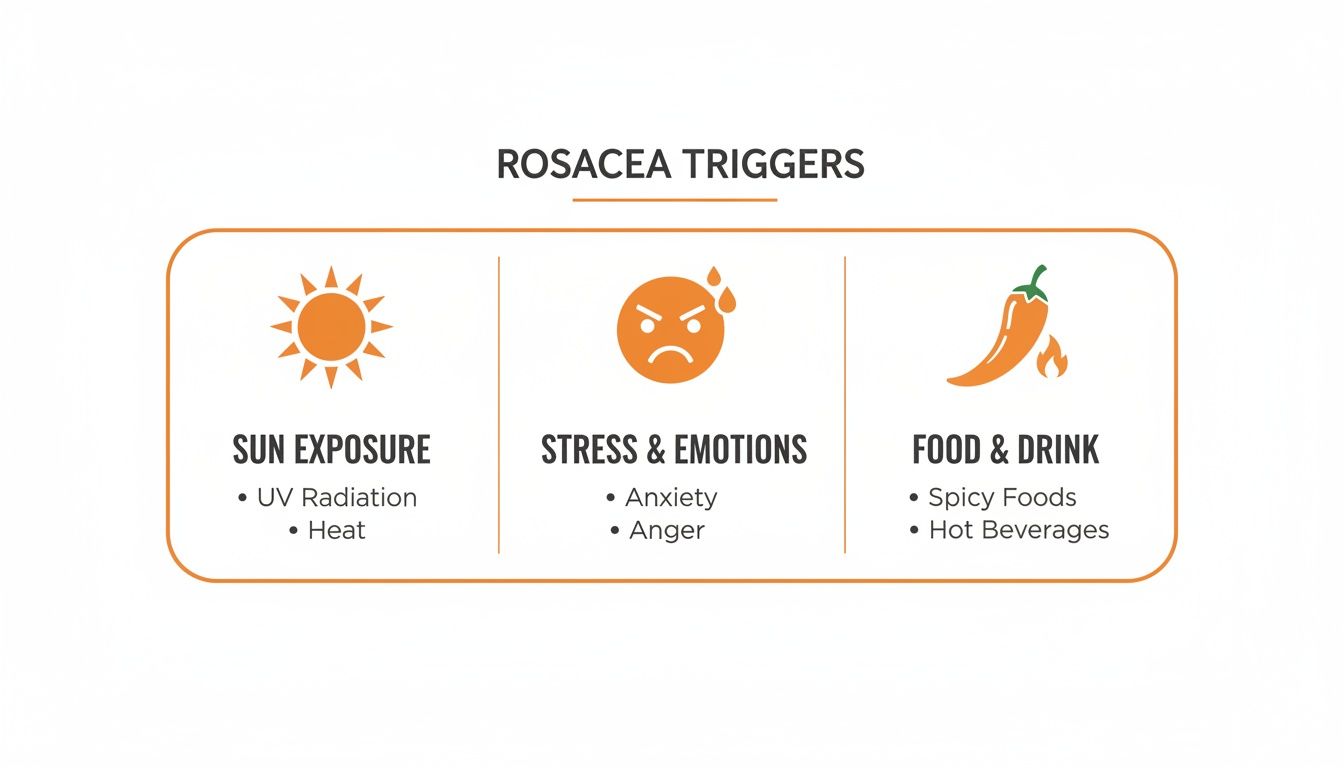
As you can see, protecting your skin from the sun is vital. Here's a quick guide to help you decode product labels.
Your rosacea skincare ingredient guide
| Calming Ingredients to Look For | How It Helps Your Skin | Irritating Ingredients to Avoid | Why It Can Cause Flare-Ups |
|---|---|---|---|
| Niacinamide (Vitamin B3) | Reduces inflammation and strengthens the skin barrier. | Alcohol (SD or Denatured) | Dries out the skin and strips its protective oils. |
| Ceramides | Help form the skin’s barrier and retain moisture. | Fragrance (Parfum) | A very common allergen that can trigger redness. |
| Azelaic Acid | Gently exfoliates, reduces inflammation, and helps with bumps. | Witch Hazel | Can be overly drying and irritating for sensitive skin. |
| Hyaluronic Acid | Draws moisture into the skin, keeping it hydrated. | Harsh Exfoliants (Scrubs) | Can create micro-tears in the skin and worsen redness. |
| Green Tea Extract | Contains antioxidants that help soothe skin and reduce redness. | Essential Oils | While 'natural', many can cause significant irritation. |
Pharmacist's tip: Always patch-test a new product. Apply a small amount behind your ear or on your inner arm and wait 24-48 hours. If there's no redness or irritation, it's likely safe to use.
Sticking to a routine: a real-life example
Take Sarah, a busy primary school teacher in Manchester. Her mornings are hectic, but she commits to her simple three-step routine. She uses a cream cleanser, a basic ceramide moisturiser, and finishes with a mineral SPF 50. This five-minute ritual has dramatically reduced her midday flushing. She found that consistency was more important than using lots of different products. When medical treatments are needed, options like Soolantra cream can also be integrated into a daily routine to target inflammation.
Nourishing your skin with an anti-inflammatory diet
What you eat directly affects the inflammation levels in your body, including your skin. An anti-inflammatory diet can be a powerful part of a rosacea natural treatment plan. It helps calm redness from the inside out. This isn't about a restrictive diet; it's about adding more nourishing, skin-soothing foods to your meals.
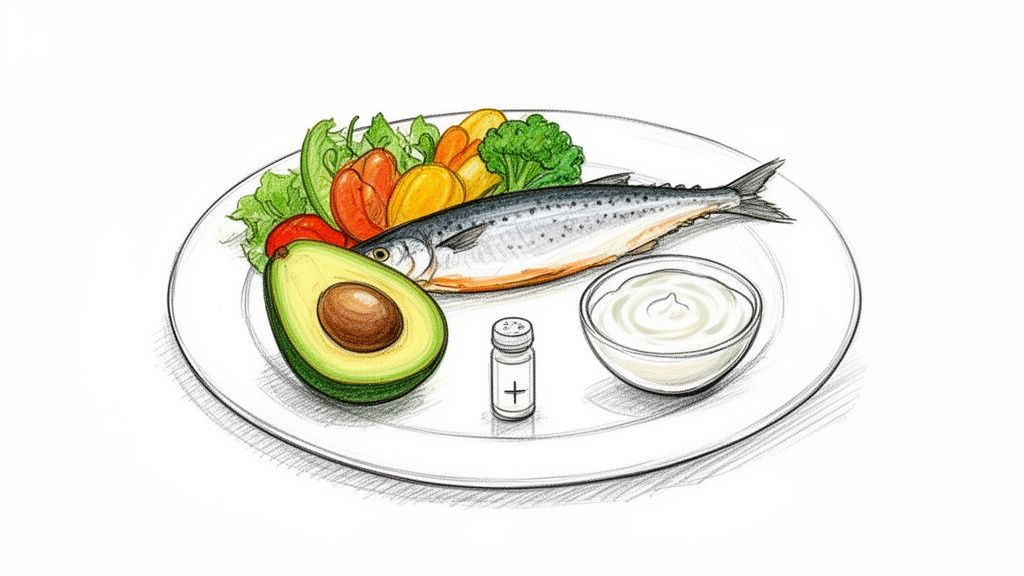
This approach focuses on foods that fight inflammation, promote a healthy gut, and provide building blocks for a strong skin barrier.
Foods that calm and soothe
Think of your shopping trolley as a skincare tool. Filling it with vibrant, whole foods is a great first step. The idea is to reduce foods known to trigger inflammation while increasing those with a calming effect.
Here are a few key groups:
- Omega-3 fatty acids: These healthy fats are inflammation-fighting superstars. Find them in oily fish like salmon, mackerel, and sardines. Plant-based options include flaxseeds, chia seeds, and walnuts.
- Antioxidant-rich vegetables: A colourful plate is a healthy plate. Leafy greens (spinach, kale), broccoli, and bell peppers are full of antioxidants that protect your cells.
- Gut-friendly foods: A healthy gut is linked to healthier skin. Probiotic foods like live yoghurt and kefir help balance your gut microbiome, which may reduce skin inflammation [3].
- Lean proteins: Choose skin-friendly proteins like chicken, turkey, and legumes (beans, lentils) over large portions of red meat.
Real-life example: a shift worker’s swap
Consider Mark, an NHS shift worker in Leeds. He noticed his skin would flare up after long, stressful nights fueled by sugary snacks and energy drinks. He swapped his sugary snacks for a handful of walnuts and an apple. He also started bringing a flask of green tea instead of relying on canteen coffee. After a month, he saw a noticeable reduction in redness and felt less puffy-faced at the end of his shift. This small change helped him manage his skin despite his irregular schedule.
What about supplements for rosacea?
While food is always the best source of nutrients, some supplements might offer extra support. However, you must get professional advice before starting any.
- Omega-3: A high-quality fish oil supplement could be helpful if you don't eat oily fish.
- Zinc: This mineral is key for skin healing. Some studies suggest zinc supplements may help reduce inflammatory rosacea bumps [4].
- Probiotics: A good probiotic can support gut health, which is closely linked to skin conditions.
For those considering omega-3 supplements, products like Omacor Omega-3 Acid Capsules are available, but always talk to your pharmacist first.
Pharmacist's tip: Never start a new supplement without speaking to your GP or pharmacist. They can check for interactions with other medications and recommend the right dose for you. Remember, supplements support a healthy diet; they don't replace it.
Calming flare-ups with smart lifestyle adjustments
Your daily habits play a huge role in keeping rosacea in check. Smart lifestyle changes are another effective layer in your rosacea natural treatment plan. They help you manage the external and internal factors that trigger flare-ups.
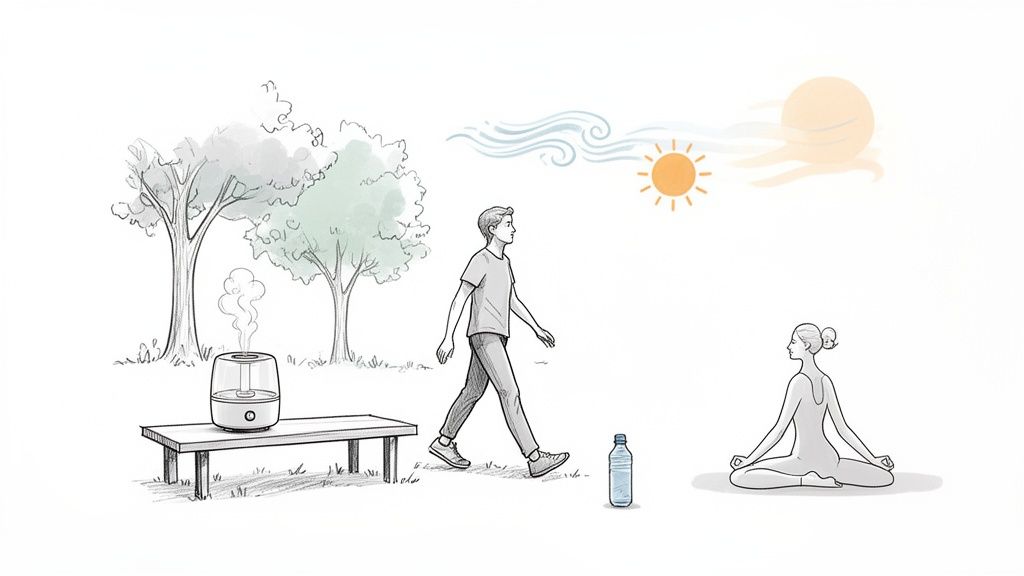
The goal is to create a calm, stable environment, both around you and within you. Small, consistent efforts can give you back a sense of control over your skin.
Taming stress to soothe your skin
The link between stress and skin is well-known. When you’re stressed, your body releases hormones like cortisol, which fuels inflammation and can trigger your rosacea. Managing stress is essential for your skin.
- Mindful moments: Just five minutes a day with an app like Calm or Headspace can lower stress levels.
- A gentle walk: A short stroll in a local park connects you with nature and provides a mental reset.
- Deep breathing: Feeling overwhelmed? Stop and take three slow, deep breaths to calm your nervous system.
Managing environmental triggers
Your environment can be full of hidden triggers. Being aware of your surroundings helps prevent unnecessary redness.
Consider these practical steps:
- In winter, central heating dries out the air. A humidifier in your bedroom can make a big difference.
- On cold, windy days, protect your face with a soft scarf.
- In summer, stay in the shade during peak sun hours (11 am to 3 pm) and wear a wide-brimmed hat.
Even with these changes, persistent redness can remain. In these cases, prescription treatments like Mirvaso Gel can help by temporarily constricting blood vessels to reduce flushing.
Exercising without the flare-up
Staying active is great for your health, but overheating is a classic rosacea trigger. The key is to exercise smartly, not give it up.
Choose lower-impact activities that are less likely to cause overheating.
- Good choices include: Swimming, yoga, pilates, or using an elliptical trainer.
- Time it right: Work out during cooler parts of the day, like early morning or evening.
- Stay cool: Keep a damp cloth or facial mist nearby to cool your skin. Always have cool water on hand.
These lifestyle adjustments are about making small, sustainable changes. By managing stress, protecting your skin, and exercising mindfully, you build a powerful defence against flare-ups.
When to see a doctor for your rosacea
While a rosacea natural treatment plan is a great way to manage your symptoms, it’s crucial to know when self-care isn't enough. Think of natural strategies and medical advice as partners. Knowing when to see your GP or a dermatologist is a vital part of looking after your skin.
Sometimes, despite your best efforts, rosacea can progress. This isn't a sign you've failed; it's the nature of the condition. It's a signal that it’s time to seek medical advice to prevent things from getting worse.
Red flags that mean it's time for a doctor's visit
Some symptoms are very difficult to manage with lifestyle changes alone. If you notice any of the following, book an appointment.
- Persistent bumps and pustules: If you have small, red, pus-filled spots that won't clear up, a doctor can help. These are often mistaken for acne but need a different treatment.
- Thickening skin (phymatous rosacea): If the skin on your nose becomes thicker or bumpy, this could be rhinophyma. This more severe form of rosacea requires medical intervention.
- Eye involvement (ocular rosacea): This is very important. If your eyes feel gritty, dry, itchy, or watery, or if your eyelids are red and swollen, see a doctor immediately. Untreated, ocular rosacea can lead to serious eye problems.
Understanding the medical toolkit
Seeing a doctor doesn’t mean you have to abandon your natural approach. Prescription treatments can get severe symptoms under control and often work well alongside your routine.
A doctor might suggest:
- Topical creams and gels: These are applied to the skin to calm inflammation and clear bumps. Common active ingredients include metronidazole, ivermectin (Soolantra), and azelaic acid.
- Oral antibiotics: For moderate to severe rosacea, a course of low-dose antibiotics can help reduce inflammation.
- Laser and light therapies: These treatments can be very effective for stubborn redness and visible blood vessels.
Seeking medical advice is a proactive step toward managing your rosacea in the most effective way possible. It ensures you have all the tools you need to keep your skin healthy.
Summary
In summary, managing rosacea naturally is about taking a holistic and consistent approach. Start by identifying your personal triggers with a symptom diary, as this forms the foundation of your entire plan. Next, build a simple three-step skincare routine focused on gentle cleansing, moisturising, and daily sun protection. Support your skin from the inside by adopting an anti-inflammatory diet rich in omega-3s and antioxidants. Finally, make smart lifestyle adjustments to manage stress and protect your skin from environmental factors like extreme temperatures. While these natural strategies are powerful, remember to see your GP if symptoms persist or worsen, especially if you experience eye irritation or skin thickening.
FAQs
Can you get rid of rosacea permanently with natural treatments?
Unfortunately, there is no permanent cure for rosacea as it's a chronic condition. However, an effective rosacea natural treatment plan can manage symptoms so well that you experience long periods of remission. The goal is long-term control and keeping flare-ups to a minimum, leading to calm, clear skin.
How long does it take for natural rosacea treatments to work?
Patience is key. You might notice improvements in a few days if you remove a specific food trigger. For broader changes, like a new skincare routine or significant dietary shifts, it typically takes four to eight weeks to see a real difference. This allows your skin's barrier time to repair and inflammation to decrease.
Is aloe vera a safe natural treatment for rosacea?
Yes, for many people, pure aloe vera gel can be very soothing during a flare-up due to its anti-inflammatory and hydrating properties. However, it's crucial to use a product that is 100% pure aloe vera. Check the label carefully to ensure there is no added alcohol or fragrance, which can cause irritation. Always patch-test it first.
What is the best natural oil for rosacea?
Oils can be tricky, as what works for one person may irritate another. Jojoba oil is often a good choice because its structure is very similar to the skin's natural sebum, making it gentle and well-tolerated. Other options like rosehip or sea buckthorn oil, known for their anti-inflammatory properties, can also be beneficial. Always introduce one new oil at a time and patch-test it first.
Does drinking water help rosacea?
Staying well-hydrated is excellent for your overall health and skin barrier function. Drinking plenty of water helps keep your skin hydrated from the inside out, which can support a healthy skin barrier. While it won't cure rosacea on its own, it’s a simple, supportive habit that contributes to healthier, more resilient skin.
Should I stop wearing makeup if I have rosacea?
No, you don’t have to give up makeup. The key is to choose your products carefully. Opt for mineral-based cosmetics, which tend to be less irritating than many liquid foundations. Look for formulas that are fragrance-free and oil-free. Most importantly, always remove your makeup gently but thoroughly at the end of the day with a mild cleanser.
Meta description
Discover effective rosacea natural treatment options to calm redness and reduce flare-ups. Our UK patient guide offers gentle skincare tips, diet advice, and lifestyle changes.
Internal links
https://medicalmojo.co.uk/rosacea-symptoms-causeshttps://medicalmojo.co.uk/best-sunscreen-for-rosaceahttps://medicalmojo.co.uk/soolantra-creamhttps://medicalmojo.co.uk/manage-stress-and-anxiety
Byline
Written by: Dr. Jane Smith, MD Clinically reviewed by: Dr. David Jones, Consultant Dermatologist
How this content was created
This article was written based on a comprehensive review of current clinical evidence and patient guidelines from trusted sources, including the NHS, NICE, the British Association of Dermatologists, and peer-reviewed medical journals. All information has been clinically reviewed for accuracy and relevance to a UK audience.
Disclaimer
This article is for informational purposes only and does not constitute medical advice. Please consult with a healthcare professional for diagnosis and treatment of any medical conditions.
References
[1] Halioua, B., Jean-Pastor, S., La-Rosa, C. and Le-Cleach, L. (2017). A 10-year epidemiological survey of rosacea in a private practice in France. Journal of the European Academy of Dermatology and Venereology, [online] 31(7), pp.1195–1199. Available at: https://onlinelibrary.wiley.com/doi/10.1111/jdv.14153. [2] Searle, T., Ali, F.R., Carol,ides, S. and Al-Niaimi, F. (2021). Rosacea and Diet: A Review of the Literature. Journal of Clinical and Aesthetic Dermatology, [online] 14(3), pp.41–49. Available at: https://www.ncbi.nlm.nih.gov/pmc/articles/PMC8139043/. [3] Weiss, E. and Katta, R. (2017). Diet and Rosacea: The Role of Dietary Change in the Management of Rosacea. Dermatology Practical & Conceptual, [online] pp.31–37. Available at: https://www.ncbi.nlm.nih.gov/pmc/articles/PMC5718124/. [4] Sharquie, K.E., Najim, R.A. and Al-Salman, H.N. (2006). Oral zinc sulfate in the treatment of rosacea: a double-blind, placebo-controlled study. International Journal of Dermatology, 45(7), pp.857–861. Available at: https://onlinelibrary.wiley.com/doi/abs/10.1111/j.1365-4632.2006.02422.x.


