Sibo Breath Test at Home: Your Quick Guide to Accurate Results
Discover how to prepare, collect, and interpret results with the sibo breath test at home for clearer digestive health.
In this article
- Key Takeaways
- What Is SIBO and Why Does Testing Matter?
- The Overlap Between SIBO and IBS
- Why Accurate Testing Is a Game-Changer
- How to Properly Prepare for Your SIBO Test
- The 24-Hour Preparatory Diet
- Pausing Medications and Supplements
- SIBO Test Preparation Timeline
- Your Final 12-Hour Fast
- Collecting Your Breath Samples Accurately
- Beginning the Test
- Mastering the Collection Technique
- Making Sense of Your SIBO Test Results
- What Do the Numbers Mean?
- Hydrogen vs Methane Dominant SIBO
- Your Next Steps After a Positive Result
- Summary
- Frequently Asked Questions (FAQs)
- How accurate is an at-home SIBO test?
- What if I make a mistake during the collection?
- What happens after a positive SIBO test?
- Can I still test if I have constipation or diarrhoea?
If you’ve been struggling with persistent bloating, abdominal pain, or completely unpredictable bowel habits, you know just how draining it is to live without clear answers. A SIBO breath test at home is a straightforward, non-invasive tool that measures gases produced by bacteria in your small intestine, offering a path to diagnosis right from your own kitchen. This guide will walk you through the entire process, from preparation to understanding your results, with practical tips to ensure you get it right the first time.
Key Takeaways
Before we dive in, here are five essential things to know about your at-home SIBO test:
- Preparation is Everything: The accuracy of your test hinges on strictly following the 24-hour preparatory diet. Even a small deviation, like eating a piece of toast, can feed the bacteria and skew your results, as one of my patients discovered, forcing a re-test.
- Timing is Crucial: The test itself takes three hours and requires you to collect breath samples at precise intervals. My top tip? Set timers on your phone for each collection. It's a simple trick that keeps you perfectly on track without stress.
- Know Your Gases: The test measures hydrogen and methane. Elevated hydrogen is often linked to diarrhoea-predominant symptoms, while high methane is strongly associated with constipation. Identifying which gas is high is key to targeted treatment.
- Don't Interpret Alone: A positive result is a vital clue, not the final answer. Always discuss your results with a healthcare professional to build a safe and effective treatment plan tailored to your specific needs.
- Look for the Root Cause: Successful SIBO management isn't just about the initial treatment. It’s about figuring out why it happened in the first place—often due to issues like poor gut motility—to prevent it from coming back.
What Is SIBO and Why Does Testing Matter?
To put it simply, Small Intestinal Bacterial Overgrowth (SIBO) happens when bacteria that belong in your large intestine decide to set up camp in your small intestine. This bacterial migration is more than just a minor inconvenience; it can cause significant and persistent digestive distress.
When these out-of-place bacteria get their hands on the food you eat, particularly carbohydrates, they start to ferment it. This fermentation process releases gases like hydrogen and methane, which is what triggers the classic SIBO symptoms: painful bloating, embarrassing gas, abdominal cramps, and unpredictable bowel habits swinging between diarrhoea and constipation. For many people battling chronic gut problems, SIBO is a critical but often overlooked diagnosis.
The Overlap Between SIBO and IBS
For years, countless people with these exact symptoms have been diagnosed with Irritable Bowel Syndrome (IBS), which can often feel more like a label for unexplained symptoms than a clear path forward. The connection between SIBO and IBS is far stronger than most people realise.
It's estimated that around 20% of the UK population struggles with IBS, a condition that can seriously disrupt daily life. Within this group, SIBO is a common but frequently missed culprit. In fact, some studies suggest that SIBO affects as many as 80% of IBS sufferers. Getting a confirmed SIBO diagnosis is often the first real, tangible step towards finding an effective, targeted treatment.
A Pharmacist's Real-World Example: "I once worked with a patient who had lived with an 'IBS with constipation' diagnosis for nearly a decade. She'd tried every diet imaginable, but nothing offered lasting relief. We finally arranged a SIBO breath test at home, which revealed she had very high methane levels—a classic sign of intestinal methanogen overgrowth (IMO). This specific diagnosis allowed us to create a targeted plan, and for the first time in years, she felt in control of her health."
Why Accurate Testing Is a Game-Changer
Getting an accurate diagnosis is vital because it shifts the focus from just managing symptoms to actually treating the root cause. If left untreated, SIBO can lead to poor nutrient absorption and is even being investigated for its links to other conditions like Long COVID and fibromyalgia. Identifying the overgrowth allows for a precise treatment that can finally resolve the underlying problem.
To get this precise diagnosis, you'll generally come across two main types of breath tests.
- Glucose Breath Test: This test uses glucose as the sugar "substrate." It's particularly good at spotting bacterial overgrowth in the upper part of the small intestine (the proximal small bowel).
- Lactulose Breath Test: This one uses lactulose, a sugar the human body can't digest. Because of this, it travels the full length of the small intestine, making it better for identifying overgrowth in the lower section (the distal bowel).
Understanding which test is right for your situation, or if a combination might be needed, is a key part of the diagnostic journey. If you're struggling with persistent digestive issues, take a look at our guide on [managing irritable bowel syndrome](https://courierpharmacy.co.uk/conditions/irritable- bowel-syndrome/) for more information.
How to Properly Prepare for Your SIBO Test
Getting an accurate result from your at-home SIBO breath test doesn’t just happen on the day. It all starts with careful preparation in the days and weeks beforehand. A simple mistake during the prep phase can easily lead to an inaccurate result, which means a frustrating delay in getting the right diagnosis and treatment.
The whole point of the prep is to create a "blank slate" in your gut. This ensures the test only measures the gases produced by bacteria reacting to the test solution, not from any leftover food or medication hanging around in your system.
The 24-Hour Preparatory Diet
For a full 24 hours before your test, you'll need to follow a very specific, limited diet. Think of it as starving the bacteria of their usual fuel so they're primed and ready to react to the glucose or lactulose solution on test day.
The rules are simple but incredibly strict. You can have:
- Plain, cooked chicken, turkey, or fish (steamed or baked is best, with only salt and pepper for seasoning).
- Plain steamed white rice.
- Clear chicken or beef broth (cubes are fine, but double-check the ingredients for any sneaky onion or garlic powder).
- Eggs, but only poached or hard-boiled to avoid any fats.
You absolutely must avoid everything else. That means no vegetables, no fruit, no dairy, no sugar, and definitely no high-fibre foods. Even a tiny deviation can feed the gut bacteria and completely skew your results.
Pausing Medications and Supplements
Just as important as the diet is temporarily stopping certain medications and supplements that could interfere with your gut environment. The timeline for this varies, so you’ll need to plan ahead.
- Four Weeks Before: Stop all antibiotics. This includes herbal antimicrobials, too. If you are taking prescription antibiotics, such as Metronidazole tablets, you must discuss this with your doctor before making any changes.
- One Week Before: It's time to pause all probiotics, prebiotics, and laxatives (both prescription and over-the-counter). This also includes any stool softeners.
- Two Days Before: Discontinue digestive support like enzymes or betaine HCl.
Pharmacist's Tip: "A question I get all the time is how to handle hunger during the fasting window. My best advice is to stay really well-hydrated with plain water, as it can help you feel fuller. On the actual test day, it's crucial to avoid chewing gum, smoking, or even doing strenuous exercise. All of these can alter your breath composition and lead to a false positive."
To help you keep track, here is a simple timeline to follow.
SIBO Test Preparation Timeline
This checklist breaks down the key actions and timings you'll need to follow to make sure your test results are as accurate as possible. Sticking to this schedule is your best bet for a clear outcome.
| Timeframe Before Test | Action Required | Pharmacist's Tip |
|---|---|---|
| 4 Weeks Out | Stop all antibiotics and herbal antimicrobials. | Set a calendar reminder now so you don't forget. This is the longest lead time item and easiest to miss. |
| 1 Week Out | Stop all probiotics, prebiotics, and laxatives. | Clear your medicine cabinet of these items temporarily to avoid taking them out of habit. |
| 2 Days Out | Stop digestive aids like enzymes and betaine HCl. | These are often taken with meals, so be extra mindful during your last few meals before the prep diet begins. |
| 24 Hours Out | Begin the strict preparatory diet. | Cook your allowed foods in batches the day before so you're not tempted to stray from the diet. |
| 12 Hours Out | Start your final fast – only water is allowed. | Have your last prep-diet meal exactly 12 hours before you plan to start the test. Drink plenty of water overnight. |
| Test Morning | No food, no gum, no smoking, no exercise. | Wake up, drink some water, and get straight to the test. Avoid your usual morning routine until after the final sample. |
Following this timeline methodically gives you the best chance of getting a reliable result from your test.
Your Final 12-Hour Fast
The last piece of the puzzle is a strict 12-hour fast right before you begin collecting your breath samples. During this window, you can only have plain, unflavoured water.
This means from the evening before your test until it's fully completed, nothing else passes your lips. It pays to be organised. Set reminders on your phone for stopping medications and starting your diet and fast. A little planning goes a long way toward getting a clear and accurate diagnosis.
Collecting Your Breath Samples Accurately
Test day is here. After all the careful prep, this final three-hour window is when you’ll gather the evidence needed for a clear diagnosis. It all comes down to precision and focus, so let’s walk through the sample collection process to make sure you feel confident and organised.
The entire process hinges on timing. One of our patients, Sarah, told us she found it helpful to lay out all her collection tubes in chronological order before she even started. She labelled them and set timers on her phone for each collection point, which took all the guesswork out of the process.
It's a simple organisational trick that helps prevent mix-ups and keeps you on schedule without any added stress.
Beginning the Test
First up, you’ll collect your baseline sample. Think of this as your "before" picture—it’s taken before you drink the lactulose or glucose solution. This first sample shows the normal gas levels in your breath after the fasting period and is absolutely essential for an accurate comparison later on.
Once your baseline tube is collected and safely stored, it’s time to mix the provided test solution with the specified amount of water. Drink it down smoothly and immediately start a timer for your next sample.
This diagram breaks down the key stages of your SIBO testing journey.
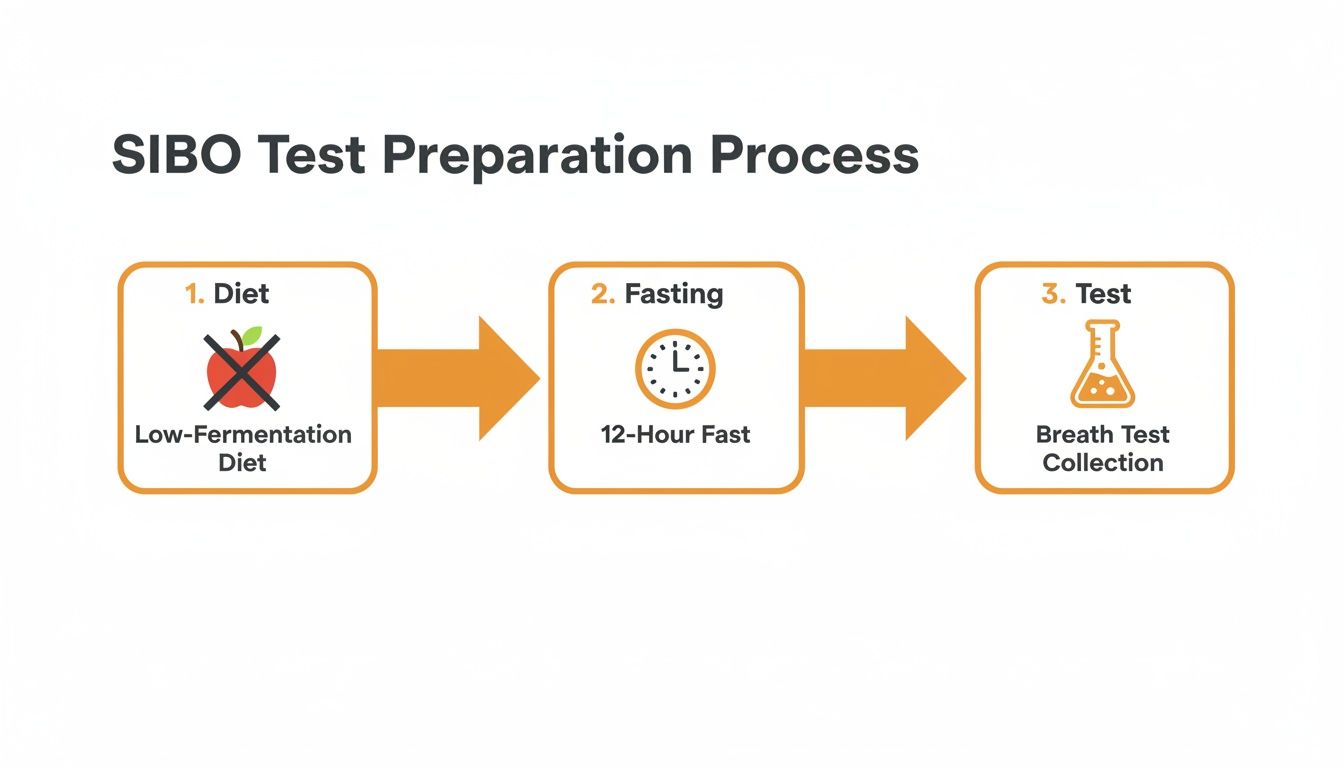 As you can see, successful testing is just a sequence of diet, fasting, and precise collection. Each step is equally important for getting a reliable result.
Mastering the Collection Technique
Now, for the next three hours, you'll be collecting breath samples at regular intervals—usually every 15 to 20 minutes. The key here is to remain relaxed and avoid any strenuous activity. Just sit back and let the time pass.
Pharmacist's Tip: "The most common mistake I see is people blowing too hard or too fast into the collection tube. It's not like blowing up a balloon. You need a gentle, steady exhalation, like you're sighing into the tube. This ensures you capture the air from deep within your lungs, which holds the key information."
If you do make a small mistake, like being a minute or two late on a collection, don’t panic. Just make a note of the actual time on the tube label and carry on. Consistency is far more important than perfect timing down to the second.
As you collect each sample, make sure it's properly sealed and placed with the others. Keeping everything organised in a small box is a good idea. Should you need any extra items during this process, you can explore our range of medical supplies available for home delivery.
You might be surprised to learn how common SIBO is, especially as we get older. For instance, UK-based research found a striking 14.5% prevalence in healthy elderly volunteers when using glucose breath tests. This just goes to show how age-related changes can quietly fuel bacterial overgrowth, even without obvious symptoms.
Making Sense of Your SIBO Test Results
After carefully collecting your samples and sending them off, the wait for your results can feel like the toughest part of the whole process. When they finally land in your inbox, you’ll be looking at a graph with lines and numbers that track the gases in your breath over a three-hour period. This data is the key to figuring out what’s really going on in your gut.
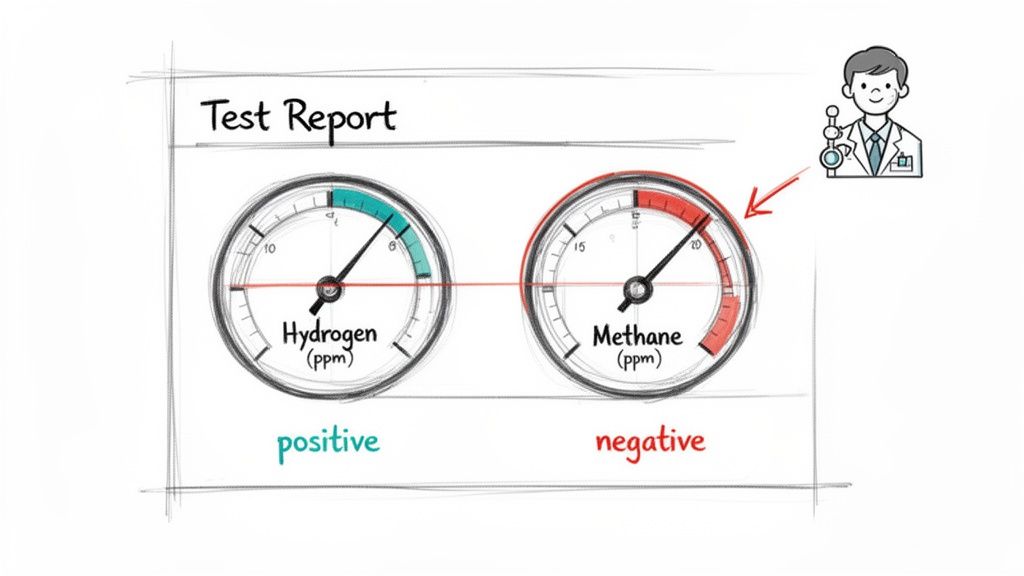
Essentially, the test measures two main gases produced when bacteria ferment the sugary solution you drank: hydrogen (H₂) and methane (CH₄). A significant jump in either of these gases after the drink strongly points towards a bacterial overgrowth in your small intestine.
What Do the Numbers Mean?
The first step is understanding what actually counts as a positive result. Our prescribers follow generally accepted clinical guidelines that define a positive SIBO test based on specific gas thresholds. These aren’t just arbitrary numbers; they represent a rise significant enough to confirm a bacterial imbalance.
A test is typically considered positive if:
- Your hydrogen level rises by 20 parts per million (ppm) or more above your baseline within the first 90 minutes.
- Your methane level hits 10 ppm or higher at any point during the three-hour test.
These thresholds are the clinical standard for diagnosis. They are particularly relevant for conditions common in the UK like functional dyspepsia, where research has shown a high prevalence of SIBO using these exact criteria. If you're interested in the science behind it, you can read the full research on these diagnostic standards.
Hydrogen vs Methane Dominant SIBO
Your results will usually point towards one of two main types of overgrowth. Making this distinction is absolutely vital because it directly shapes your treatment plan.
Pharmacist's Insight: "Think of hydrogen-producing bacteria as fast-moving trouble-makers, often leading to diarrhoea. Methane-producers, or methanogens, are different; they actually consume hydrogen to produce methane. This process slows down gut motility, which is why we almost always see high methane levels linked with chronic constipation. Recognising this difference is the key to creating a targeted treatment plan that actually works."
This is precisely why a one-size-fits-all approach to SIBO rarely succeeds. Someone with hydrogen-dominant SIBO might need a completely different antimicrobial from a person with methane-dominant SIBO, which often requires a combination of treatments to be effective.
Your Next Steps After a Positive Result
Getting a positive result from your SIBO breath test at home isn't the end of the road—it’s the start of your recovery. It's crucial to discuss these findings with a healthcare professional, like one of our prescribers at Courier Pharmacy, who can interpret them in the context of your specific symptoms and medical history.
Your personalised treatment plan might include prescription antimicrobials, targeted dietary changes, or medications to improve gut motility, known as prokinetics. It's worth remembering that SIBO has a high recurrence rate. Because of this, ongoing support is essential to manage the condition long-term and tackle the root cause, which can sometimes be linked to other conditions like inflammatory bowel disease.
Summary
Taking a SIBO breath test at home is a powerful step towards taking control of your digestive health. By carefully following the preparation instructions—especially the strict 24-hour diet and 12-hour fast—you can ensure your results are accurate and reliable. The three-hour test involves collecting breath samples at precise intervals after drinking a sugar solution, measuring the hydrogen and methane gases produced by bacteria in your small intestine. A positive result, interpreted with a healthcare professional, provides the crucial diagnosis needed to create a targeted treatment plan and finally address the root cause of your symptoms.
Frequently Asked Questions (FAQs)
How accurate is an at-home SIBO test?
When you follow the preparation and collection instructions precisely, at-home SIBO breath tests are a very reliable and clinically accepted method for diagnosing bacterial overgrowth. The accuracy hinges on your adherence to the diet, fasting, and medication pauses. At Courier Pharmacy, we use validated laboratories to ensure your results are analysed with the highest precision.
What if I make a mistake during the collection?
A minor mistake, like being a few minutes late on a single sample, is unlikely to invalidate the entire test. Just note the correct time on the tube label. However, a major error during preparation, such as eating food during the 12-hour fast, will almost certainly skew the results and require a re-test. If you make a significant mistake during the 3-hour collection window, like eating or smoking, it's best to contact our team for advice.
What happens after a positive SIBO test?
A positive result is the starting point for your recovery. The next step is to discuss the results with a qualified healthcare professional who can develop a personalised treatment plan. This typically involves specific antimicrobials (like Rifaximin for hydrogen-dominant SIBO or a combination therapy for methane-dominant SIBO), dietary changes like the low FODMAP diet, and sometimes prokinetics to improve gut motility and prevent recurrence.
Can I still test if I have constipation or diarrhoea?
Yes, absolutely. In fact, these symptoms are a key reason to test. The results can help explain why you are experiencing them. Methane-dominant SIBO (also called IMO) is strongly linked with constipation because methane gas slows gut transit, while hydrogen-dominant SIBO is more commonly associated with diarrhoea or mixed bowel habits.
Ready to stop guessing and get real answers about your digestive health? Courier Pharmacy provides a reliable, easy-to-use at-home SIBO breath test, complete with professional support to help you understand your results and plan your next steps.


