Sudafed and Paracetamol: Safe UK Dosing Guide
Can you take Sudafed and paracetamol together? Learn how to check your cold and flu medicines, avoid accidental overdose, and dose safely in the UK.
You can take plain Sudafed, which contains pseudoephedrine only, with paracetamol, but never add extra paracetamol to a combination Sudafed cold and flu product that already contains it. Adults taking 500 mg paracetamol tablets should leave at least four hours between doses and take no more than eight tablets, or 4,000 mg, in 24 hours.
You're probably reaching for relief from a blocked nose, headache, fever, or sinus pressure. The tricky part isn't usually a direct clash between pseudoephedrine and paracetamol. It's choosing the wrong Sudafed box and accidentally taking the same painkiller twice.
This guide shows how to identify your product, calculate your total daily dose, spot situations where pseudoephedrine may be unsafe, and know when to ask a pharmacist or seek urgent help.
- Check the active ingredients: Sudafed products don't all contain the same medicine.
- Count every paracetamol source: Include cold remedies, flu sachets, co-codamol, and painkillers.
- Respect the time gap: Leave at least four hours between relevant doses.
- Screen for risks: High blood pressure, kidney disease, liver problems, and some medicines need extra care.
- Stop and seek help for red flags: Sudden severe headache, confusion, seizures, visual changes, or overdose need urgent attention.
Taking Sudafed and Paracetamol Together Safely
A busy parent might take a Sudafed tablet for a blocked nose, then reach for paracetamol after a headache starts. That combination can be suitable if the Sudafed contains pseudoephedrine only. Plain pseudoephedrine and paracetamol work in different ways, so there's no usual direct interaction between the two ingredients.
The important question is: which Sudafed product do you have? Brand names can look familiar while the ingredients differ. Some products contain pseudoephedrine alone. Others combine pseudoephedrine with paracetamol and may include further cold-and-flu ingredients.
Check the front and back of the box before taking anything else. Look for the words “active ingredients”, “paracetamol”, and “pseudoephedrine hydrochloride”. If you can't identify the ingredients, pause and ask a pharmacist.
Practical rule: Treat the ingredient list, not the brand name, as your safety guide.
For example, Sudafed Decongestant Tablets contain pseudoephedrine only in the UK formulation described in the product information. You may then use paracetamol for pain or fever, provided you follow the paracetamol label and count all other sources.
The rest of this guide focuses on three checks:
- Identify whether your product contains paracetamol.
- Add up your total intake over 24 hours.
- Check whether your health or other medicines make pseudoephedrine unsuitable.
Checking the Active Ingredients in Your Medicine
Many people assume Sudafed is one medicine. It isn't. UK products under the Sudafed name can have different ingredients and strengths, so the same dosing assumption won't work for every box.
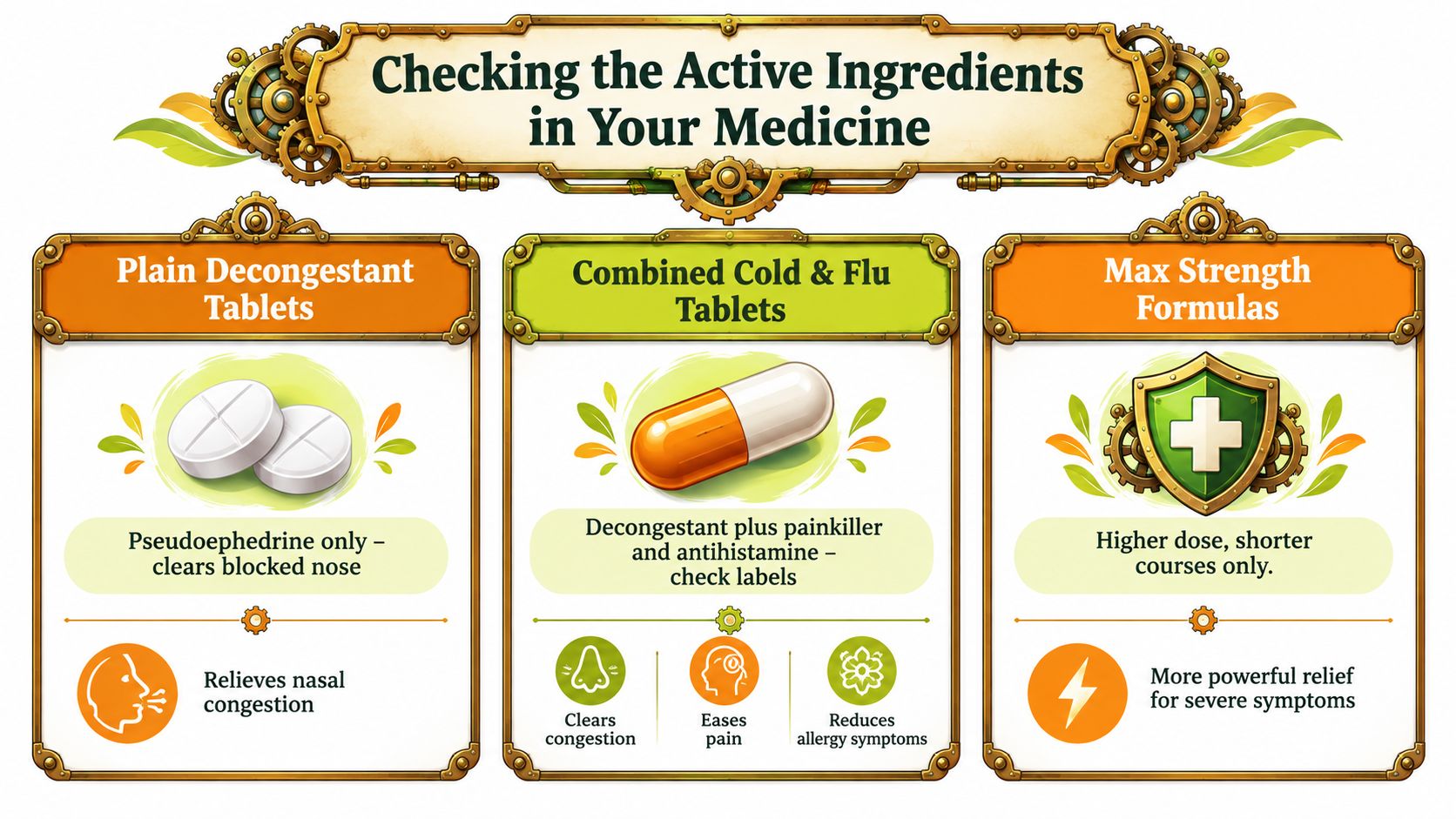
Plain Sudafed Decongestant contains pseudoephedrine hydrochloride at 60 mg per tablet. The product information says adults and children aged 12 years and over should take one tablet every four to six hours, with at least four hours between doses, and no more than four doses in 24 hours. That equals a maximum of 240 mg pseudoephedrine hydrochloride per day from that product. Check the official product information for Sudafed Decongestant Tablets because other products may differ.
By contrast, Sudafed Non-Drowsy Congestion Cold and Flu contains 500 mg paracetamol and 60 mg pseudoephedrine per tablet, according to the UK product information summarised by the Specialist Pharmacy Service. Taking ordinary paracetamol alongside it would duplicate the painkiller.
What to look for on the packet
Turn the box over and find the ingredients panel. Then match it to the type below:
| Product type | What it may contain | Can you add paracetamol? |
|---|---|---|
| Plain decongestant | Pseudoephedrine only | Usually, if suitable for you and you follow both labels |
| Combination cold and flu | Pseudoephedrine plus paracetamol | No extra paracetamol |
| Other cold remedy | May contain paracetamol with another decongestant | Check before combining |
A busy parent grabbing the first box from a supermarket shelf may not notice the difference between “Decongestant” and “Cold and Flu”. The packaging may look similar, but the second product can already provide the day's painkiller.
A shift worker faces another common trap. They take a cold-and-flu tablet before work, then use a separate paracetamol product later because the first dose didn't seem strong enough. The total matters, even if the products came from different packets.
You can find plain paracetamol options, such as paracetamol tablets, but check every cold medicine first. “All-in-one” products often already contain a painkiller.
Daily Dosing Limits and Avoiding Overdose
Paracetamol has a firm ceiling. NHS guidance says adults using 500 mg tablets should take one or two tablets per dose, leave at least four hours between doses, and take no more than eight tablets, or 4,000 mg, in 24 hours. NHS advice also says adults shouldn't normally take it for more than three days without medical advice. See the NHS guidance on paracetamol for adults.
That limit covers your whole day, not one packet. Add paracetamol from combination Sudafed, flu sachets, co-codamol, and other cold remedies.
| Medicine type | Maximum 24-hour limit | Key safety rule |
|---|---|---|
| Plain paracetamol 500 mg tablets | 8 tablets, or 4,000 mg | Leave at least four hours between doses |
| Plain Sudafed Decongestant Tablets | 4 tablets, or 240 mg pseudoephedrine | Leave at least four hours between doses |
| Combination product containing 500 mg paracetamol per tablet | Follow that product's label | Count its paracetamol within your total |
A licensed UK combination product containing 500 mg paracetamol and 30 mg pseudoephedrine specifies two tablets every four to six hours, up to four times daily. That reaches 4,000 mg paracetamol and 240 mg pseudoephedrine in 24 hours, so adding separate paracetamol would exceed the intended limit. The product information also warns about cumulative exposure when people combine products.
A simple counting method
Write down every dose as you take it. Include:
- Combination cold medicine: Count the paracetamol printed in each tablet or sachet.
- Separate painkiller: Add each paracetamol tablet to the same running total.
- Co-codamol: Check the label because co-codamol contains paracetamol.
- Missed dose: Don't double up to “catch up”.
Adults with low body weight, liver disease, malnutrition, chronic alcohol use, or other risk factors may need a lower maximum. Some hospital protocols use 3,000 mg or less for higher-risk patients. Ask a pharmacist or clinician for a personal limit rather than relying on the standard adult maximum.
If you've taken more than the packet directs, seek urgent medical advice even if you feel well. Liver injury can develop before symptoms become clear. A liver function home blood test can't replace urgent assessment after an overdose.
Who Should Avoid Decongestants and Painkillers
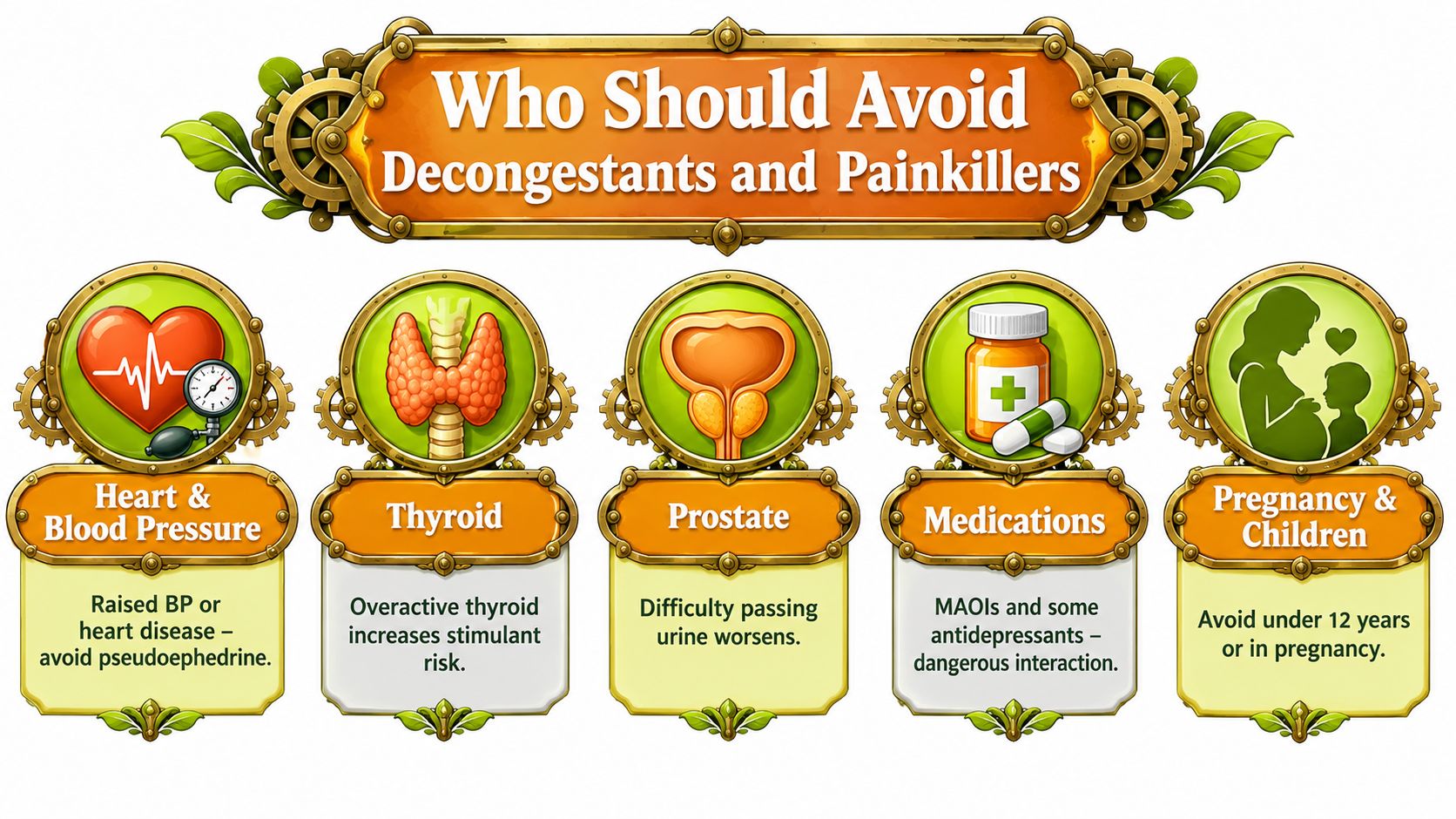
Over-the-counter doesn't mean suitable for everyone. Pseudoephedrine stimulates the body's blood vessels and can increase strain in people with certain heart, blood pressure, or kidney problems.
UK MHRA advice says people with very high or uncontrolled blood pressure should avoid pseudoephedrine. It also advises against use in severe acute or chronic kidney disease or kidney failure. The MHRA safety update on pseudoephedrine explains these key restrictions.
Ask before using pseudoephedrine
Speak to a pharmacist before taking a pseudoephedrine product if you have:
- Blood pressure problems: Especially readings that remain high or are not controlled.
- Heart or circulation disease: A stimulant decongestant may not suit you.
- Kidney disease: Pseudoephedrine leaves the body mainly through the kidneys. Severe kidney impairment is a reason to avoid it, while moderate impairment needs caution.
- Liver disease or low body weight: You may need a lower paracetamol limit.
- Regular alcohol use or poor nutrition: These can increase concern about paracetamol-related liver injury.
- Several medicines: Ask before using cold remedies alongside prescription treatment.
Pseudoephedrine can also interact with some medicines. The product information warns that prolonged regular paracetamol use can increase the effect of warfarin and other coumarin blood thinners, which may raise bleeding risk. Occasional paracetamol doses aren't expected to have a significant effect, but regular use needs advice.
The UK also restricts pharmacy supply of pseudoephedrine. One transaction must not contain more than 720 mg of pseudoephedrine salts without a prescription under Regulation 237 of the Human Medicines Regulations 2012. The legislation on pseudoephedrine supply explains why a pharmacist may ask questions or limit the amount supplied.
Pharmacist's tip: Take a photo of your medicine cupboard labels before a busy cold season. It makes ingredient checks easier when you're tired or caring for someone else.
Recognising Side Effects and Warning Signs
A gym-goer may take pseudoephedrine before heading out, then notice a racing heartbeat or unusual shakiness. That's a reason to stop and ask for advice, not a sign that the medicine is “working harder”.
Pseudoephedrine can cause stimulant-like effects, such as feeling restless, jittery, or having a dry mouth. Paracetamol usually doesn't cause that feeling. If symptoms feel strong, new, or worrying, don't take another dose until you've spoken with a pharmacist or clinician.
Get urgent help for neurological symptoms
The MHRA highlights rare reports of posterior reversible encephalopathy syndrome, known as PRES, and reversible cerebral vasoconstriction syndrome, known as RCVS. These names sound technical, but the warning signs are clear:
- Sudden severe headache
- Nausea or vomiting with severe headache
- Confusion
- A seizure
- Changes in vision
Stop pseudoephedrine and seek urgent medical attention if these symptoms occur. Don't drive yourself if you feel confused, have visual symptoms, or might have a seizure.
Take overdose symptoms seriously
After too much paracetamol, you may feel well at first. That doesn't make the dose safe. Contact urgent medical services if you've exceeded the packet directions, even without pain, nausea, or other symptoms.
Some combination painkillers, such as Solpadeine Max Tablets, also contain paracetamol. Never assume a different brand means a different ingredient.
Pharmacist's tip: Keep the packet with you when asking for help. The strength and ingredient list help the pharmacist or clinician make a safe decision quickly.
Practical Steps for Managing Your Cold Symptoms
Use a short routine each time you reach for a medicine. It works better than trying to remember which colourful box you used yesterday.

Your cold medicine checklist
- Read the active ingredients. Confirm whether Sudafed contains pseudoephedrine alone or includes paracetamol.
- Write down each dose. Record the time and number of tablets.
- Add all paracetamol sources. Check flu sachets, co-codamol, and other pain remedies.
- Keep the dose gap. Leave at least four hours where the product guidance requires it.
- Use short term only. Speak to a pharmacist if congestion, pain, or fever persists or worsens.
- Support your recovery. Rest, drink fluids, and avoid taking extra medicines because symptoms are annoying.
A nasal spray may suit someone who mainly has a blocked nose and wants to avoid an oral combination product. Ask a pharmacist whether Vicks Sinus Micromist Nasal Spray is appropriate for your symptoms and health history.
When to stop self-treating
Speak to a pharmacist or GP if your symptoms continue, your pain worsens, you develop palpitations, or fever doesn't settle. Seek urgent help after an overdose or for severe headache, confusion, seizures, or visual disturbance.
Pharmacist's tip: If you're unsure, take every medicine packet to the pharmacy. A two-minute ingredient check can prevent a serious dosing mistake.
Courier Pharmacy provides access to OTC and prescription treatments through a UK-regulated, GPhC-registered online pharmacy, with medicines reviewed through secure online questionnaires where appropriate. Visit Courier Pharmacy to explore suitable cold symptom treatments and ask for medicine guidance before combining products.
Summary
- Plain Sudafed contains pseudoephedrine only, so it may be used with paracetamol when suitable.
- Some Sudafed cold-and-flu products already contain paracetamol.
- Adults taking 500 mg paracetamol tablets should take no more than eight tablets in 24 hours.
- Leave at least four hours between paracetamol doses.
- Check with a pharmacist if you have high blood pressure, kidney disease, liver problems, or take warfarin.
- Seek urgent help after excess paracetamol or serious neurological symptoms.
FAQs
Can I take Sudafed and paracetamol together?
You can usually take plain Sudafed, containing pseudoephedrine only, with paracetamol. First check the active ingredients because some Sudafed cold-and-flu products already contain paracetamol. Don't add separate paracetamol to those combination products.
How much paracetamol can an adult take with Sudafed?
Adults taking 500 mg paracetamol tablets should take one or two tablets per dose, leave at least four hours between doses, and take no more than eight tablets, or 4,000 mg, in 24 hours. Count paracetamol from every medicine, not just the separate paracetamol packet.
Does Sudafed cold and flu contain paracetamol?
Some UK Sudafed cold-and-flu products contain paracetamol alongside pseudoephedrine. One listed formulation contains 500 mg paracetamol and 60 mg pseudoephedrine per tablet. Check your own packet because Sudafed products vary.
Can I take paracetamol with Sudafed Decongestant Tablets?
Plain Sudafed Decongestant Tablets contain pseudoephedrine only in the UK formulation described in the product information. You may be able to take paracetamol for pain or fever, but follow both labels and check your health conditions first.
Who should avoid pseudoephedrine?
People with very high or uncontrolled hypertension should avoid pseudoephedrine. UK safety advice also warns against it in severe kidney disease or kidney failure. Ask a pharmacist if you have heart disease, kidney problems, or take regular medicines.
What happens if I take too much paracetamol?
You may feel well even when the dose has caused serious liver injury. Seek urgent medical advice if you exceed the packet directions. Don't wait for symptoms to appear.
Can pseudoephedrine cause a severe headache?
Rare but serious neurological reactions have been reported. Stop pseudoephedrine and seek urgent help for a sudden severe headache, confusion, seizure, vomiting with severe headache, or visual disturbance.
Can I take Sudafed with co-codamol?
Check the ingredients before combining them. Co-codamol contains paracetamol, so taking it with a paracetamol-containing Sudafed product can create an unsafe total dose. Ask a pharmacist if you're unsure.
How long can I take paracetamol for a cold?
NHS guidance says adults shouldn't normally take paracetamol for more than three days without medical advice. Speak to a pharmacist or GP if pain or fever continues. Persistent congestion also needs review rather than repeated dose increases.
Suggested visual ideas
- Ingredient comparison card: A side-by-side view of plain pseudoephedrine and combination cold-and-flu products, using bright lime green, pale yellow-green, light grey, and ornate brass plaques. Alt text: “Comparison of plain Sudafed and combination cold-and-flu ingredients.”
- Dose-counting wheel: A painterly steampunk wheel showing how paracetamol from different packets contributes to one daily total. Alt text: “Paracetamol dose-counting guide for combined cold medicines.”
- Pharmacy safety checklist: A brass-framed checklist showing active ingredients, dose times, health conditions, and urgent warning signs. Alt text: “Pharmacist checklist for checking Sudafed and paracetamol safety.”
Internal links to consider
- Sudafed Decongestant Tablets
- Paracetamol Tablets
- Liver Function Home Blood Test
- Vicks Sinus Micromist Nasal Spray
- Solpadeine Max Tablets
Meta description: Sudafed and paracetamol explained for UK adults, including safe dosing, ingredient checks, overdose risks, health warnings, and when to seek urgent help.
Byline: By the Medical Mojo editorial team
Clinical review: Clinically reviewed by a UK-registered pharmacist
How this content was created: This article uses UK NHS, MHRA, medicines product information, Specialist Pharmacy Service, and UK legislation sources. The dosing and safety points were checked against the cited documents, then edited for clear, practical patient guidance.
References
- NHS. (n.d.) Paracetamol for adults. Accessed 9 October 2026.
- Electronic Medicines Compendium. (n.d.) Sudafed Decongestant Tablets patient information. Accessed 9 October 2026.
- Specialist Pharmacy Service. (n.d.) Sudafed Non-Drowsy Congestion Cold and Flu Tablets. Accessed 9 October 2026.
- Medicines.org.uk. (n.d.) Product information for a pseudoephedrine and paracetamol combination. Accessed 9 October 2026.
- MHRA. (n.d.) Update on the safety review of medicines containing pseudoephedrine. Accessed 9 October 2026.
- UK Government. (2012) Human Medicines Regulations 2012, Regulation 237. Accessed 9 October 2026.
- NHS. (n.d.) Pseudoephedrine. Accessed 9 October 2026.
Disclaimer: This article is for general information only. It isn't a substitute for advice from a pharmacist, GP, or other qualified healthcare professional.


