Sugar Free Syrups: What They Are and How to Choose
Sugar free syrups explained: what counts as sugar-free, how sweeteners compare, and when to check with a pharmacist before using them.

Does taking sugar out of a syrup make it a healthy choice? Sugar-free syrups can help you cut sugar, but the label alone cannot tell you whether a product suits your gut, health condition or medicines. The sweetener, serving size and what you add it to all matter.
A coffee flavouring and a liquid medicine can both carry a sugar-free label, but the choice calls for different checks. The ingredients may affect your gut, and a change to a prescribed liquid medicine should be discussed with a pharmacist.
Five key takeaways
- Check the whole label: Sugar-free doesn't mean calorie-free or carbohydrate-free.
- Know your sweetener: Polyols and high-intensity sweeteners behave differently.
- Listen to your gut: Bloating or loose stools may follow polyol intake.
- Match your health needs: Diabetes and PKU need specific checks.
- Treat medicines separately: Ask a pharmacist before changing a prescribed liquid.
What sugar-free syrups are and what the label means
A sugar-free syrup is a liquid flavouring used in coffee, tea, cocktails or food that meets a strict sugar limit. Under the nutrition and health claims regulation, it must contain no more than 0.5 g of sugars per 100 ml or 100 g. [1]
That test counts all sugars, not just spoonfuls added during manufacture. Fruit concentrates and botanical flavourings can contribute sugars too. A recipe without added table sugar doesn't automatically meet the claim.
The setting may look familiar, but the bottle still needs checking.

What replaces the sugar?
Manufacturers use two broad sweetener families:
- Polyols: Also called sugar alcohols. Examples include sorbitol, maltitol, xylitol and erythritol.
- High-intensity sweeteners: These provide strong sweetness in small amounts. Examples include sucralose, stevia-based sweeteners and aspartame.
Some polyols supply energy, so sugar-free and low-calorie aren't interchangeable. Think of the claim like a no-added-salt label on a ready meal. It tells you something useful, but it doesn't describe the whole meal.
Two everyday choices
A busy parent adds flavoured syrup to a child's hot chocolate. Removing sugar from the syrup doesn't change the sugar already present in the chocolate mix.
A gym-goer stirs syrup into a protein shake. The key question may be gut comfort rather than sugar alone.
Medicine bottles need a different check again. A sugar-free cough syrup is a medicine, not a flavouring for drinks. Its purpose, dose and suitability come first.
Ask three questions before choosing: Which sweetener is in it? How much will I use? Does it suit my body?
Sugar substitutes compared at a glance
Common sugar substitutes compared
| Sweetener | Type | Energy (kcal per gram) | Laxative risk at high intake | Practical note |
|---|---|---|---|---|
| Erythritol | Polyol | Close to zero | Gut symptoms remain possible | Can give a cooling taste |
| Xylitol | Polyol | Supplies energy; check the product declaration | Possible | Toxic to dogs; may help reduce tooth decay |
| Sorbitol | Polyol | Supplies energy; check the product declaration | Possible | Check for the added-polyol warning |
| Sucralose | High-intensity | Negligible in the amounts used | Not the same polyol laxative effect | Check that the finished syrup suits baking |
| Stevia | High-intensity, plant-derived | Negligible in the amounts used | Not the same polyol laxative effect | Some products have a liquorice-like aftertaste |
| Aspartame | High-intensity | Used in tiny amounts; check the finished product | Not the same polyol laxative effect | Contains phenylalanine; doesn't suit every heated recipe |
The energy column deliberately avoids treating every bottle as pure sweetener. A syrup can contain blends, carriers and other ingredients. The finished product's nutrition declaration gives the useful calorie figure, not the name of its main sweetener alone.
Sweetness doesn't tell you serving size
High-intensity sweeteners taste much sweeter than sugar. Manufacturers therefore use small amounts, often alongside ingredients that add body or improve the flavour.
Polyols can contribute bulk and texture as well as sweetness. That can help a syrup feel more like a traditional sugar syrup. However, those same ingredients deserve closer attention if your gut is sensitive.
A bottle labelled stevia, for example, may also contain a polyol. Don't assume that a prominent ingredient on the front is the only sweetener inside.
What the warning means
The UK sweetener regulations require foods containing more than 10% added polyols to carry the warning “excessive consumption may produce laxative effects”. [2] That warning describes a real effect, not a fault with the bottle.
Pharmacist's tip: Choose a syrup for its full ingredient list, not the sweetener pictured on the front.
For someone who reacts to polyols, a product sweetened without them may be a better starting point. It still isn't a promise of perfect tolerance. Flavourings, serving size and the rest of the drink can also affect how you feel.
For baking, use a product with clear cooking directions. A coffee syrup doesn't necessarily replace sugar's bulk, browning or texture in a cake.
Which health conditions change your sweetener choice
For diabetes, check total carbohydrate per serving, not just the sugars line. Polyols generally affect blood glucose less than sugar, but they can still contribute carbohydrate.
The NHS guide to sweetener safety explains that approved sweeteners undergo safety checks and can offer an alternative to sugar. [3] That doesn't make every sweetened product nutritionally equal.
Conditions that change the sweetener check
| Condition | Main concern | What to check |
|---|---|---|
| Diabetes | Carbohydrate and blood glucose response | Carbohydrate per serving; agree regular use with your diabetes team |
| Phenylketonuria, or PKU | Phenylalanine from aspartame | Avoid aspartame; look for “contains a source of phenylalanine” |
| Tooth decay risk | Sugars that feed decay-causing bacteria | Choose a non-sugar sweetener; xylitol may help, but keep brushing with fluoride toothpaste |
| Weight management | Total energy across the day | Energy per serving and what the syrup replaces |
Diabetes and weight management
Don't let a diabetes-friendly marketing message replace a nutrition check. A product can contain little sugar while still adding calories through other ingredients.
Say a shift worker replaces a sugary coffee syrup but keeps the same milk and toppings. That swap can reduce sugar from the syrup. Adding a larger topping because the drink now feels healthier may cancel part of the intended benefit.
Pharmacist's tip: If you take diabetes medicines, bring the label to a pharmacist or your diabetes team. Ask how the planned change fits your usual meals and glucose monitoring. Don't change your medicine dose yourself.
PKU and dental care
People with PKU need to avoid aspartame because it supplies phenylalanine. Follow your specialist team's advice rather than judging a product by its sugar claim.
For teeth, replacing sugar with a non-sugar sweetener can help reduce exposure to sugars that feed decay-causing bacteria. However, syrup isn't dental care. Keep brushing with fluoride toothpaste, and don't assume every sugar-free drink is tooth-friendly in every respect.
Weight management needs the same whole-picture approach. A syrup is useful when it replaces something you want to reduce, not because it adds sweetness without sugar.
Gut effects, polyols and IBS
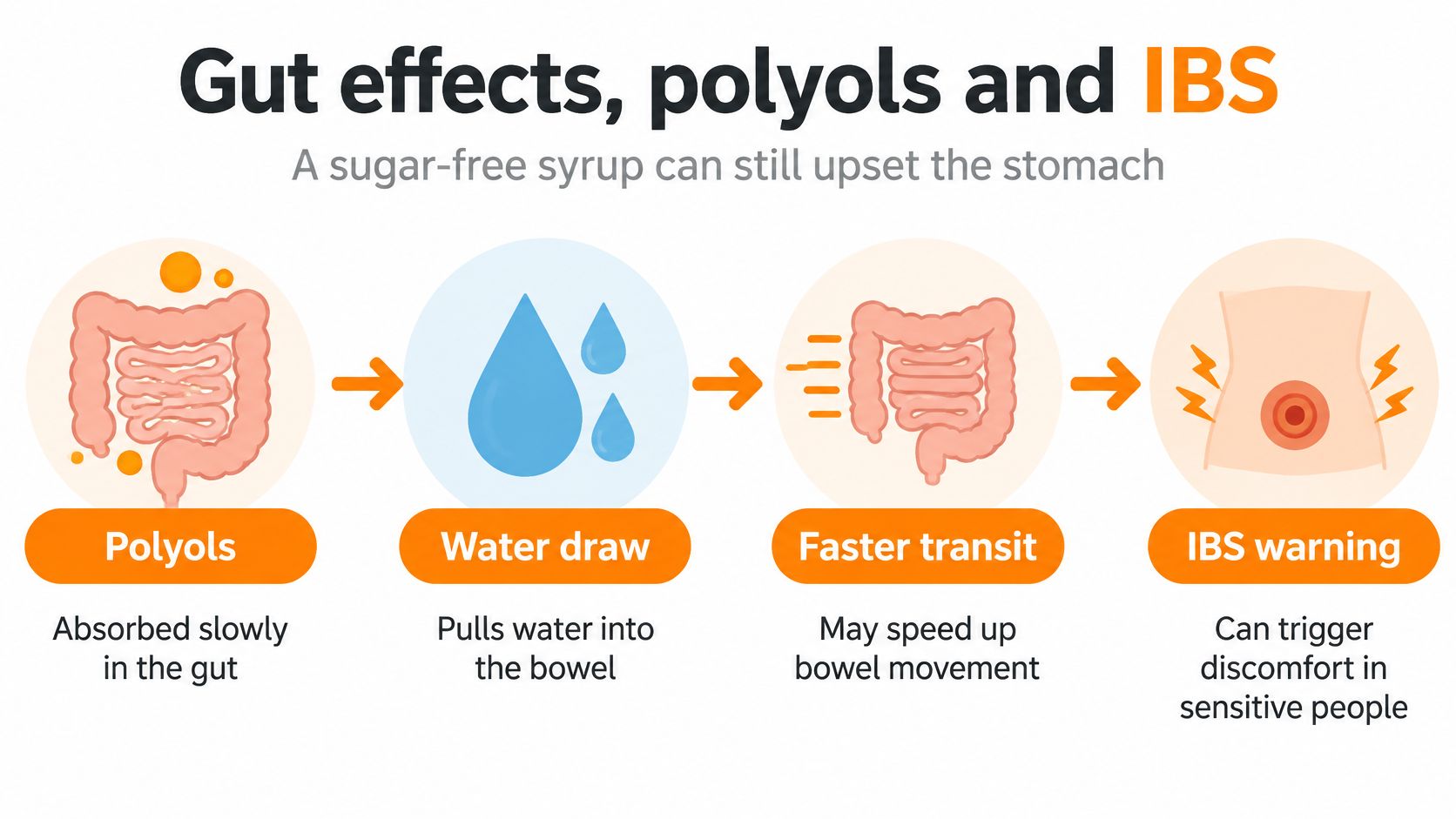
A sugar-free syrup can still upset your stomach. Polyols may not fully absorb in the small bowel. The unabsorbed portion draws water into the bowel and can contribute to wind, bloating and loose stools.
This illustration shows the basic sequence.
Why IBS changes the choice
Cambridge University Hospitals' low-FODMAP guidance identifies polyols as FODMAPs, carbohydrates that can trigger symptoms in sensitive people. Some sugar-free foods may need to be avoided during a supervised elimination phase. [4]
That doesn't mean everyone with IBS must avoid every sweetener. Nor does bloating after a syrup prove IBS or small intestinal bacterial overgrowth. For support with irritable bowel syndrome, discuss your symptoms rather than starting a broad exclusion diet yourself.
Consider a gym-goer who adds polyol-sweetened syrup to several daily shakes. They later notice bloating. Reducing the syrup or trying a non-polyol option may help identify a trigger, but the shakes' other ingredients also need checking.
A cautious way to assess tolerance
For an adult trying a food syrup, not a medicine:
- Start small: Use less than the suggested serving, rather than pouring freely.
- Keep a short note of the amount, other foods and symptoms.
- Change one thing: Don't swap your syrup, protein powder and milk together.
- Stop if symptoms appear. Ask for advice if they persist or return.
Don't use a fixed teaspoon trial for every concentrate. Strengths differ, and a food experiment must never replace medicine dosing directions.
Gut comfort matters: You don't need to push through diarrhoea to gain the benefit of cutting sugar.
For anyone watching the accompanying video, use the label and your clinical advice to guide personal decisions.
Contact a GP or NHS 111 for severe pain, blood in your stool, persistent diarrhoea or signs of dehydration. Seek dietetic advice before a long elimination diet.
Can you use sugar-free syrup every day?
For most adults, modest use can fit into a balanced diet. The useful question is what the syrup replaces and how much you use, not whether daily use earns a simple yes or no.
Safety assessments of approved sweeteners don't mean every finished syrup offers a health benefit. Equally, finding a sweetener in someone's body doesn't by itself prove harm. Exposure, dose and clinical outcomes are different questions.
Make the swap useful
A commuter who replaces a sugary coffee flavouring has made a clear substitution. Someone who adds syrup to coffee, yoghurt and already-sweetened shakes has made a different change.
You don't need to select a single sweetener to avoid all others. That isn't a proven safety rule. Instead, notice how often sweetened products appear and whether you actually want each one.
- Keep a simple list: Include squash, gum, sweets, shakes and syrups.
- Measure your pour: A measuring spoon gives better control than a long squeeze.
- Use the least you enjoy: Don't increase sweetness just because sugar is absent.
- Review the purpose: Keep the swap if it helps your goal and feels comfortable.
What remains uncertain?
A legal nutrition claim can't tell you the long-term effect of your whole diet. It also can't predict your personal response to a sweetener blend.
Be cautious about dramatic claims in either direction. Sugar-free syrup isn't a treatment for diabetes, a guaranteed weight-loss aid or proof of a harmful diet.
If you rely on it heavily, try reducing the amount gradually and see whether you still enjoy the drink. Water and unsweetened drinks remain straightforward options too.
Pharmacist's tip: If symptoms began after a new daily habit, take the bottle or a clear label photo to your appointment. The ingredient list is more useful than the flavour name.
How to read a sugar-free syrup label
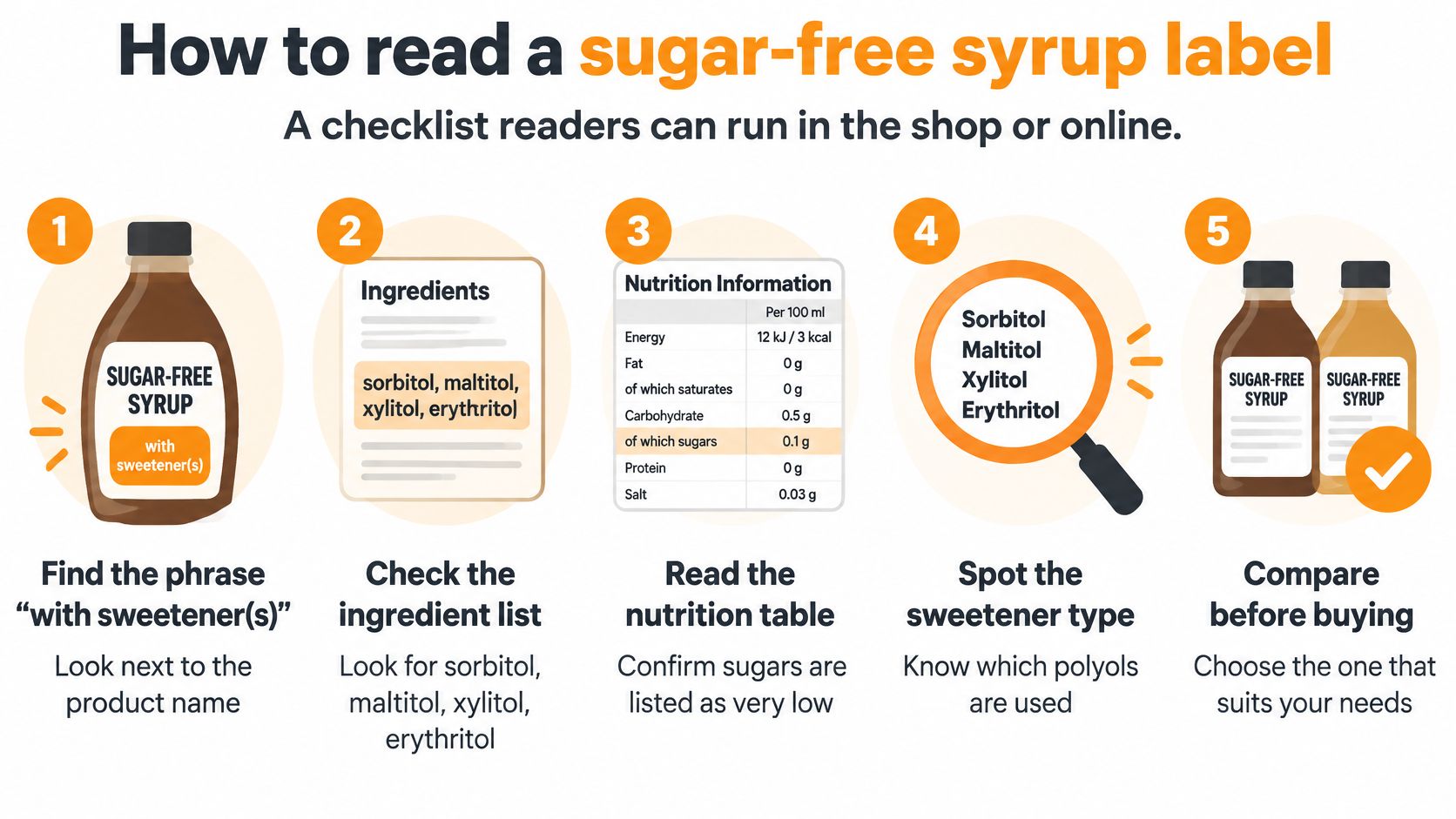
Start with the product name, then turn the bottle around. In Great Britain, government food-information guidance requires “with sweetener(s)” beside the name, or “with sugar(s) and sweetener(s)” when both are present. [5]
Use this visual as a shop-floor reminder.
Your bottle check
- Read the claim: Sugar-free and no added sugar aren't interchangeable. Zero sugar wording doesn't remove the need to check the declaration.
- Find the sweeteners in the ingredients. Look beyond the ingredient promoted on the front.
- Check warnings: Read any phenylalanine information, polyol warning and other relevant statements.
- Compare nutrition on the same basis, then calculate what your actual serving supplies.
- Check preparation: Note dilution, storage and use-after-opening directions.
- For medicines, read the patient leaflet and prescribed dose rather than food-syrup advice.
Government food-standards guidance requires accurate, non-misleading food information. [6] Front-of-pack wording should therefore be a starting point, not the whole buying decision.
A two-bottle example
A busy parent compares syrups for hot chocolate. One contains sorbitol and suggests a generous pour. The other contains sucralose and gives a clearly measured small serving.
The second may be easier to portion, but it isn't automatically better for every child. The parent still needs to check suitability, the full ingredients and the drink's other components. They could also choose less syrup or none.
Food and medicine labels need different handling. A sugar-free melatonin oral solution still requires a clinical suitability check and medicine-specific directions.
Before buying: Check the sweetener, the serving and the claim. Choose for your health needs, not the most reassuring front label.
Sugar-free medicines and compounding options
Liquid medicines often need ingredients that mask a bitter taste. These can include sugar, sorbitol or other sweeteners.
A sugar-free version may suit a person's dental or diabetes needs. However, don't swap prescribed liquids without a pharmacist check. Products can differ in strength, ingredients and measuring instructions.
The medicine cabinet needs its own checks.

Check the whole formulation
A pharmacist can review the active medicine and the other ingredients, called excipients. Polyol-containing medicines may contribute to loose stools, especially when someone uses other polyol-containing products too.
- Measure accurately: Use the supplied oral syringe or medicine measure, not a kitchen spoon.
- Keep medicines secure: Store them away from children and pets. Xylitol is toxic to dogs.
- Report reactions: Give the pharmacist the product name and details of what happened.
When a bespoke liquid may help
Compounding means preparing a medicine to meet a particular patient's need. For example, a carer might ask about removing a poorly tolerated dye or sweetener when no suitable licensed liquid exists.
A UK compounding pharmacy needs to assess whether that change is appropriate. A bespoke medicine isn't automatically safer or better. A suitable licensed product remains the first choice.
Seek prompt advice for a new rash after a switch. Call 999 for breathing difficulty, collapse, or swelling of the tongue or throat. Don't wait for an online reply.
Confirm the right syrup before you buy or use it
What do you need the syrup to do? Reducing sugar, avoiding gut symptoms and choosing a suitable liquid medicine call for different checks.
Keeping free sugar intake low can be helpful, but a sugar-free label does not tell you everything about a product. The sweetener blend, serving size and your own tolerance all matter.
Summary
Sugar-free describes sugar content, not overall health.
Check the sweetener blend and serving size.
Your gut may tolerate one product better than another.
Health conditions can affect which option suits you.
Ask a pharmacist before switching liquid medicines.
FAQs
Are sugar-free syrups calorie-free?
Not always. Check the energy declaration and consider how much syrup you use.
Can people with diabetes use them?
Often, but check the full carbohydrate content. If you're unsure about regular use, ask your diabetes team.
Are they safe for IBS?
No syrup can guarantee freedom from symptoms. Check for polyols, and discuss ongoing symptoms with a clinician or dietitian.
Is stevia always better than sucralose?
No. Your needs, the full formulation and your personal tolerance matter more than whether a sweetener is plant-derived.
Can children have sugar-free syrup?
Check that the product is suitable for the child, and avoid making sweet drinks the default. For liquid medicines, follow the child-specific directions and ask a pharmacist if you're unsure.
Can I replace a medicine with a sugar-free version?
Check with a pharmacist first. The strength, dose and other ingredients must suit you, and similarly named liquids are not necessarily interchangeable.
Make your decision
- Name your goal: less sugar, gut comfort, dental care or a medicine need.
- Check whether the ingredients suit your health needs.
- Check before using: read the label and measure the serving.
- Ask a pharmacist, GP or dietitian before changing treatment or following a diet for a health condition.
Through our online pharmacy service, patients can complete a questionnaire for prescriber review. If a licensed medicine does not meet a clinical need, customers can select from an existing formulary of compounded medicines. If nothing suits, the compounding pharmacists can design a formulation.
For help choosing or checking a liquid medicine, contact Courier Pharmacy. This information is not a substitute for advice from a healthcare professional.


