Tension Headache Relief That Works Fast and Lasts
Get tension headache relief fast with evidence-based self-care, OTC options and prevention tips. Learn when to seek help and how to stop headaches returning.
A busy parent reaches mid-afternoon with a tight band of pain across the forehead. A shift worker notices the neck and shoulders have stiffened after hours in one position. Tension headache relief often starts with simple steps, such as relaxing tight muscles, drinking water, taking a screen break, and choosing a suitable over-the-counter medicine.
This guide explains what to do in the next 30 minutes, how to make a safe same-day medicine choice, and how to reduce repeat headaches over the following 4 weeks. It also covers medication-overuse headache, practical trigger tracking, and when a headache needs medical help.
Introduction to tension headache relief
A tension headache usually feels like steady pressure or tightness around the head. It often affects both sides and may come with sore neck or shoulder muscles, rather than the throbbing pain many people associate with migraine. NHS guidance lists simple painkillers, exercise, yoga, massage, better sleep habits, heat or cold packs, and a low, firm pillow among helpful options.1
Featured answer: Tension headache relief means easing current pain while reducing the muscle tension, stress, posture strain, and medicine overuse that can keep headaches returning.
Tension headaches affect many UK adults. A British consumer survey reported in 2023 found that 41% of respondents, equivalent to more than 20 million UK adults, said they'd had a tension headache in the past month.2 An NHS-linked local resource says around half of adults experience tension-type headaches at least monthly, while about 1 in 30 adults experience chronic tension-type headache.2
Five useful points stand out:
- Start without medicine: Relax your neck, shoulders, breathing, eyes, and posture.
- Choose painkillers carefully: Paracetamol, aspirin, or an NSAID may suit different people.
- Avoid opioids: NICE advises against opioids for tension-type headache.3
- Track patterns: Stress, poor sleep, missed meals, caffeine, screens, and posture can all matter.
- Watch frequency: Regular painkiller use can cause medication-overuse headache.
For more general guidance about managing pain, see this UK pain conditions resource. A pharmacist can also check whether a medicine fits your other conditions and treatments.
Fast self care moves for immediate relief
Try this 30-minute tension headache relief routine before reaching for a medicine. It works best when you act at the first sign of pressure, tightness, or neck strain.
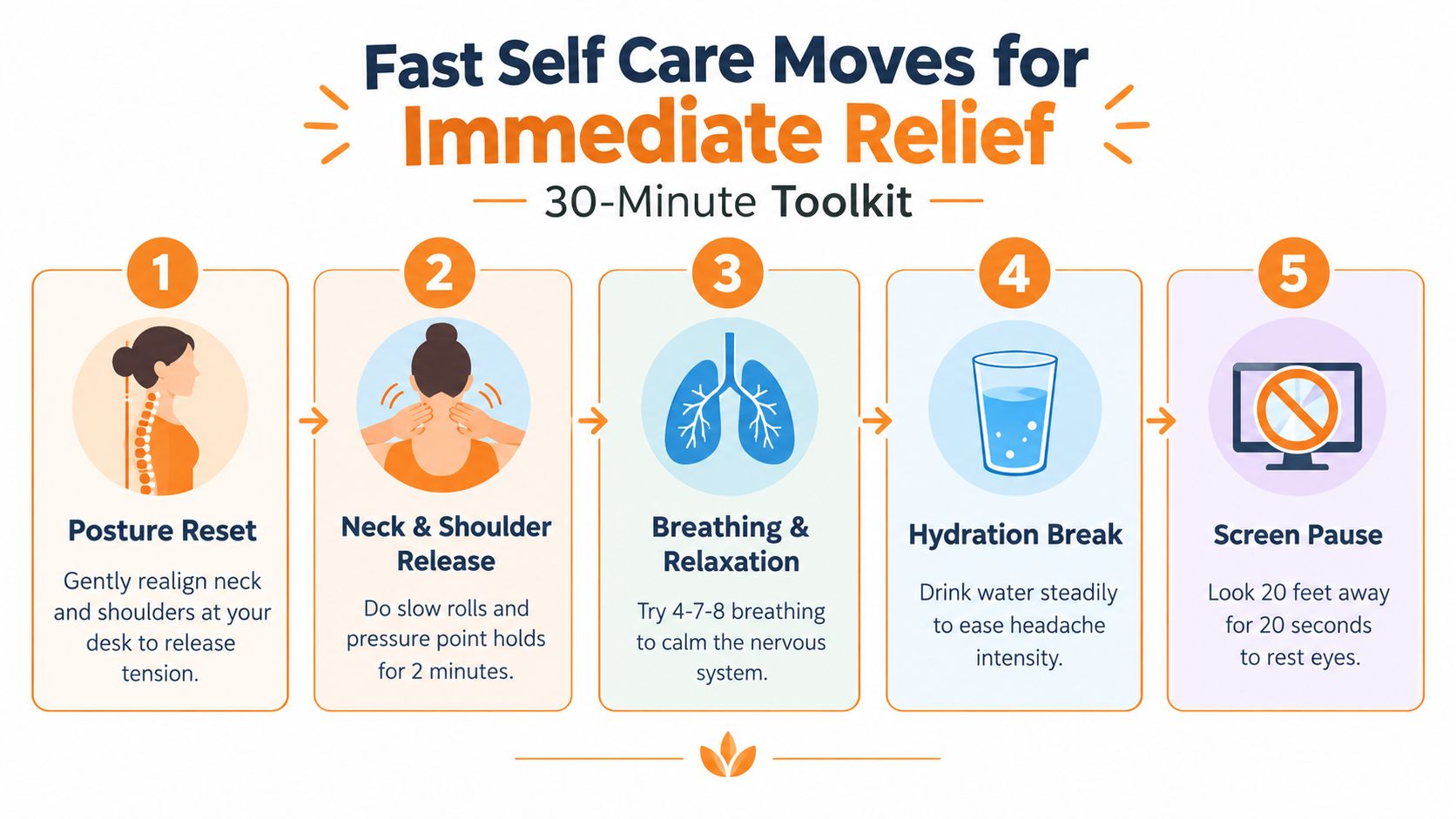
Minutes 0 to 5, reset your position
Put both feet on the floor. Let your shoulders drop, and bring your screen closer to eye level if you're working. Keep your chin level rather than pushing your head forwards.
Avoid forcing your neck into a stretch. A gentle reset should feel comfortable. If movement causes sharp pain, weakness, dizziness, or tingling, stop and seek advice.
Minutes 5 to 10, release the neck and shoulders
Roll your shoulders slowly backwards. Then try gentle neck movements within a comfortable range. You can also massage the muscles beside the neck, across the shoulders, or at the temples.
A gym-goer may notice this after lifting weights with shrugged shoulders. A slow cool-down, relaxed shoulders, and gentle movement may help more than sitting rigidly still.
Minutes 10 to 15, slow your breathing
Sit somewhere calm. Breathe in gently, then breathe out more slowly. Repeat for several minutes without trying to force a deep breath.
Relax your jaw as well. Many people clench their teeth during concentration or stress, which can add strain around the temples and face.
Pharmacist's tip: Don't turn a headache into a test of endurance. Pause intense activity, but keep gentle movement if it feels comfortable.
Minutes 15 to 25, use heat or cold
If your neck feels tight, try a heat pack. If warmth feels unpleasant, use a cold pack wrapped in fabric instead. NHS advice also mentions heat or cold packs and a low, firm pillow when neck pain contributes to headache.1
An office worker who's spent hours on a laptop might combine a warm pack with relaxed shoulder movements. Keep the pack comfortable, and don't place very hot or very cold material directly against the skin.
Minutes 25 to 30, hydrate and rest your eyes
Drink water steadily rather than gulping it. Move away from the screen and rest your eyes in a quieter space. Look into the distance and allow your facial muscles to soften.
If the pain eases, return to activity gradually. The 4head Headache Stick is a tablet-free topical option described for use on the forehead, temples, or back of the neck. Read its product information and ask a pharmacist if you're unsure whether it suits you.
Using painkillers safely and when to ask a prescriber
For an adult with a typical tension-type headache, NICE recommends aspirin, paracetamol, or an NSAID, chosen with other health conditions and side-effect risks in mind.3 The right first choice depends on you, not just the pain.
Featured answer: There isn't one painkiller that suits everyone. A pharmacist can help you choose between paracetamol, aspirin, and an NSAID after checking your health and medicines.
| Medicine | Best for | Key safety notes |
|---|---|---|
| Paracetamol | People who need a simple painkiller and may not suit an anti-inflammatory medicine | Check other products, especially cold and flu remedies, so you don't accidentally take paracetamol twice. |
| Ibuprofen, an NSAID | People who may benefit from an anti-inflammatory painkiller | Ask a pharmacist first if you have stomach, kidney, heart, blood pressure, or asthma concerns, or take regular medicines. Take it only as the label advises. |
| Aspirin | Some adults who can safely take it | Avoid it in under-16s because of the risk of Reye's syndrome. Ask about stomach bleeding risk and medicine interactions. |
Use the packet directions for the dose and timing. Don't take doses closer together because the pain feels stubborn. If you're pregnant, have a long-term condition, take blood thinners, or use several medicines, ask a pharmacist before choosing an NSAID or aspirin.
Why opioids aren't a good escalation
NICE explicitly advises against opioids for tension-type headache.3 Opioids can bring risks without solving the trigger behind recurring head pain. Combination products containing codeine also need particular care because frequent use can contribute to medication-overuse headache.
Pharmacist's tip: Check the active ingredients, not just the brand name. Two different products may contain the same painkiller.
Don't combine medicines unless a healthcare professional or the product information says it's suitable. If a headache keeps returning, or you need pain relief often, ask a pharmacist or prescriber rather than just adding another product. For information about another anti-inflammatory medicine, see what naproxen is, but don't start it for headaches without suitable advice.
Pharmacist's tip: Tell the pharmacist how many headache days you have, which medicines you take, and how often you take them. That pattern can matter more than one difficult episode.
Finding and managing your personal triggers
Relief becomes more lasting when you find what happens before the pain. Common triggers include stress, poor sleep, dehydration, skipped meals, caffeine changes, long screen sessions, and a fixed or strained posture. NHS self-care advice also highlights exercise, yoga, massage, sleep habits, and practical neck support.1
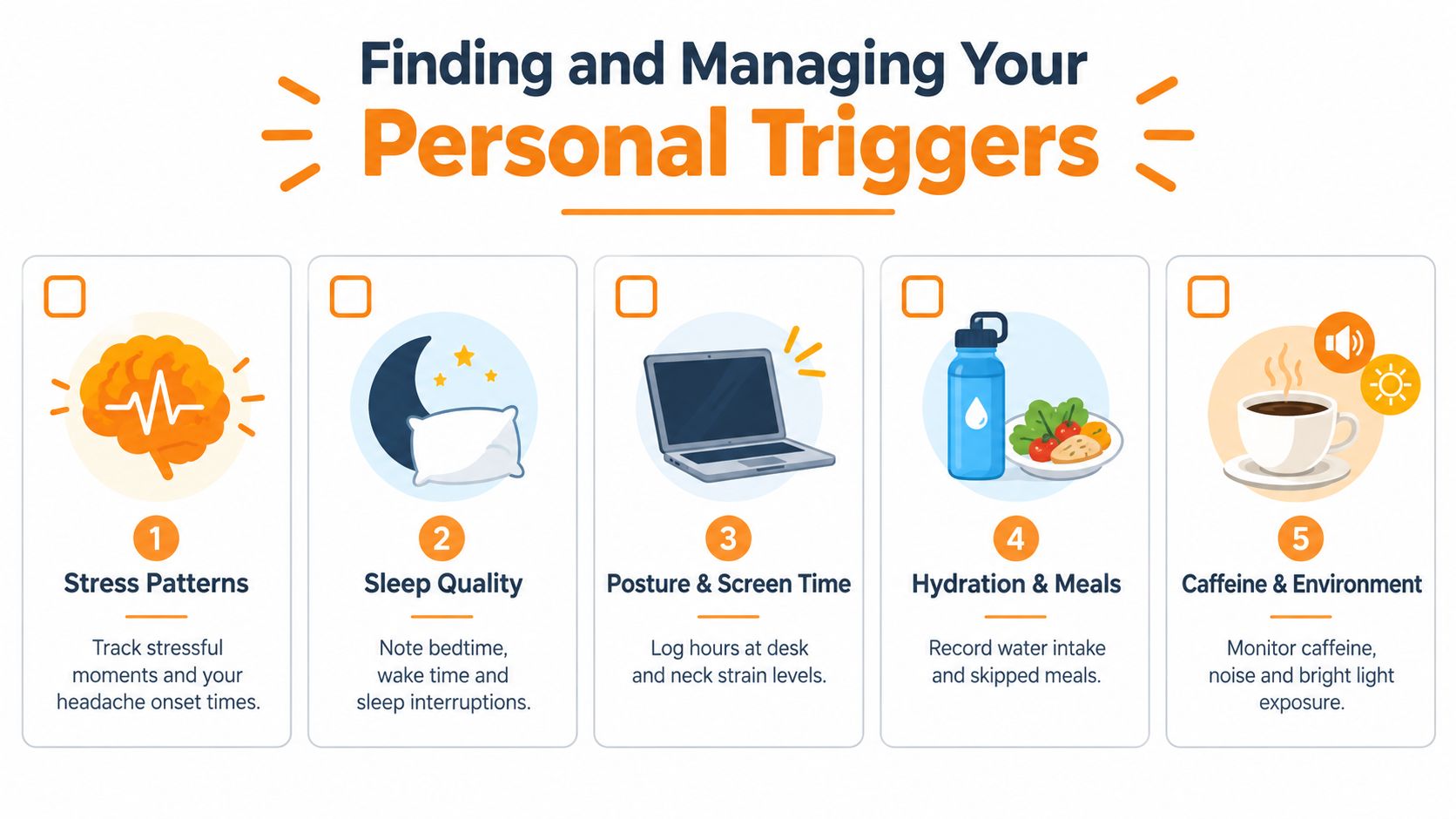
Keep a simple 7-day diary
You don't need a complicated app. Use a notebook or phone note and record:
- Time and pain: Note when the headache starts and how it feels.
- Sleep: Record bedtime, waking time, and broken sleep.
- Food and drink: Mark skipped meals, water intake, and caffeine.
- Body position: Write down desk time, driving, lifting, or neck strain.
- Environment: Note bright light, noise, heat, and stressful events.
- Medicines: Record the product, time, and whether it helped.
Look for repeated links rather than blaming one event. A shift worker might spot headaches after night work and broken sleep. A parent might notice pain after missed meals, rushing, and prolonged phone use.
Make one swap at a time
Changing everything at once makes it hard to know what helped. Try a regular meal pattern first. Then add short movement breaks, steady hydration, or a calmer bedtime routine.
Caffeine deserves a measured approach. Sudden changes can affect headaches, so discuss a gradual plan with a pharmacist if caffeine seems linked to your symptoms. Don't use extra caffeine as your main treatment.
Pharmacist's tip: Take the diary to a GP or pharmacist if headaches continue. It helps them see frequency, triggers, medicine use, and changes in the pattern.
For related sleep support, visit this sleep conditions guide. It may help you connect poor sleep with daytime tension without assuming sleep is the only cause.
Everyday habits that prevent tension headaches
Prevention works through repetition. One relaxed shoulder at a time may sound modest, but daily habits can reduce the strain that builds during work, travel, exercise, and family life.
Start with the habits that fit your routine:
- Protect sleep: Keep a steady sleep pattern where possible. Make the final part of the evening calmer and less screen-heavy.
- Move gently: Add walking, regular stretching, yoga, or another activity you enjoy. Stop if movement causes concerning symptoms.
- Set up your desk: Keep your screen at a comfortable height. Support your feet and avoid holding your neck in one fixed position.
- Support your neck: NHS advice includes a low, firm pillow. Choose comfort rather than a very high or soft pillow.1
- Release stress: Use short breathing breaks, relaxation activities, or a quiet pause before tension becomes pain.

Build a small weekly tracker
Make a simple grid with sleep, movement, screen breaks, meals, and headache days. Tick what you manage, but don't treat it as a pass-or-fail test. The useful information comes from noticing which habits change your comfort.
A desk-based worker might stand during phone calls and relax their shoulders between tasks. A gym-goer could add gentle neck care after training rather than stretching aggressively through pain.
Pharmacist's tip: Consistency matters more than intensity. Choose a habit you can repeat on busy days.
When acupuncture may fit
For chronic tension-type headache, NICE recommends up to 10 acupuncture sessions over 5 to 8 weeks.3 This sits within a planned preventive approach. It isn't a reason to escalate painkillers on your own.
Ask a GP or other suitable clinician whether acupuncture fits your diagnosis and circumstances. A clinician should also review frequent headaches, medicine use, and symptoms that don't match your usual pattern.
When painkillers make headaches worse and when to seek help
More tablets don't always mean more relief. NICE says clinicians should suspect medication-overuse headache when headaches worsen while someone has used triptans, opioids, ergot medicines, or combination analgesics on 10 days per month or more, or paracetamol, aspirin, or an NSAID on 15 days per month or more, for at least three months.4
The headache may feel like your usual pain, but it can become more frequent or harder to control. NHS-linked guidance also stresses limiting analgesia, with one headache pathway using a maximum of 10 days per month as a practical safety rule.5
If overuse may be present, NICE advises stopping the analgesic and reassessing the headache after about 4 weeks. Symptoms may temporarily worsen, so plan this with a clinician or pharmacist rather than making a risky change alone.4
Get urgent help for warning signs
Seek urgent medical assessment for a sudden, extremely severe headache, or a headache after a head injury. Get prompt help if pain comes with weakness, numbness, trouble speaking, confusion, fainting, fever, repeated vomiting, or new vision problems.
Book a GP or pharmacist review if headaches are changing, becoming more frequent, disrupting daily life, or needing regular painkillers. If symptoms feel more like migraine, use this migraine conditions guide for context, but ask a clinician if you're unsure.
In summary:
- Start gently: Reset posture, relax muscles, breathe slowly, hydrate, and rest your eyes.
- Choose carefully: Paracetamol, aspirin, or an NSAID may suit different adults.
- Don't use opioids: NICE advises against them for tension-type headache.
- Track patterns: Sleep, stress, meals, caffeine, screens, and posture can all matter.
- Watch medicine days: Frequent use can worsen headaches.
- Ask for help: New, severe, changing, or unusual symptoms need assessment.
FAQs
What is the fastest tension headache relief?
Start with a posture reset, gentle neck and shoulder movement, slow breathing, water, and a screen break. Heat or cold may help if neck muscles feel tight. If you need medicine, ask a pharmacist which option fits your health and current treatments.
Is a tension headache serious?
Most typical tension headaches aren't caused by a serious problem. However, sudden severe pain, neurological symptoms, fever, head injury, or a major change in pattern needs prompt medical assessment.
Should I take paracetamol or ibuprofen?
Either may help, but neither suits everyone. Paracetamol may be unsuitable if you're already taking another product containing it, while ibuprofen needs extra care with some stomach, kidney, heart, blood pressure, asthma, pregnancy, and medicine concerns.
Can dehydration cause a tension headache?
Not drinking enough can contribute to headache symptoms. Sip water regularly and consider whether missed meals, heat, exercise, or a busy shift came before the pain. Persistent headaches still need a proper review.
Can posture cause tension headaches?
A fixed or strained posture can tighten the neck and shoulder muscles. Raise your screen, relax your shoulders, support your feet, and take regular movement breaks. Stop stretches that cause sharp pain, weakness, tingling, or dizziness.
How often can I take painkillers for headaches?
NICE warns about medication overuse with paracetamol, aspirin, or NSAIDs on 15 days per month or more, and with triptans, opioids, ergot medicines, or combination analgesics on 10 days per month or more for at least three months.4 Ask a pharmacist if you're using headache medicines regularly.
Can acupuncture help chronic tension headaches?
NICE recommends up to 10 acupuncture sessions over 5 to 8 weeks for chronic tension-type headache.3 Discuss this with a suitable clinician, especially if your diagnosis or symptoms remain unclear.
When should I see a GP about tension headaches?
Arrange a review if headaches keep returning, change pattern, affect work or sleep, or need frequent painkillers. Take a headache diary so the clinician can see timing, triggers, symptoms, and medicine use.
What can a pharmacist check?
A pharmacist can review your symptoms, existing conditions, regular medicines, allergies, and painkiller frequency. They can also advise whether self-care is reasonable or whether you need a GP or urgent assessment.
Visual ideas for Medical Mojo
- 30-minute toolkit: A vertical process flow with lime green, pale yellow-green, light grey, and ornate brass plaque details. Alt text: “Five-step tension headache relief routine for posture, muscle release, breathing, hydration, and screen breaks.”
- Trigger diary: A painterly checklist with brass overlays and icons for sleep, stress, screens, meals, and caffeine. Alt text: “Checklist for tracking personal tension headache triggers.”
- Desk balance: A calm desk scene in Medical Mojo colours, with a subtle steampunk-inspired brass frame. Alt text: “Desk posture and neck stretch supporting tension headache prevention.”
- Medicine safety: A comparison graphic showing simple analgesics, pharmacist review, and medication-overuse warning. Alt text: “Safe painkiller choices and medication-overuse warning for tension headaches.”
Summary
Tension headache relief usually combines immediate self-care with careful medicine use.
Start with posture, muscle relaxation, breathing, water, and a screen pause.
Choose paracetamol, aspirin, or an NSAID only when it suits your health.
Avoid opioids and don't keep increasing painkillers.
Track triggers and build steady sleep, movement, and relaxation habits.
Seek help for unusual symptoms, frequent headaches, or regular medicine use.
Disclaimer: This article provides general information for UK adults. It isn't a substitute for personalised advice from a pharmacist, GP, or other qualified healthcare professional.
Meta description: Tension headache relief for UK adults, with fast self-care steps, safe painkiller advice, trigger tracking, prevention tips, and warning signs.
Suggested internal links
Byline: Written by the Medical Mojo editorial team, with UK pharmacy education experience.
Clinical review: Reviewed by a UK-registered pharmacist, subject to final clinical sign-off before publication.
How this content was created: We translated NHS and NICE guidance into plain, practical steps, checked every numerical claim against the supplied UK sources, and included safety advice for medicine overuse and urgent symptoms. The article should receive clinical review before publication.
References
- NHS. (n.d.) Tension headaches. NHS website. Accessed 11 September 2026.
- Lenstore. (2023) Headaches Brits experience the most. Accessed 11 September 2026.
- NICE. (2026) Headaches in over 12s, diagnosis and management, recommendations. Accessed 11 September 2026.
- NICE. (2026) Headaches in over 12s, diagnosis and management. Accessed 11 September 2026.
- Nottinghamshire Area Prescribing Committee. (n.d.) GP headache pathway. Accessed 11 September 2026.
Courier Pharmacy offers pharmacist-led access to suitable over-the-counter and prescription treatments, including support for people managing recurring headaches or medicine sensitivities. Visit Courier Pharmacy to explore its online pharmacy services and seek a personalised treatment review.


