Managing Testosterone Replacement Therapy Side Effects
Our UK guide on testosterone replacement therapy side effects covers common to rare issues. Learn how to manage them safely with proper monitoring and testing.
SEO brief
- Primary keyword: testosterone replacement therapy side effects
- Secondary keywords: TRT side effects, TRT blood tests, polycythaemia TRT, TRT fertility, TRT prostate monitoring, testosterone therapy risks
- Search intent: Informational. The reader wants a clear, practical UK guide to risks, monitoring, and when to get help.
- Target reader: UK adults considering or using TRT, plus partners and carers
- Product/service mention: Courier Pharmacy blood testing and TRT support services, mentioned only in the final CTA
- Internal links available: Assumed from brief and used as provided
You might be reading this while weighing up whether TRT could help your energy, mood, sex drive, or recovery, but one question keeps getting in the way. What are the testosterone replacement therapy side effects, and how worried should you be?
The short answer is this. TRT can cause side effects, but many are manageable when the treatment is properly prescribed, monitored, and adjusted. Think of testosterone like tuning a radio. Too little signal and things sound weak. Too much and you get static. Safe treatment aims for the sweet spot.
This guide explains the common side effects, the rarer risks people worry about most, the blood tests that matter, and the practical steps that make TRT safer in the UK.
Five key takeaways
- Start with proper checks: Baseline blood tests and screening matter before the first dose.
- Watch the blood count: Raised red blood cells are the most common documented side effect.[1]
- Don’t ignore breast changes: Tenderness or swelling can happen because some testosterone converts to oestrogen.[1]
- Fertility needs a separate plan: TRT can suppress sperm production, so younger men should discuss this early.[3]
- Monitoring keeps TRT safer: Follow-up blood tests are part of the treatment, not an optional extra.
What TRT Side Effects Really Mean
A side effect doesn’t always mean something has gone badly wrong. Often, it means your body is reacting to a change in hormone levels, or that the dose, timing, or balance isn’t quite right yet.
Side effects are often signs of dose or balance issues
TRT isn’t just about adding more testosterone. It’s about restoring levels to a range that improves symptoms without pushing the body out of balance. A simple way to think about it is a stereo volume knob. Too low and you strain to hear. Too high and the sound distorts.
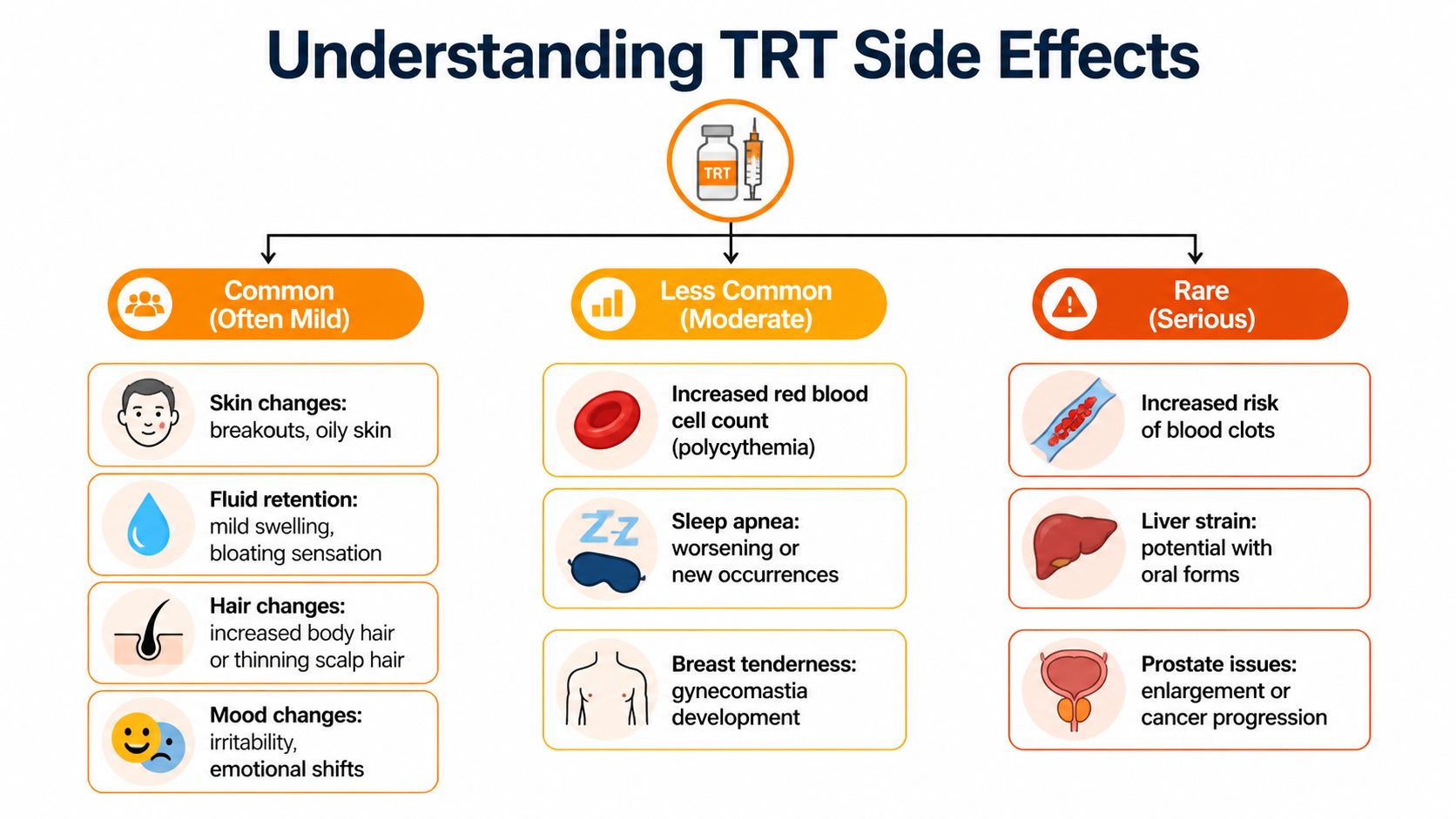
That’s why side effects can show up in different ways. Some men notice oily skin or acne. Some notice breast tenderness. Others don’t feel much at first, but a blood test shows their red blood cell count is climbing.
Practical rule: A side effect is often a clue. It tells your prescriber what to adjust, what to test, or what to watch more closely.
The most frequently documented adverse effect of TRT is polycythaemia, which means a raised red blood cell count. In the evidence cited by the Journal of Clinical Endocrinology & Metabolism, haemoglobin rose by a weighted mean difference of 0.80 g/dL and haematocrit rose by 3.18% in treated patients, with monitoring at baseline, 3 to 6 months, and then annually, and stopping treatment if haematocrit goes above 54% [1].
Common confusion points
People often mix up three things:
- Early settling effects: mild changes that may improve as treatment stabilises
- True side effects: changes that need review, dose adjustment, or treatment change
- Unrelated symptoms: problems caused by sleep, stress, weight, alcohol, or other conditions
Breast tenderness is a good example. It can happen because some testosterone converts into oestrogen. That doesn’t mean treatment has failed. It means your hormone balance may need checking.
Another common worry is mood. Medically supervised TRT is not the same as misuse of anabolic steroids. If someone becomes more irritable, the answer is usually to review the plan, not to assume TRT is dangerous by default.
Featured answer
Are testosterone replacement therapy side effects always permanent?
No. Many side effects improve when the dose, timing, or form of treatment is adjusted.
Common Side Effects and How They Feel
Most men asking about testosterone replacement therapy side effects want to know one thing. What will I notice in day-to-day life? That’s the right question.
Blood count changes
The commonest documented side effect is a rise in red blood cells, often called polycythaemia.[1] In plain English, your blood can become more concentrated. Some men describe this as feeling “thicker”, although you can’t feel blood thickness directly.
You might notice:
- Headaches: especially if they’re new or more frequent
- Flushing: feeling warmer or looking red in the face
- A heavy feeling: some men describe a sense of pressure rather than pain
- No symptoms at all: this is very common, which is why blood tests matter
A rise in red blood cells matters because it may increase the risk of venous thromboembolism, including deep vein thrombosis and pulmonary embolism.[1]
Breast tenderness and swelling
Another common issue is gynecomastia, which means breast tissue growth, or breast pain. It affects 10% to 25% of men on TRT because some testosterone converts to oestrogen.[1]
Men often get confused here because they expect testosterone to cause the opposite. Hormones don’t work in straight lines. The body converts and balances them constantly.
How it can feel:
- Tender nipples: a sharp or bruised feeling
- Fullness under the chest: often noticed in the shower or gym
- Mild puffiness: which can be worrying, even if it’s early and subtle
Skin, sleep, fertility and body changes
Other side effects can be easier to spot but less serious.
- Acne or oily skin: TRT can make the skin more active. If breakouts start, a simple skincare routine and early treatment can help. If you need support for persistent spots, Courier Pharmacy’s acne treatment guide explains common options.
- Sleep apnoea changes: TRT can worsen sleep apnoea in some men.[2] If you snore heavily or wake unrefreshed, tell your clinician.
- Reduced sperm production: TRT can reduce fertility and may lead to infertility concerns.[2]
- Testicle shrinkage: This can happen because the testes may make less of their own testosterone while you’re on treatment.[2]
- HDL cholesterol drop: HDL fell by a weighted mean difference of -0.49 mg/dL among TRT recipients in one summary, but the clinical meaning is still uncertain.[2]
A note on heart and prostate fears. Older studies raised concern, but more recent large randomised controlled trials have been more reassuring in properly assessed men. I’ll cover that next.[2]
Breast tenderness, acne, and blood count changes can feel alarming. They’re still reasons to review treatment, not reasons to panic.
Featured answer
Is acne a common TRT side effect?
Yes, acne or oily skin can happen on TRT, though it affects a relatively small proportion of men.[2]
Understanding Rarer and More Serious Risks
This particular aspect causes many patients significant anxiety. They’ve heard stories about heart attacks, strokes, clots, or prostate cancer, and they want a straight answer.
Heart and stroke concerns
The evidence is more nuanced than headlines make it sound. Older observational studies suggested possible increased risk of heart attack and stroke in some long-term users, especially older men.[2] More recent large randomised controlled trials have provided more reassuring data for men with confirmed testosterone deficiency who are properly screened.[2]
That means TRT is not a free-for-all. It means safer use depends on diagnosis, assessment, and follow-up.
For day-to-day practice, “properly screened” usually means checking things like:
- Why testosterone is low: not every tired man needs TRT
- Your baseline blood count: especially haematocrit
- Prostate history and PSA: before starting
- Sleep apnoea risk: especially if symptoms are already present
- Fertility goals: before the first prescription
Prostate questions
Many men still worry that TRT will “feed” prostate cancer. Current evidence does not firmly establish a causal link between properly prescribed TRT and new prostate cancer in appropriately screened patients.[2]
That said, caution still matters. Baseline PSA testing is part of safe practice in UK care pathways.[3] Men with active prostate cancer, a suspicious PSA result, or worrying urinary symptoms need proper assessment before treatment.
A small UK study described 13 men with untreated low-grade prostate cancer on TRT for 2.5 years without progression, which suggests possible safety in selected cases, but it doesn’t remove the need for individual clinical judgement [3].
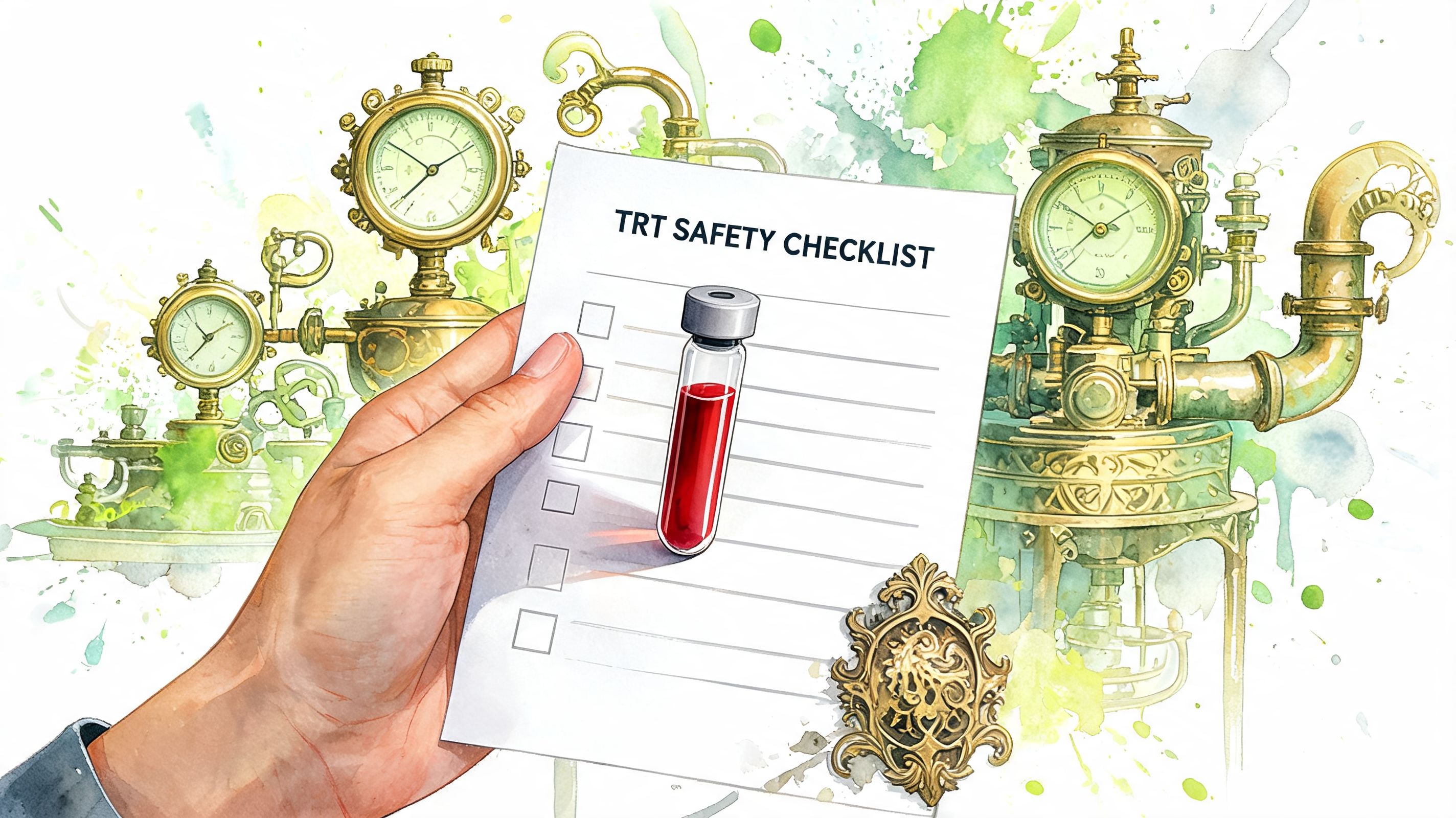
A simple safety checklist before and during TRT
Here’s the calm, practical version:
- Confirm the diagnosis. Symptoms alone aren’t enough.
- Check the bloods before treatment. This gives you a safe baseline.
- Review sleep, prostate, and fertility issues early. Don’t leave these until later.
- Track new symptoms accurately. Headaches, swelling, breast changes, and shortness of breath all matter.
- Use follow-up testing as part of treatment. It’s the steering wheel, not admin.
If you want a clear explanation of what a full blood count includes, Courier Pharmacy’s guide to the full blood count test gives a useful overview.
Featured answer
Does TRT increase heart attack or stroke risk?
Recent large randomised trials have been reassuring in men with confirmed low testosterone who are properly screened, but monitoring still matters.[2]
Your TRT Safety Checklist Monitoring and Blood Tests
Safe TRT is less about guessing and more about checking. If you monitor properly, you can spot problems early and often fix them before they become bigger issues.
Why regular blood tests matter
In the UK, thorough monitoring matters because polycythaemia affects 15% to 40% of users, making regular haematocrit checks essential, while TRT suppresses sperm production in over 90% of cases, so fertility planning should happen before treatment begins [3].
That one paragraph explains most of safe TRT. Check the blood. Check the prostate. Talk about fertility before you start.
A blood test isn’t just a box to tick. It helps answer specific questions:
- Total testosterone: Is the dose getting you into the right range?
- Free testosterone: Is enough hormone available to tissues?
- Oestradiol: Could breast symptoms or water retention relate to hormone balance?
- Haematocrit: Is your red blood cell level staying in a safe range?
- PSA: Is your prostate monitoring up to date?
For men who want to start with home testing, Courier Pharmacy’s TRT eligibility home blood testing kit is one route to getting those baseline checks organised.
Typical UK TRT monitoring schedule
| Test | Why It's Checked | When It's Checked |
|---|---|---|
| Total testosterone | Confirms deficiency at baseline and checks response to treatment | Baseline, then follow-up as your prescriber advises |
| Free testosterone | Helps interpret available testosterone, especially if symptoms don’t match total levels | Baseline and follow-up if needed |
| Oestradiol | Helps assess breast tenderness, swelling, or fluid retention | When symptoms or dose changes suggest imbalance |
| Haematocrit | Monitors for polycythaemia and rising clot risk | Baseline, 3 to 6 months after starting, then annually [1] |
| PSA | Supports prostate safety checks before treatment and during review | Baseline, then follow-up as clinically advised [3] |
Good monitoring doesn’t make TRT harder. It makes it safer and often more effective.
Real life examples
Busy parent scenario
A father in his forties starts TRT after months of low mood and poor energy. He feels better, then begins getting headaches and facial flushing. He assumes work stress is the cause. A follow-up blood test shows his haematocrit has risen, so his prescriber reviews the plan and adjusts treatment rather than letting the problem drift.
Gym-goer scenario A man using TRT to treat confirmed deficiency notices tender nipples and oily skin a few weeks into treatment. He worries the treatment is “turning into oestrogen”. In practice, that symptom pattern prompts a review of dose, timing, weight, alcohol intake, and bloods.
Shift worker scenario
A night-shift worker struggles to apply daily treatment consistently and gets uneven symptom control. His review focuses on adherence and routine, not blame. The key lesson is simple. A plan only works if it fits real life.
Featured answer
How often should haematocrit be checked on TRT?
Clinical monitoring protocols recommend checking haematocrit at baseline, at 3 to 6 months after starting TRT, and then annually.[1]
How to Manage and Reduce TRT Side Effects
Good TRT management is usually boring in the best possible way. Small adjustments, regular checks, and honest reporting solve many problems before they become dramatic.

Small changes that often help
Most men don’t need heroics. They need a plan.
- Keep the dose schedule steady: Missed doses and catch-up dosing can make symptoms swing.
- Report breast changes early: Tenderness is easier to manage when caught early.
- Take skin changes seriously: Gentle cleansing and prompt acne treatment beat harsh scrubbing.
- Review other health issues: Poor sleep, heavy drinking, and weight gain can muddy the picture.
- Talk about fertility before treatment: Don’t assume this can wait.
Pharmacist's tip: If oily skin or spots start, use a gentle cleanser and avoid over-washing. Scrubbing hard often makes irritation worse.
Pharmacist's tip: If you’re trying for a baby now or in the near future, tell your prescriber before starting TRT. Fertility planning should sit right at the start of the conversation, not months later.
A baseline hormone review can help frame these decisions. Courier Pharmacy’s male hormone health check is one example of the kind of testing people use to start that discussion.
Practical examples from daily life
For the gym-goer
If breast tenderness appears, don’t jump straight to internet advice. Check whether body weight, alcohol use, and inconsistent dosing could be contributing to hormone imbalance. Many men focus only on the testosterone number and ignore the bigger picture.
For the shift worker
If you work rotating shifts, routine can be the hidden problem. A treatment plan that looks neat on paper may be hard to follow in real life. Bring that up early so your prescriber can tailor the plan around your actual week.
For the man who hates blood tests
Avoiding follow-up because it feels inconvenient is a false economy. Home testing options can make ongoing monitoring more realistic.
Here’s a simple video overview that can help some readers understand the wider TRT journey before they speak to a clinician.
When to ask for a dose review
Ask for review if you notice:
- Headaches or flushing
- New breast tenderness
- Worsening snoring or daytime sleepiness
- Acne that keeps building
- Mood changes that feel new
- Any concern about fertility
The safest TRT patients aren’t the quietest ones. They’re the ones who report changes early and stick with monitoring.
Pharmacist's tip: Keep a short symptom diary for the first months. Note energy, sleep, libido, headaches, skin, and any breast symptoms. That gives your clinician something useful to work with.
Featured answer
Can you reduce TRT side effects without stopping treatment?
Often, yes. Dose review, timing changes, blood tests, and treating specific symptoms can help.
When TRT May Not Be Safe For You
Some men are good candidates for TRT. Some are not. A safe prescriber should be willing to say “not yet” or “not for you” if the risk picture doesn’t look right.

When prescribers need to pause or be extra careful
TRT may not be safe, or may need extra caution, if you have:
- Active prostate cancer or male breast cancer
- A very high haematocrit at baseline
- Untreated severe sleep apnoea
- Unexplained PSA changes or worrying prostate symptoms
- A strong wish to preserve fertility right now
- Serious heart or clotting concerns that need specialist review
This doesn’t mean “never” in every case. It means the risks need sorting before treatment starts.
Your medication list matters too. Tell your prescriber about prescription medicines, over-the-counter products, gym supplements, and anything bought online. Hidden ingredients and overlapping treatments can muddy the picture fast.
If you’re looking for a regulated route to private medicines and advice, Courier Pharmacy’s UK online pharmacy service explains how a GPhC-registered online pharmacy works.
Urgent symptoms that need prompt medical help
Seek urgent medical help if you develop:
- Chest pain
- Sudden shortness of breath
- One-sided leg swelling
- A severe new headache
- Sudden weakness, facial droop, or speech trouble
These symptoms aren’t “normal TRT settling effects”. They need prompt assessment.
Featured answer
Should you start TRT if you want children soon?
You need a fertility discussion first. TRT can suppress sperm production, so this should be part of the decision from the start.[3]
Summary A Safe and Informed TRT Journey
Testosterone replacement therapy side effects are real, but they don’t need to be mysterious. The most important risks are usually the ones you can monitor, spot early, and manage well. Blood count changes, breast symptoms, skin changes, sleep problems, and fertility issues all deserve proper attention.
Safe TRT rests on three things. A correct diagnosis. A dose plan that suits the individual. Regular follow-up blood tests and symptom reviews.
If you’re considering TRT, the smartest next step isn’t guesswork. It’s a proper conversation with a qualified clinician who takes monitoring seriously.
Frequently Asked Questions FAQs
What is the most common TRT side effect?
Polycythaemia, or a rise in red blood cell count, is the most frequently documented side effect of TRT.[1] That’s why haematocrit checks are such an important part of follow-up.
Can TRT cause breast enlargement?
Yes. Gynecomastia or breast pain affects 10% to 25% of men on TRT because some testosterone converts to oestrogen.[1]
Does TRT cause blood clots?
Raised red blood cell production may increase the risk of venous thromboembolism, including deep vein thrombosis and pulmonary embolism.[1] That’s one reason regular monitoring matters.
Does TRT cause prostate cancer?
Current evidence does not firmly establish a causal link between properly prescribed TRT and new prostate cancer in appropriately screened men.[2] Baseline PSA checks still matter.[3]
Can TRT affect fertility?
Yes. TRT suppresses sperm production in over 90% of cases according to the verified UK-focused source.[3] Men who may want children should discuss this before treatment starts.
How often do I need blood tests on TRT?
Haematocrit is commonly checked at baseline, 3 to 6 months after starting, and then annually.[1] Other tests depend on your symptoms and treatment plan.
What side effects should make me seek urgent help?
Chest pain, sudden shortness of breath, one-sided leg swelling, or severe new neurological symptoms need urgent medical assessment.
Can side effects improve after a dose change?
Yes. Many side effects improve when prescribers adjust dose, timing, or the overall treatment plan.
If you want a safe, regulated way to explore TRT, blood testing, and ongoing monitoring, Courier Pharmacy offers UK-based support through a GPhC-registered online pharmacy. Patients can access home and venous blood testing, secure clinical review, and personalised follow-up in one place. If convenience has been the main thing getting in the way of proper monitoring, that kind of joined-up service can make safe treatment much more realistic.
Meta description: Testosterone replacement therapy side effects explained in plain UK English. Learn common risks, blood tests, fertility issues, and when to seek help.
Suggested internal links
- TRT eligibility home blood testing kit
- Male hormone health check
- Guide to understanding the full blood count test
- Acne treatments
- Online pharmacy UK
Byline
Written by Medical Mojo Editorial Team
Clinical review
Clinically reviewed by a UK-registered pharmacist
How this content was created
This article was written using the verified sources supplied in the brief, with a focus on peer-reviewed evidence and UK-relevant safety points. A clinician reviewed the draft for tone, clarity, and patient safety. This content is for information only and isn’t a substitute for personal medical advice.
Visual ideas for the designer
Monitoring timeline infographic
Style: painterly with brass plaque labels in lime green, pale yellow-green, and light grey
Alt text: “Timeline showing baseline, 3 to 6 month, and annual TRT blood test checks”Hormone balance explainer
Style: vintage dial or radio tuner showing “too low”, “balanced”, and “too high”
Alt text: “Illustration of testosterone balance as a radio dial with side effects outside the safe zone”Fertility warning card
Style: ornate medical notice with sperm, testes, and checklist icons
Alt text: “Graphic explaining that TRT can suppress sperm production and why fertility planning matters”When to seek urgent help panel
Style: brass-framed symptom alert card with clear red flag icons
Alt text: “Visual guide to urgent warning symptoms such as chest pain, leg swelling, and shortness of breath”
References
[1] Bhasin, S. et al. (2010) ‘Testosterone therapy in men with androgen deficiency syndromes’, Journal of Clinical Endocrinology & Metabolism. Available at: https://academic.oup.com/jcem/article/95/6/2560/2597959
[2] Moffitt Cancer Center (n.d.) ‘Can testosterone replacement therapy increase the risk of prostate cancer?’. Available at: https://www.moffitt.org/cancers/prostate-cancer/faqs/can-testosterone-replacement-therapy-increase-the-risk-of-prostate-cancer/
[3] Morgentaler, A. and Traish, A.M. (2014) ‘Shifting the understanding of testosterone and prostate cancer’, European Urology / PMC record supplied in brief. Available at: https://pmc.ncbi.nlm.nih.gov/articles/PMC3897047/


