The Sinclair Method for Alcoholism: A UK Guide
Explore the Sinclair Method for alcoholism in the UK. Learn how targeted naltrexone works, what UK guidelines say, safety tips, and realistic outcomes.
SEO brief
- Primary keyword: The Sinclair Method for alcoholism
- Secondary keywords: naltrexone, targeted dosing, pharmacological extinction, alcohol dependence, UK guidelines
- Search intent: Informational, UK patient education
- Target reader: UK adults curious about a niche alcohol treatment option
- Product/service mention (if any): None in the main article, Courier Pharmacy only in the CTA
- Internal links available: Included where required in the article
A busy week, a few drinks that keep creeping up, and the same question again. Could a tablet taken before drinking help you cut down? The Sinclair Method for alcoholism is built around that idea, but it's not a magic fix, and it isn't a standard NHS first-line pathway. Here's what it involves, how it works in the brain, where UK practice is cautious, and what to ask before you book a consultation.
What the Sinclair Method Actually Involves
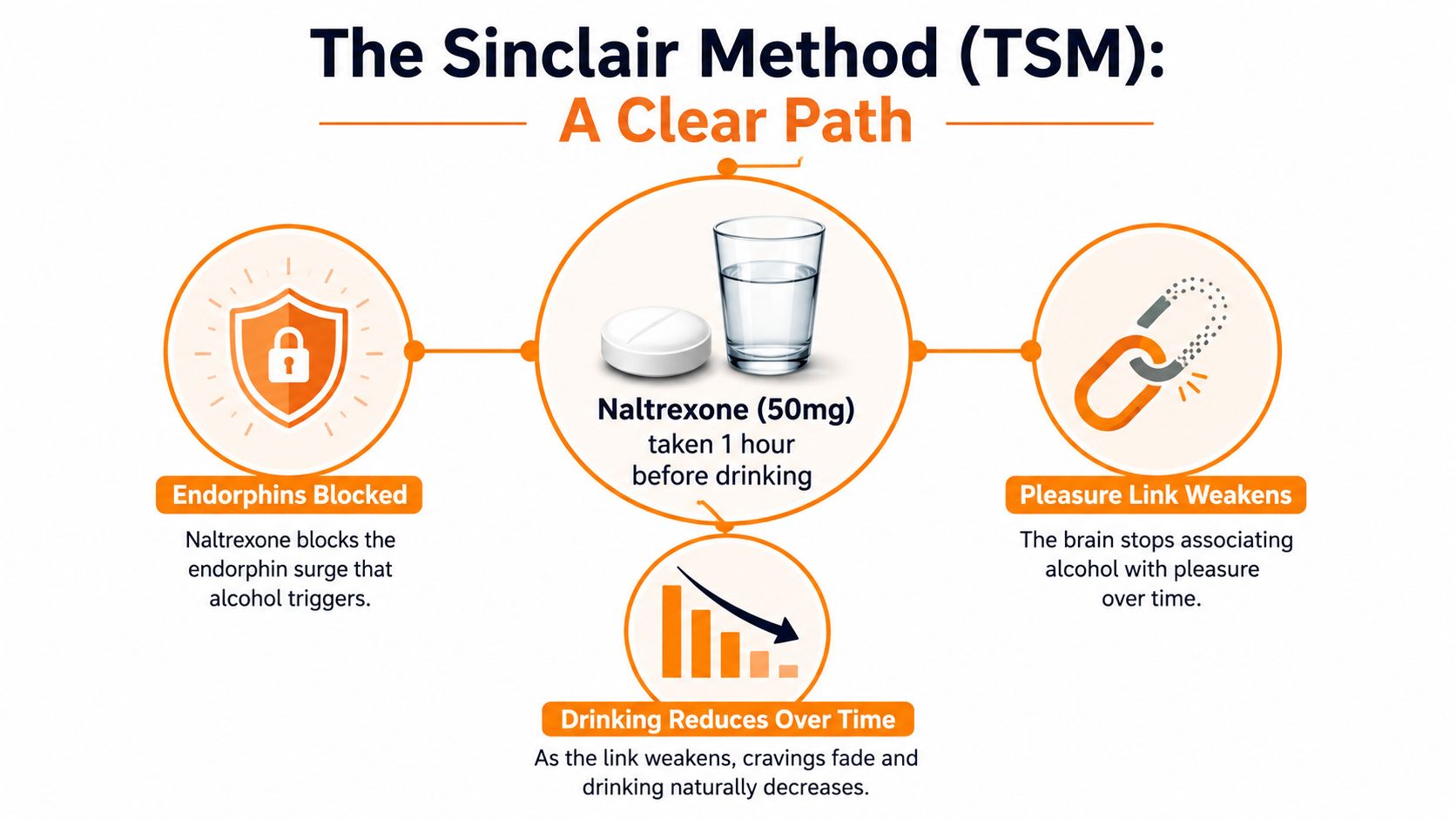
If you're a shift worker who wants to cut down rather than stop overnight, the Sinclair Method is a targeted naltrexone plan, not a daily pill routine. In plain English, you take naltrexone 50 mg about 1 to 2 hours before drinking, so the tablet is active when alcohol arrives. That timing is the whole point of the protocol, which is why it's often called pre-drinking dosing [1].
The simple version
The method was developed by Dr John David Sinclair in the late 1980s. The idea is not to force immediate abstinence, but to weaken the alcohol reward loop over time through repeated pairing of alcohol with opioid blockade [1]. That's why you'll often hear the phrase pharmacological extinction.
Pharmacist's tip: In this context, extinction means behavioural unlearning. It doesn't mean you have to give up “cold turkey” on day one.
The interest online is easy to understand. Many people don't want a lecture about total abstinence before they've even had a chance to think. The Sinclair Method sounds more flexible because it starts from the everyday world, where plenty of people still drink while they're trying to change.
The catch is that interest doesn't equal routine UK adoption. UK-facing evidence discussions have centred more on naltrexone itself than on the full Sinclair-style protocol, and that distinction matters when you speak to a prescriber [1]. If you've also heard of low-dose naltrexone, that's a different use case entirely, which is why a clear guide like this overview of low-dose naltrexone can help separate the ideas.
What to expect from the protocol
The method usually suits people who can plan drinking occasions. It asks for consistency, because the tablet has to be on board before alcohol starts. That's very different from the abstinence-first model many people picture when they think about alcohol treatment.
In practical terms, the protocol is structured but narrow. It's a drink-reduction strategy, not a promise of instant control. That honest framing helps more than the internet hype does.
How Blocking the Reward Loop Works
Alcohol doesn't only affect mood in the moment. It also teaches the brain what to expect next time. When someone drinks, the brain releases endorphins, and those signals help mark the experience as rewarding [1].
Why timing matters
Naltrexone sits on the opioid receptors before alcohol arrives, so the usual endorphin signal is blocked [1]. Over repeated drinking occasions, the brain gets less of the “that was good, do it again” message. That's the basic logic behind targeted pharmacological extinction.
A vending machine that still takes your coin but doesn't always drop the snack is one way to understand the process. At first, you keep trying. After enough failed attempts, the urge to press the button fades. The Sinclair Method uses that kind of learning loop, but with alcohol and reward signalling [1].
The key is not just taking the tablet. The key is taking it before the drink, so the brain learns under the blocked-reward condition.
That's why the protocol feels so different from a standard daily prescription. Daily naltrexone keeps receptor blockade more steady. Sinclair-style dosing aims that blockade at the drinking event itself [1].
The mechanism is appealing because it fits the way habits form. But theory and internet popularity aren't the same as broad guideline endorsement. The UK conversation is more cautious, especially when people ask whether this is an NHS-style route or a private off-label option [4].
For a reader trying to explain it to a friend, the cleanest version is this. Alcohol normally triggers reward signals. Naltrexone blunts those signals. Repeatedly pairing drink with blocked reward may make alcohol feel less compelling over time [1].
For a more technical walk-through of the same medication, this explanation of how low-dose naltrexone works shows how the drug concept changes with different dosing goals.
Sinclair Dosing Compared with Standard UK Naltrexone
The same active drug can be used in two very different ways. That's where a lot of confusion starts. A patient may ask for the Sinclair Method and get offered a more standard daily naltrexone plan instead [1][4].
The main difference in practice
| Feature | Sinclair Method | Standard daily naltrexone |
|---|---|---|
| Timing | Taken about 1 hour before drinking [2] | Taken daily or as a monthly regimen in standard references [1][4] |
| Goal | Reduce the reward from drinking over time | Support alcohol reduction or relapse prevention more steadily |
| Use pattern | Only before planned drinking occasions [1][2] | Ongoing dosing whether or not you plan to drink |
| Clinical framing | Off-label, structured drink-reduction approach [1][4] | Better aligned with evidence-based guidance [1][4] |
| Support | Often paired with counselling or coaching | Often paired with counselling or structured support |
What stays the same
The tablet strength is still commonly 50 mg [2]. The medicine itself is still naltrexone. The difference is the intent, the timing, and the level of guideline support behind it [1][4].
That matters in the UK because the standard evidence-based route is usually more familiar to GPs and alcohol services. NICE-aligned practice has not adopted Sinclair-style pre-drinking dosing as a first-line regimen [1][4]. If you walk into a short appointment and ask for “the Sinclair Method”, a prescriber may instead talk about daily or monthly naltrexone with counselling, because that's closer to routine references [1][4].
A useful way to think about it is this. Same medicine, different job. One version tries to shape behaviour around drinking events. The other aims for steadier coverage.
If you're comparing service models, this guide to low-dose naltrexone helps separate dosing strategy from the medication name itself.
Pharmacist's tip: The tablet matters, but the goal matters more. If you and the prescriber want different outcomes, the plan usually falls apart quickly.
Who the Method Is Generally Aimed At
The Sinclair Method is usually talked about as a fit for people who want to reduce drinking, not commit to immediate abstinence. UK-oriented sources also frame it for people drinking at higher levels, with thresholds of 60 g/day for men and 40 g/day for women [5]. Those numbers are not a diagnosis by themselves, but they do show the kind of drinking pattern clinicians have in mind.
A quick sense-check
If you're wondering whether you fall into that group, the first question is simple. Do you usually know in advance when you'll drink? If the answer is yes, Sinclair-style dosing is at least structurally possible.
The next question is just as important. Are you aiming to cut down, or do you want an abstinence plan? The method fits the first goal better than the second [1][4].
A clinician would also check for things that make naltrexone unsuitable. That includes opioid painkillers, because naltrexone blocks opioid action [4]. It also includes acute hepatitis, end-stage liver disease, and pregnancy or planned pregnancy, where a prescriber would need to think very carefully before offering treatment [4].
What a screening chat should cover
- Current medicines: Especially opioid-based pain relief.
- Drinking pattern: How often, how much, and whether it's planned.
- Liver history: Any hepatitis, cirrhosis, or previous liver concerns.
- Pregnancy status: Current pregnancy or plans for pregnancy.
- Support needs: Counselling, coaching, or relapse-prevention support.
A two-week drinking diary makes this much easier. It gives the prescriber something concrete, rather than a vague memory of “probably too much”. Bring the days, the amounts, and the times you usually drink.
Featured snippet answer: The Sinclair Method is generally aimed at people who want to cut down drinking, can plan ahead, and do not take opioid painkillers [4][5].
Two Realistic UK Scenarios Over Six Months
A 38-year-old office worker starts the protocol because weekday wine has become a habit. She takes naltrexone before planned drinks, keeps a simple diary, and checks in regularly. By around the middle of the process, she notices the urge to top up feels less automatic.
Scenario one, steady use
Nothing magical happens on day one. She still likes the taste of wine, and she still has social evenings. But the internal pull starts to soften because she's been consistent with the timing, and the tablet is always there before the drink.
That kind of story fits the way the broader evidence is often described, where many cohorts see about 60% to 80% of participants achieve substantial reductions in consumption or cravings over 3 to 12 months [2]. It's a useful range, not a promise. The same data also points to a major problem, non-adherence [2].
Scenario two, missed doses
A 45-year-old self-employed tradesperson wants the same result, but his week is messy. He forgets the tablet on busy days, then drinks without it. After a few weeks, he says it's “not doing much”.
That outcome is frustrating, but it's also unsurprising. The protocol depends on timing and consistency. If the pill isn't taken before drinking, the brain doesn't get the same blocked-reward learning signal [2].
Practical rule: The tablet is the trigger for the protocol. The rest of the result depends on routine, review, and support.
These are representative examples, not guarantees. Some people change faster, some slower, and some don't get the outcome they hoped for. A sensible review point is whether cravings, drinking amount, and day-to-day control are shifting, not whether the method sounded clever on paper.
If a reader wants more structured prescribing support, this page about online pharmacy services in the UK shows the kind of digital pathway some people prefer for private care.
Why UK Guidelines Have Not Adopted the Protocol
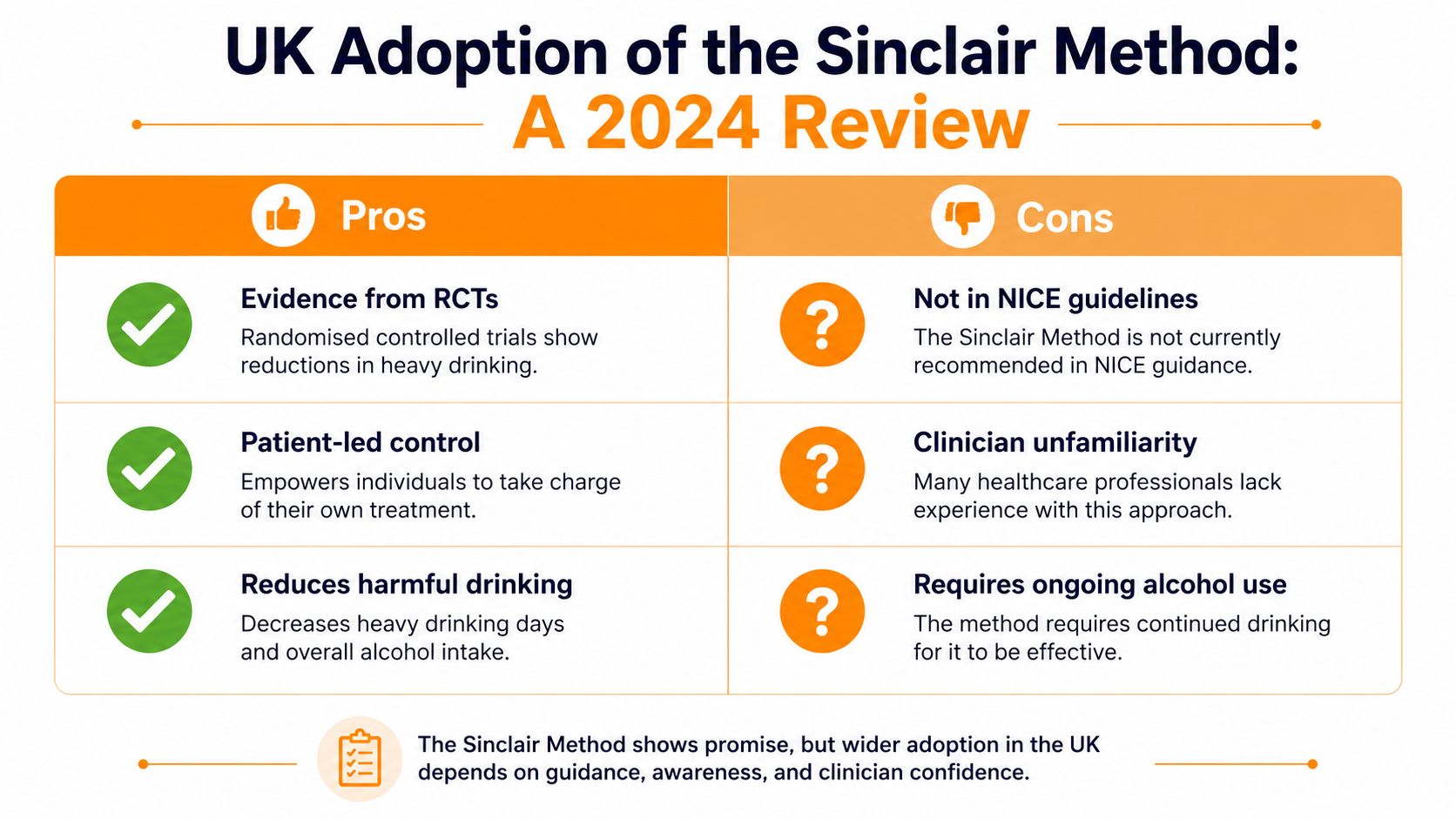
The Sinclair Method gets a lot of attention online, but UK-facing guidance remains cautious. A 2024 clinical-pharmacy review states that it is not recommended in any evidence-based AUD pharmacotherapy guideline, and it notes that standard references such as NICE, SAMHSA and NIAAA support daily or monthly naltrexone with counselling rather than intermittent pre-drinking use [4]. That is the key divide in British practice.
Why the headline number needs context
You'll often see the 78% success figure quoted for Sinclair-style treatment [2]. That number comes from Sinclair's own published or follow-up data and later summaries, which is why it's so widely repeated [2]. The problem is not that the number is made up. The problem is that it gets treated like a UK population benchmark when it isn't one.
Independent review commentary is more cautious. High-quality randomised trials testing the Sinclair Method as a distinct protocol are limited [2]. The broader evidence for naltrexone itself is stronger than the evidence for this exact timed-dosing approach [1][4].
A realistic reading of the evidence
The honest conclusion is not “it doesn't work”. It's “the evidence base is narrower than the marketing suggests”. Many patients may benefit from reduced drinking, but strong guideline-level endorsement is still missing [1][2][4].
That's why the method often sits best as a niche option, especially for people who don't want abstinence first and are willing to plan carefully [4]. It can be part of a wider plan that includes CBT, coaching, and review appointments, rather than standing alone as a miracle fix [4].
If you want a broader view of how naltrexone has developed over time, this history of low-dose naltrexone shows how one medicine can move through very different clinical uses.
Pharmacist's tip: Choosing an off-label route isn't “wrong”. It just needs a prescriber who will keep an eye on liver health, mental health, and whether the plan is still helping.
Safety, Interactions and Access in the UK
Naltrexone is not a casual supplement. It needs a proper medicines check. Common side effects can include nausea, headache, sleep disturbance and fatigue, and some people also report digestive upset or mood changes [4]. Two common initial questions are: Can I take it safely, and how do I get it in the UK?
Safety checklist
The biggest safety issue is opioids. Naltrexone blocks opioid action, so it should not be used with opioid painkillers [4]. That means a prescriber needs the full list of medicines, including anything bought privately or used occasionally after dental work or injury.
A clinician should also think about liver monitoring. Baseline and follow-up liver function tests are part of sensible prescribing [4]. The same careful review matters if you take antidepressants or other regular medicines, because the prescriber needs the full picture before they agree a plan [4].
UK access routes
In the UK, the main routes are usually NHS GP, specialist alcohol services, or a private online prescriber who offers structured naltrexone support. The right route depends on your goals, your medical history, and how much follow-up you need.
If you want a self-paced route, you may prefer a service that lets you complete a questionnaire and then speak to a human prescriber. If you want more face-to-face support, your GP or local alcohol team may be the better starting point. Either way, the short appointment goes more smoothly if you bring a medication list and a clear goal.
Featured snippet answer: Naltrexone should not be used with opioid painkillers, and liver function should be checked before and during treatment [4].
Pharmacist's tip: Write down every medicine and supplement you use, even the occasional ones. It saves time and helps the prescriber spot risks fast.
Questions to Ask a Clinician and Where to Go Next
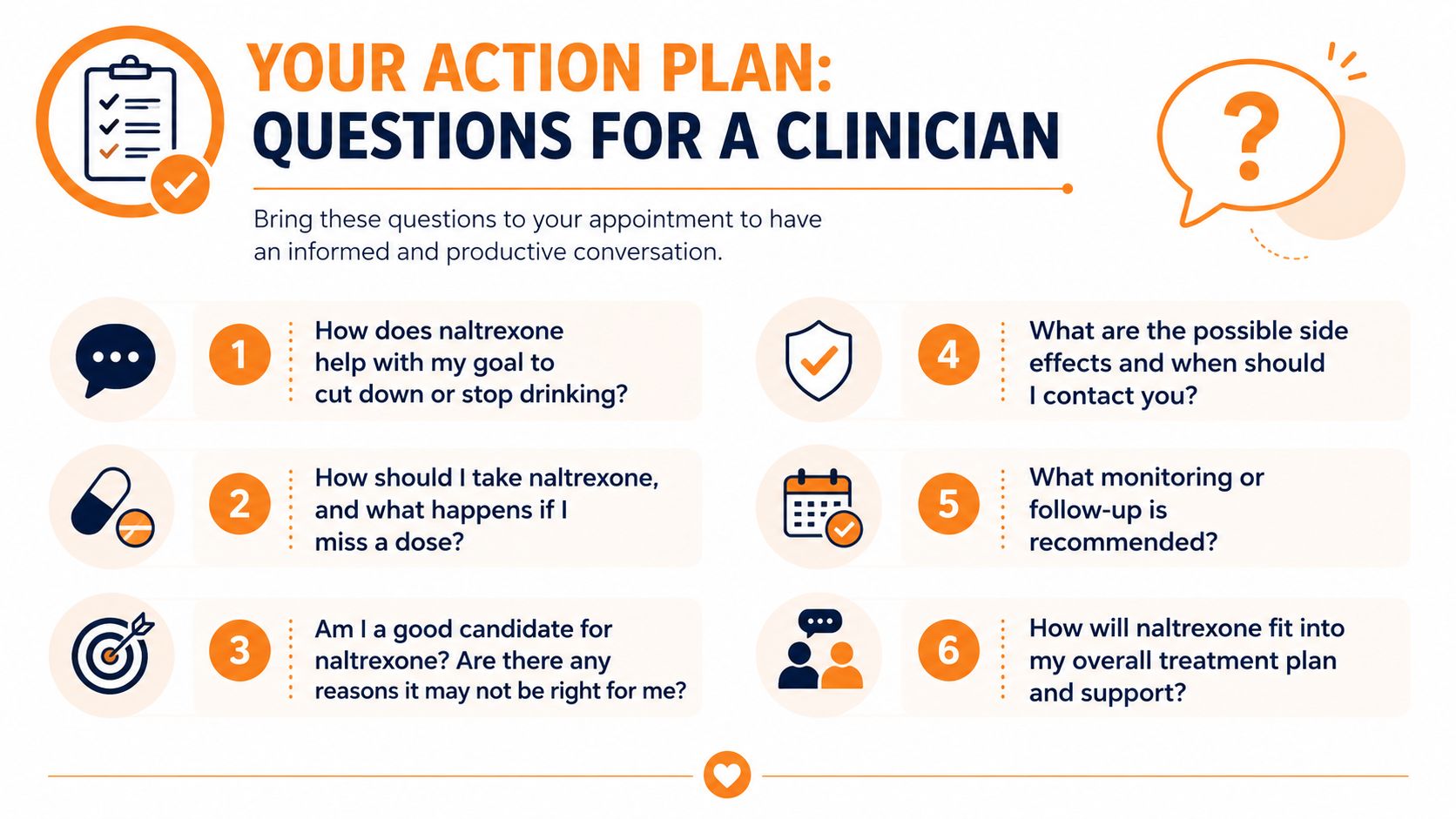
If you're booking an appointment, keep the conversation simple. Say you want help cutting down, not just a prescription name. That gives the clinician the right frame from the start.
Good questions to bring
- How does naltrexone fit my goal to cut down drinking?
- Would you suggest the Sinclair Method or standard daily dosing?
- What should I do if I take opioids for pain?
- What liver tests will you arrange before treatment?
- What support should I have alongside the tablet?
- What should I do if cravings get worse or my mood drops?
A prescriber should be able to answer those quickly. If the answer is vague, that's a sign you need clearer follow-up, not more guesswork. You deserve a plan that covers medication, drinking goals, and review dates.
For people who want a structured private route, Courier Pharmacy's online pharmacy service is one place to look for UK-based prescribing oversight. NHS drink-related support is also worth using if you want local, joined-up care rather than doing everything on your own.
Featured snippet answer: Ask whether the prescriber sees your goal as cutting down, what monitoring they'll do, and what support sits alongside the medicine.
In summary, the Sinclair Method is a targeted naltrexone protocol that aims to reduce alcohol's reward over time. It's popular because it sounds practical, but UK guideline support is still limited, and daily naltrexone remains the more standard reference point [1][4]. If you're considering it, the safest next step is a proper medicines review with a clinician who will talk through goals, risks, and follow-up.
Summary
The Sinclair Method uses naltrexone before drinking, not as a daily pill.
It aims to weaken alcohol's reward loop over time.
The idea is known as pharmacological extinction.
UK guidance is more cautious than many online articles suggest.
The protocol may suit people who want to cut down, not stop overnight.
Safety checks matter, especially around opioids and liver health.
If you want to try it, speak to a clinician first.
FAQs
What is the Sinclair Method for alcoholism?
It's a targeted naltrexone protocol where you take the tablet before drinking. The aim is to reduce alcohol's reward signal over time, so cravings become less strong [1][2].
Do you have to stop drinking on the Sinclair Method?
No. The method is designed for people who keep drinking while they change their relationship with alcohol. That said, it only makes sense if drinking is something you can plan for [1][4].
How long does it take to work?
People often talk about changes over 3 to 12 months, but results vary and depend a lot on adherence [2]. Some people notice change earlier, some later, and some don't get the outcome they hoped for.
Is the Sinclair Method on the NHS?
It is not a standard first-line NHS pathway. UK-facing guidance is more likely to discuss daily or monthly naltrexone with counselling rather than pre-drinking dosing [1][4].
What side effects should I expect?
Common side effects can include nausea, headache, sleep disturbance and fatigue [4]. If side effects feel strong or your mood changes, speak to a clinician promptly.
Can I take naltrexone with opioid painkillers?
No, that's a major problem because naltrexone blocks opioid action [4]. Tell your prescriber about any opioid medicine, including short courses and occasional use.
Who is the Sinclair Method best suited to?
It's usually discussed for people who want to reduce drinking, can plan ahead, and don't rely on opioid painkillers [4][5]. It's less suitable if you need an abstinence-first approach.
Why do some people praise the 78% figure?
That number is widely linked to Sinclair's published or follow-up data, but it isn't a UK population estimate [2]. It should be read as part of the history of the method, not as a guaranteed result for everyone.
Can I get this treatment privately in the UK?
Yes, some private services offer structured naltrexone prescribing and follow-up. A proper consultation should still include medicines review, liver checks and clear safety advice.
How do I know whether to ask for the Sinclair Method or standard naltrexone?
Start with your goal. If you want steady support throughout the day, daily naltrexone may fit better. If you drink on planned occasions and want a targeted approach, ask whether Sinclair-style dosing is appropriate [1][4].
Meta description: The Sinclair Method for alcoholism explained for UK readers. Learn how naltrexone dosing works, who it suits, and why NICE guidance is cautious.
Byline: Written by a UK medicines writer and pharmacist educator.
Clinical review: Reviewed by a UK-registered pharmacist with alcohol-medicine prescribing knowledge.
How this content was created: This article was written from verified source material on naltrexone, Sinclair-style targeted dosing, and UK prescribing context, then checked for clear language, safety, and factual consistency. No unsupported statistics or claims were added.
References
Harvard Health Publishing. Can you retrain your brain to stop excessive drinking? Available at: Harvard Health on targeted naltrexone and the Sinclair approach
Sinclair Method. What is the Sinclair Method? Available at: Sinclair Method overview and commonly cited success data
YouTube. Sinclair Method explanation video. Available at: UK-facing expert explanation of pharmacological extinction
Dilworth Center. The Sinclair Method, naltrexone under scrutiny. Available at: Clinical-pharmacy review of guideline status and UK relevance
Rehab 4 Addiction. Sinclair Method. Available at: UK-oriented overview including drinking thresholds and planned-use framing
If you're weighing up whether this protocol fits you, start with a proper medicines review and a frank conversation about your drinking goal. Courier Pharmacy can help you explore a structured, clinician-led route if you want private support with naltrexone and careful follow-up. Visit Courier Pharmacy to see how their UK online prescribing service can fit a safety-first conversation about cutting down.


