Vitamins for Dry Skin: What Really Helps
Vitamins for dry skin explained — which ones help, the evidence, UK food sources and supplement guidance, plus when to see a pharmacist or GP.

You're standing by the radiator after washing your hands, and your skin feels tight again. Your legs look flaky under your trousers, while the cold British weather and central heating seem determined to undo every moisturiser you apply.
So, which vitamins for dry skin really help? The honest answer is that correcting a genuine deficiency may support healthier skin, but a vitamin pill rarely fixes dryness on its own. Most dry skin needs barrier care first, with nutrition playing a supporting role.
This guide explains where vitamin D fits, why vitamin E and B vitamins are often overstated, when testing makes sense, and how UK advice applies to food and supplements.
- Vitamin D is the clearest UK-relevant nutrient, especially during low-sunlight months.
- Emollients usually do more for everyday dryness than a general multivitamin.
- Vitamin E, B3, B12 and folate support normal skin health, but they aren't proven stand-alone cures.
- Food comes first, unless a clinician identifies a deficiency or a clear risk.
- Dryness with cracking, marked itching, fatigue, numbness or infection needs medical advice.
Why Your Skin Feels Dry and What Vitamins Can Realistically Do
Dry skin often starts with the skin barrier, not a lack of tablets. Cold air, indoor heating, frequent handwashing, hot showers and strong soaps can remove surface oils. Water then escapes more easily, leaving skin rough, tight or itchy.
The NHS generally places emollients at the centre of dry-skin care. These moisturisers soften the outer layer and help reduce water loss. A soap substitute can also help when ordinary soap leaves your hands sore or tight. The advice is practical because it targets the cause many people can change today.
Practical rule: If a moisturiser improves the problem, barrier damage or the environment may matter more than a vitamin deficiency.
Vitamins still have a place. Your skin needs nutrients to support normal cell growth, immune responses and the fats that help form its protective surface. However, the evidence differs greatly between nutrients. Vitamin D has the strongest UK seasonal signal, while claims about large doses of vitamin E, biotin or mixed supplements often run ahead of the evidence.
A supplement makes most sense when you have a recognised risk or a confirmed deficiency. It may also help prevent vitamin D deficiency during the UK's darker months. It shouldn't replace regular emollient use, gentle cleansing, a varied diet or assessment of conditions such as eczema, psoriasis or contact dermatitis.
For a simple starting point:
- Apply an unperfumed emollient often, especially after washing.
- Use warm rather than very hot water.
- Choose gentle cleansers and avoid scrubbing flaky areas.
- Review your diet and vitamin D risk.
- Ask a pharmacist or GP before taking higher-dose supplements.
The key question isn't, “Which pill cures my dry skin?” It's, “Is there a deficiency worth correcting, and what is weakening my barrier?”
How the Skin Barrier Works and Where Nutrients Fit In
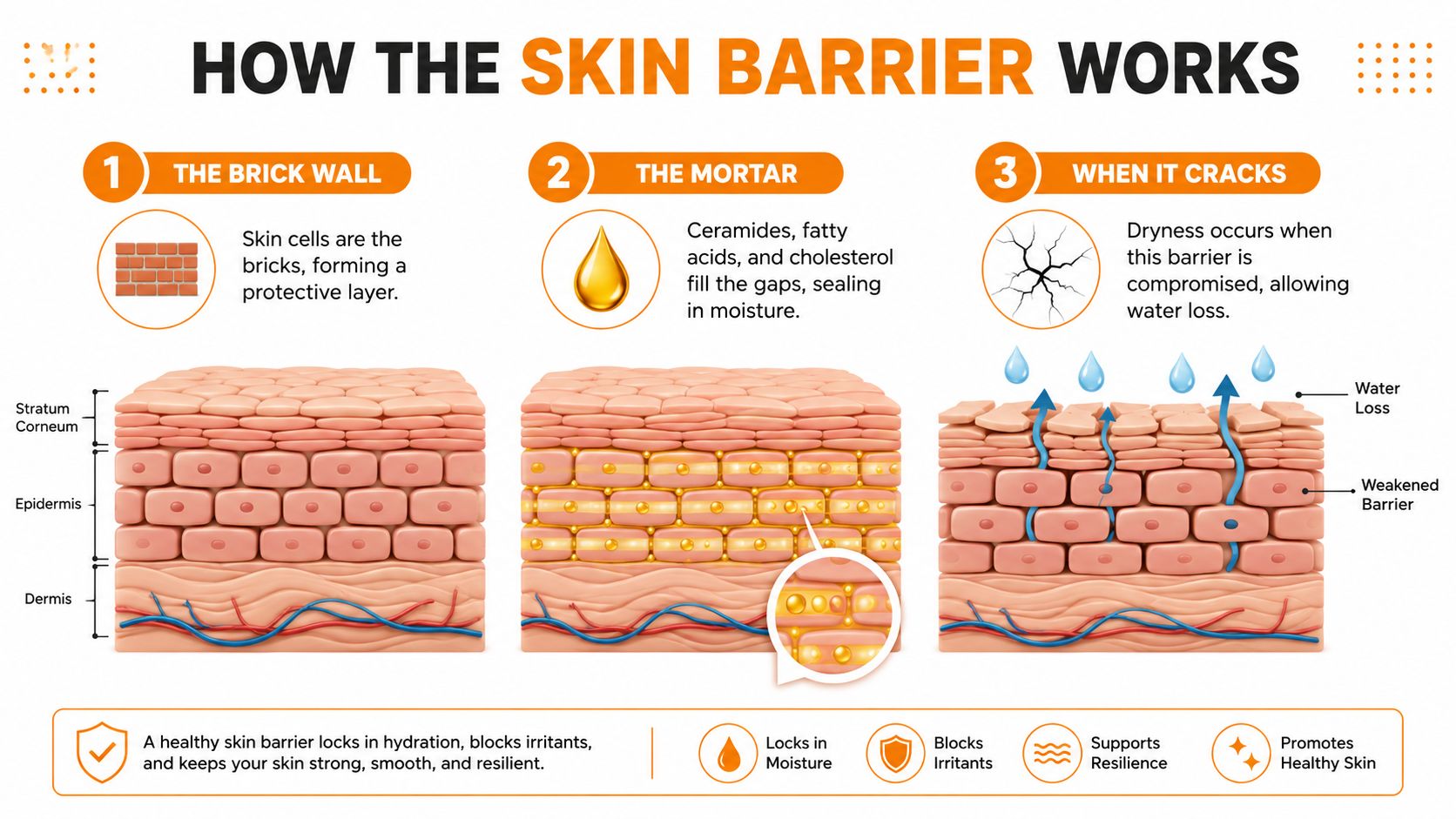
Think of the outer skin layer as a brick wall. The skin cells act as bricks. Ceramides, fatty acids and cholesterol act like mortar, filling the gaps and helping keep water inside.
When that wall becomes rough or cracked, moisture escapes more easily. Irritants can also enter, which may increase stinging, redness or itching. This process is often called transepidermal water loss, meaning water moves out through the skin and evaporates.
Where nutrition can help
Nutrients support several parts of this wall:
- Essential fats provide materials for cell membranes and surface lipids.
- Vitamin E helps protect fats from oxidative damage and contributes to normal skin health.
- Vitamin A supports normal cell growth, although high-dose supplements can be unsafe.
- B vitamins help the body use energy and maintain healthy skin and tissues.
- Vitamin D supports normal immune function and skin-cell development.
That biology explains why a severe deficiency can affect skin. It doesn't prove that adding extra vitamins improves already healthy skin. Your body may already have enough of a nutrient, leaving little benefit from taking more.
Dehydration and xerosis aren't identical
Dehydrated skin has lower water content at the surface. Dry air, hot water and poor moisturising can contribute. Humectants and regular emollient use may improve it.
Xerosis means abnormally dry skin linked to poor barrier function. It can occur with age, eczema, some medicines or repeated exposure to irritants. Treatment focuses on restoring the barrier and addressing the underlying cause.
This distinction matters. Drinking more water is sensible when you're thirsty, but it won't repair a damaged outer barrier by itself. Likewise, a vitamin capsule can't remove detergent residue or replace the lipids stripped away by over-washing.
The nutrition question becomes more useful when you ask about risk, not appearance alone. A restrictive diet, little sun exposure, darker skin, malabsorption or broader symptoms may justify a clinical review. Dryness on its own usually doesn't identify a particular deficiency.
The Key Vitamins and Minerals Linked to Dry Skin
No single supplement deserves the label “best” for every person. The right choice depends on your diet, health, medicines, sun exposure and test results.
The comparison below separates a nutrient's role from the strength of the dry-skin claim. NHS guidance says vitamin E helps maintain healthy skin, with a recommended intake of 4 mg daily for men and 3 mg daily for women 1. That supports adequate intake, not a promise that extra capsules will treat flaking.
| Nutrient | Mechanism | Evidence for dry skin | UK deficiency risk | Main food sources |
|---|---|---|---|---|
| Vitamin D | Supports normal immune function and skin-cell development | Most relevant UK seasonal nutrient, but NHS advice doesn't claim it cures dry skin | Limited sun exposure, darker skin, indoor lifestyles and covered skin | Oily fish, eggs and fortified foods |
| Vitamin E | Helps maintain healthy skin and protects fats from oxidation | Supportive role, limited evidence as an oral dry-skin treatment | Very restrictive diets or absorption problems | Nuts, seeds and plant oils |
| Vitamin B3 | Helps keep skin healthy; topical niacinamide can support barrier care | Oral evidence for ordinary dryness is limited | Poor diet or some health conditions | Meat, fish, wholegrains and pulses |
| B12 | Supports blood and nerve health | Dryness alone isn't a typical reason to self-treat | Vegan diets, absorption problems and some medicines | Meat, fish, eggs, dairy and fortified foods |
| Folate | Supports normal blood formation and cell division | Treat deficiency when confirmed, not dryness alone | Restrictive diets and absorption problems | Leafy greens, pulses and fortified foods |
| Vitamin A | Supports normal cell growth | Deficiency can affect skin, but excess can harm | Malabsorption or very limited diets | Eggs, dairy and orange or dark-green vegetables |
| Essential fatty acids | Help form cell membranes and surface lipids | Plausible support, but supplements aren't a general cure | Very limited diets | Oily fish, walnuts and flaxseed |
| Zinc, selenium and iron | Support immune function, tissues, blood or antioxidant systems | Correct confirmed deficiency, rather than guessing | Restrictive diets, blood loss or absorption problems | Meat, seafood, pulses, nuts and seeds |
Vitamin D deserves the closest look in the UK. Public guidance says adults and children aged four and over should consider 10 micrograms, or 400 IU, daily from October to early March because sunlight is too weak for reliable production during those months 2. People with little or no sun exposure should consider taking it all year.
UK evidence also shows that sunlight doesn't work equally well for everyone. Research found that seasonal exposure could prevent winter deficiency in 95% of healthy white adults and 83% of adolescents, while more than 90% of healthy South Asians remained deficient in one UK population study 2. A photobiology study estimated that skin type V individuals needed about 25 minutes of lunchtime sunlight daily from March to September, and hands-and-face exposure alone was inadequate 3.
B12 and folate need a wider symptom check. The NHS frames B12 deficiency as a medical condition assessed through symptoms and blood tests. Treatment can involve tablets for diet-related deficiency, or hydroxocobalamin injections every two to three months when the cause isn't dietary 4. Dry skin alone isn't enough reason to start B12.
For a broader, food-focused overview, see this guide to vitamins and minerals.
Food Sources and Smart Supplement Choices for the UK
Food supplies nutrients alongside protein, fibre and energy. That combination makes it easier to support general health without chasing one symptom with multiple products.
Try simple swaps rather than a total diet overhaul. Oily fish such as sardines or mackerel provides vitamin D and omega-3 fats. Eggs contribute vitamin D and B vitamins. Nuts, seeds and sunflower oil provide vitamin E, while wholegrains, pulses, meat and eggs cover several B vitamins.
| Nutrient | Best UK food sources | Realistic portion | Notes for UK shoppers |
|---|---|---|---|
| Vitamin D | Sardines, mackerel, eggs and fortified spreads | Add oily fish to a sandwich or salad | Food alone may not cover winter needs |
| Vitamin E | Almonds, sunflower seeds and sunflower oil | Sprinkle seeds over porridge or salad | Choose unsalted nuts where possible |
| B vitamins | Wholemeal bread, oats, pulses, meat and eggs | Swap white toast for wholemeal | Fortified foods can help restrictive eaters |
| Omega-3 | Sardines, mackerel, walnuts and flaxseed | Stir ground flaxseed into breakfast | Plant and fish sources differ in fat type |
| Folate | Lentils, chickpeas, leafy greens and fortified foods | Use pulses in soups or stews | A varied diet usually supplies useful amounts |
| Vitamin A | Eggs, dairy and orange or dark-green vegetables | Add carrots or spinach to meals | Avoid high-dose vitamin A supplements |
Who may need a supplement
For a healthy adult eating a varied diet, a general multivitamin usually isn't the first answer to dry skin. However, UK guidance supports vitamin D supplementation during the low-sunlight season.
People who spend little time outdoors, cover most of their skin or have darker skin may need year-round vitamin D. NHS guidance also advises year-round consideration for people with little sun exposure 2. The NHS vitamin D page provides the same broad seasonal approach 5.
A North West London NHS-linked guide states that adult vitamin D deficiency is diagnosed below 25 nmol/L, while the child threshold is below 50 nmol/L. It describes treatment as a course lasting one to two months, followed by a lower maintenance dose to reduce recurrence 6. That's why higher doses belong in a clinician-led plan.
Pharmacist's tip: Check the label before combining products. Vitamin D can appear in a multivitamin, cod-liver oil and a separate supplement.
Adults shouldn't take more than 100 micrograms of vitamin D daily without medical supervision, according to NHS guidance 5. Fat-soluble vitamins, including A and D, can build up in the body. Avoid megadoses, especially during pregnancy, unless a clinician has prescribed them.
Pregnant people, breastfeeding parents, older adults, housebound people and restrictive eaters should ask a pharmacist or GP for individual advice. The NHS Healthy Start scheme may also help eligible families access food and vitamin support.
For an example of a vitamin D product available through a pharmacy, see Fultium-D3 800 IU capsules. Product suitability still depends on your circumstances and total daily intake.
Real Life Scenarios Where the Advice Changes
The same dry hands can point to very different priorities. Lifestyle, diet and exposure often tell you more than the skin symptom itself.
The busy parent
Sam does the school run in cold weather, washes their hands often and keeps the heating on at home. Their hands feel tight but improve when they use an unperfumed emollient.
The sensible plan starts with barrier care. Sam can keep a small tube by the sink, use a soap substitute when suitable and apply cream after washing. They can also follow UK seasonal vitamin D advice by considering 10 micrograms daily from October to early March 2.
Lunch doesn't need to become complicated. Tinned sardines on wholemeal toast, or peanut butter on wholemeal toast, adds useful food variety. A high-street multivitamin is less targeted than fixing the obvious skin triggers and meeting vitamin D guidance.
The shift worker
Mo works nights and often buys meal deals. Their skin feels dry, but they also feel tired because their sleep pattern is unsettled.
Mo's first steps involve regular meals with protein and B-vitamin sources, enough fluid, and barrier cream before a shift. Meat, eggs, dairy, pulses and wholegrains can all help create a steadier pattern. Energy drinks aren't a reliable answer to possible B12 deficiency.
If Mo also has mouth ulcers, numbness, tingling or unusual fatigue, a GP should assess the wider picture. B12 and folate deficiency need proper diagnosis, not a guess based on dry skin 4.
The darker-skinned adult
Aisha works indoors and covers most of her skin outdoors. Her dry skin may still need emollients, but her vitamin D risk deserves attention. Year-round 10 micrograms daily may be appropriate under UK guidance, with a pharmacist or GP helping if she has symptoms or other health concerns 2.
Fortified foods, such as fortified chapatti flour where available, can make meals more useful without adding another tablet. The plan changes because sun exposure and skin pigmentation affect vitamin D production. The cream remains important, but the prevention advice differs.
For itchy, inflamed or recurring patches, read this information on eczema and dermatitis.
Why a Pill Rarely Fixes Dry Skin on Its Own
A capsule can correct a nutrient gap. It can't undo every cause of dryness.
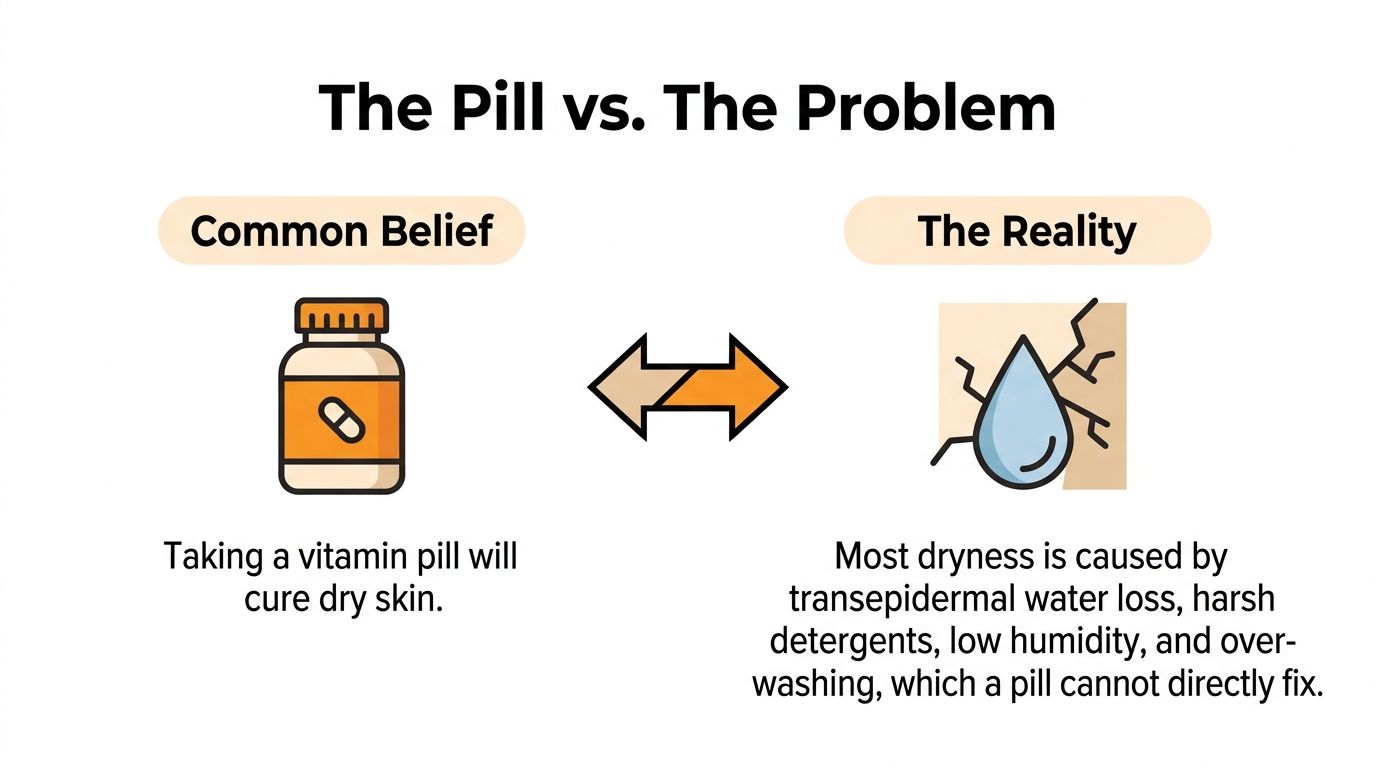
Hot showers, harsh detergents, repeated handwashing, cold air and low indoor humidity all increase the strain on the barrier. A supplement won't remove soap residue, replace lost surface oils or protect skin from a draughty commute.
Emollients do the direct work. Apply them regularly, use a gentle cleanser, keep showers comfortably warm and avoid vigorous rubbing with a towel. If the room air feels dry, modest humidity changes may help, but avoid creating damp conditions that encourage mould.
Where supplements do fit
A smaller group may have skin changes linked with a real deficiency. Vitamin D is particularly relevant in the UK because sunlight-dependent production falls during winter and some groups remain at higher risk. B12, folate, iron or zinc problems may also affect health, but dryness alone doesn't identify which one.
The NHS-linked Somerset primary-care guidance says vitamins and minerals shouldn't routinely be prescribed as general supplements because evidence for clinical effectiveness is limited. That supports a targeted approach, test when appropriate, then replace what's missing.
The NHS also warns against high-dose vitamin A in pregnancy. Don't assume “natural” means harmless. Always check combined products, especially if you use cod-liver oil, a multivitamin and a separate skin supplement.
Topical treatments can also affect dryness. For example, tretinoin may irritate or dry the skin and needs suitable medical advice, so don't add it casually to a damaged barrier. You can read about tretinoin 0.025% topical cream before discussing treatment with a prescriber.
This short video provides another visual explanation of skin care and dryness:
When to Test, When to Ask a Pharmacist, and When to See a GP
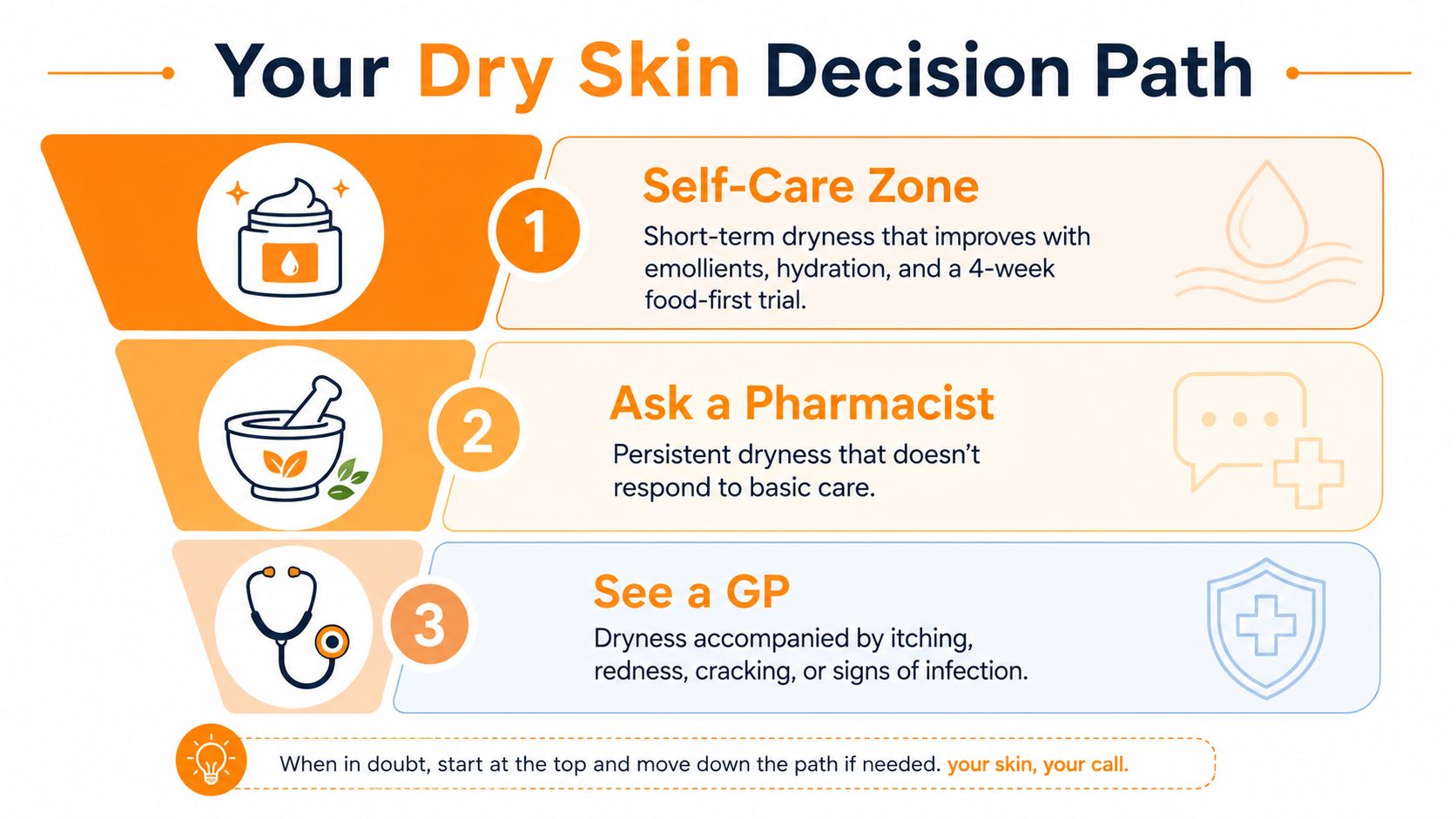
Start with self-care when dryness is recent, mild and improving. Use an emollient consistently, avoid harsh washing and improve food variety. Give a food-first approach time to work, but don't keep self-treating indefinitely if symptoms continue.
Ask a community pharmacist if the skin remains dry, cracked or itchy, or if you're unsure which product suits you. Speak to a pharmacist before taking more than the usual vitamin D amount, and ask for advice during pregnancy or breastfeeding.
A sensible decision path
- Self-care: Mild dryness that improves with emollient use and gentler washing.
- Pharmacist: Persistent symptoms, cracked skin, product questions or supplement checks.
- GP appointment: Widespread cracking, suspected eczema or psoriasis, or dryness with other symptoms.
- Same-day help: Spreading redness, fever, worsening pain, pus or signs that eczema has become infected.
What testing may show
A GP may consider blood tests for vitamin D, B12, folate, ferritin and thyroid function when your symptoms support them. Dry skin alongside hair loss and fatigue may need a broader review. Mouth ulcers or numbness and tingling can also make B12, folate or iron assessment more relevant.
The NHS usually tests only selected vitamins when symptoms justify it, rather than screening everyone. Private finger-prick tests can offer convenience, but a result still needs context. A GP may need to confirm it, investigate the cause or choose the right treatment.
Seek same-day advice if redness spreads quickly, you develop a fever, or the skin becomes painful and oozes. Those signs may suggest infection, which vitamins won't treat.
A home test may be useful for some people, but it shouldn't delay care for concerning symptoms. See this guide to using a home blood test kit in the UK before choosing that route.
Practical Summary and Common Questions Answered
- Use an emollient as the foundation for dry-skin care.
- Eat varied foods that provide protein, fats and vitamins.
- Consider UK seasonal vitamin D advice.
- Test suspected deficiencies instead of guessing.
- Don't use megadoses for cosmetic reasons.
- Seek help when dryness persists or comes with other symptoms.
How long does it take to notice improvement?
Barrier care may feel better quickly, but stubborn dryness can take longer. If there's no clear improvement with regular emollient use, ask a pharmacist or GP.
Can I combine vitamin D, E and B3?
Food-level intake is usually the safest starting point. Check labels before combining supplements, and ask a pharmacist if you take medicines, are pregnant or want high-dose products.
Do evening primrose oil or biotin help?
Evidence doesn't support using either as a routine cure for ordinary dry skin. Biotin deficiency is uncommon, and unnecessary supplements can complicate test results.
When is the best time to test vitamin D?
Late winter may reveal seasonal low levels, but testing should depend on symptoms and risk. A clinician can decide whether a result would change your care.
When should I stop self-treating?
Stop relying on self-care when symptoms persist, spread, crack, bleed or become very itchy. Get prompt help for fever, spreading redness, pain or oozing.
Is this advice medical treatment?
No. This article is for information only and isn't a substitute for advice from a pharmacist, GP or other qualified clinician.
Suggested internal links for related reading include eczema and dermatitis, vitamins and minerals and home blood testing.
Suggested visual ideas
- Skin barrier illustration: Painterly brick-and-mortar skin layers with bright lime green, pale yellow-green and light grey, plus an ornate brass plaque. Alt text: “Illustration of skin cells and lipids forming a barrier that holds in moisture.”
- Food plate graphic: Oily fish, eggs, nuts, seeds and pulses arranged on a light-grey plate with brass labels. Alt text: “UK food sources of vitamin D, vitamin E, B vitamins and omega-3 fats.”
- Supplement safety graphic: A brass pharmacy counter showing a vitamin label, a checklist and a magnifying glass. Alt text: “Pharmacist checking vitamin supplement labels and daily doses.”
- Decision pathway: A painterly lime-green funnel moving from emollient care to pharmacist advice and GP review. Alt text: “Dry skin decision pathway from self-care to professional medical advice.”
Meta description: Vitamins for dry skin explained by a UK pharmacist. Learn about vitamin D, food sources, testing, emollients and when to seek medical advice.
Byline: Written by the Medical Mojo health education team, with UK pharmacy content experience.
Clinical review: Clinically reviewed by a UK-registered pharmacist.
How this content was created: We used NHS, UK government and peer-reviewed sources supplied for this article, then checked the advice for UK dosing, safety, testing and referral points. The content focuses on risk-based supplementation rather than cosmetic claims.
References
[1] NHS. (n.d.) Vitamin E. NHS.
[2] UK Health Security Agency. (n.d.) Vitamin D deficiency migrant health guide. GOV.UK.
[3] Webb, A.R. et al. (2018) Vitamin D synthesis in skin type V. PubMed.
[4] NHS. (n.d.) Vitamin B12 or folate deficiency anaemia. NHS.
[5] NHS. (n.d.) Vitamin D. NHS.
[6] Northamptonshire Integrated Care System. (n.d.) Vitamin D deficiency guidance. NHS-linked guidance.
[7] NHS. (n.d.) Vitamins and minerals. NHS and clinical nutrition guidance.
Courier Pharmacy provides pharmacist-led advice, vitamin and mineral support, and home and venous blood testing options for people who need a more personalised review. Visit Courier Pharmacy to explore suitable testing and treatment support for dry skin concerns.


