What Boosts Metabolism: A Practical UK Guide
Wondering what boosts metabolism? A friendly UK guide to the real levers behind energy burn, evidence-based habits, and when to seek medical advice.
The internet loves a simple answer to what boosts metabolism: drink green tea, add chilli, eat every few hours, and watch the fat disappear. That's an attractive story, but it misses how metabolism works. Your body uses energy at rest, while digesting food, and during every movement from walking upstairs to training at the gym. This guide explains the parts you can influence, the popular claims that deserve caution, and when symptoms suggest you should speak with a pharmacist or GP.
- Movement is the biggest practical lever, especially when you keep it going across the week.
- Strength training helps you protect muscle, which supports energy use at rest.
- Protein modestly increases the energy cost of digestion, but it isn't a magic ingredient.
- Sleep matters, and late caffeine can leave you tired rather than energised.
- Persistent symptoms need proper assessment, not an unregulated “fat burner”.
What metabolism actually means
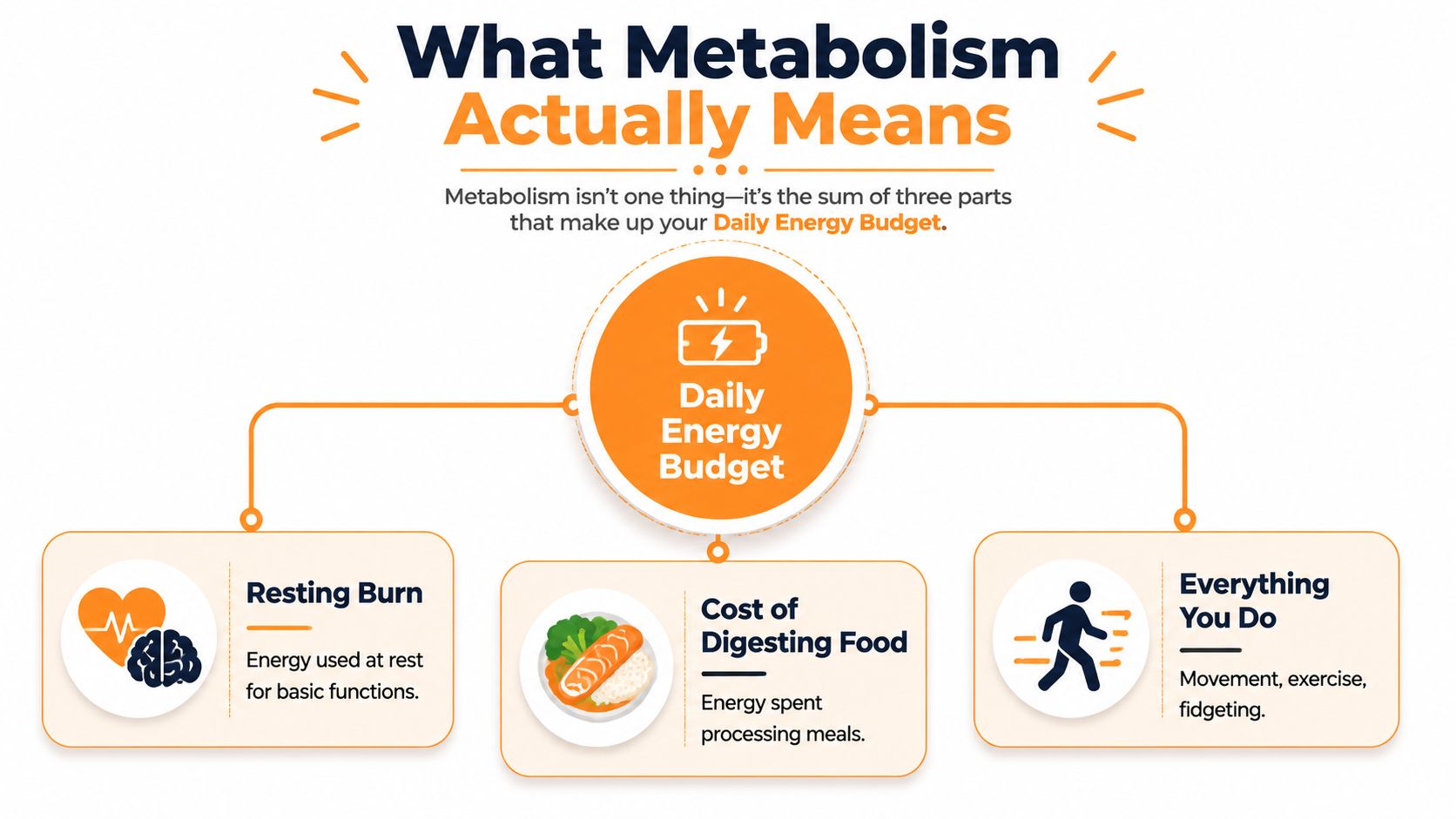
Metabolism isn't a switch you flip with a mug of green tea. It's your body's complete daily energy budget. That budget includes the energy needed to stay alive, process meals, and power movement.
The key terms in plain English
Basal metabolic rate, or BMR, means the energy your body needs at rest for basic functions. Your heart keeps beating, your lungs keep working, your brain stays active, and your body maintains its internal systems even while you're asleep.
Resting energy expenditure is a closely related idea. In everyday conversation, people often use it interchangeably with BMR. Both describe the large background share of energy your body uses without planned exercise.
Diet-induced thermogenesis, sometimes called the thermic effect of food, is the rise in energy use after eating. Your body must digest, absorb, and process nutrients. A University of Aberdeen and Rowett Institute trial description places this effect at 3 to 10% of total energy expenditure, depending on meal composition. Research on diet-induced thermogenesis
Finally, total energy expenditure, or TEE, means everything your body uses across the day. It combines resting needs, food processing, planned exercise, and ordinary movement.
The phrase “slow metabolism” can feel like a complete explanation for weight gain or difficulty losing weight. Sometimes health conditions, medicines, body composition, food intake, sleep, and activity all contribute instead. A single label rarely tells you which part needs attention.
Pharmacist's tip: Before buying a metabolism supplement, look at sleep, daily movement, medicines, eating patterns, and symptoms. Those clues usually offer more useful information than a product label.
Mini answer: Metabolism is the sum of the energy your body uses to stay alive, digest food, and move. The largest share usually comes from resting energy use, not a single workout.
For a more technical look at how body signals affect appetite and energy balance, see this guide to the MC4R receptor.
The three real levers of energy burn
The numbers help explain why quick fixes disappoint. Resting metabolism forms the largest background share. Food processing adds a smaller amount, while physical activity gives you the most direct room to change your daily energy use.
A House of Commons Health Committee evidence session reported that physical activity contributes about 10 to 15% of total daily energy expenditure in sedentary people, rising to 30 to 40% in normally active people. The same evidence places resting metabolic rate at 60 to 70%, with the energy cost of feeding at about 10%. UK BMR and energy expenditure context
| Component | Share of daily energy use | Easy to change? |
|---|---|---|
| Resting metabolic rate | 60 to 70% in the cited UK evidence | Not quickly. Muscle, body size, health, and genetics matter |
| Diet-induced thermogenesis | About 3 to 10% | Somewhat. Meal composition can alter it modestly |
| Physical activity | About 10 to 15% in sedentary people, rising to 30 to 40% in normally active people | Yes. Walking, exercise, standing, and strength work all help |
These ranges don't act like a personal calorie calculator. They show the shape of the problem. A supplement aimed at a small food-related effect can't compete with a sustained change in how often you walk, train, stand, or climb stairs.
NEAT is the movement between workouts
Non-exercise activity thermogenesis, or NEAT, covers low-intensity movement. It includes walking around the house, standing at work, changing posture, taking the stairs, and fidgeting. A cited review estimates physical activity-related energy expenditure at about 15 to 30% of total energy expenditure and reports 280 to 350 kcal per day as a NEAT target that may support weight loss. Review of NEAT and daily energy expenditure
That doesn't mean you should chase a precise calorie figure. Your realistic opportunity may be a short walk after meals, carrying shopping, or standing during phone calls.
The NHS recommends at least 150 minutes of moderate activity each week, or 75 minutes of vigorous activity, plus muscle-strengthening work on two or more days. NHS exercise guidance The NHS also explains weight loss as a net energy deficit, rather than a hunt for one special food. NHS weight-management information
A useful explanation of inherited influences on appetite and body weight appears in this guide to the MC4R receptor.
Do common metabolism boosters actually work
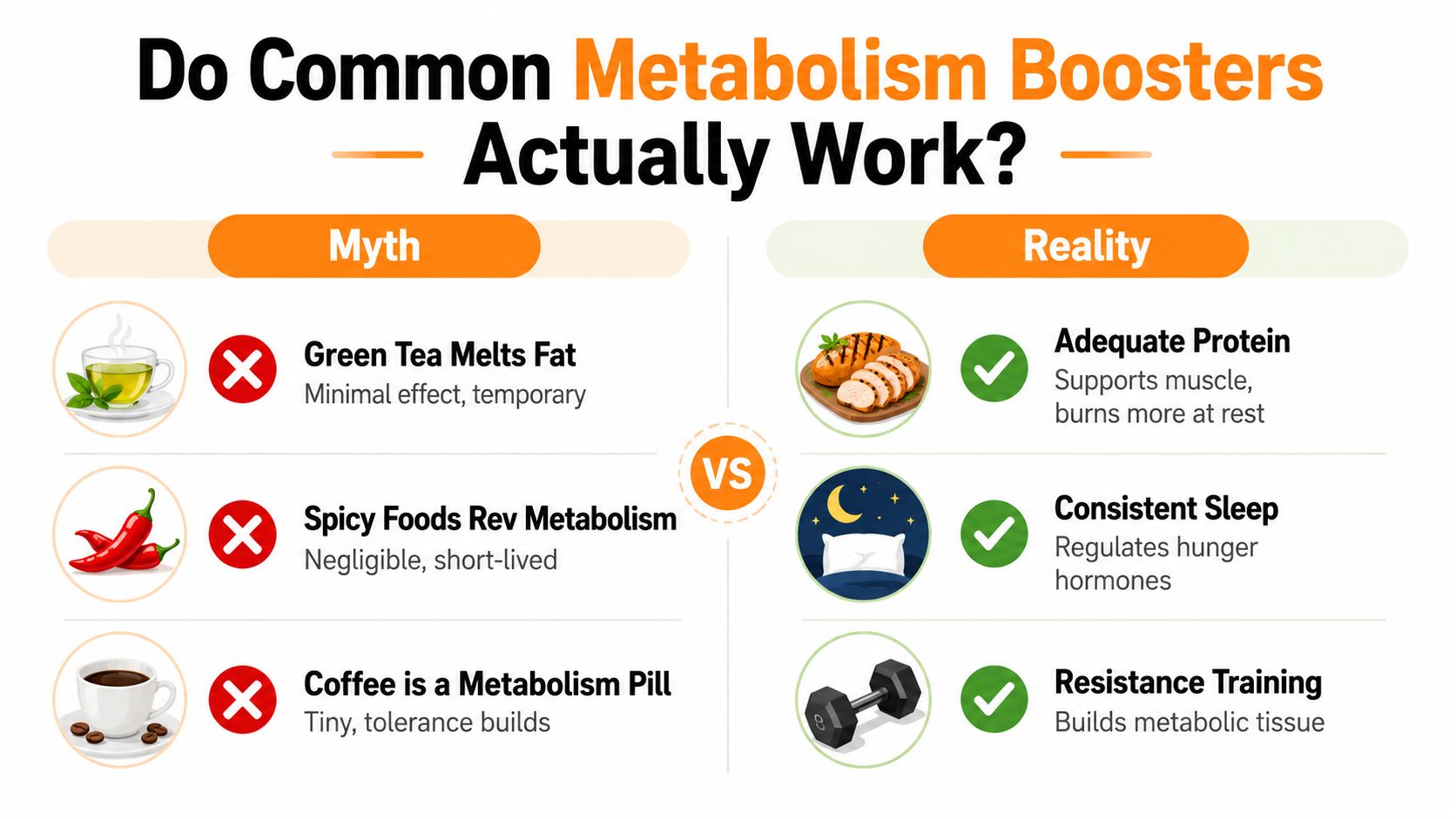
Most “fat-burning” claims promise a large result from a small action. UK-facing guidance gives a more cautious picture. Green tea, black coffee, spices, and energy drinks may affect how alert you feel or slightly alter energy use, but evidence for meaningful fat loss remains weak. UK-facing guidance on metabolism boosters
A quick verdict on popular claims
- Green tea: It may have a small, temporary effect, but it won't replace activity or a suitable eating pattern.
- Black coffee: Caffeine can increase alertness. Research on caffeine and weight outcomes found estimated reductions in weight, BMI, and fat mass of about 22%, 17%, and 28% respectively for every doubling in caffeine intake, but the authors described the overall effect as modest. Peer-reviewed caffeine and weight review
- Spicy foods: Chilli can make a meal feel warming, yet the practical effect on daily energy use appears small and short-lived.
- Small, frequent meals: Eating more often doesn't automatically create a faster metabolism. Choose a meal pattern that helps you manage hunger and energy.
- Supplements: Products sold as “metabolism boosters” can contain stimulant combinations or poorly tested ingredients. Marketing language isn't the same as proof of safety or benefit.
Protein has a stronger biological reason behind it. A peer-reviewed review found that high-protein meals produce greater dietary thermogenesis than low-protein meals. The same review found greater total energy expenditure when people ate before moderate-intensity aerobic exercise, compared with exercising while fasted. Review of protein, meal timing, and energy expenditure
That effect remains modest. Muscle-strengthening activity may offer a more useful long-term route because it helps maintain or build muscle, one of the few lifestyle changes with a plausible effect on resting energy use.
Pharmacist's tip: Avoid products that promise rapid fat loss, hide the full ingredient list, or rely on dramatic before-and-after stories. Ask a pharmacist to check interactions, particularly if you take medicines for blood pressure, mood, sleep, or your heart.
For readers considering medical weight management, this guide to Mounjaro and diet explains why food quality and muscle support still matter.
Lifestyle habits that move the numbers
The most reliable habits are regular movement, two strength sessions each week, enough protein, and good sleep. They won't create a dramatic overnight change. They can make your daily energy use, appetite, and weight-management plan more workable.
Start with movement you can repeat
Use the NHS activity target as a guide, not a test you pass or fail. A busy adult might build towards it through brisk walking, cycling, dancing, gardening, or active travel. Add strength work with resistance bands, bodyweight exercises, weights, or a supervised class.
Small actions count because they add NEAT to the day:
- Walk short journeys: Get off the bus earlier when the route allows.
- Break up sitting: Stand during calls or walk while listening to a podcast.
- Use stairs: Choose them when your joints and fitness allow.
- Plan strength work: Put two short sessions in your diary, rather than waiting for a free evening.
Make meals support muscle
Protein-rich foods include eggs, fish, yoghurt, tofu, beans, lentils, poultry, and meat. Spread protein across meals in a way that suits your appetite and budget. If a high-protein diet causes constipation, bloating, or discomfort, reduce the change and ask a healthcare professional for advice.
Hydration supports normal body function, but water isn't a special fat-burning drink. Drink regularly and pay attention to thirst, urine colour, heat, and exercise.
Here's a short visual explanation of movement, food, and sleep in daily energy balance:
Protect your sleep
Caffeine can make you feel more awake, but the NHS says its effects may last up to seven hours. Evening coffee, energy drinks, and strong tea can therefore disturb sleep, leaving you more tired the next day. NHS advice on caffeine and fatigue
Pharmacist's tip: If you need caffeine for a night shift, plan it early in the shift where possible. Don't use it to mask ongoing exhaustion without looking for the cause.
Stress can also disrupt eating and sleep routines. Keep the first step small, such as a walk after work, a regular bedtime, or preparing a protein-containing breakfast. Supplements marketed for energy, including CoQ10, shouldn't replace an assessment of persistent fatigue.
Real-life scenarios for UK adults
The best answer to what boosts metabolism depends partly on what your day already looks like. Two people can follow the same broad guidance but need different starting points.
The shift worker in Manchester
A 38-year-old warehouse shift worker in Manchester wants to lose weight but can't add more gym sessions. Her easiest lever may be NEAT, not another hard workout.
She could take a short walk before or after each shift, use stairs where safe, and stand during breaks. On night shifts, she might prepare meals before work so hunger doesn't push her towards vending-machine snacks. A protein-containing meal before the shift and a lighter meal before sleep may suit her better than forcing a traditional breakfast, lunch, and dinner pattern.
Sleep needs special protection. Blackout curtains, a cool bedroom, and a consistent wind-down routine may help her recover after nights. If caffeine stays in her system for hours, she should avoid taking it near the point when she plans to sleep.
The gym-goer in Bristol
A 45-year-old gym-goer in Bristol trains hard but has reached a weight-loss plateau. His first move shouldn't be adding endless cardio. He could review portion sizes, weekend eating, sleep, and whether his training plan supports recovery.
He might distribute protein across meals, keep a simple food diary for a short period, and add easy walking on rest days. Strength training should remain purposeful, with enough recovery to maintain performance. If fatigue, cold intolerance, hair loss, or an unexplained weight change appears, he should arrange a clinical review rather than assume the issue is motivation.
Pharmacist's tip: Build the routine you can repeat during a difficult week. A slightly less ambitious plan that survives shift work, family life, and poor weather usually beats a perfect plan that lasts briefly.
When to get tested and how a pharmacy can help
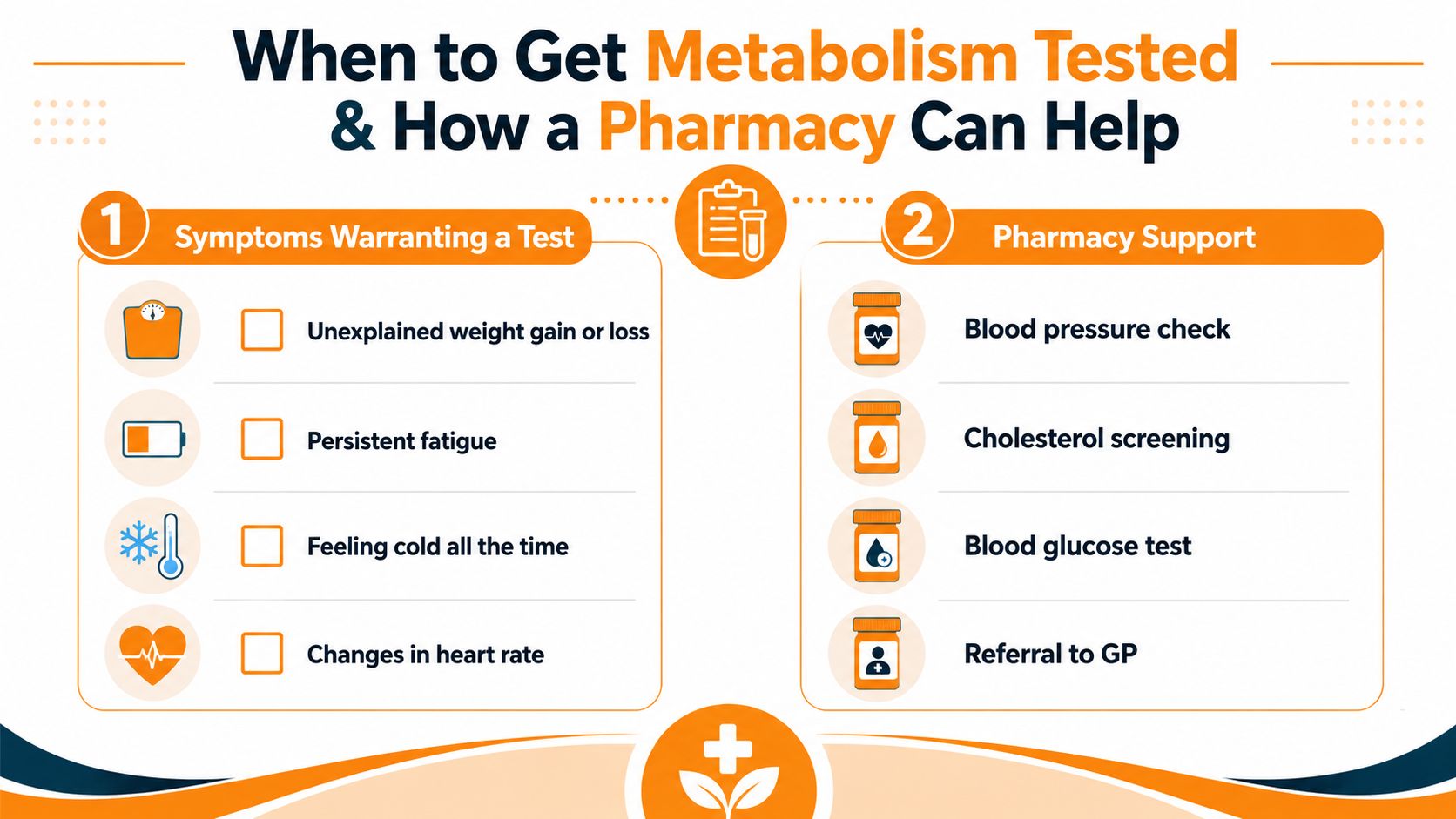
Lifestyle changes make sense for many people, but symptoms deserve proper attention. Speak with a GP or pharmacist if you notice unexplained weight gain or loss, ongoing fatigue, hair loss, feeling unusually cold or hot, changes in heart rate, or menstrual changes.
A clinician may consider tests based on your symptoms and history. These can include thyroid function, a full blood count, vitamin D, iron studies, or HbA1c, which checks average blood glucose. A test should answer a clinical question, rather than become a hunt for a “slow metabolism” label.
Weight-management support
Severe calorie restriction can suppress energy expenditure and make weight management harder. The NHS provides structured support, including a free 12-week digital programme for eligible adults. NHS digital weight-management programme
Prescription medicines such as GLP-1 therapies may suit some people who meet clinical criteria. They need proper screening, prescribing, follow-up, and advice about eating enough, managing side effects, and protecting muscle. They aren't a substitute for a safe long-term plan.
Courier Pharmacy offers home and venous blood testing, thyroid checks, and medically supervised weight-management consultations, alongside other pharmacy services. If you use an online service, check that a qualified prescriber reviews your information and that you receive clear follow-up advice.
Pharmacist's tip: Thyroid symptoms can overlap with anaemia, sleep problems, medication effects, and other conditions. Don't assume every change in weight or energy comes from the thyroid.
Safety note: Don't buy injectable weight-loss medicines or stimulant “fat burners” from unverified websites. If you develop severe chest pain, severe breathlessness, fainting, sudden weakness, or signs of a serious allergic reaction, seek urgent medical help.
For practical preparation before testing, read this UK guide to using a home blood test kit.
Your action plan and common questions
Try this five-step plan:
- Build daily movement: Add walking, standing, stairs, or active travel.
- Train your muscles: Work towards strength sessions on two days each week.
- Include protein: Add a suitable protein source to balanced meals.
- Protect sleep: Keep caffeine and screens away from your planned wind-down.
- Book a review: Ask a pharmacist or GP about persistent symptoms.
FAQs
Does a thyroid problem always slow metabolism?
No. Thyroid disorders affect people differently, and symptoms can overlap with other conditions. A clinician can decide whether thyroid testing fits your symptoms.
Does metabolism slow with age?
Energy use can change as people age, but the reason isn't just a number of birthdays. Changes in muscle, movement, food intake, health, and medicines may all matter.
Can Wegovy or Mounjaro boost metabolism?
These medicines mainly support weight management through appetite and food-intake effects. A prescriber must check whether they're suitable, then monitor treatment and side effects.
Is coffee a metabolism pill?
No. Caffeine may have a modest effect on energy use and alertness, but tolerance, sleep disruption, and added sugar can reduce its usefulness.
Should I eat before exercise?
It depends on the person and the activity. Research suggests eating before moderate-intensity aerobic exercise can produce greater total energy expenditure than exercising fasted, but comfort, timing, and medical needs matter.
When should I seek urgent help?
Seek urgent help for severe chest pain, severe breathing difficulty, fainting, sudden weakness, or a serious allergic reaction. For ongoing fatigue, weight change, or temperature intolerance, arrange a non-urgent clinical review.
Summary
Metabolism is your whole daily energy budget.
Resting needs use the largest share.
Movement, including NEAT, offers the clearest practical lever.
Strength work helps protect muscle.
Protein and meal timing may add modest effects.
Sleep and safe medical review matter more than miracle supplements.
This article is for information only and doesn't replace advice from your GP, pharmacist, or other healthcare professional.
Suggested internal links
- Metabolism and the MC4R receptor
- Mounjaro diet guidance
- Home blood testing in the UK
- CoQ10 benefits and safety
Visual ideas for the designer
- Daily energy budget: A painterly steampunk diagram with ornate brass plaque labels, pale yellow-green background, light grey panels, and bright lime accents. Alt text: “Daily energy budget showing resting burn, digestion, and physical activity.”
- Myths versus reality: A two-column brass-framed comparison using bright lime checks and muted warning symbols. Alt text: “Metabolism booster myths compared with protein, sleep, and resistance training.”
- Pharmacy testing pathway: A checklist with brass instruments, lime highlights, and pale yellow-green panels. Alt text: “Symptoms that may need a metabolism review and pharmacy support options.”
Meta description: What boosts metabolism? Learn which habits support energy use, how caffeine and protein compare, and when UK adults should seek medical advice.
SEO brief
- Primary keyword: what boosts metabolism
- Secondary keywords: metabolism boosters, how to increase metabolism, foods that boost metabolism, metabolism and weight loss, UK weight management
- Search intent: Informational and practical
- Target reader: UK adults seeking clear, safe metabolism and weight-management advice
- Product or service mention: Blood testing and medically supervised weight-management support
- Internal links available: Courier Pharmacy guidance on metabolism, blood tests, supplements, and GLP-1 medicines
Byline: Medical Mojo editorial team, patient education writers
Clinical review: To be reviewed by a UK-registered pharmacist before publication
How this content was created: This article combines UK guidance, the supplied peer-reviewed research, and patient-friendly interpretation. Medical claims and safety wording should undergo clinical review before publication.
References
- Aviva. (n.d.) BMR calculator and energy expenditure information.
- Diabetes.co.uk. (n.d.) BMR and diet-induced thermogenesis information.
- Primary Health Trust. (2025) Review of non-exercise activity thermogenesis.
- NHS England. (n.d.) Weight-management information.
- NHS. (n.d.) Exercise guidance.
- Oxfordshire Family Information Service Directory. (n.d.) Guidance on metabolism boosters.
- NHS England. (n.d.) Digital weight-management programme.
- NHS. (n.d.) Self-help tips for fatigue and caffeine.
- Kim, J. E. et al. (2015) Protein, meal timing, and energy expenditure review.
- Schubert, M. M. et al. (2018) Caffeine and weight outcomes review.
Courier Pharmacy offers UK home and venous blood testing, thyroid checks, and medically supervised weight-management consultations where clinically appropriate. Visit Courier Pharmacy to explore the available services and arrange a safe next step.


