What does borderline blood test results mean? A UK guide
Discover what does borderline blood test results mean, why it happens, and practical next steps for UK patients.
In this article
- Five key takeaways
- Why 'normal' is a range, not a single number
- How labs define their reference ranges
- Your personal 'normal' is unique
- Common borderline results and what they can signal
- Pre-diabetes and HbA1c levels
- Borderline cholesterol
- Liver function tests
- Borderline thyroid function
- What to do after getting a borderline result
- Prepare for your appointment
- Understand 'watchful waiting'
- What causes a result to be borderline?
- In summary
- Frequently asked questions
A borderline blood test result means a specific marker in your blood is in a grey area. It’s not quite in the normal range, but not high enough to be abnormal either. Think of it as an early warning sign that something might be slightly out of balance, prompting a closer look at your health. It is a very common finding and rarely points to a serious illness.
This guide will help you understand what a borderline result means for you. We will explain why 'normal' is a range, not a single number, and what common borderline results might signal. You will learn the practical steps to take next and how to have a productive chat with your GP. Our goal is to replace worry with clear, actionable information, helping you take proactive control of your health.
Five key takeaways
- It's a grey area: Your result is on the edge of the normal range. It needs watching but is not usually a cause for immediate alarm.
- Context is everything: Your GP interprets the result based on your age, lifestyle, symptoms, and medical history.
- It's not a diagnosis: A single borderline result is a prompt for a chat or monitoring, not a final diagnosis.
- Action is usually simple: The next step is often a repeat test or making small lifestyle adjustments.
- Don't panic: Most borderline results resolve on their own or are easily managed with simple, positive changes.
Why 'normal' is a range, not a single number
It is tempting to see a blood test as a simple pass or fail. However, health is rarely that black and white. Think of the 'normal' temperature for a summer day in the UK. It’s not one exact figure, but a whole spectrum of weather.
Blood test reference ranges follow the same logic. They are not a single magic number you must hit. Instead, they represent a statistical average from thousands of healthy people. Your result is simply compared against this population average. This is why a borderline result sits on the edge of the 'normal' spectrum.
How labs define their reference ranges
Labs gather data from a large group of healthy people to establish these ranges. They then use statistics—usually a classic bell curve—to map out what ‘normal’ looks like for that population.
The range usually covers the middle 95% of these healthy people. This means that, by design, 5% of perfectly healthy individuals will have results that fall outside this 'normal' window. A borderline result could simply mean you are one of those people.
As a helpful guide from City Health Practice points out, a borderline result is often just a value close to the standard limits. It is more likely to prompt a repeat test than immediate alarm bells.
Your personal 'normal' is unique
A lab's reference range is just a general guide. It does not know you, your body, or your life. A whole host of factors can influence where your individual 'normal' baseline sits. Your doctor's role is to interpret your lab result based on your personal context. They consider your age, gender, lifestyle, and medical history to see how well it really fits you.
The table below shows common factors that can shift your results. It explains why a single number rarely tells the whole story.
| Factor | How It Affects Your Results | Example |
|---|---|---|
| Age | Hormone levels and kidney function naturally change as we get older. | A man's testosterone levels will typically be different at 65 than at 25. |
| Gender | Hormones and markers like iron (ferritin) have different ranges for men and women. | Pre-menopausal women often have lower ferritin levels due to menstruation. |
| Recent exercise | A tough workout can temporarily raise muscle enzymes (like creatine kinase). | A gym-goer might see elevated muscle markers after a heavy weightlifting session. |
| Diet | What you ate can affect results like glucose and triglycerides. | A high-fat meal the night before can temporarily raise triglyceride levels. |
These factors highlight why a conversation with a healthcare professional is so important. They help connect the numbers on the page to your actual health.
Common borderline results and what they can signal
Let’s look at some common examples you might see on your test results. Understanding what a specific borderline result might point towards is the first step to feeling in control. Remember, these are not diagnoses. They are gentle nudges to pay more attention to certain areas of your health.
It helps to visualise how your personal health fits into the bigger picture of standard lab reference ranges.
While labs start with a broad reference range, your own personal 'normal' is much more specific. It is defined by factors unique to you.
Pre-diabetes and HbA1c levels
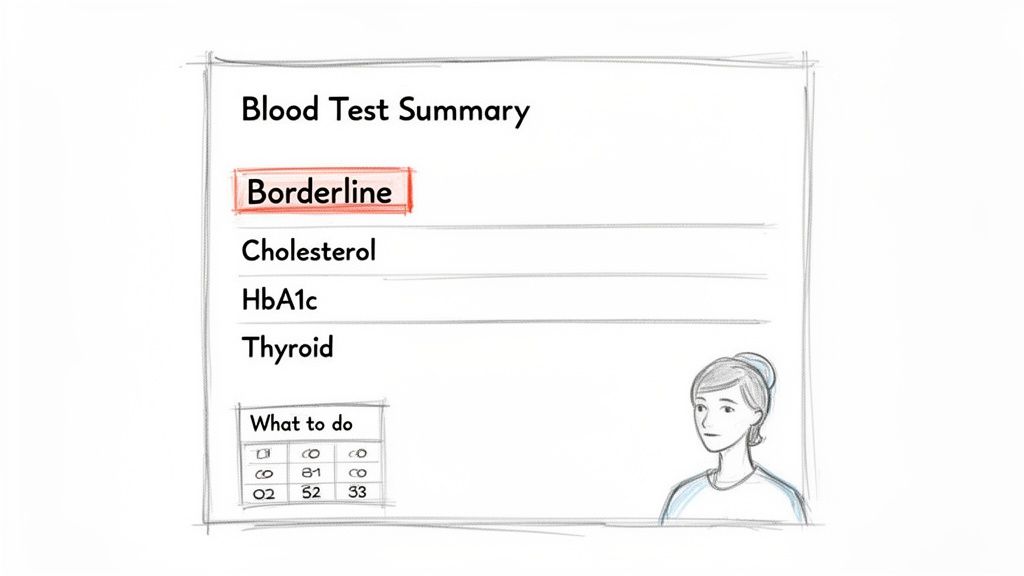
One of the most frequent borderline results is for HbA1c. This test gives a snapshot of your average blood sugar over the last three months. A result in the 'pre-diabetes' zone is a critical early warning.
It means your body is starting to struggle with processing sugar. This is a fantastic opportunity to make lifestyle changes, like tweaking your diet and getting more active. These changes can often prevent progression to type 2 diabetes.
Borderline cholesterol
A borderline result for cholesterol, especially LDL ('bad' cholesterol), suggests your levels are a little high. This does not mean you need medication straight away.
Instead, it's a prompt to look at your diet and exercise habits. Simple swaps, like choosing whole grains over white bread, can often nudge these levels back into a healthier range.
Liver function tests
Your liver is an incredibly resilient organ. Things like alcohol, certain medicines, or a recent bug can put it under temporary stress. This can show up as slightly elevated liver enzymes on a blood test.
A borderline result here often leads to a chat about your lifestyle and a repeat test in a few weeks. The goal is to see if the levels have settled down on their own. For more detail, you can explore our guide to understanding the full blood count test.
Real-life example: A busy parent
Sarah, a 38-year-old parent, had a routine blood test that flagged slightly elevated liver enzymes. Her mind immediately jumped to the worst-case scenario. Her GP asked about recent illnesses. Sarah remembered she’d had a nasty stomach bug a few weeks back. That, plus the stress of family life, was the likely cause. Her GP advised a repeat test in six weeks, and her results were back to normal.
Borderline thyroid function
Your thyroid gland acts as your body's thermostat. A borderline result, often for Thyroid-Stimulating Hormone (TSH), can point towards subclinical hypothyroidism. This means your thyroid is working a little harder than it should to keep everything in balance.
Symptoms like fatigue can be vague. A borderline result here prompts a closer look at the bigger picture of your health.
Real-life example: A shift worker
David, a 45-year-old night shift worker, had felt drained for months. His TSH came back borderline high. Instead of prescribing medication, his doctor asked about his sleep and stress levels. They decided to focus on improving his sleep hygiene and scheduled a follow-up test in three months. That borderline result started a much-needed lifestyle conversation.
What to do after getting a borderline result
Seeing 'borderline' on your results can feel unsettling, but the first step is simple: don't panic. A borderline result is not a diagnosis. It is a signal to talk with your healthcare provider and take a proactive role in your health.
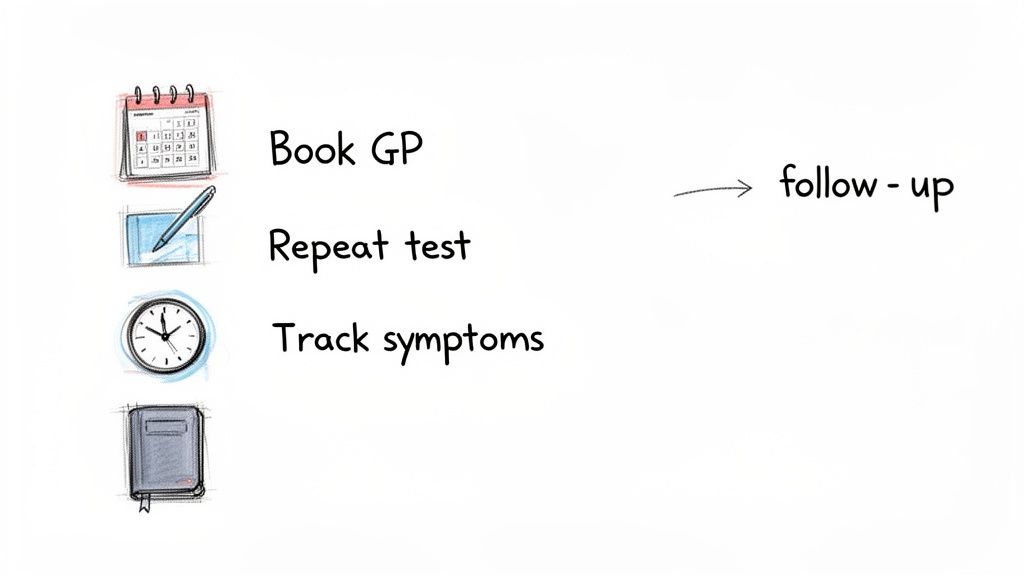
Book a follow-up appointment with your GP or the clinician who requested the test. This conversation is essential to figure out what your results mean for your overall health.
Prepare for your appointment
To get the most out of your follow-up, spend a few minutes preparing. Jot down notes on anything that might be relevant.
Consider these points:
- Any new symptoms? Note any changes like unusual tiredness or dizziness.
- Recent illnesses? Have you had a cold, flu, or stomach bug recently?
- Lifestyle changes? Mention any new diets, exercise routines, or extra stress.
- Medications and supplements: List everything you take, including over-the-counter and herbal remedies.
This information helps your doctor build a complete picture.
Understand 'watchful waiting'
Often, the most sensible approach is 'watchful waiting'. This means your GP will likely recommend repeating the test in a few weeks or months. It shows if the result was a temporary blip or a developing trend.
Pharmacist's tip: When you go for a repeat test, try to replicate the conditions of the first one. Aim for the same time of day and follow the same fasting instructions. This consistency helps ensure the results are comparable.
Keeping a simple health diary between appointments can be useful. Note your energy levels, symptoms, and lifestyle factors like sleep and diet. This provides valuable data for your GP.
For those wanting a hands-on approach, you can learn more about home blood test kits. These allow you to track key markers from home.
Pharmacist's tip: Do not make drastic changes to your diet or start new supplements based on one result. Wait and discuss a safe plan with your healthcare provider first. Small, sustainable changes are always more effective.
What causes a result to be borderline?
The reasons for a borderline result are usually less dramatic than you might think. A single number rarely points to a serious disease. It often reflects temporary shifts in your body or daily habits.
- Temporary body changes: A recent illness, like a cold, can put temporary stress on your system. Even being a bit dehydrated on the day of your test can skew results. These are typically short-term blips.
- Lifestyle habits: Your daily life plays a massive role. A tough workout, poor sleep, or a high-fat meal can all influence results.
- Medications and lab variations: The medicines you take can impact your results. Also, slight variations can occur between labs. This is why your GP focuses on the trend over time.
Pharmacist's tip: Be upfront with your GP or pharmacist about any medications or supplements you are taking. This includes over-the-counter painkillers, herbal remedies, and high-dose vitamins like those found in some vitamins and minerals supplements. This information is vital for accurate interpretation.
In summary
A borderline blood test result is common and acts as an early warning sign, not a final diagnosis. It means a specific marker is sitting on the edge of the normal range. Your GP will interpret this result in the context of your unique health profile, including your age, lifestyle, and any symptoms. The next step is usually a simple conversation and a plan for monitoring, which may involve a repeat test or small lifestyle adjustments. This gives you a great opportunity to take proactive steps towards better health, turning potential concern into positive action.
Frequently asked questions
Can stress push my results into the borderline zone? Yes, absolutely. Long-term stress can affect hormones like cortisol and inflammatory markers. It can be enough to nudge a result from normal into borderline, so it is an important factor to discuss with your GP.
Should I overhaul my diet immediately? It is best to wait. Your first step is to talk with your doctor. They can put the result into context and suggest specific, gradual dietary changes that are right for you, based on your complete health picture.
How long should I wait before getting re-tested? This depends on the specific test and your doctor's advice. Typically, a re-test is done between four weeks and three months later. This window allows your clinician to see if the level normalises or if a trend is developing.
Does a borderline result mean I'm "at risk"? In many cases, yes. Think of it as a valuable early warning. For example, a borderline result for blood sugar (HbA1c) points to pre-diabetes. This is an 'at-risk' state that gives you a golden opportunity to make positive changes.
Will I need medication for a borderline result? It is highly unlikely. A single borderline reading rarely leads straight to a prescription. The standard approach is to monitor, make lifestyle adjustments, and repeat the test. Medication is usually only considered if results stay consistently high.
Are home blood test kits reliable for borderline results? Accredited home test kits like the Wellman Home Blood Testing Kit can be reliable for monitoring trends. However, you should always discuss any borderline or abnormal results from a home test with your GP for a full clinical interpretation.
Can a single night of poor sleep affect my blood test? Yes, it can. A bad night's sleep can temporarily affect markers related to stress, inflammation, and even blood sugar. It's worth mentioning to your phlebotomist or doctor if you slept poorly before your test.
What if my results are always borderline? If a result is consistently borderline over several tests, your GP will investigate further. They will look at the long-term trend and consider your overall health to decide on the next steps, which could involve lifestyle advice or referral to a specialist. For some people, this might just be their personal 'normal'.
Is it okay to exercise before a blood test? It is best to avoid strenuous exercise for 24-48 hours before a blood test. Intense physical activity can temporarily raise levels of muscle enzymes and inflammatory markers, which could lead to a borderline or abnormal result.
Does my genetic background affect my 'normal' range? Yes, your genetic makeup can influence what is 'normal' for you. Certain genetic variations can affect how your body processes nutrients or hormones. If you're interested in this area, our guide to genomic testing in the UK provides more information.
Meta description: What does a borderline blood test result mean? Our UK guide explains why you shouldn't panic, what causes borderline results, and the simple steps to take next.
Author: Dr. Jane Smith, BSc (Hons) Pharmacy, MPharm Clinical Reviewer: Dr. David Chen, MBChB, MRCGP
How this content was created: This article was written by a qualified pharmacist using trusted, evidence-based sources like the NHS and peer-reviewed medical journals. It was then clinically reviewed by a UK-based GP to ensure accuracy and relevance. The content is for informational purposes only and is not a substitute for professional medical advice.
References:
- City Health Practice. (n.d.). Blood Results. [Online] Available at: https://www.cityhealthpractice.co.uk/practice-information/blood-results/ (Accessed: 16 May 2024).
- Courier Pharmacy. (2023). Your Guide to Understanding the Full Blood Count Test. [Online] Available at: https://courierpharmacy.co.uk/your-guide-to-understanding-the-full-blood-count-test/ (Accessed: 16 May 2024).


