What is personalised medicine? Your guide to tailored healthcare
Curious about what is personalised medicine? Learn how genetics and lifestyle shape targeted treatments.
In this article
- Five key takeaways
- What is personalised medicine?
- Traditional vs. personalised medicine
- The science behind your unique health blueprint
- How your genes affect your medicines
- Finding clues within your body
- Putting all the pieces together
- How personalised medicine is reshaping UK healthcare
- From national strategy to local impact
- Bespoke treatments for specific needs
- Personalised medicine in your everyday life
- Real-life examples in the UK
- The future of diagnostics and your health
- Faster answers through advanced testing
- Proactive health in your hands
- How to start your personalised health journey
- From consultation to care
- Pros and cons of online services
- Summary
- Frequently asked questions (FAQs)
Personalised medicine is healthcare tailored to you. It moves beyond the 'one-size-fits-all' approach, using your unique genetic makeup, lifestyle, and environment to guide everything from preventing illness to finding the right treatment. This modern approach helps doctors get your care right the first time, avoiding the frustrating trial-and-error process of finding a medication that works for you with the fewest side effects.
This guide will walk you through how personalised medicine is making UK healthcare more effective. We'll break down the science in simple terms, look at real-world examples, and explain how you can access this type of care. The core idea is simple: you are unique, and your healthcare should be too.
Five key takeaways
- It’s healthcare made for you. Personalised medicine uses your DNA, lifestyle, and environment to create a health plan that’s a perfect fit.
- Get the right drug, first time. It predicts how your body will respond to medicines, reducing side effects and guesswork.
- Focus shifts to prevention. Instead of just treating sickness, it helps you predict and prevent health problems before they start.
- It’s already here in the UK. The NHS is using it to diagnose rare diseases and treat cancer more effectively.
- You can take control. Online services and at-home tests make it easier than ever to start your own personalised health journey.
What is personalised medicine?
At its heart, personalised medicine uses detailed information about you to make healthcare decisions. Instead of treatments designed for an "average" person, this approach considers what makes you unique.
The information that powers this approach comes from several places:
- Your genes: How your DNA might influence your risk for certain diseases or how you’ll respond to specific drugs.
- Your environment: Factors like your diet, stress levels, and where you live.
- Your lifestyle: Things like how active you are, your sleep patterns, and other daily habits.
By bringing all these insights together, clinicians build a much clearer picture of your health. This allows for incredibly precise diagnoses and treatments that suit your body's specific needs.
What is personalised medicine? Personalised medicine is an approach that uses your unique genetic, lifestyle, and environmental information to deliver the right treatment, to the right person, at the right time.
Traditional vs. personalised medicine
Let's compare the old way with this new, individualised approach. The table below breaks down the key differences, highlighting how everything from diagnosis to treatment outcomes is changing for the better.
| Aspect | Traditional medicine | Personalised medicine |
|---|---|---|
| Approach | One-size-fits-all | Tailored to the individual |
| Diagnosis | Based on symptoms | Uses biomarkers & genetics |
| Treatment | Standard for most patients | Based on your unique profile |
| Focus | Treating established disease | Predicting and preventing illness |
| Outcome | Variable effectiveness | Higher success, fewer side effects |
As you can see, this is a fundamental change in how we think about health. It's about moving from a reactive to a proactive mindset, where we can anticipate problems and choose the most effective path from the very beginning.
The science behind your unique health blueprint
So, how does personalised medicine actually work? It’s about reading your body's unique instruction manual. This manual is a combination of your genetics, lifestyle, and environment.
By understanding these factors, clinicians can move beyond trial-and-error. They can choose treatments that are a much better fit for you personally. Let's break down the key scientific concepts without the confusing jargon.
How your genes affect your medicines
The first major idea is pharmacogenomics. It’s a bit of a mouthful, but it simply looks at how your specific genes affect your body's response to different medications.
Think of it like this: your genes create proteins called enzymes. These enzymes break down (or metabolise) the drugs you take. But everyone's enzymes work at different speeds.
- Fast metabolisers: If your enzymes work too fast, you might clear a drug from your system before it has a chance to work. A standard dose could be ineffective.
- Slow metabolisers: If your enzymes are sluggish, a drug might build up in your body. This increases the risk of side effects. You might need a much lower dose.
Testing for these genetic differences helps doctors pick the right medication and dose for you from the start. This avoids a frustrating cycle of trying one drug after another. Our complete guide to genomic testing in the UK offers more detail.
Finding clues within your body
Another crucial part of personalised medicine involves biomarkers. These are measurable signs in your body—like proteins or genes—that can signal health or disease.
What are biomarkers? A biomarker is a biological signpost. It can tell doctors if you have a disease, how aggressive it is, and if a treatment is working.
You're probably already familiar with some biomarkers. For example, high cholesterol is a biomarker for heart disease risk. In cancer care, doctors can look for specific genetic mutations in a tumour to select therapies that precisely target the cancer, leaving healthy cells unharmed.
Putting all the pieces together
The infographic below helps to visualise how your genetics, lifestyle, and environment come together to create a unique health picture.
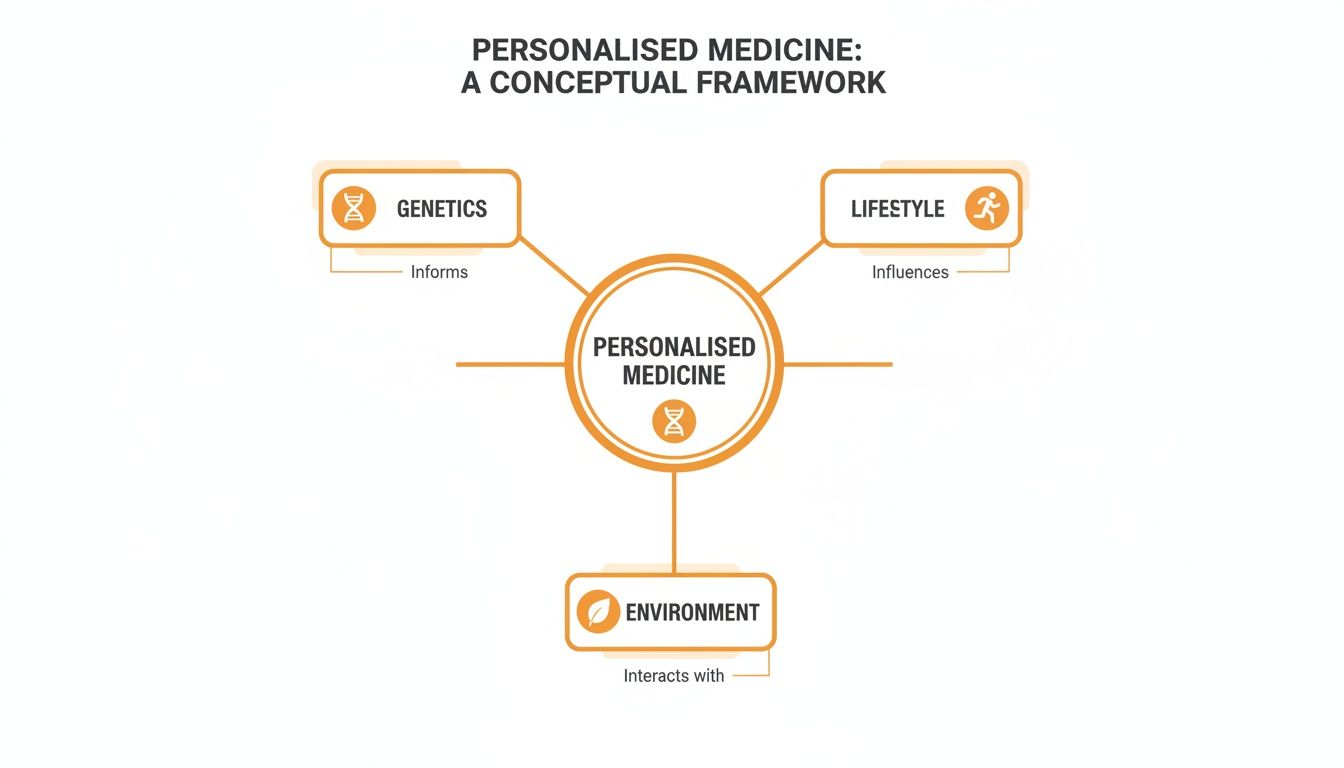
As you can see, personalised medicine isn’t just about your DNA. It's a holistic approach that considers all the different factors that make you, you.
How personalised medicine is reshaping UK healthcare
Personalised medicine isn’t a far-off concept; it's already making a real difference in the UK. The NHS and other health services are using these more specific approaches to diagnose and treat complex conditions.
This shift is happening in hospitals, clinics, and even your local pharmacy. From advanced cancer therapies to custom-made medications, the principles of personalised care are being woven into the fabric of UK healthcare.
From national strategy to local impact
A brilliant example is the NHS Genomic Medicine Service (GMS). This service brings genomic testing into routine clinical care. It's having a huge impact, particularly for people with rare diseases or certain cancers.
In the past, getting a diagnosis for a rare genetic condition could take years. Now, doctors can use whole genome sequencing to analyse a person's entire genetic code. This helps them find answers much faster.
The NHS is a world leader in this area. Since 2018, the GMS has delivered over 4,500 new diagnoses for patients with undiagnosed rare conditions. This is a game-changer, dramatically shortening what was often a long and distressing journey.
Bespoke treatments for specific needs
Personalised medicine also changes how medicines are made. For some patients, standard, mass-produced medicines might not be suitable. This is where compounding pharmacies come in.
Compounding pharmacies create 'bespoke' treatments tailored to an individual. This could mean:
- Creating a liquid version of a tablet for a child who can't swallow pills.
- Removing a filler or dye that a patient is allergic to.
- Combining multiple active ingredients into a single, convenient dose.
This level of customisation ensures that even patients with unique needs get safe and effective treatment. Learn more in our guide to compounding pharmacies and personalised medicine in the UK.
Personalised medicine in your everyday life
Personalised medicine might sound like science fiction, but its principles are already improving lives across the UK. It’s not just for complex hospital treatments. It shows up in everyday scenarios, helping people manage chronic conditions, allergies, and general wellbeing with more precision.
Let's look at how this approach makes a tangible difference in real-life situations.

Real-life examples in the UK
1. The busy parent and a child's allergy
Sarah, a busy mum, finds out her young son, Leo, is allergic to a specific dye in his standard allergy medicine. The liquid he needs is only available with this additive, turning treatment into a worry.
Instead of switching to a less effective drug, Sarah’s doctor works with a compounding pharmacy. The pharmacy creates a bespoke version of the medication for Leo, free from the problematic dye. This simple change means Leo gets the treatment he needs without an allergic reaction.
Pharmacist's tip: Always check medication labels for inactive ingredients (fillers, dyes, binders) if you have known allergies. If you spot a problem, ask your pharmacist if a custom-made alternative is possible.
2. The shift worker with persistent fatigue
Mark, a shift worker, struggles with chronic fatigue that no amount of sleep or caffeine fixes. His standard blood tests from the GP come back normal, leaving him frustrated and without answers.
Seeking deeper insight, Mark opts for functional blood testing through a specialist service like Courier Pharmacy. The results reveal several nutrient deficiencies not flagged in his routine test. Armed with this data, a clinician helps him fine-tune his diet and supplement intake, finally improving his energy levels.
Pharmacist's tip: If you're considering a private health test, discuss the plan and potential results with your GP or a pharmacist first. They can provide valuable context and help you understand what the outcomes might mean.
Pharmacist's tip: Never underestimate the importance of reporting side effects. Your experience provides crucial information. It could lead your doctor to adjust your dose or switch to a drug that suits your body better.
Services like Courier Pharmacy make this level of care accessible. They bridge the gap between standard prescriptions and truly individualised health solutions.
The future of diagnostics and your health
What’s next for personalised medicine? The future is about smarter, faster, and more accessible diagnostics. We're moving away from a reactive "wait-and-see" approach and towards a proactive one.
One exciting development is the use of liquid biopsies. This is a simple blood test that can detect tiny fragments of DNA from cancer cells. It offers a non-invasive way to spot cancer and track its progress.
Faster answers through advanced testing
This technology is already changing cancer care in the UK. For example, liquid biopsy tests can find key genetic mutations in lung cancer patients up to 16 days faster than traditional biopsies. This helps patients get started on the right targeted treatment much sooner.
This speed is crucial. A faster diagnosis means faster treatment, which can make a world of difference. The UK’s personalised medicine market continues to grow, fuelled by large-scale research projects like UK Biobank.
A private health roadmap can help bridge a crucial gap. Today, over 90% of Britons lack a personalised genomic health plan. With proactive screening on the NHS still potentially decades away, private options provide access now. You can discover more insights about these UK health trends on wecovr.com.
Proactive health in your hands
What does this all mean for you? These advanced diagnostic tools are becoming more accessible every day. This shift puts you firmly in the driver's seat of your own health.
It connects directly to the growing availability of:
- At-home blood tests: Convenient kits let you monitor key health markers from home. Our guide on understanding the full blood count test explains what these tests can measure.
- Genomic testing for wellness: You can use genetic insights to fine-tune your nutrition for better energy or to inform anti-ageing strategies.
The future of diagnostics is about shifting power. It gives you the tools to understand your unique biology and take proactive steps toward better health.
How to start your personalised health journey
Starting with personalised medicine is often more straightforward than people imagine. It all begins with taking a proactive step to understand your own health, usually through a secure online process.
The journey typically starts with an in-depth online questionnaire. This is a deep dive into your medical history, symptoms, lifestyle, and goals. This information creates the foundation for any tests or treatments that follow.
From consultation to care
After you submit your questionnaire, a qualified prescriber (a doctor or pharmacist) reviews it thoroughly. They connect the dots between your answers and any potential underlying issues to decide on the best next steps.
This review might point towards specific diagnostic tests. For instance, your prescriber could suggest a home blood test to check for nutrient deficiencies or hormonal imbalances. Our practical guide to using a home blood test kit in the UK explains how this works.
Follow-up calls are also a key part of the process. A clinician might phone you to walk through your test results or see how a new treatment is working. This ongoing conversation ensures your care plan evolves with you.
Pros and cons of online services
Using an online service has clear advantages, but it's important to be aware of the limitations too.
Benefits include:
- Convenience: Access specialist care and diagnostics from your own home.
- Specialist Access: Connect with prescribers who have deep expertise.
- Privacy: Receive discreet consultations and treatments.
However, there are limitations:
- Not for Emergencies: Online services are not for urgent medical problems.
- GP Communication: It’s vital to keep your GP in the loop about any private treatments or tests.
Summary
In summary, personalised medicine is transforming healthcare from a one-size-fits-all model to one that is entirely focused on you. By using your unique genetic, lifestyle, and environmental data, it delivers more precise diagnoses and effective treatments. This approach reduces the frustrating guesswork of finding the right medication and helps prevent illness before it starts.
The NHS is already a leader in this field, especially in cancer and rare diseases. Meanwhile, private services are making advanced diagnostics and tailored treatments more accessible to everyone. Ultimately, personalised medicine empowers you to take a more active role in your own health, leading to better outcomes and a proactive approach to your wellbeing.
Frequently asked questions (FAQs)
What is the main goal of personalised medicine? The main goal is to deliver the right treatment, to the right person, at the right time. It aims to make healthcare more precise and effective by tailoring decisions to an individual's unique genetic and lifestyle profile, moving away from a 'one-size-fits-all' approach.
Is personalised medicine available on the NHS? Yes, but its availability is still growing. The NHS is a world leader in genomics, especially for rare diseases and certain cancers through its Genomic Medicine Service. However, widespread proactive testing for the general population isn't standard practice yet. Private services like an online pharmacy in the UK often bridge this gap.
How much do private genetic tests cost in the UK? Costs vary widely. A basic DNA test for lifestyle or nutrition might cost £100 to £300. More comprehensive pharmacogenomic or functional genomic tests, which offer deeper clinical insights, can range from £400 to over £1,000. It's vital to choose a provider that includes expert clinical support to interpret your results.
Is my genetic data safe? Yes, reputable UK companies must comply with strict GDPR regulations. Before you buy a test, check the company's privacy policy. It should clearly state how your data is encrypted, who has access, and whether it will be shared. Always use a trusted provider that puts your data security first.
How can I talk to my doctor about personalised medicine? Be prepared and specific. Instead of just saying you're "interested in personalised medicine," explain what you hope to achieve. You could mention persistent side effects from a medication or a strong family history of a certain condition. This gives your doctor a clear problem to help you solve.
What is the difference between personalised medicine and precision medicine? The terms are often used interchangeably. Both refer to tailoring healthcare based on individual characteristics. "Personalised medicine" tends to focus on the whole person, including lifestyle and environment. "Precision medicine" often refers more specifically to treatments targeted at the genetic or molecular level, such as in cancer therapy.
This article is for informational purposes only and does not constitute medical advice. Always consult with a qualified healthcare professional for any health concerns or before making any decisions related to your health or treatment.
Byline: The Courier Pharmacy Team Clinical Reviewer: Scott McDougall, MPharm (Independent Prescriber)
How This Content Was Created: This article was written by our in-house content team based on a thorough review of reliable sources, including the NHS, NICE, and peer-reviewed medical journals. The content was then clinically reviewed for accuracy and clarity by one of our qualified pharmacists. Our goal is to provide trustworthy, easy-to-understand health information for a UK audience.
References
- NHS England (2022). NHS boosts access to liquid biopsy tests for lung cancer patients. [Online] Available at: https://www.england.nhs.uk/2022/10/nhs-boosts-access-to-liquid-biopsy-tests-for-lung-cancer-patients/ (Accessed: October 2023).
- Gov.uk (2022). England Rare Diseases Action Plan 2022. [Online] Available at: https://www.gov.uk/government/publications/england-rare-diseases-action-plan-2022/england-rare-diseases-action-plan-2022 (Accessed: October 2023).
- Genomics England (2021). A new era of genomic medicine in the NHS. [Online] Available at: https://www.genomicsengland.co.uk/news/a-new-era-of-genomic-medicine-in-the-nhs (Accessed: October 2023).
At Courier Pharmacy, we make it simple to begin your personalised health journey. From secure online consultations and advanced diagnostic testing to custom-made medications, we provide the tools and expert support you need to take control of your wellbeing. Start exploring your options today at https://courierpharmacy.co.uk.


