Why Do I Have Spots on My Forehead? Causes and Care
Why do I have spots on my forehead? Learn common causes, how to tell acne from other skin problems, treatment options, and when to seek advice.
You notice a fresh line of bumps along your hairline while getting ready for work, or after a sweaty gym session. Forehead spots are often acne, caused by blocked hair follicles, but irritation, folliculitis, hair products, sweat and hormonal changes can look similar. The pattern and feel of the spots can offer clues, but they can't confirm a diagnosis on their own.
Spots are common and don't automatically mean poor hygiene. This guide looks at what different bumps may look and feel like, how to check for possible triggers, and what gentle care you can try. It also explains when to speak with a pharmacist or GP, and when to seek more urgent help.
What Causes Forehead Spots
The most common cause of forehead spots is acne. Oil and dead skin cells can block hair follicles, creating blackheads or whiteheads. Inflammation can then lead to red bumps or pus-filled spots. UK clinical guidance on acne describes this process.
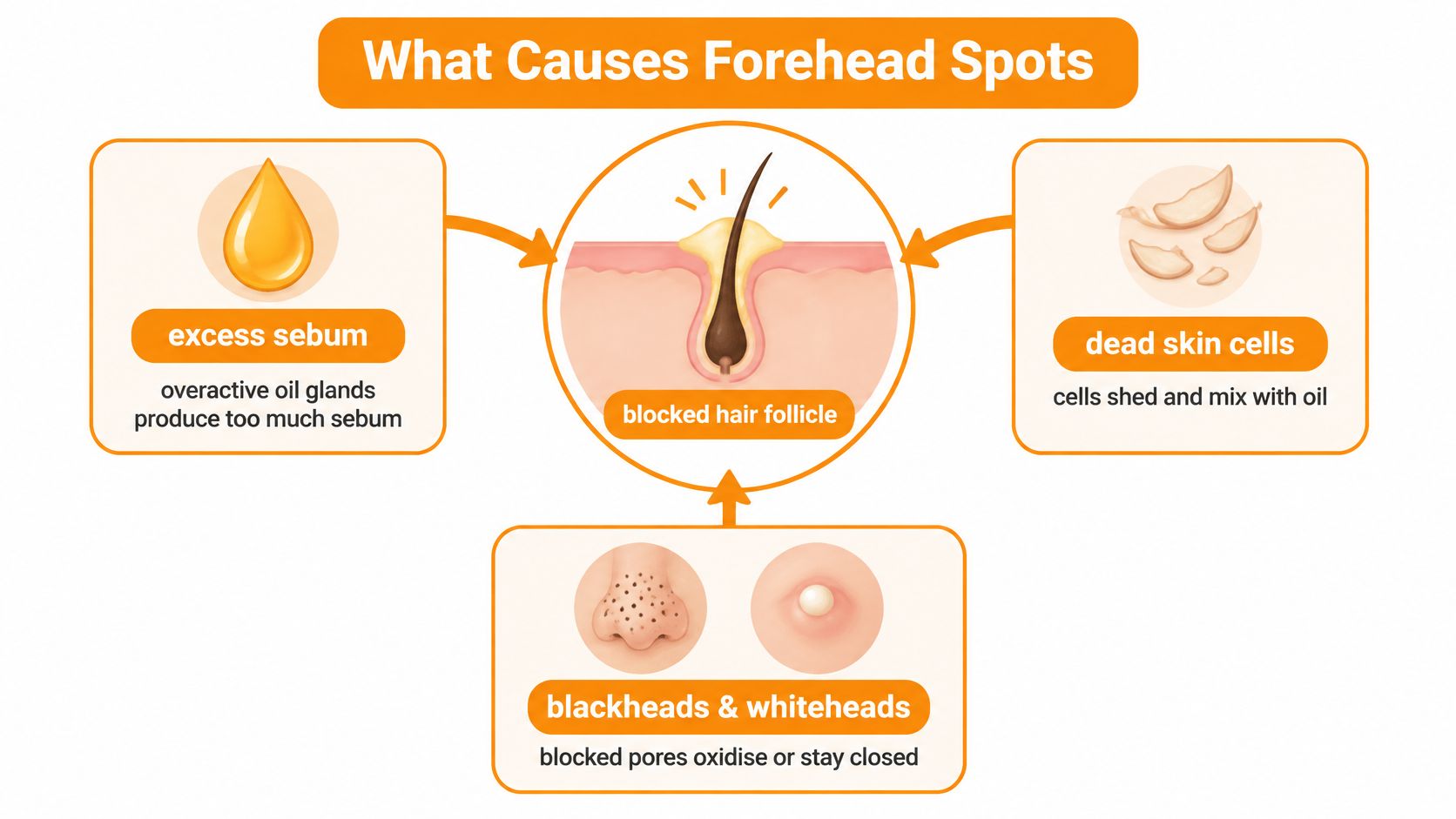
Why the forehead can be affected
The forehead is part of the T-zone, where oil production is often higher. Hair oils, styling products, sweat and makeup can add to the oil or blockages on the skin. Hats, helmets and headbands can also rub against the hairline or trap sweat and product residue.
Hormonal changes can affect oil production, too. Puberty is a familiar example, but acne can also start or return in adulthood, including around menstruation, pregnancy and menopause. Some medicines and hormonal conditions can contribute as well.
When products may play a part
Oily hair products can cause a pattern called pomade acne, with spots or blocked pores near the forehead and temples. That doesn't mean every hairline bump comes from a product, but it's worth noticing whether a new oil, gel or styling cream touches the area.
Forehead acne usually reflects a mix of factors, such as oil, blocked follicles, inflammation and friction. It isn't a sign that you haven't washed enough. If you'd like a general overview of acne and available care, read Courier Pharmacy's information about acne.
Common Triggers and Patterns
A cluster of bumps doesn't always mean acne. The way the spots look and feel, where they sit and when they appear can offer useful clues, though similar-looking skin problems can have different causes.
| Pattern | What you may notice | Useful clues | When to get advice |
|---|---|---|---|
| Acne | A mix of blackheads, whiteheads, red bumps or pus-filled spots | Can appear across the forehead, not only at the hairline | Ask for help if it persists, hurts, scars or worsens |
| Folliculitis | Small bumps around hair follicles, sometimes itchy or tender | Bumps may look similar to each other, especially near the hairline | Get advice if it continues or becomes painful |
| Contact dermatitis | An itchy or scaly rash, sometimes spreading beyond one spot | May follow a new product or repeated washing | Ask a pharmacist or GP if it persists or worsens |
| Sweat or friction irritation | Bumps or sore areas where a hat, helmet or headband rubs | May flare after exercise or prolonged wear | Seek advice if it doesn't settle after removing the likely trigger |
| Hormonal pattern | Spots that recur at certain times | Menstrual timing or other hormonal changes may be relevant | Discuss recurring or distressing symptoms with a clinician |
A rash that itches or scales may point away from typical acne, while uniform, itchy bumps along the hairline may have another explanation. Don't try to diagnose the cause from appearance alone. If you're unsure, a pharmacist can help you decide whether self-care is reasonable or whether you should see a GP.
Some products can also leave marks after spots have settled. For a separate guide to marks and changes in skin colour, see this overview of skin hyperpigmentation.
How to Check What May Be Triggering Them
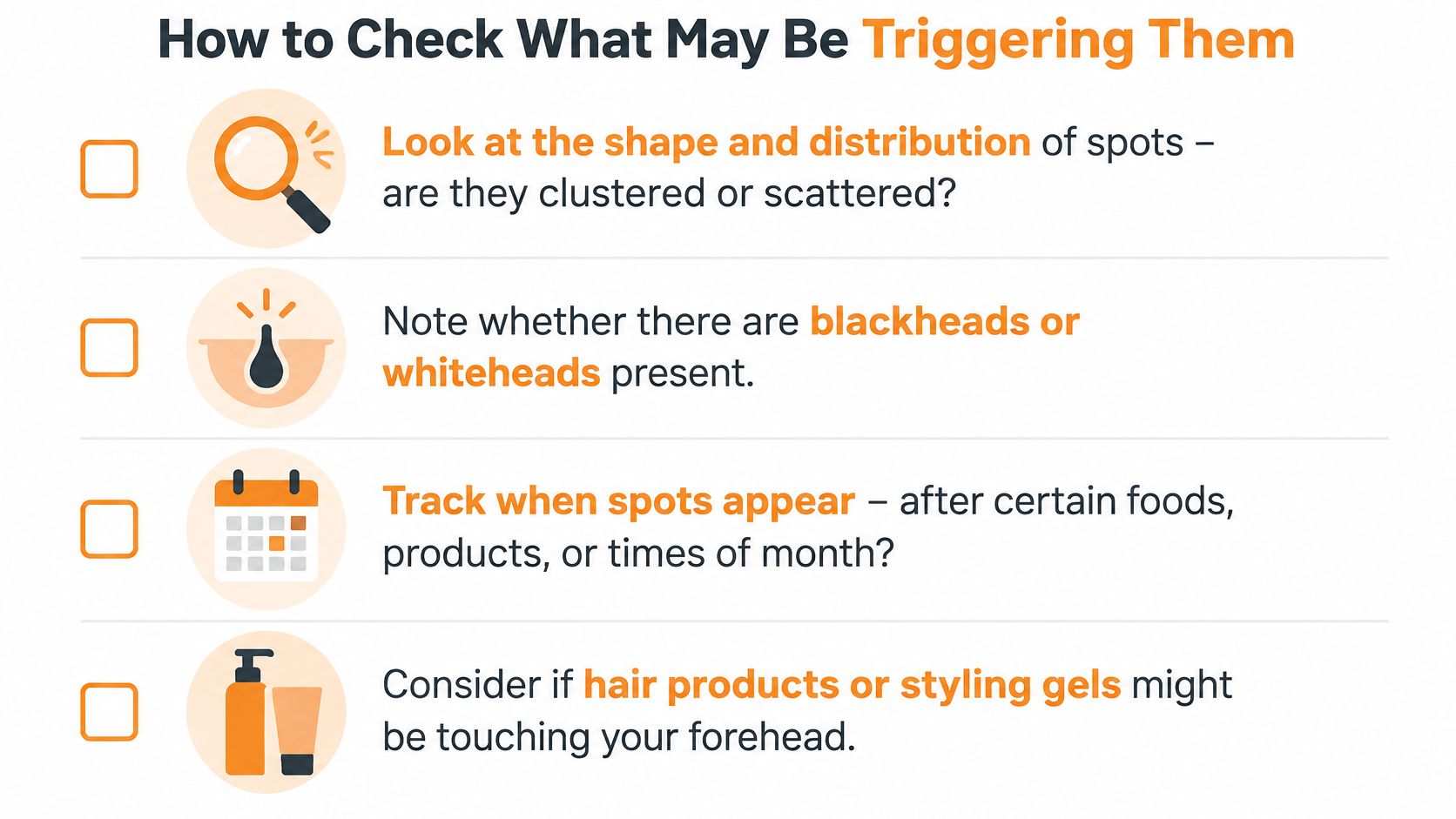
Rather than changing several things at once, keep a simple record of what you notice. It won't diagnose the cause, but it may help you describe the pattern clearly to a pharmacist or GP.
Note how the spots behave
Check whether you can see blackheads or whiteheads, or whether the bumps all look much the same. Notice if they itch, feel sore, contain pus, or have scaling or crusting around them. Record whether they sit along the hairline, appear across the forehead or spread into a broader rash.
Write down possible changes around the time the spots appeared, such as:
- Products: new skincare, makeup, sunscreen or hair styling products.
- Activities: exercise, sweating, helmets, hats or headbands.
- Routine: changes in washing, stress or medicines.
- Timing: whether the spots return around menstruation, if relevant.
A short log over a couple of weeks may help you spot a possible link. It doesn't prove that a product or activity caused the bumps, so avoid stopping prescribed medicine without speaking to a clinician.
Photographs taken in similar lighting can help you show whether the pattern has changed. They're a useful record, not a substitute for an in-person or professional assessment.
Simple Treatment and Prevention
Start with a gentle routine. Wash your face with a mild cleanser and lukewarm water. Avoid scrubbing, picking or squeezing, which can irritate the skin and increase the risk of marks or scars.

Choose skincare and hair products labelled non-comedogenic where possible. After sweating, cleanse gently and consider whether a hat, helmet or styling product is repeatedly touching the affected area. Frequent harsh washing or using several strong products can make irritated skin feel worse.
Ask a pharmacist before adding treatments
A pharmacist can discuss whether an acne treatment is suitable for your symptoms and skin. NHS guidance lists topical salicylic acid and benzoyl peroxide among options for acne, but a treatment may irritate skin that's already sore or inflamed. NHS advice on acne also recommends seeking guidance from a pharmacist.
Pharmacist's tip: Ask whether salicylic acid or benzoyl peroxide suits the spots you have, check a product is appropriate for itchy or flaky skin before applying it, and avoid starting several active ingredients at once so you can tell which one your skin reacts to.
The video below demonstrates a gentle cleansing routine and how to introduce one active ingredient at a time. For prescription choices, a prescriber can explain which treatments fit your symptoms and circumstances. For example, you can read about choosing a tretinoin strength for acne and wrinkles, but don't choose or change a prescription treatment without professional advice.
Prescribed acne treatments aren't usually judged after only a few days. NICE recommends a first treatment course that normally lasts 12 weeks, followed by a review of the response. Options depend on acne severity, skin tolerance, pregnancy considerations and personal preference. NICE acne guidance sets out the treatment options and review approach.
What Different Everyday Situations Can Reveal
A busy parent might notice small bumps near the hairline after a stressful month. They've also started using a new styling cream and often finish the school run after a brisk walk. Those details don't prove what's causing the bumps, but they could make it sensible to keep the routine simple and check whether the cream touches the forehead.
A shift worker might develop forehead spots after wearing a cap for long stretches. If the bumps feel itchy and look similar to each other, it's worth noting the cap, sweat and timing rather than assuming the cause is ordinary acne. They could ask a pharmacist what to do next, particularly if the spots persist or feel sore.
Similar-looking spots can have different triggers, and the same trigger won't affect everyone in the same way. Keep notes that feel comfortable to share, and focus on practical details such as timing, itch and product changes. If facial redness or irritation is also a concern, read about rosacea, but seek individual advice if you're unsure what's happening.
When to Get Medical Advice
A pharmacist can help if you're unsure whether the bumps look like acne or want to discuss an over-the-counter treatment. Book a GP appointment if the spots are persistent, painful, scarring, suddenly worsening or causing significant distress, or if they don't settle with reasonable self-care.
Tell a clinician if the spots occur alongside irregular periods or excess facial hair. Mention any new medicine if you think it may be linked. Don't stop a prescribed medicine without advice.
Seek urgent medical help if you feel very unwell or have a severe, rapidly worsening skin reaction. For a rash that may be linked to irritation, you can also read this UK guide to dermatitis creams, but don't use a guide to delay getting help when symptoms are severe.
If a clinician prescribes acne treatment, follow their directions and give the planned course time. NICE advises a normal first-line course of 12 weeks, with a review afterwards, rather than judging the result after only a few days.
This article is for information only and isn't a substitute for medical advice. Online guidance can't assess your skin or replace a consultation made for you.
Frequently Asked Questions
Do forehead spots mean I have poor hygiene?
No. Forehead spots are often linked to blocked follicles, oil, inflammation, hormones, products or friction. Gentle cleansing can help remove sweat and residue, but scrubbing harder isn't the answer.
Does sweating cause acne?
Sweat can mix with oils or products on the skin, and friction from a hat or helmet may irritate the area. That doesn't mean sweat alone explains every spot. Cleanse gently after exercise and note whether bumps follow particular activities.
Can adults get acne?
Yes. Acne can start or recur after the teenage years, including around hormonal changes. If it persists, causes scarring or affects your wellbeing, ask a pharmacist or GP for advice.
Is it safe to pop a forehead spot?
It's better not to. Picking or squeezing can irritate the skin and increase the risk of marks or scars. Let the spot settle and seek advice if it's painful or keeps returning.
Should I change all my skincare products at once?
No. Changing several products together can make it difficult to identify a possible trigger. Keep your routine gentle and note any changes you make.
When should I ask for help?
Speak to a pharmacist if you're uncertain about a treatment or whether the bumps look like acne. Contact a GP for persistent, painful, scarring, worsening or distressing spots, or if other symptoms concern you.
Summary
- Forehead spots are often acne, but not every bump is acne.
- Oil, blocked follicles, hair products, sweat and friction can all matter.
- Itch, scaling, pain and the spot pattern are useful clues.
- Keep a simple record of products, activities and timing.
- Cleanse gently, avoid picking and ask a pharmacist about treatments.
- Contact a GP if spots persist, hurt, scar or worsen.
Meta description: Why do I have spots on my forehead? Learn common causes, how to spot possible triggers, gentle care to try, and when to ask a UK pharmacist or GP for advice.
Suggested internal links: Courier Pharmacy's acne information; its guide to skin hyperpigmentation; its tretinoin guide; its rosacea information; and its dermatitis cream guide.
Suggested visuals for future use:
- A painterly, steampunk-inspired follicle diagram with an ornate brass plaque and bright lime green, pale yellow-green and light grey details. Alt text: “Diagram showing how oil and dead skin cells can block a forehead hair follicle.”
- A checklist infographic in the same palette, with brass-style labels for checking spot shape, itch, timing and product exposure. Alt text: “Checklist of features and possible triggers to note when forehead spots appear.”
- A gentle cleansing illustration in a bright bathroom, using pale yellow-green and light grey with small brass accents. Alt text: “Person washing their face gently with a cleanser.”
Byline: Author and clinical reviewer details weren't provided for this article.
How this content was created: This article draws on UK clinical guidance from the NHS, NICE and the Primary Care Dermatology Society. It explains general information in plain language and isn't a personal diagnosis or treatment plan.
References
- Primary Care Dermatology Society, Acne vulgaris.
- NHS, Acne.
- NICE, Acne vulgaris: management, recommendations.
For advice about acne treatment options, Courier Pharmacy offers online pharmacy services, including acne treatment information and access to prescription care where appropriate. Visit the site to learn more and find out whether its services may suit your needs.


